Love and Deepspace | New Interactive 5-Star Memory 🥂[Zayne: Past Midnight]
Leaving the crowd behind, swaying together in carefree, improvised steps before slowly drawing close—this is a party for two.
Keep the rain outside. Keep tonight in the car… When sight is obscured, your touch feels all the more vivid.
"When I can't see you... I can feel it more."
🥂Event Duration: From 05:00 on Sept. 22 to 04:59 on Oct. 10 (Server Time)
———
🪐Official Discord: https://t.co/hKmnBAbbgu
🪐Download and Log in Now: https://t.co/bNEP8yM6bZ
#LoveandDeepspace #ANightThatNeverEnds #Zayne
A cake from across the miles, full of sweetness and blessings.
All our love gathered, all surprises in place — celebrating the perfect finale of this drama together.
Here’s to countless more moments of glory we’ll share in the days ahead.
#ongsacelcius@Ongsacelcius1
A beloved Easter egg for Ongsa is soon to be revealed …
A surprise from thousands of miles away, carrying on Chinese Fahrenheits’ boundless love for Ongsa.
The best is yet to come…
#ongsacelcius@Ongsacelcius1
#TheEdgeOfHorizon
Final EP Chinese Fans' Support
Dearest Ongsa🦌
May you keep to your own pace.
May you go after all your passions.
May you be the brightest one among the stars✨
With endless support🫶🏻💫
#ongsacelcius@Ongsacelcius1
81 years on, Japan must not turn back the clock
On the 81st anniversary of Japan's unconditional surrender in World War II, Japanese Defense Minister Shinjiro Koizumi visited the notorious war-linked Yasukuni Shrine. So did a group of the ruling Liberal Democratic Party's senior officials, the first such collective visit by the party's top leadership. Prime Minister Sanae Takaichi sent a ritual offering.
The shrine honors Japan's war dead, including 14 convicted Class-A war criminals, and has long been seen across Asia as a symbol of Japan's wartime militarism.
The timing was telling. On a day that should prompt reflection on how the war ended and why it must never be allowed to happen again, the gestures raised a troubling question: which parts of history are Japan's leaders choosing to remember, and which would they rather forget?
That question matters as some in Tokyo increasingly invoke Japan's suffering from the atomic bombings while glossing over the history that preceded them: the aggression that once brought untold misery across Asia and ultimately led Japan to surrender.
The argument is not only about how Japan remembers its past. It is also about what lessons it chooses to draw from it.
Under Takaichi, Japan has been steadily dismantling the restraints that have shaped its postwar security policy. Defense spending has continued to rise, restrictions on arms exports have been eased, long-range missiles have been deployed, and the government is pushing ahead with plans to acquire greater offensive capabilities.
Now, even the Three Non-Nuclear Principles, a cornerstone of Japan's postwar policy, are being undermined. Koizumi has called for discussions on nuclear policy "without taboos," including whether to revise the principles that prohibit Japan from possessing, producing or allowing the introduction of nuclear weapons.
Taken together, these moves are dangerous signs that Japan has deviated from its postwar security path, stepping away from an exclusively defense-oriented posture and toward becoming a country increasingly equipped to wage war yet again.
As always, the justification is "security." Japan's right-wing politicians have repeatedly portrayed the regional security environment as increasingly dangerous and pointed to so-called external threats. The latest defense white paper goes even further, labeling China the "unprecedented and the greatest strategic challenge which Japan should respond with its comprehensive national power."
This logic should sound familiar.
Before and during World War II, militarist Japan also invoked "national survival," "security" and "self-defense" to justify military expansion and wars of aggression. The result was catastrophic, bringing untold suffering to the people of Asia and the world.
That is precisely why Japan's postwar Constitution, pacifist principles and restrictions on military capabilities were established. They were not shackles placed on Japan, but guardrails built from the ruins of war. Yet those safeguards are now being steadily eroded.
History does not repeat itself automatically. But when the lessons of history are deliberately forgotten, the risk of repeating them grows.
For Japan, remembering the past is not enough. It should reflect on where it is heading, and whether it is once again allowing militarism to masquerade as security.
The real lesson of the war is that militarism can bring catastrophe not only to its neighbors, but ultimately to Japan itself.
Turning back toward military expansion would betray the lessons learned at the cost of enormous human suffering. Japan should choose peace, not repeat the mistakes of its past.
#Remilitarization #靖国神社
#YasukuniShrine #JapaneseMilitarism
#Militarism #NeoMilitarism #WorldWarII
#ShinjiroKoizumi #Shinjiro #Koizumi
#LiberalDemocraticParty
#ThreeNonNuclearPrinciples
#TakaichiSanae #Sanae #Takaichi
#SanaeTakaichi #高市早苗
#ChinaMilBugle #ChinaMilitary
🇨🇳 81 years. Immeasurable suffering. A story hardly told in the west...
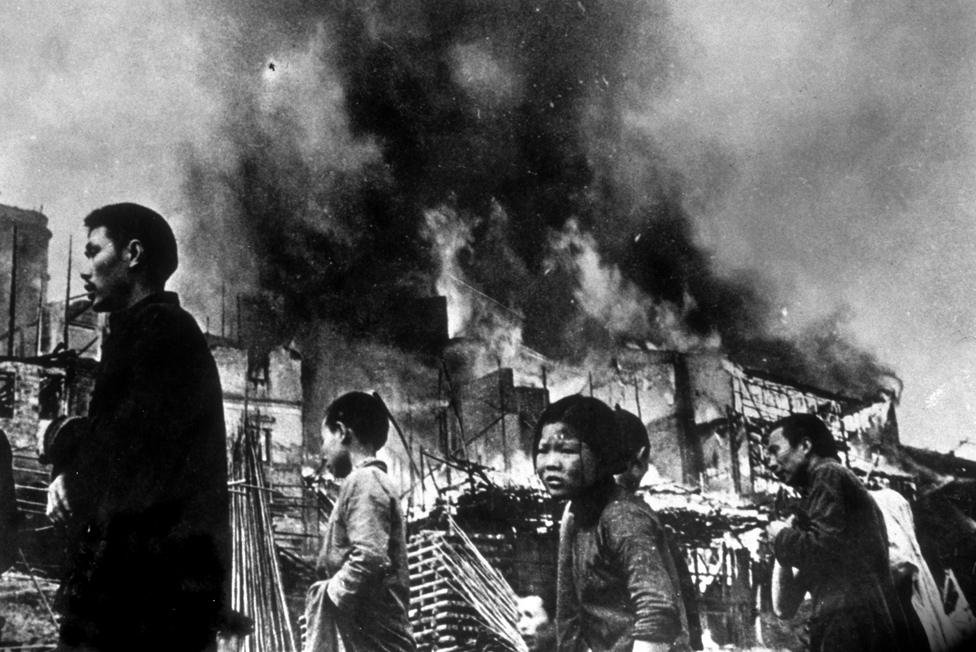
Japan invaded China in 1931.They surrendered on this day in 1945, 81 years ago.
14 years of destruction which culminated in;
- 20+ million Chinese killed
- Up to 300,000 murdered during the Nanjing Massacre alone
- Hundreds of thousands killed or injured by Japanese biological & chemical warfare programmes
- More than 900 cities occupied, with infrastructure across the country devastated
Fast-forward 81 years.
From the ashes, China rebuilt.
- World's #1 manufacturing output for 16 consecutive years
- Global #2 largest economy
- World #1 in university graduates annually (11.8M)
- Life expectancy 79, up from 35 in 1945
--
The Chinese people saved China.
From invasion, occupation and death to one of the most powerful countries on Earth.
Never forget. 🇨🇳♥️
Eighty-one years ago, the chariot of Japanese militarism was ultimately brought to a halt by Japan's unconditional surrender. Eighty-one years on, Japan's right-wing forces are still distorting history and pushing for military expansion, using so-called "external threats" as a pretext to keep breaking through post-war constraints and accelerating down the dead-end road of remilitarization. History has long proven that those who try to turn back the wheel of history will inevitably end up battered and disgraced. #TiantanView #Japan #NeoMilitarism
81 years ago, Japan announced its unconditional surrender. We remember—not to hate, but to stay vigilant.
Everyone, including the Japanese people, should keep their eyes wide open and never allow anyone to repeat that disastrous path of warmongering and militarization.
061026 | During its campus recruitment event, Guvet set up roll-up banners (poster stands) featuring its global brand ambassador #TianXuning at the venue and distributed merchandise bearing the ambassador's image along with recruitment materials, drawing the attention of graduating students on site.
This integration of the ambassador’s image into the recruitment campaign reflects the brand’s strong recognition of Tian Xuning as a "walking, living emblem" of the brand.












![Love_Deepspace's tweet photo. Love and Deepspace | New Interactive 5-Star Memory 🥂[Zayne: Past Midnight]
Leaving the crowd behind, swaying together in carefree, improvised steps before slowly drawing close—this is a party for two.
Keep the rain outside. Keep tonight in the car… When sight is obscured, your touch feels all the more vivid.
"When I can't see you... I can feel it more."
🥂Event Duration: From 05:00 on Sept. 22 to 04:59 on Oct. 10 (Server Time)
———
🪐Official Discord: https://t.co/hKmnBAbbgu
🪐Download and Log in Now: https://t.co/bNEP8yM6bZ
#LoveandDeepspace #ANightThatNeverEnds #Zayne](https://pbs.twimg.com/media/HSoP95cbAAAuq6Q.jpg)