Time for an intro!
I’m Lenka.
>made in Slovakia
>last 2 years mostly living out of a suitcase
>in crypto since january this year
>doing bd @vacuum_crypto
>still curious, still learning something new
We build a lot of cool stuff on-chain. Wallets, defi, governance, dapps. If you need to ship something fast, secure and actually well built, dm me, happy to help.
I love meeting new people and being around people who inspire me to do better.
Off the clock: gym, yoga, pilates, running, biking. basically anything.
Now your turn :)
Day 17/30.
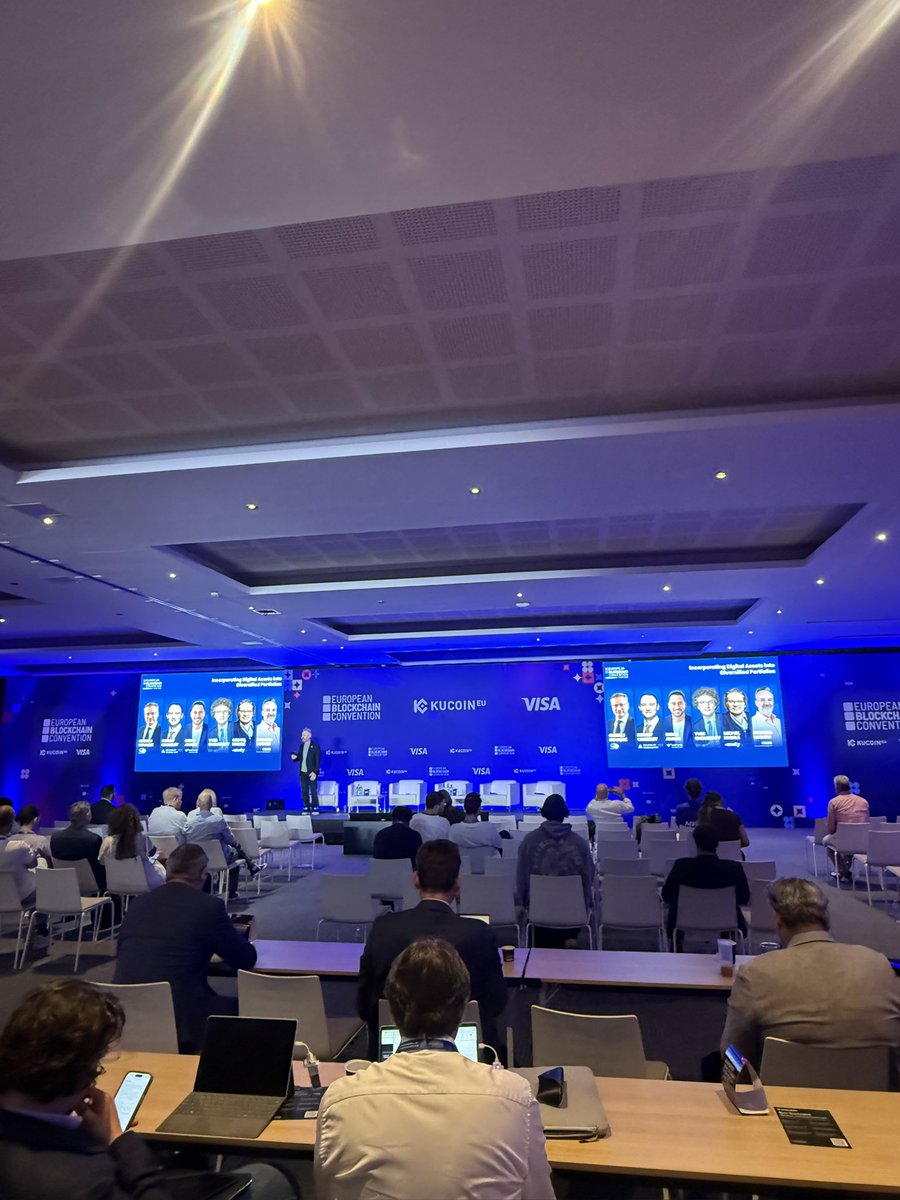
Yesterday I wrote that the mindset has to change before anyone adds a feature. Barcelona showed me what that actually means in practice.
Banks need to understand this first. Where the ownership record actually lives. What breaks when a transfer cannot be reversed. Who is liable when the keys sit with a provider.
Until that is clear, they cannot write the brief. And nobody builds from a brief that does not exist.
Credit where it is due: @EBlockchainCon put the right people in one room.
What struck me most: the industry has moved from whether to how. Two years ago banks were asked if digital assets belong in finance at all.
It is always interesting to observe how this space is changing.
Missed two days of posting. Day 16/30, live from EBC12 in Barcelona.
Banks are ready to bring crypto assets to their clients. Regulation handled, strategy written. The open question is who moves first, and whether being first even matters.
But here is the thing nobody says out loud: the settlement layer banks depend on closes at the weekend. In the euro area that is T2, working days only. Instant rails like TIPS run 24/7, but they are capped and built for small payments.
A blockchain never closes.
So the whole mindset about how the system works has to change first, before anyone adds a single feature. SWIFT launched a blockchain ledger in July with 17 major banks testing exactly this.
Flying to Barcelona today. And of course I managed a proper masterpiece of shit: I went to the wrong airport. Had to buy a new ticket. So Barcelona better be worth it.
Day 15/30. Tomorrow I am at EBC12, so here are the five questions I am taking with me.
1. If the licence was granted tomorrow, could you launch in a quarter?
Everyone says regulation is the blocker. Push once and it usually turns out the licence is fine and they are stuck on systems.
2. Which of your policies could you not evidence with a system today?
The application is documents. The licence requires the thing to actually work.
3. Where is your source of truth for client ownership, and how often is it reconciled?
"We use a good custody provider" is not an answer. The provider holds the keys. The record of who owns what is still yours.
4. Do you hold the keys, or does your client?
This one answer tells you what licence they need and what they are liable for.
5. Build, buy, or partner?
The most useful sentence anyone can give me this week.
If you are at EBC12 and working on custody, payments or tokenization, my DMs are open.
Day 14/30. Today I finally understood why a bank looks at stablecoins completely differently than the rest of us.
A bank earns by lending your deposit out. Your deposit is not sitting safely in a vault, it is raw material and somebody else already has it.
So when a client moves 10,000 EUR into a stablecoin, that material is gone. It now sits with an issuer who parks it in T-bills, lends it to nobody, and keeps the interest. A real pickle if you are the bank.
Surprise surprise, this is why regulators keep talking about deposit outflows, and why MiCA bans issuers from paying interest to holders. If a stablecoin paid 4%, the outflow would be brutal.
So the question inside a bank is defensive. How do we keep the money here when the client wants that token anyway?
Enter tokenized deposits. Same deposit, still the bank's liability, just on a programmable ledger. The client gets the speed, the bank keeps the money. Everybody goes home happy, apparently.
Day 13/30. No new topic today. Sunday is for prep, and I fly to Barcelona on Tuesday for EBC12.
So today I built the target list.
6000 people at that event. Two days. Realistically that is maybe 12 real conversations, and the rest is small talk in a coffee queue.
So I used the filter I built on day 2, plus what I learned this week:
- does the company hold client money
- does it have a CASP license, or is it in the process
- did it raise or acquire in the last 9 months
Three yes and I want a long conversation.
If you are going to EBC12 and working on custody, payments or tokenization, my DMs are open.
And also… wish me luck:)
Day 12/30: settlement. A fancy word for "the moment the thing actually happens".
You buy a share today. The money and the asset change hands two days later. T+2. In 2026.
Those two days are not waiting around. Four companies sit in between: a broker, a clearing house, a custodian and a bank. Four separate records of the same trade, all arguing until they agree.
And in that gap sits settlement risk. The other side can just... not deliver. That is why the clearing house exists, standing in the middle and guaranteeing both sides, with collateral to back it. An entire institution whose job is making sure nobody runs away in the meantime.
Here is what tokenization actually fixes. If the asset and the money move in one transaction, either both happen or neither does. No guarantee needed, no two days, no arguing. Speed is a side effect.
What I did not expect: those two days let you net everything. Trade the same thing a hundred times, settle only the difference. Instant settlement means the full amount, every single time, with your capital just sitting there being useless.
So somebody pays for instant. Usually the person holding the capital.
Day 11/30: AML, travel rule and address screening.
When you send a bank transfer, your name travels with it (hopefully). The travel rule does the same for crypto: when two regulated providers move funds, client data has to travel with the transaction, so it is not just : Hey, here are some tokens, Good luck figuring out what transaction it's for.
The tricky part: the blockchain does not carry that data. It goes through a separate channel between providers, and there are several competing standards for it. Two providers not speaking the same standard is like talking to a deaf guy, a real pickle.
What suprised me: is basically the complete background check, of the tokens. Whether you obtained them legaly or not. Moreover, even if you did obtain them legitimately and they come from suspicious side, transaction will be blocked.
From the client's side it looks unfair. From the company's side it is the only way to avoid a sanctions problem that can cost the license.
Honestly I have MiCA over my head at this point, so let's go look at where this all started.
Day 10/30: cypherpunks.
In the late 80s and 90s, a group of people believed privacy in the digital world would disappear unless people built it themselves, with cryptography. Their principle: do not trust, verify.
Bitcoin solved that in 2009. Thousands of computers agree on what is true, with nobody in charge, and nobody who can be forced to flip a switch.
What is interesting: this entire industry was built by people trying to escape institutions. Today the money and the survival of most companies depend on exactly the institutions they were trying to avoid.
Not a betrayal. Just what happens when something that works gets big enough to attract capital, and capital brings regulation with it.
Bitcoin is as decentralized today as it was ten years ago. What changed is who builds on top of it, and who gets to decide what survives.