Summer anxiety is real. Heat, poor sleep, changing routines, and the pressure to “make the most of it” can leave your nervous system overloaded.
You do not have to “perform” happiness to have a meaningful summer.
We’re living through a lot of uncertainty.
As a clinician I’ve been wondering,
What are people most afraid of right now?
Understanding this fear might tell us more than we realize.
A reminder this morning,
Progress in therapy is usually quieter than people expect.
Better boundaries
Better sleep
Less avoidance
More flexibility
These small changes often matter more than the “big” breakthroughs.
Free agency is here and, right now, my TL is all LeBron, all day. Where's he going, what are the Warriors doing, etc. That's fine. He's LJ. I get it! But I'll tell you what I'm actually watching, and it isn't LJ and marquee guys. It's the OGs.
Don't get me wrong, I love this young NBA. These kids are so skilled it's almost unfair, and athletic in a way that's crazy. Different game now. A better one in a lot of ways, and I mean that.
Here's my thing, though. When I came into the league I didn't know anything, not really, and it was the vets who raised me. Guys like Ervin Johnson and Lindsey Hunter and Ray Allen taught me how to carry myself, how to be a pro on the nights nobody's watching. Taught me about money. Shoot, taught me about golf, about how to be a man. I needed that. Most of these young guys need it too, whether they know it yet or not.
So yeah. Harrison Barnes going back to San Antonio, that one was obvious. Russell Westbrook getting tied to DC? I love it for AJ Dybantsa and them. And if you've got a young roster you're trying to grow, you have to call a Khris Middleton or a Mike Conley. Get somebody in that locker room who's seen it, lived it, and can pass on that knowledge.
They can still give you minutes, sure. But that's not really why you sign them. You bring them in for the kid who's got all the talent in the world and no idea what to do with it yet. The vet pulls him aside when the coaches can't. Shows him the little things nobody teaches you in college. Shows him how to play the game, but also live the life.
Each one teach one. That's how it used to worked in the NBA. Let's make sure the young guys get that same guidance.
Everyone is talking about how it’s $10,000 to get into MSG for the NBA Finals. Not enough people are talking about how the Knicks publicly traded stock has outperformed pretty much everything outside of AI over the last year.
Counselors report cautious optimism about AI, seeing promise in reducing workload and burnout while raising concerns over ethics, bias, and limited human connection. Empirical evidence matters as #AI enters practice.
#Therapists#AcademicTwitter
New Study:https://t.co/LtLGHvMR8y
People underestimate how dramatic the impact will be when millions/billions of AIs (agents) start working together, 24/7.
They don’t even need to be AGI. Just agents like the ones we have today, one or two iterations better.
That alone would accelerate civilization beyond recognition.
🚨 RIP prompt engineering.
This new Stanford paper just made it irrelevant with a single technique.
It's called Verbalized Sampling and it proves aligned AI models aren't broken we've just been prompting them wrong this whole time.
Here's the problem: Post-training alignment causes mode collapse. Ask ChatGPT "tell me a joke about coffee" 5 times and you'll get the SAME joke. Every. Single. Time.
Everyone blamed the algorithms. Turns out, it's deeper than that.
The real culprit? 'Typicality bias' in human preference data. Annotators systematically favor familiar, conventional responses. This bias gets baked into reward models, and aligned models collapse to the most "typical" output.
The math is brutal: when you have multiple valid answers (like creative writing), typicality becomes the tie-breaker. The model picks the safest, most stereotypical response every time.
But here's the kicker: the diversity is still there. It's just trapped.
Introducing "Verbalized Sampling."
Instead of asking "Tell me a joke," you ask: "Generate 5 jokes with their probabilities."
That's it. No retraining. No fine-tuning. Just a different prompt.
The results are insane:
- 1.6-2.1× diversity increase on creative writing
- 66.8% recovery of base model diversity
- Zero loss in factual accuracy or safety
Why does this work? Different prompts collapse to different modes.
When you ask for ONE response, you get the mode joke. When you ask for a DISTRIBUTION, you get the actual diverse distribution the model learned during pretraining.
They tested it everywhere:
✓ Creative writing (poems, stories, jokes)
✓ Dialogue simulation
✓ Open-ended QA
✓ Synthetic data generation
And here's the emergent trend: "larger models benefit MORE from this."
GPT-4 gains 2× the diversity improvement compared to GPT-4-mini.
The bigger the model, the more trapped diversity it has.
This flips everything we thought about alignment. Mode collapse isn't permanent damage it's a prompting problem.
The diversity was never lost. We just forgot how to access it.
100% training-free. Works on ANY aligned model. Available now.
Read the paper: arxiv. org/abs/2510.01171
The AI diversity bottleneck just got solved with 8 words.
Billions of AI scientists working 24/7 will make centuries of progress in less than a day
Kosmos - new AI Scientist "Does 6 months of work in a single day. One run can read 1,500 papers and write 42,000 lines of code. At least 79% of its findings are reproducible. Kosmos has made 7 discoveries so far"
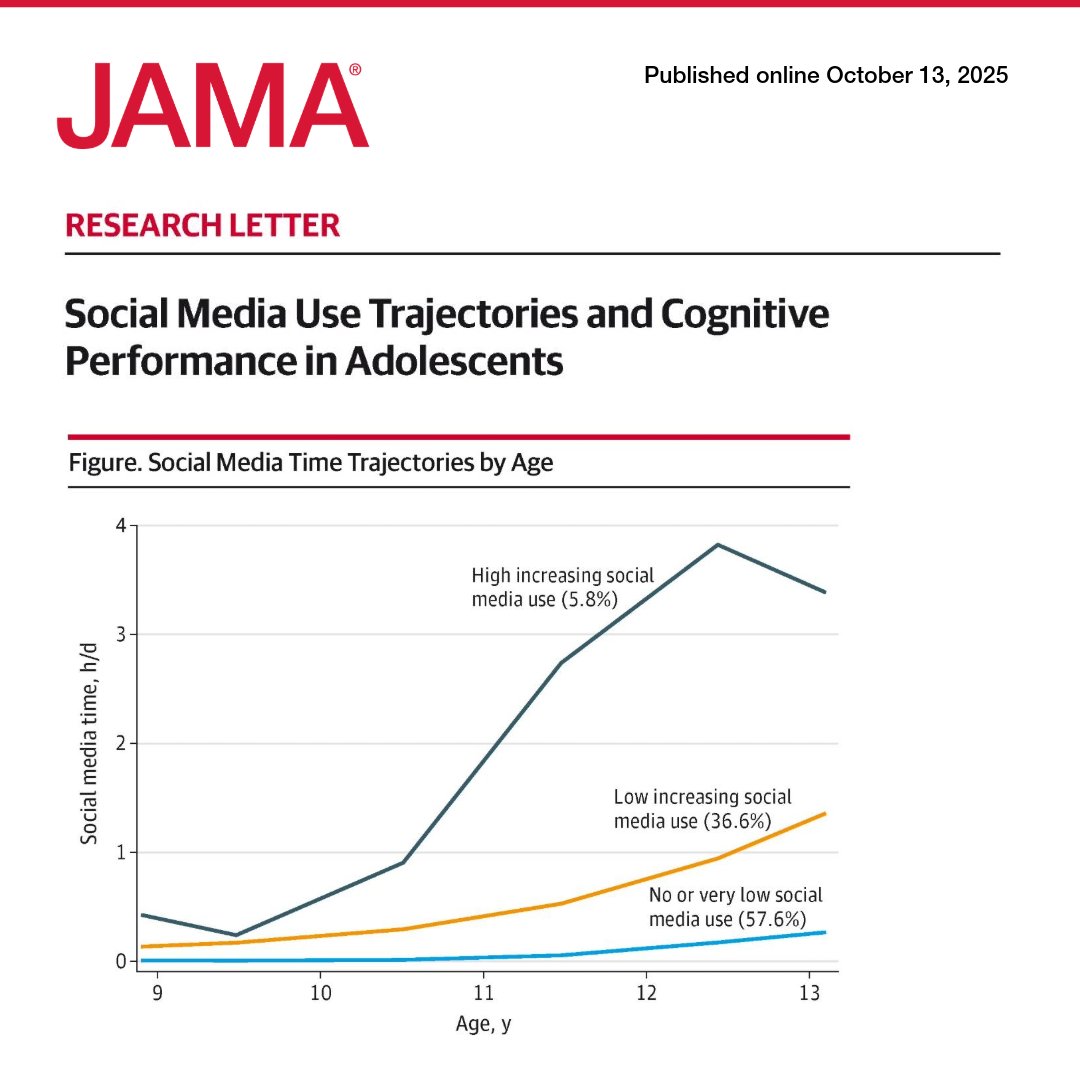
In US adolescents, increasing social media use from ages 9–13 was associated with lower scores on measures of reading, memory, vocabulary, and composite cognition. 🧵
https://t.co/Ehyr7Gj9Iu
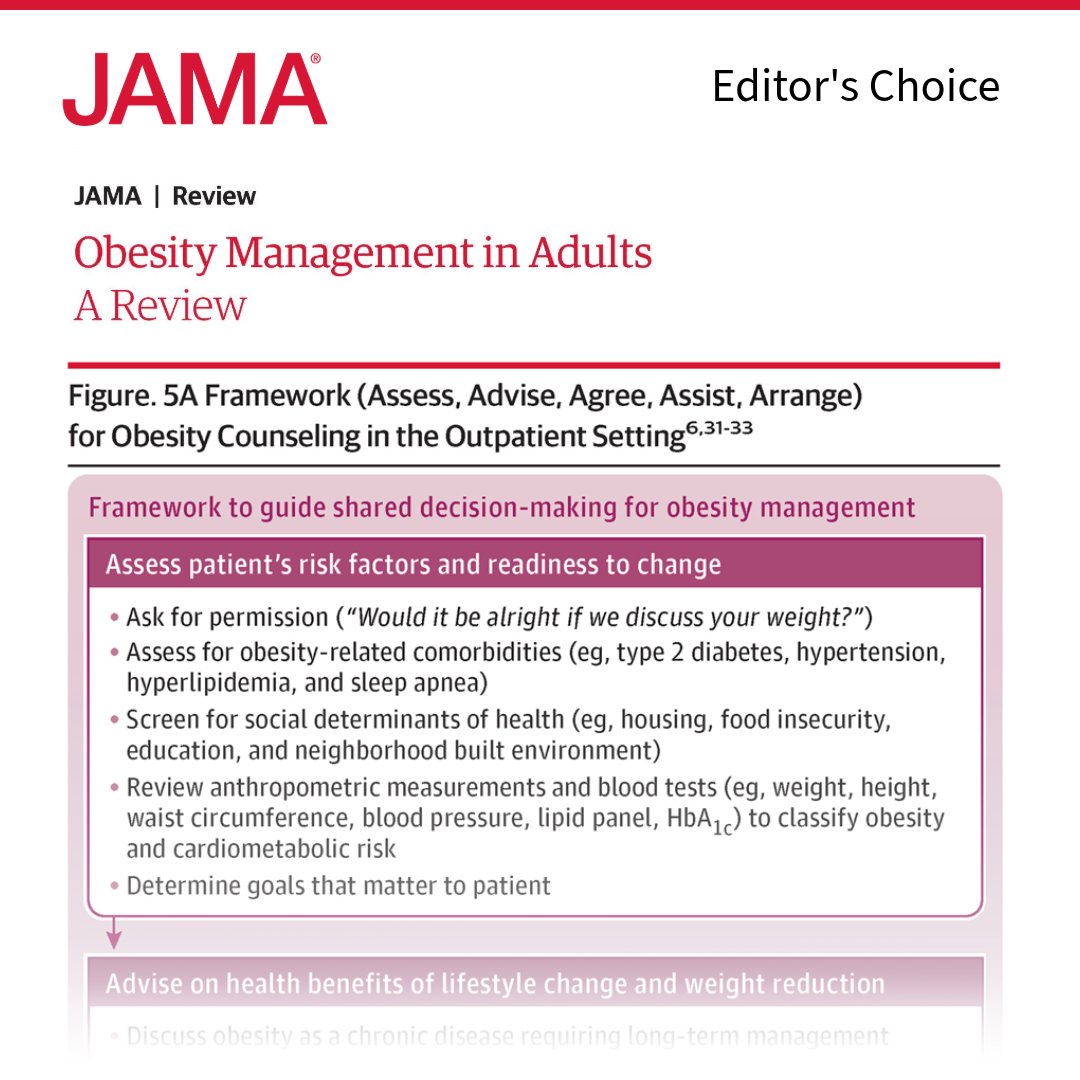
✅ Editor's Choice: This review highlights the latest evidence-based approaches to obesity management, spanning behavioral, nutritional, pharmacologic, and surgical interventions.
🔖 Bookmark it for your citations: https://t.co/2ZoAA5NbYu
But here’s what AI can’t do:
It can’t feel.
It can’t connect.
It can’t care.
You’re not needed because you’re perfect. You’re needed because you’re human.
As a therapist and professor, I’m seeing a new perfectionism emerge.
It’s not about grades or looks.
It’s about competing with AI.
“If ChatGPT can write it better… why bother?”
This isn’t just a mental health issue.
It’s existential. As AI continues to integrate our world we may question:
“Am I still needed?”
“What’s the point if AI can do it all?”