Congrats to @theguardian.com for co-launching the #89PercentProject - reminding us that the vast majority want stronger #climate action. The climate denial of the populist right is the minority. Media needs to reflect this & Govts urgently need to act👇 https://t.co/BI71gUD63i
@marcorubio Rubio, Rubio, wherefore art thou? “It should not be hard to say that Vladimir Putin is a war criminal, (said Rubio) And I find it discouraging your inability to cite that, which I think is globally accepted.”
@CarolineLucas Agree but I'm taking a *slight* positive from this. It's not justice but better than keeping them in to serve the full (excessive) sentences.
@teameffujoe@ToombsToni@EdKrassen Thanks for this. Now can you please explain how Vladimir Putin is a democratically elected leader and not a dictator?
Oh dear , what a shame , bye . . .
‘At first , when I see you cry
Yeah , it makes me smile
Yeah , it makes me smile
At worst , I feel bad for a while
But then I just smile
I go ahead and smile’
‘Lord’ Walney - John Woodcock - dumped . Long overdue but the best P45 of the year so far
@JustStop_Oil@XRebellionUK@libertyhq
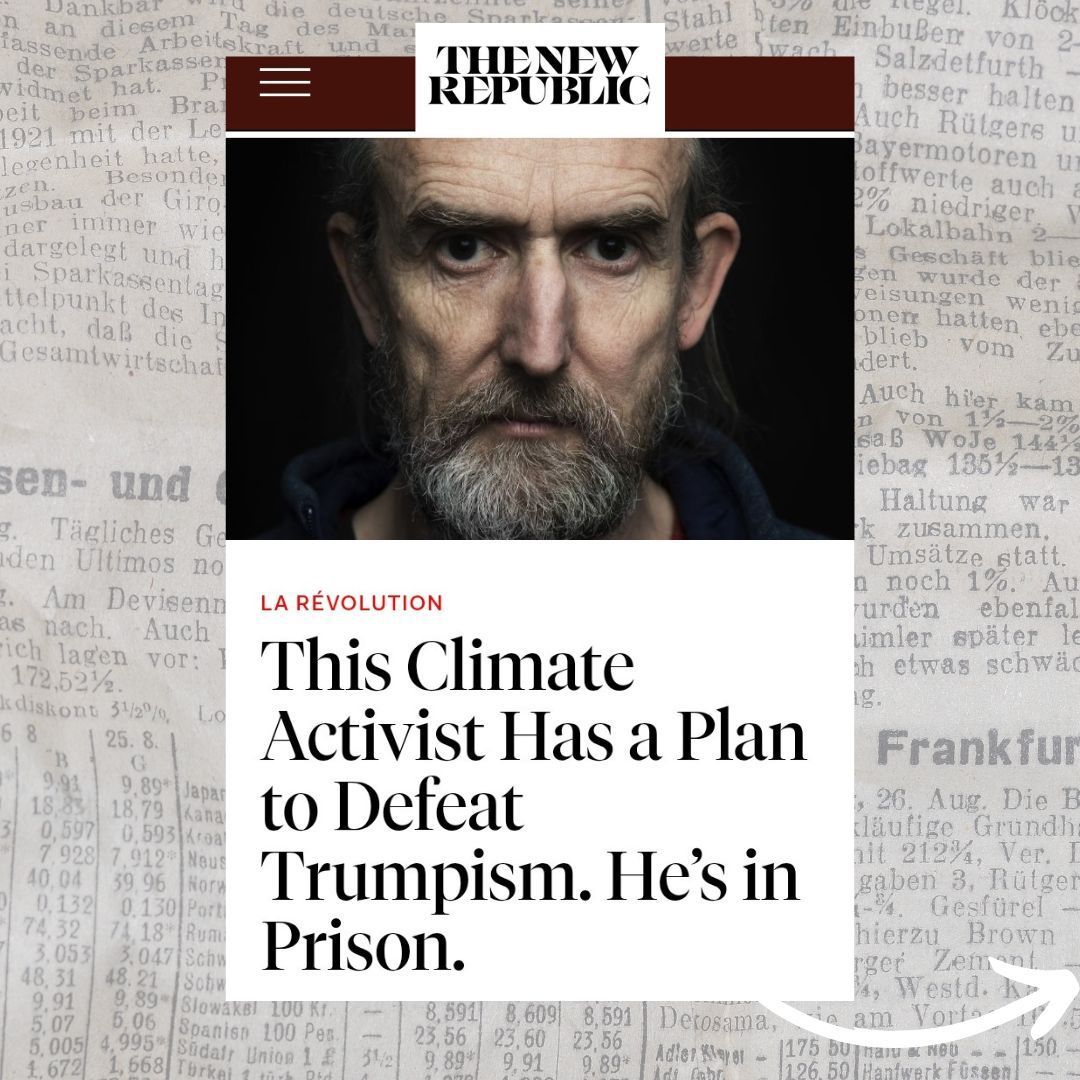
In October 2023, The World Transformed, the annual conference of the British Labour Party’s leftist flank, offered a grizzled socialist organizer a brief speaking slot. He’d been asked the question “Why is the left losing?”—a mystery many liberals in America and around the world have been pondering as well. The guest, a former organic farmer and scholar of social movement theory named Roger Hallam, looked weary. His lanky frame was noticeably slumped, his plaid button-down shirt hung untucked, and a curl of stringy gray hair escaped from his pony tail. With his beakish nose, sunken eyes, and untamed beard, Hallam’s appearance brings to mind a biblical prophet. His answer to the conference attendees, while far from scriptural, bore the sting of divine judgment: “You’re all fucking cunts.”
While Hallam’s diagnosis drew a mixed response, it can’t have been a surprise. Though virtually unknown in the United States, the 58-year-old, a co-founder and strategic mastermind of the civil resistance groups Extinction Rebellion (often called XR) and Just Stop Oil, is a polarizing public figure in Great Britain—perhaps as famous for his rhetorical vehemence as for his extraordinary record as a climate campaigner. Though his demeanor is often quite affable, even impish, Hallam believes that only direct, emotional language has the power to shake the world’s comfortable classes from suicidal complacency. “We are not facing climate change,” he put it recently in a typical tweet, “we are facing social breakdown—mass rape, mass slaughter, and mass starvation.”The tactic—which accords with XR’s vow to “act like the truth is real”—has occasionally gotten him into trouble. His oft-repeated claim that surpassing two degrees Celsius of planetary warming, a distinct likelihood on our current trajectory, will lead to the deaths of a billion people occasioned a nitpicky scolding in The New York Times titled, “Just How Many People Will Die From Climate Change?” The writer was none other than David Wallace-Wells, the acclaimed author of the Cassandra-esque blockbuster The Uninhabitable Earth and himself an occasional target of arguably parsimonious rebuttals. Hallam soon fired back, accusing Wallace-Wells of “elite pathology” and adding, “Sorry to ask the question, but what does uninhabitable actually mean?” In any case, his warning had shouldered its way into the prestigious daybook of liberal elite thought, which for Hallam, Wallace-Wells, and anyone else willing to consider the peril before us, probably counts as a modest win.
As discomfiting as Hallam’s methods might be, there’s little doubt the approach has borne fruit. XR made its official public debut on October 31, 2018. Drawing on a year of planning by Hallam and a handful of others, the rally on Parliament Square drew 1,000 people, including the famous teenage activist Greta Thunberg. Just a few weeks later, XR all but shut down London, deploying an estimated 6,000 fired-up protesters from around the U.K. to block all five bridges crossing the Thames, in what became one of the biggest mass acts of civil disobedience in British history. After a variety of demonstrations over the succeeding months, including an action in April 2019 that packed police holding cells, XR’s demand that Parliament declare a climate emergency was eventually met.Defying the authorities in this way is a proven strategy—see, for example, the Civil Rights Movement—but it is not without risk. In 2017, Hallam and a colleague were arrested for spraying graffiti around King’s College, where he was then working on a Ph.D., demanding it divest from fossil fuels. (The university eventually pledged to do so.) Hauled into court, the pair argued that their action had been a proportionate response to the climate crisis, and the jury agreed, a major win for the movement. But this year, an attempt to mount the same defense in another case was thwarted by a judge, who declared the rationale behind the criminal acts immaterial.
In July, Hallam was convicted along with four fellow activists and sentenced to an unprecedented five years in prison for “conspiracy to cause a public nuisance.” (Hallam’s “crime” had been advocating direct action during a videoconference.) The ruling prompted a harsh response from the U.N.’s special rapporteur for environmental defenders, who warned that the sentence may violate international human rights law. An appeal is set for January 29. Meanwhile, Hallam is being held in a medium-security prison in Norfolk, England. He is making the most of his time behind bars, recording a weekly podcast, cranking out a few books (one about climate collapse and another outlining a new democratic constitution), quietly advising German leftists on electoral strategy, and going on daily runs around the prison yard. Perhaps most important, he’s been doing some hard thinking about what comes next.
Born in Manchester to middle-class Methodist parents, Hallam has been a political activist since age 15. After winning a scholarship to the London School of Economics, he focused his studies on peace activism, and later got involved in workers’ co-ops. Eventually, he decided to try his hand at vegetable farming (Hallam is vegan), turning a 10-acre plot in the Welsh countryside into a thriving operation with 25 employees. A major turning point occurred around 2007, when relentless rains wiped out his entire harvest two years in a row. Forced to lay off his staff, Hallam ceased operations and turned his attention to the growing impacts of climate change. Farms all over the world were experiencing ruined harvests due to extreme weather events, and the problem was only getting worse. Indeed, he realized, our entire food system is far more vulnerable than most of us realize.
Simultaneous crop failures in major agricultural regions, an increasingly likely scenario, would lead to widespread famine. In wealthier countries, a sharp rise in prices would increase economic instability and spark social unrest.
And nobody seemed to be doing anything about it, not really.
Hallam rededicated himself to activism, pursuing a doctorate in sociology at King’s College, with a focus on mass social movements, to better understand the characteristics of successful efforts. Drawing on the work of Erica Chenoweth, Paul Engler, Gene Sharp, and others, he began to put together a list of principles. Among them: Movements must dedicate themselves to nonviolence, for spiritual as well as strategic reasons. Typically, only highly disruptive protests, maintained over time, can force change on a Western regime. Like business start-ups, movements need to experiment, learn from failure, and rapidly iterate. And finally, they need to strike a careful balance between accountable leadership and individual empowerment by allowing a small group to make the big decisions—to create the “DNA”—and then giving participants maximum autonomy within those guidelines.
Nonetheless, while XR remains a going concern, with chapters around the world, the original magic that fueled its explosive growth was fleeting—and some of the blame for that no doubt falls to Hallam himself. For one thing, as the group became more of a threat to the established order, Hallam’s defiant approach and polarizing language became a problem. After colleagues rejected Hallam’s proposal to fly drones near Heathrow Airport to halt the construction of a new runway, he formed a splinter group and went ahead with the plan. A few months later, during an interview to promote the German publication of his book Common Sense in the 21st Century, he described the Holocaust as “just another fuckery in human history.” Hallam’s point was that the exceptionalism with which we treat the Nazi murder project can blind us to the many other genocides committed over the centuries and, more importantly, to the era of mass death we’re presently teeing up. It wasn’t taken that way. Though he quickly produced an internal memo suggesting ways in which the outrage might be used in furtherance of the group’s cause, few of his comrades had the stomach for the fight, and Hallam eventually apologized.
Not for nothing did XR co-founder Gail Bradbrook describe him as “our biggest asset and our worst liability.”
Hallam moved on, co-founding Just Stop Oil, which took the same aggressive approach to climate protest that has animated XR, and helping to build an international network of climate protest groups called A22. But even then, he was beginning to reorient his thinking—shifting away from a focus on climate collapse and instead aiming to overturn an entire political system he believes is failing us.
The real problem is “the degeneration of democratic culture, spurred by the capturing of states by corporate power,” he told me. “And a side issue of that is the death project”—the relentless pumping of greenhouse gases into the atmosphere—“which is going to destroy the corporate sector and Western society and everything else.” What we really need, he came to believe, is to reimagine, and then recreate, society in a way that supports our shared humanity as we enter a frightening new epoch.
In short: a revolution.
Hallam knows his message—that a nonviolent democratic revolution is not only possible but essential, and that we actually have the power to shape our collective future, as humans have done throughout history—is a challenging one. After all, most of us came of age during a period when progress was thought to march forward of its own volition, albeit in baby steps, and revolution was a dirty word (except when cast in the elegiac hues of 1776). Talk of upending the established order makes us nervous. “We all want a nice, linear transition to a post-carbon future,” Hallam acknowledged, his voice crackling over a temperamental prison phone line. “But that’s not what historical sociology says, right? It just doesn’t happen like that.”
Climate activism alone, he now believes, will never suffice. And while revolution sounds scary, “the concept is simply the necessity to change the political regime to something that’s more functional, more suited to the social context at that point in history,” he said. “It’s a perfectly respectable idea. It’s got its dangers, but welcome to political life. Everything good has its dangers.”
Hallam’s program is elaborate (I would direct those seeking a deep dive to his 30-plus hour podcast, Designing the Revolution), but it boils down to a few central themes: Due to a cascade of carbon-induced emergencies, the coming years will bring major social upheaval. Right-wing forces are adept at exploiting such moments. To combat them, we need to envision and model a new social order based on radically democratic principles. Hallam’s plan for replacing the existing political paradigm involves the formation of a network of citizens’ assemblies—local, regional, and finally national—which will come to act as a shadow government, pressuring the existing system for critical change. When their pleas are ignored (as they almost inevitably will be) pressure will be applied by a disciplined, relentless, and strictly nonviolent mass movement of the sort he’s already helped create several times. Eventually, as the illegitimacy of the government is laid bare, the assemblies will create a new constitution and supplant the system altogether.
No doubt this outline will strike most readers as callow fantasy. But as Hallam points out, revolutionary change always seems impossible until it happens; in retrospect, it appears inevitable. (He offers the example of citizens voting for their own leaders—a scheme that the eighteenth-century European aristocracy viewed as lunacy.)
In considering Hallam’s revolutionary project, the first thing to understand is his unwavering certainty that the status quo is simply no longer on the menu; profound ruptures are coming whether we prepare for them or not. We’ve accustomed ourselves to a world that mostly behaves in predictable ways. But the rate of change is quickening. As we surpass 1.5 degrees of warming and stumble toward two, the capricious will become routine. “All the black swan events are becoming white swan events,” he observed.
On some level, anyone paying attention understands this. We recognize that relentlessly pumping carbon into the atmosphere is destabilizing the complex environmental system on which human civilization rests, that things are going to get worse, and that our inherited political structures, built for times gone by, are not only incapable of addressing the emergency but seem in some essential way precision-engineered to ignore it altogether.
Second, unpleasant though it may be, it’s helpful to contemplate the dire implications embedded within the parade of dry scientific findings we keep reading. A few of the most obvious: As noted above, an increase in floods, droughts, and wildfires will wreak havoc on the global food system. Prices for basic commodities will rise, economies will sputter, social strife will intensify. Densely populated areas will become unfit for human life, forcing hundreds of millions to migrate, and thereby fomenting political chaos in more prosperous regions. Bacteria and insects too will migrate, leading to waves of deadly disease. Struggles over scarce resources will produce military conflict, straining precisely the kind of transnational alliances required to confront a global crisis. And we’ll have to face it all without coffee.
This is not news, or it shouldn’t be.
THANK YOU
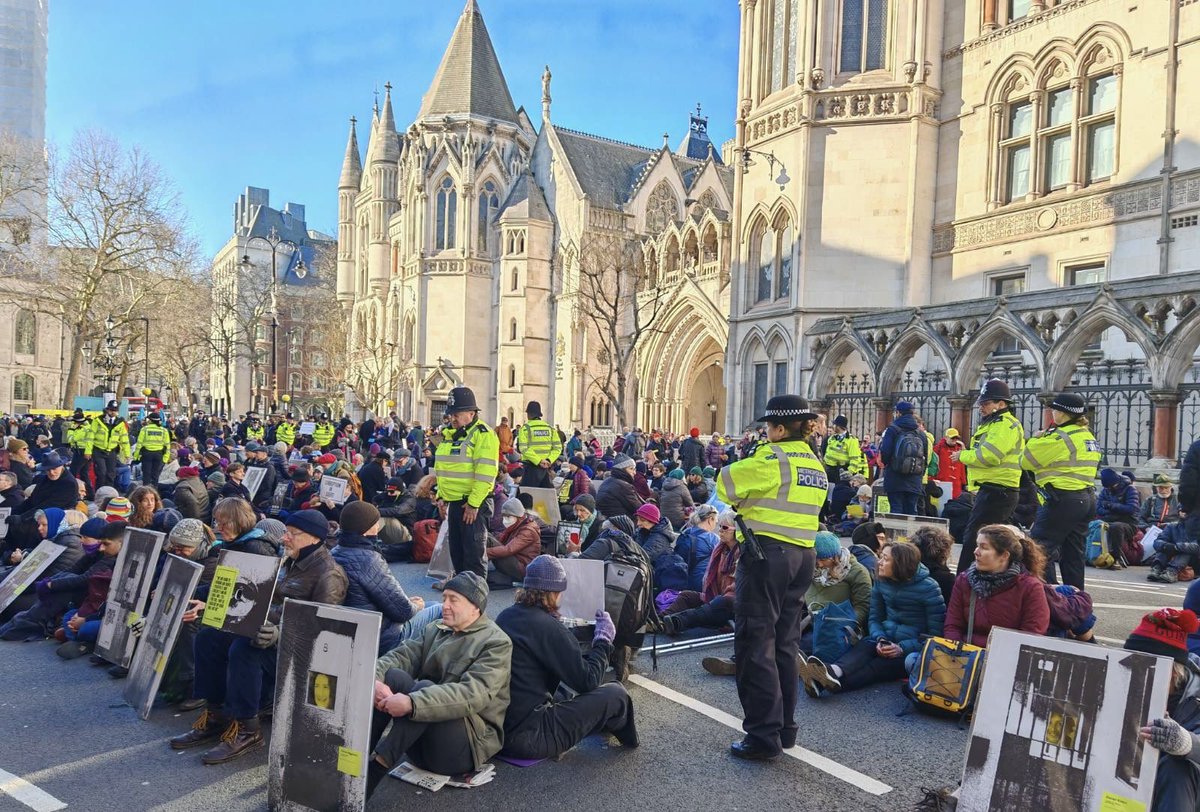
This is a little public thank you to all the 1000 people who have just risked multi-year prison sentences for ... yes, you guessed it, sitting down in the road for 90 minutes in the green and pleasant land of the UK. I can only speak for myself, of course, but I am sure that all of us in prison for our resistance are deeply appreciative of this act of solidarity. And while I am at it, I would like to thank the many people who organise the prisoner support. Support work is never properly recognised but it is absolutely vital in order to keep the show on the road. There are tens of thousands of people stuck in prison for no good reason who could benefit from such support. Hopefully, when the inevitable ruptures which our elites have created come down the road, there will be an opportunity to review why we keep so many people behind bars. This should be part of a new spirit of collective pulling together in the face of the greatest challenges our societies are ever going to face. In the meantime, thanks everyone and lots of love xx
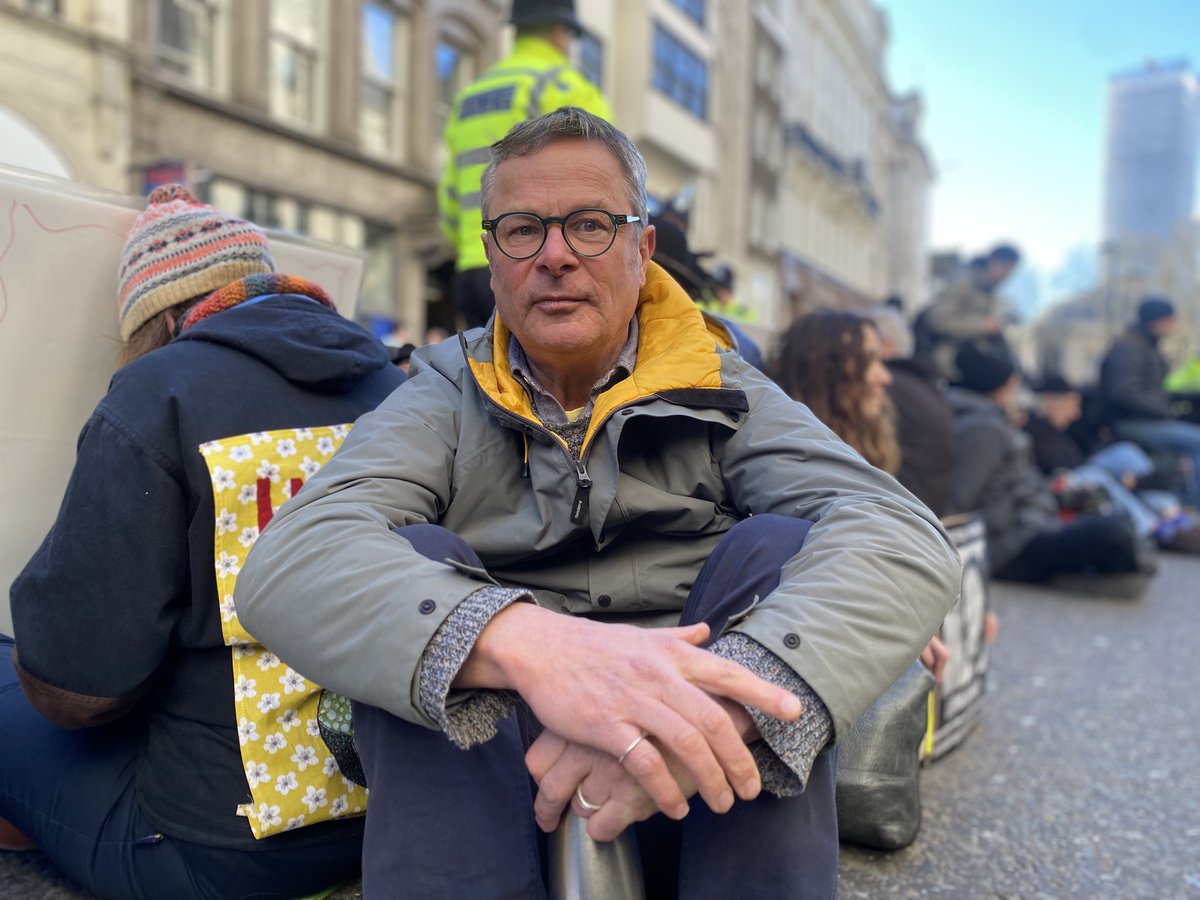
BREAKING🚨
Legendary British chef, Hugh Fearnley-Whittingstall has joined our peaceful Exhibition Action & is intent on staying for the duration.
Thank you, to all those with public platforms who speak out and share in solidarity with those in prison.
https://t.co/YlN77BH1ji
Sombre scenes outside the Royal Court of Justice today as health professionals join @DefendourJuries to protest the unjust imprisonment of peaceful protesters.
This is just weeks after working GP Patrick Hart was sentenced to 12 months in prison for nonviolent peaceful protest.
"The obsession with growth is insane. We live on a planet with finite resources....We are one species, on one planet, with one last chance to sort it out and we've got to do it now!" says @ChrisGPackham@XRebellionUK#HeathrowExpansion@StopHeathrowExp
History will not be kind to our Labour Govt. And I think neither will voters at the next GE.
This is such a stupid statement from Reeves. It is *exactly* the sort of environmentally ignorant attitude that has brought us to this point in our #ClimateCrisis.
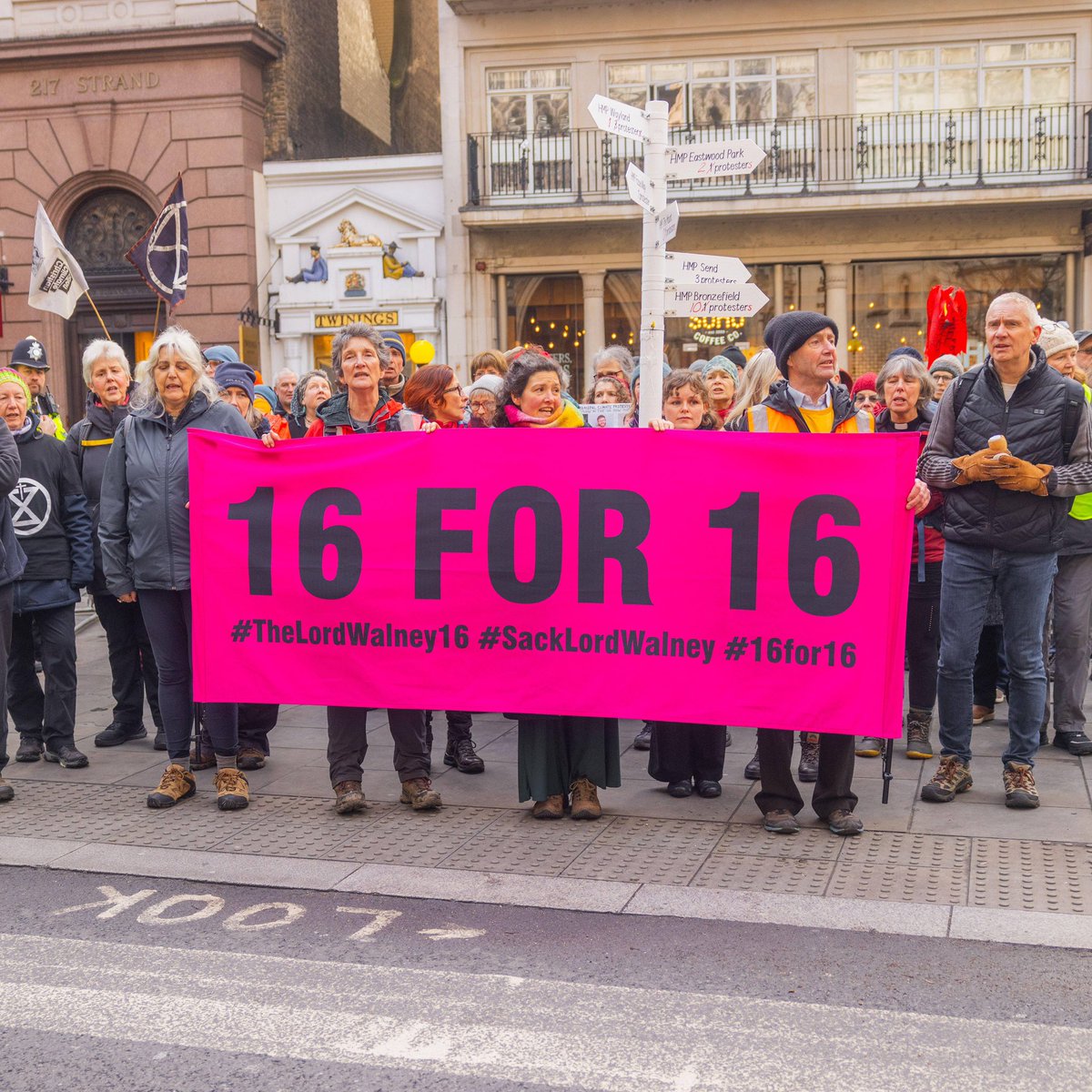
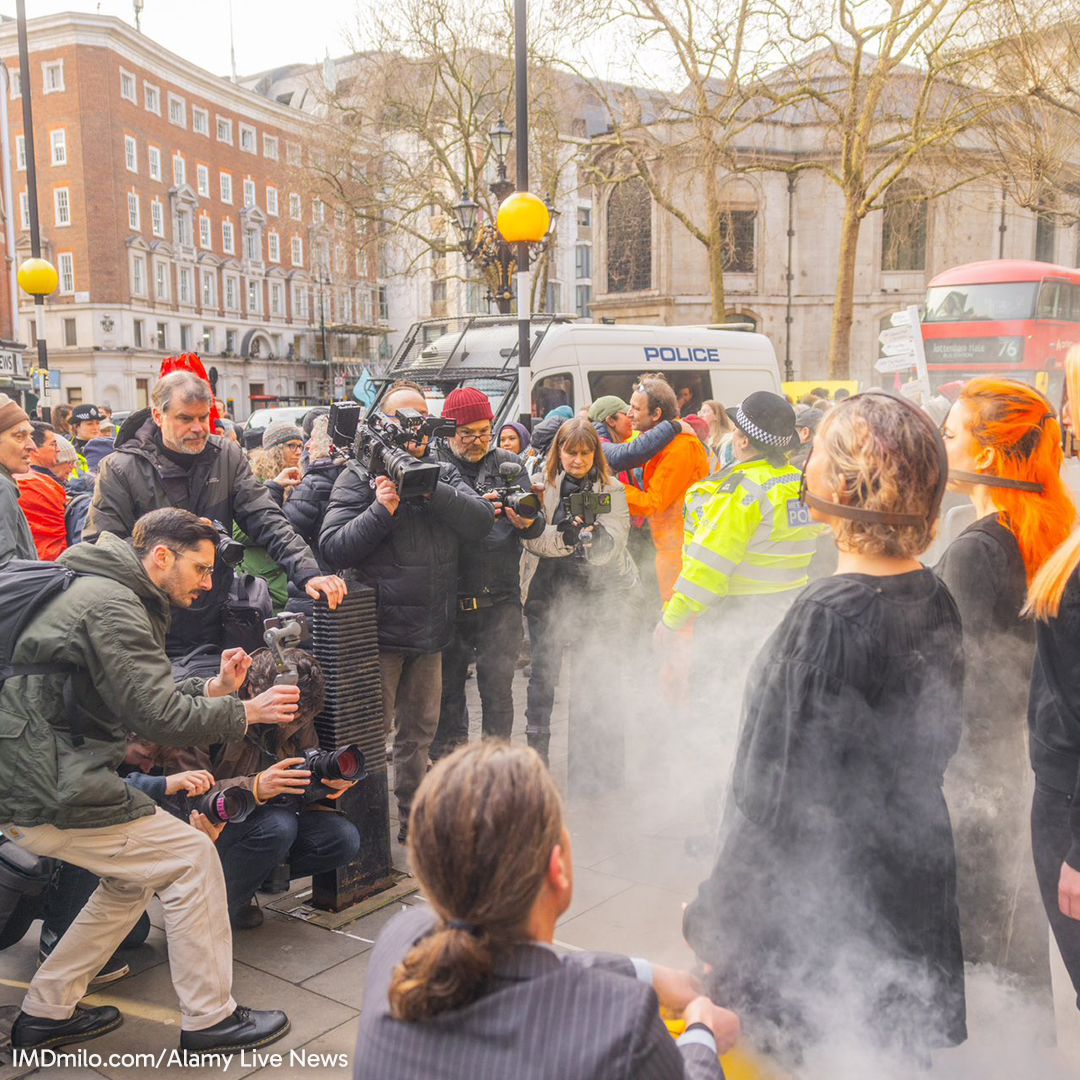
🚨 BREAKING - Road occupied at Strand outside the Royal Courts of Justice.
Over 1,000 people are sat in the street holding a time-limited Exhibition in solidarity with the ‘Lord’ Walney 16.
The People will not be deterred by extreme sentences of peaceful protestors. 🧵
I joined protestors outside the RCJ today because our politicians continue not only to ignore the evidence of climate breakdown , but accelerate our species collapse with this obsession over growth above all else .
No growth on a dead planet , solidarity with the #LordWalney16