The University of Oregon Police Department evacuated Hayward Field in Eugene on Tuesday following a bomb threat that forced attendees inside to vacate the area.
Several teams were practicing inside of the stadium when the order to leave was issued. The NCAA Division I Outdoor Track and Field Championships are set to begin on Wednesday and police said that the threat was called in by telephone.
More than 1,000 athletes from 272 schools are set to compete at the event, which concludes on Saturday.
No additional information about the threat was given by police but the evacuation comes weeks after a bomb threat was called into a student center on campus.
Brad Paisley urges his followers to sign a petition to stop the construction of a 69,000-square-foot data center that would be 50 yards from the Nashville Zoo, which he called “an absolute nightmare scenario” in an Instagram Reel. https://t.co/EmxKUw5oav
In 2023 Indonesia refused to give the Israeli U23 team visas.
FIFA instantly stripped them of the tournament and moved it to Argentina.
Strip the USA and move it solely to Canada, Mexico and Brazil.
When the President of France visited the United States in April 1960, he asked the FBI to help him find a man.
The man he was looking for was an American citizen. He was sixty-four years old. He had been awarded fifteen French military decorations and — six months earlier, in a ceremony in Paris — had been made a Knight of the Légion d'honneur, the highest civilian honor France can give. The medal had been pinned to his chest by the President himself, who had publicly called him un véritable héros français. A true French hero.
The FBI located the man within a few days.
He was operating an elevator at Rockefeller Center in New York City.
The elevator operator's name was Eugene Bullard. He had been born in Columbus, Georgia, in 1895, the son of a man whose own father had been a slave.
He had run away from Columbus at the age of eleven, after watching a white mob nearly lynch his father.
He spent the next several years drifting through the American South. At sixteen, he stowed away on a German freighter at Norfolk, Virginia. He landed in Aberdeen, Scotland. From there he made his way to London, where he learned to box. By 1913, at eighteen, he was prizefighting in Paris.
When Germany invaded France in August 1914, Bullard was nineteen years old. He had no legal obligation to fight. He had no French citizenship.
He went to the recruiting office on October 19, 1914, and signed up for the French Foreign Legion.
He spent the next eighteen months as an infantryman in some of the worst fighting of the war — at the Somme, at Champagne, at Verdun. He was wounded three times. The third wound, on March 5, 1916, tore open his thigh and left him with permanent damage to his leg.
He was twenty years old. The doctors told him he would not return to the infantry.
He decided he wanted to fly.
In a Paris café in the spring of 1916, while he was recovering, Bullard mentioned to three white American friends that he was thinking of joining the French air service. A Mississippian named Jeff Dickson laughed.
Gene, Dickson said, you know damn well there aren't any Negroes in aviation.
Bullard answered: Sure do. That's why I want to get into it. There has to be a first to everything, and I'm going to be the first.
Dickson bet him two thousand dollars he would not make it.
Bullard took the bet. He earned his pilot's license on May 5, 1917. He won the bet.
He reported to the front in August 1917 and flew approximately twenty combat missions over the next three months in a SPAD VII. The fuselage was painted with a bleeding heart pierced by a knife and the French phrase Tout le Sang qui Coule est Rouge — All Blood that Flows is Red.
He carried, on every combat flight, a small capuchin monkey named Jimmy in the front of his flight jacket.
The French press began calling him L'Hirondelle Noire — the Black Swallow.
When the United States entered the war in 1917, Bullard immediately applied to transfer to the U.S. Army Air Service.
His application was rejected.
The U.S. Army Air Service had a policy, in 1917, of not accepting Black pilots. The other American pilots flying for France in his unit, all of them white, were transferred to the U.S. Air Service.
He was the only one who was not.
For the next twenty years, he was one of the most familiar faces in the Montmartre nightlife of Paris between the wars. He owned a nightclub called L'Escadrille. He spoke fluent French, English, and German. Hemingway drank there. Fitzgerald drank there. Langston Hughes drank there. Josephine Baker performed there. Louis Armstrong was a personal friend.
When Germany invaded Poland in 1939, Bullard was forty-four. His fluent German and his ownership of a nightclub frequented by German officers made him useful to the French Resistance. He became an intelligence agent — eavesdropping in his own bar on conversations between German officers who did not know he understood every word.
When France fell in June 1940, friends in the Resistance smuggled him across the Spanish border before the Gestapo could arrest him.
He came back to the United States for the first time in twenty-eight years.
He arrived in New York with thirty dollars in his pocket and a permanent limp.
He did not return to a hero's welcome. He returned to a country that had no idea who he was.
He worked at a perfume counter. He worked as a security guard. He worked at the Staten Island shipyards. By the late 1940s, he had taken the job that he would hold for most of the rest of his life.
He operated the elevator at Rockefeller Center.
He was wearing the elevator uniform on the day a producer from NBC came down from the studios upstairs to ask if he was the man Charles de Gaulle had been looking for.
A few weeks later, NBC sent a film crew to interview him in the lobby. The studios where NBC produced The Today Show were on the floors above. He had operated the elevator that took the network executives up to those studios every morning for nearly ten years. He had not been recognized as he did it.
He went back to operating the elevator the following Monday.
He died of stomach cancer on October 12, 1961, three days after his sixty-sixth birthday.
He was buried in the French War Veterans' section of Flushing Cemetery, in Queens, in the uniform of the French Foreign Legion. The casket was draped with the French flag.
In 1994 — thirty-three years after his death — the United States Air Force formally commissioned Eugene Jacques Bullard as a Second Lieutenant, posthumously.
It was the first commission the U.S. military had ever offered him.
He had been the first Black combat pilot in American history.
The French had been calling him a hero since 1917.
The Americans got around to it in 1994.
The FBI had boxes full of serial killer confessions they couldn’t actually use.
Hours of interviews.
Detailed admissions.
Direct conversations with some of the most violent men in America.
And none of it was scientifically useful.
Then a 42-year-old psychiatric nurse walked into Quantico and changed criminal investigation forever.
Her name was Ann Burgess.
1975.
FBI agents Robert Ressler and John Douglas had spent months traveling across the country interviewing imprisoned serial killers. They believed understanding offenders could help solve future crimes.
But when Ann Burgess listened to the tapes, she immediately saw the problem.
“This isn’t research,” she told them.
“These are just stories.”
The room went silent.
“You’re asking them to talk about themselves,” she said. “But every interview is different. There’s no structure. No methodology. You can’t compare one offender to another.”
Then she asked a question nobody else in the room had thought to ask:
“Tell me about the women they killed.”
Not the killers.
The victims.
Who were they?
How old were they?
Where were they approached?
What made them vulnerable?
How did the offender gain control?
The agents were confused.
Ann Burgess explained something revolutionary:
“If you truly study the victims, you’ll understand the offender.”
At the time, Burgess was already a groundbreaking trauma researcher. In 1974, she had co-authored one of the first major studies proving rape caused lasting psychological trauma — at a time when courts barely acknowledged it.
She helped create the term “rape trauma syndrome.”
Now she brought that same scientific rigor to the FBI.
She redesigned the interviews.
Created structured questionnaires.
Introduced victimology as the foundation of profiling.
Distinguished between a killer’s “MO” and their “signature.”
Mapped escalation patterns.
Explained that sexual violence was about power and control — not desire.
Suddenly, the FBI’s Behavioral Science Unit had something it had never truly possessed before:
Methodology.
And it worked.
In 1983, young boys began disappearing in Nebraska.
Using Burgess’s framework, investigators built a profile:
A young white male.
Slight build.
Someone trusted around children.
Likely connected to scouting or youth activities.
A person who kept souvenirs and detective magazines.
Police arrested John Joubert.
The profile was astonishingly accurate.
Almost overnight, criminal profiling became legitimate law enforcement science.
And yet most of the credit went elsewhere.
The public celebrated the FBI agents.
Books were written.
Movies and television series followed.
Ann Burgess became a footnote.
When Netflix released Mindhunter, they based a character on her — but changed nearly everything.
They made her a psychologist instead of a nurse.
Changed her personal life entirely.
Most viewers never even realized she was based on a real person.
Meanwhile, the real Ann Burgess kept working.
Teaching.
Publishing.
Consulting.
Testifying in court.
Training professionals around the world.
More than 150 academic publications.
Multiple landmark books.
Decades of pioneering work.
And through all of it, one truth remained:
Modern criminal profiling exists in large part because a psychiatric nurse walked into a room full of FBI agents and told them they were asking the wrong questions.
Not:
“Why did the killer do this?”
But:
“Who were the victims?”
That shift changed criminal investigation forever.
Ann Burgess is 88 years old now.
Still teaching.
Still working.
Still brilliant.
And finally receiving recognition not as a side character in someone else’s story —
But as herself.
The woman who taught the FBI how to truly understand predators by first understanding the people they harmed.
... pursuing illegal U.S. Attorney appointments, having courts regularly throw out indictments and grand juries return "no bills," and costing the Department its customary "presumption of regularity."
He is a walking disgrace.
Blanche acts as Trump’s personal attorney and political henchman, but the Attorney General’s client is supposed to be the American people.
He will never understand that.
Kyle Kulinski: “Jake Tapper wrote a motherfucking book about Joe Biden and his cognitive decline and the massive cover-up. Well Jake, why don’t you get to work on your Trump book now because I guarantee you the cover-up that’s happening with him is way worse and way more severe and they’re covering more extreme stuff. His body is failing and his mind is failing on a regular basis”
Top row
Colt Gray, murdered 4, injured 4, ARMED— ALIVE (Arrested by police)
Dylan Roof, murdered 9, injured 1, ARMED— ALIVE (Arrested by police)
Payton Gendron, murdered 10, injured 3, ARMED—ALIVE (Arrested by police)
Travis Reinking, murdered 4, injured 4, ARMED
—ALIVE (Arrested by police)
Bottom row
Black man Sean Bell, murdered O, injured 0, UNARMED— DEAD (Shot 50 times by police)
Black man Stephon Clark, murdered O, injured O, UNARMED—DEAD (Shot 20 times by police)
Black man Jayland Walker, murdered O, injured O, UNARMED—DEAD (Shot 90 times by police)
Black man LaQuan McDonald 17, walking away—DEAD (Shot 16 times by police)
I know white people, "Stop making it about race."🤦🏽♂️
Data published in npj Dementia shows older Covid survivors experience a 41% increased risk of all-cause dementia and a staggering 77% increased risk of vascular dementia compared to uninfected controls.
Leadership and health "care" have abandoned us to this.
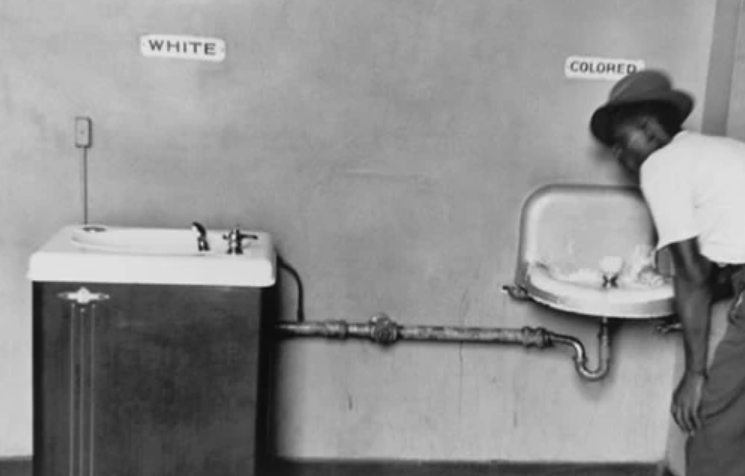
On this day in 1896, 130 years ago, the Supreme Court handed down Plessy v. Ferguson and gave legal sanction to the lie of “separate but equal.” That decision helped entrench racial segregation for generations. The Supreme Court has gotten it wrong before, and when it does, the consequences are profound.
In this moment, as voting rights are again being weakened, we must remember that justice cannot depend on courts alone. We must stay vigilant, organized, and committed to protecting our rights and our democracy.
#MLK #VotingRights #PlessyvFerguson #SupremeCourt