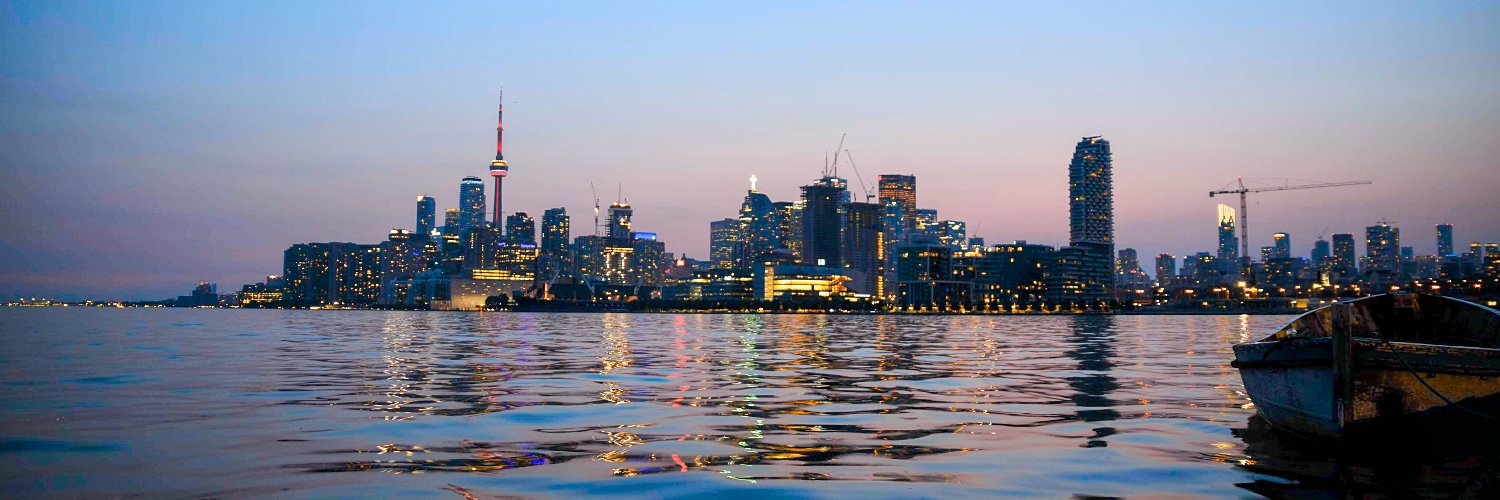
Two sets of fans. One city. ZERO chill. 😤🔥
🇧🇦 Bosnia fans: drums banging, scarves flying, chants shaking the walls
🇨🇦 Canada fans: red & white EVERYWHERE, voices loud enough to rattle the CN Tower
The atmosphere? UNMATCHED. The result? Cyle Larin with the equalizer to send Canadian fans into MELTDOWN MODE 🍁💥
Canada 1-1 Bosnia | #WorldCup2026 is HERE and Toronto is READY 🏆
#FIFAWorldCup #Toronto #FIFAFanFestival #WorldCup2026
Downtown Toronto is UNREAL today 🇨🇦⚽🔥
✅ Bosnia fans parading the streets
✅ Flags on every corner
✅ Game isn't until 3 PM
✅ Nobody cares
This is the most Toronto thing I've ever seen and also the greatest day of my life 😭🇧🇦🇨🇦⚽
#FIFAWorldCup2026#TorontoWC26#CanadaVsBIH #CANMNT
The Most Controversial Tournaments: The 2026 FIFA World Cup
The whistle has finally blown. After four long years of anticipation, the 2026 FIFA World Cup officially kicks off today — and before a single ball has been kicked in anger, this tournament has already generated more headlines, controversy, and jaw-dropping storylines than most World Cups produce across their entire run. Welcome to North America. Welcome to the biggest, most politically charged, most star-studded football spectacle the world has ever seen.
Spread across 16 cities in three nations — the United States, Canada, and Mexico — featuring a record 48 teams and 104 matches, this is no ordinary World Cup. It is a tournament shaped by geopolitics, personal glory, generational transition, and a world-class cast of players that may never be assembled on the same stage again.
Buckle up. This is everything you need to know.
1. The Last Dance: Messi and Ronaldo's Final Curtain Call
No storyline captivates the football world quite like this one.
Lionel Messi, 38, the eight-time Ballon d'Or winner and reigning World Champion who fulfilled his ultimate dream in Qatar 2022, steps onto the pitch in the country where he now plays his club football — Inter Miami's home turf. Three days before Argentina's group stage opener, he turns 39. This is almost certainly his final World Cup. The question is not whether he belongs here. The question is whether he can produce one last, unforgettable chapter.
His eternal rival, Cristiano Ronaldo, at 41, refuses to close the book. The Portuguese captain — pointedly left off FIFA's first official World Cup promotional poster in favour of Bruno Fernandes, triggering a global backlash — arrives in North America with a point to prove. Whether Ronaldo starts or plays as an impact substitute, his presence looms large over Portugal's campaign. Former Chelsea star critics have warned it "will probably end in tears," but Ronaldo has made a career out of silencing doubters.
The two greatest players of a generation share the same stage for the last time. Savour every moment.
2. The New Royalty: Mbappé's Moment, Yamal's Coronation
While the legends prepare their farewells, the new guard is kicking down the door.
Kylian Mbappé, 27 and now at Real Madrid, arrives carrying the weight of a nation's expectation and the memory of heartbreak. France's captain was magnificent in Qatar's final only to finish on the losing side in a penalty shootout. This time, he has vowed, will be different. In a recent interview, Mbappé was asked who would score more goals between Ronaldo and Messi — and he picked Ronaldo, his idol. Then, with characteristic confidence, he added that he expected to outscore them both. Bold words. The stage is set.
Perhaps the most exciting young talent to emerge in global football in years, Lamine Yamal of Spain makes his World Cup debut at 18. The Barcelona sensation lit up Euro 2024 with a stunning semi-final goal against France — a moment that announced him to the world with unmistakable force. He is already a global superstar. If he delivers in North America the way he did in Germany, a Ballon d'Or may not be far away.
And then there is Erling Haaland. The Manchester City striker — who holds an extraordinary record of 55 goals in 50 caps for Norway — makes not just his World Cup debut but his first appearance at any major senior tournament. Norway have not been at a World Cup since 1998, before Haaland was even born. He helped drag them back single-handedly, scoring 16 goals in qualifying — more than double anyone else in UEFA's qualifying rounds. Defenders across the world are already afraid.
3. The Controversy That Wouldn't Go Away: Politics Crashes the Party
If you thought the football would be the only drama, think again.
This World Cup has been engulfed in political controversy from the moment it was awarded to North America. The biggest flashpoint: Iran.
With the United States and Israel conducting military strikes against Iran in the lead-up to the tournament — strikes that killed Iran's Supreme Leader and other senior officials — the Iranian football federation expressed grave doubts about travelling to America for their group stage matches. President Trump, asked whether he cared if Iran pulled out, replied: "I really don't care. I think Iran is a very badly defeated country."
Iran initially demanded their matches be relocated to Mexico. FIFA refused. Iran threatened a boycott. The situation remains simmering. Iran is scheduled to play in Los Angeles and Seattle — on American soil. Whether they ultimately take the pitch remains one of the tournament's most politically charged open questions.
The controversy does not stop there. A Somali referee, Omar Artan, appointed by FIFA for the tournament, was denied entry to the United States and sent home this week — a decision that left FIFA President Gianni Infantino calling on everyone to "chill," while critics asked aloud: "Who is running this World Cup — FIFA or the U.S. government?" An Iraq player was also detained for several hours on arrival in Chicago, and a photographer with the Iraqi delegation was denied entry entirely.
Trump's travel restrictions have cast a shadow over the event's inclusivity, with fans from Senegal, Ivory Coast, and other nations facing uncertainty about their ability to attend. Meanwhile, former FIFA President Sepp Blatter publicly backed calls to boycott the tournament over America's conduct as host — a stunning statement from the man who awarded it the hosting rights in the first place.
4. Ticket Prices: The Fan Who Got Left Behind
The 2026 World Cup has broken records on the pitch. Off it, it has broken wallets.
FIFA initially priced group stage tickets as high as $700 for a single seat, with final tickets reaching into the thousands. The backlash was immediate and fierce, with fan groups describing it as a "monumental betrayal." FIFA received over 500 million ticket requests — an almost incomprehensible number that underscores global demand — but the pricing left millions of ordinary supporters feeling locked out of the game they love.
Under pressure, FIFA eventually slashed some tickets to as low as $60. But the damage to FIFA's reputation among grassroots fans was done. The contrast between Infantino's lavish launch press conference and the financial reality facing ordinary supporters could hardly have been starker.
5. The Heat Is On — Literally
North America in summer is not traditionally a football venue, and for good reason: the heat.
An NPR analysis found that more than one-third of 2026 World Cup matches carry a high risk of dangerously hot and humid conditions for players, fans, and stadium workers. Some matches in cities such as Kansas City and Dallas face temperatures that pose a genuine health risk. FIFA has scheduled the majority of games in the evening to reduce exposure, and has confirmed that spectators will be allowed to bring sealed water bottles into venues in the United States and Canada.
The global players' union FIFPRO raised concerns about player safety. Studies have shown that players run faster and cover more ground in cooler conditions — meaning the heat could directly affect the quality of football on display. The assistant referee who fainted during a 2024 Copa América match in Kansas City served as a stark warning of what extreme heat can do.
6. The Tournament Format: Organised Chaos
For the first time, 48 teams compete at a World Cup — 16 more than in Qatar. The expanded format brings first-time qualifiers including Cape Verde, Jordan, Uzbekistan, and Curaçao, adding new footballing cultures to the global stage.
The group stage alone features 72 matches, with up to six games per day during the final group round. From June 24 to June 27, fans will be tracking simultaneous results across multiple time zones in a logistical and emotional marathon unlike any World Cup before. If you love football, clear your calendar for the entirety of June.
The final will be held on July 19 at MetLife Stadium, East Rutherford, New Jersey — just outside New York City. The half-time show will be headlined by Madonna, Shakira, and BTS, aiming to raise $100 million for the FIFA Global Citizen Education Fund. It will be one of the most-watched events in human history.
7. The Dark Horses and Wildcard Stories
Beyond the superstars and the scandals, football always finds its surprises.
Norway's return after 28 years is a fairy tale in progress — and with Haaland leading the line alongside Martin Ødegaard and a golden generation of talent, they could be a genuine dark horse to reach the knockout rounds and beyond.
Canada, co-hosting their first-ever World Cup, carry the hopes of an entire nation finally emerging as a serious football power, led by Alphonso Davies and Jonathan David.
Morocco, who stunned the world by reaching the semi-finals in Qatar, return hungrier and more experienced. African football has never been stronger.
And the USA, playing at home in front of their own fans for the first time at a World Cup, carries enormous expectation. Christian Pulisic and a new generation of American talent have an opportunity to change how football is perceived in the country forever.
Final Word: Why This World Cup Matters
There are tournaments, and then there are moments. The 2026 FIFA World Cup — despite, and perhaps because of, its controversies — is shaping up to be a genuine moment in sporting history.
It may be the last time we watch Messi and Ronaldo on the same World Cup stage. It may be the tournament where Mbappé finally delivers on his destiny. It may be the moment Haaland and Yamal announce themselves as the defining players of the next decade.
Whatever happens on the pitch, the world will be watching. And in a time of remarkable global turbulence, football — for all its politics and its imperfections — still has the unique power to stop everything, and make us care.
The 2026 World Cup begins today. Don't look away.
Canada’s March to the Match continues to work its way through the Toronto streets toward the stadiums.
Beautiful scenes as fans chant and cheer and high five fans who are lining the streets.
It’s going to be electric inside the stadium today.
Ole, ole Toronto! It's the first match day in Toronto and team Canada kicks off against at Bosnia and Herzegovina at 3 p.m. ⚽
The energy in the city will be electric. If you're heading out, get your game plan ready and plan ahead before heading downtown.
👉 Stay in the loop and learn about getting around, entry guidelines and more at https://t.co/gNHeeO6InH
🇫🇷⚽ We caught up with some incredible fans who flew all the way from France to be here — and their message to everyone? "Don't miss this weekend!"
🏙️ Downtown Toronto is absolutely ELECTRIC right now — the energy, the culture, the football — it's unlike anything else. Come soak it all in! 🎉🔥
#FIFAWorldCup #Toronto #FIFAFanFestival #WorldCup2026
Downtown Toronto is abuzz with World Cup fandom and police escorts for the teams.
Canada’s opening match opponent Bosnia Herzegovina’s bus is making its way down Yonge street right now.
Quite the entourage. One day away now folks.