✡️ In a few weeks, the lights of Hanukkah will shine again in homes and public squares.
Beyond the festive image, the story behind this Jewish celebration speaks of cultural resistance, identity, and spiritual autonomy in the face of imperial power.
Hanukkah is not just an ancient memory — it’s a reflection on how peoples preserve their essence even in times of pressure and assimilation.
🌍 #Israel #MiddleEast #History #Hanukkah
History and Archaeology align! 🏛️
Around 178 BCE, a limestone inscription recorded a Seleucid royal decree appointing Olimpiodorus as supervisor of all provincial temples—including the Holy Temple in Jerusalem. 📜📍
The official charged with enforcing this decision was Heliodorus, the chief administrator for King Seleucus IV. 👑
Buried for nearly two millennia in ancient Maresha. 🏺
Fragments uncovered in 2005–2006 were later joined with a matching piece at the Israel Museum, allowing the full text to be published in 2007.
The Heliodorus named here is the same figure described in the Second Book of Maccabees (ch. 3), sent to seize funds from the Jerusalem Temple treasury. 💰🏛️
For the first time, archaeology independently confirms his existence, office, date, and mandate—a rare and powerful convergence between historical text and material evidence. 🤝🇮🇱
Unlike the standard clock that resets at midnight, in Jewish tradition, the day begins at nightfall, when the first three stars appear.
Why?
Because in Genesis it says: "And there was evening, and there was morning, one day."
This is more than a calendar; it’s a beautiful life lesson: Darkness isn’t the end, it’s the prelude to light.
We begin with peace and reflection before the rush of the day, it teaches us to find meaning in the cosmos, not just the clock.
We don’t end the day when it gets dark... we start it with the hope of a new dawn! 🕯️🌅
Marriage is not only about love, it is about shared responsibility.
Building a home means creating a space of respect, kept promises, and steady presence.
Family is where love stops being just a feeling
and also becomes a daily commitment.
“Two are better than one.”
(Kohelet / Ecclesiastes 4:9)
Walking together… changes everything.✡️
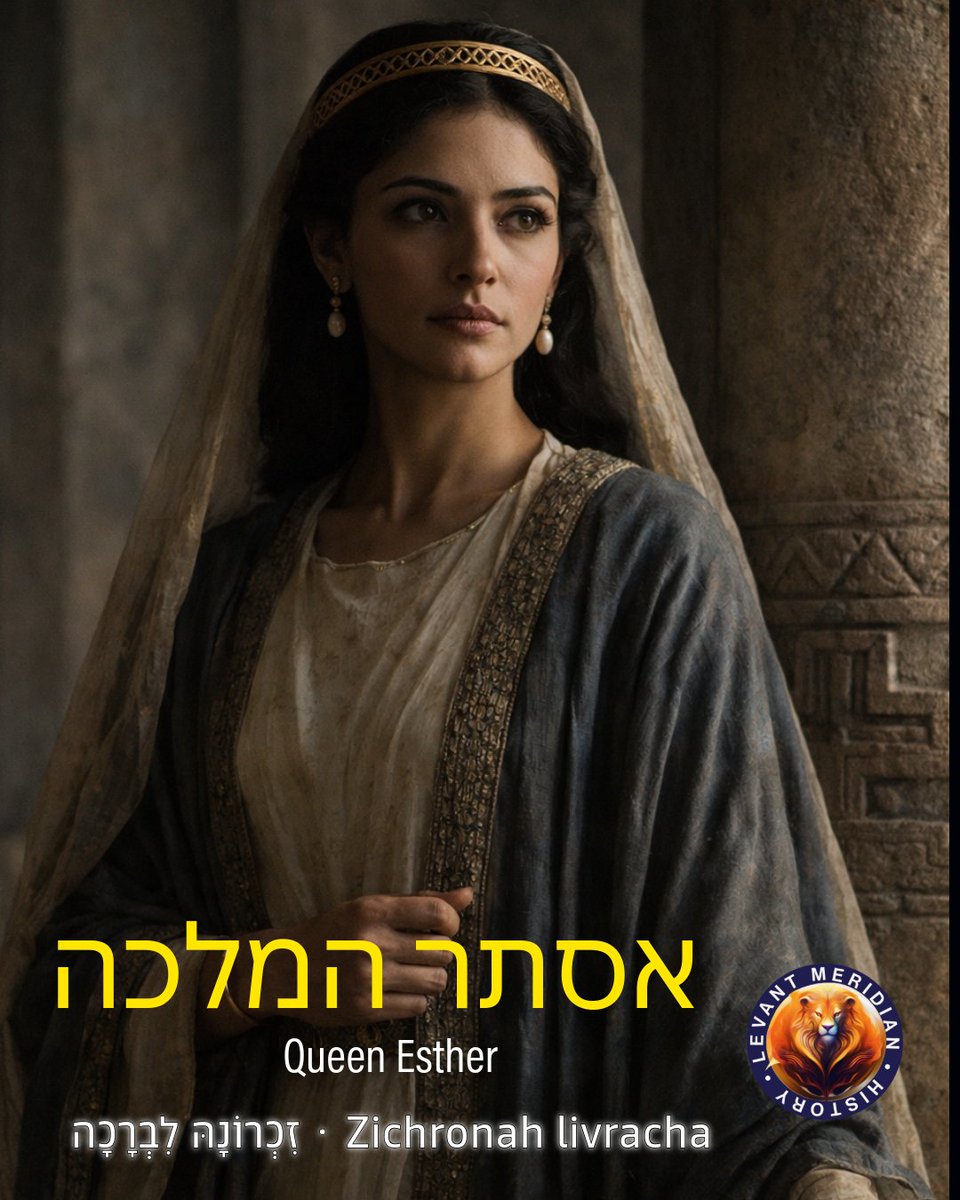
📜 The Levant’s history is often told through empires and borders, but its true memory lives in people — in the fabrics they wove, the stories they carried, and the languages that shaped their world.
Portraits like this one remind us that the region’s heritage is not abstract; it has always been embodied in real lives, real families, real traditions.
Understanding the past begins with recognizing its human face.
#LevantMeridian #History #Levant #Culture #Identity
What do we pray after lighting the Shabbat candles?
There is a special tefilah for women, recited right after lighting the candles—known as Yehi Ratzon, “May it be Your Will.”
“May it be Your will, Eternal One, my God and God of my ancestors, to show compassion to me, to my husband, to my children, and to my entire family. Grant us, and all of Am Israel, a good and long life filled with blessing. Remember us for good, look upon us with mercy, and surround us with salvation. May our homes be whole and complete, and may Your Presence dwell among us.
Grant me the merit to raise children and grandchildren who are wise and understanding, who love the Eternal, who live with truth, who are a holy seed bound to You, illuminating the world through Torah and mitzvot.
Please hear my prayer in this moment, in the merit of our Matriarchs Sarah, Rivka, Rachel, and Leah. May the light we kindle today never be extinguished, and may the radiance of Your Presence bring us salvation. Amen.”
📰👉🏻Before the maps and the politics hardened, the Levant was described by early 20th-century journalists as a place “too complex for headlines.”
Their dispatches spoke of markets where four faiths negotiated over spices, of fishermen who knew the tides better than the borders, and of villages where news traveled faster through storytelling than through telegraphs.
Reading those old reports today feels almost prophetic.
They remind us that the region’s richness — and its tensions — were never meant to be simplified into slogans.
Real understanding requires stepping back into those layered human moments that history books often overlook.
#LevantMeridian #History #MiddleEast #Culture #Context
📜 The Levant’s history is often told through empires and borders, but its true memory lives in people — in the fabrics they wove, the stories they carried, and the languages that shaped their world.
Portraits like this one remind us that the region’s heritage is not abstract; it has always been embodied in real lives, real families, real traditions.
Understanding the past begins with recognizing its human face.
#LevantMeridian #History #Levant #Culture #Identity
👉🏻 On November 9–10, 1938, the streets of Germany and Austria were filled with shattered glass and burned synagogues.
It marked the beginning of one of humanity’s darkest chapters: the Holocaust.
#NeverForget
🏔️🇮🇱 Mount Hermon stands where Israel, Lebanon, and Syria meet — a borderland in modern maps, but a sacred summit in ancient memory.
In Canaanite texts, it was the dwelling of gods; in biblical tradition, the “dew of Hermon” symbolized divine blessing.
Few places show better how faith and geography intertwine: where the sacred once marked the skyline, now it defines frontiers.
#MountHermon #SacredGeography #BiblicalHistory #LevantMeridian
✡️⚱️Hebrew, Aramaic, and Arabic — sister tongues born from the same Semitic root system.
Each carries echoes of the other: shalom, salam, shlama — “peace” spoken through time.
Language here is not just communication; it’s continuity. The Levant’s speech is a living archaeology.
#hebrew #israel #levant
🏺👉🏻 The Assyrian deportations of Israel’s northern tribes (8th century BCE) scattered communities across the Near East — yet traces of their memory lingered for millennia.
From Kurdish legends to Pashtun oral traditions, echoes of the “lost tribes” illustrate how exile reshapes identity and myth alike.
History, once displaced, becomes narrative.
⚱️🇮🇱 Every stone unearthed in Jerusalem tells a layered story — of belief, power, and continuity.
The City of David excavations, often politicized, remind us that archaeology is never neutral. It shapes narratives of belonging as much as it reconstructs the past.
Understanding the soil is understanding identity — but only if we listen beyond ideology.
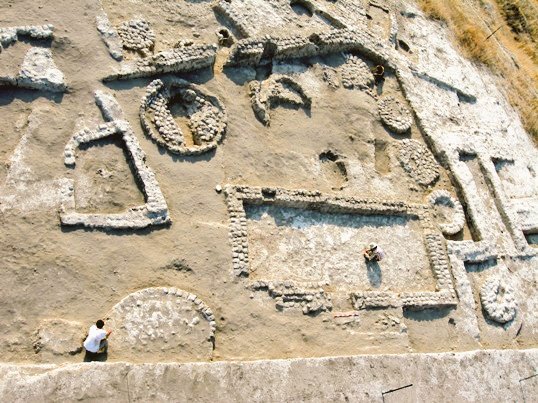
👉🏻Consider the site of Tel Tsaf in the Jordan Valley — dating to the Middle Chalcolithic (ca. 5300-4500 BCE) — where archaeologists uncovered silos for grain storage, copper awls and elaborate burial goods.
The findings hint at early social differentiation and long-distance exchange: the presence of basalt, obsidian and Nilotic shell at this site suggest connections far beyond the immediate valley.
This reminds us: settlement in the Levant was never isolated.
#TelTsaf #Chalcolithic #EarlyComplexSociety
We're thrilled to announce that Levant Meridian is officially live! 🌐
After months of research, development, and refinement, we're launching our platform dedicated to evidence-based analysis of Middle Eastern affairs, comprehensive fact-checking, and rigorous Jewish studies scholarship.
First and foremost, we want to thank every person who has supported us on this journey. To those who provided feedback during our development phase, to our early readers who believed in what we're building, and to everyone who encouraged us to create a space for nuanced, academic-standard analysis—this wouldn't exist without you.
We know that in today's information landscape, complexity often gets lost in the noise. That's why Levant Meridian exists: to provide thorough, well-sourced analysis that respects the intelligence of our readers and the complexity of the subjects we cover.
**A note on our launch:** Our site is now functional and we're excited to start serving our community. However, we want to be transparent—there are still details being refined and features being polished. We believe in launching and learning, so we're opening our doors now while continuing to improve the experience behind the scenes.
What you'll find on Levant Meridian:
• Fact-checking with transparent methodology
• Regional and security analysis backed by primary sources
• Jewish studies resources and contemporary scholarship
• Academic standards and verified sources database
We're grateful to everyone who reads our work, engages with our analysis, and holds us to high standards. Your feedback helps us grow and improve.
This is just the beginning. We're committed to building a trusted resource for anyone seeking deeper understanding of Middle Eastern affairs and Jewish studies.
Welcome to Levant Meridian.
👉🏻🔗 Visit us at https://t.co/q0GFVF1kiy
🎯As Saudi Arabia signals openness to a phased normalization with Israel following new U.S. mediation, the question is not if peace is possible, but what kind.
Unlike past accords, this one hinges less on land swaps and more on recognition — of history, legitimacy, and survival.
👉🏻“A dead language revived is a cultural resurrection.”
❌The claim: Hebrew was just revived for state-building.
✅The fact: Its revival was also a reclamation of memory, identity and land. It ties to the soil, the texts, the society.
In today's Israel, modern Hebrew thrives — but its story is layered: biblical Hebrew, medieval usage, revival in the 19th-20th centuries, everyday speech now.
👉🏻“Trade knows no walls; it only knows routes.”
❌The claim: The Levant was always isolated, caught in local conflicts.
✅The fact: It was a hub, a maritime cross-roads, long before modern states.
Off the northern coast of modern Israel, archaeologists located three Iron Age shipwrecks whose cargoes tell us about trade networks, Mediterranean connection and the Levant’s deep involvement in antiquity.