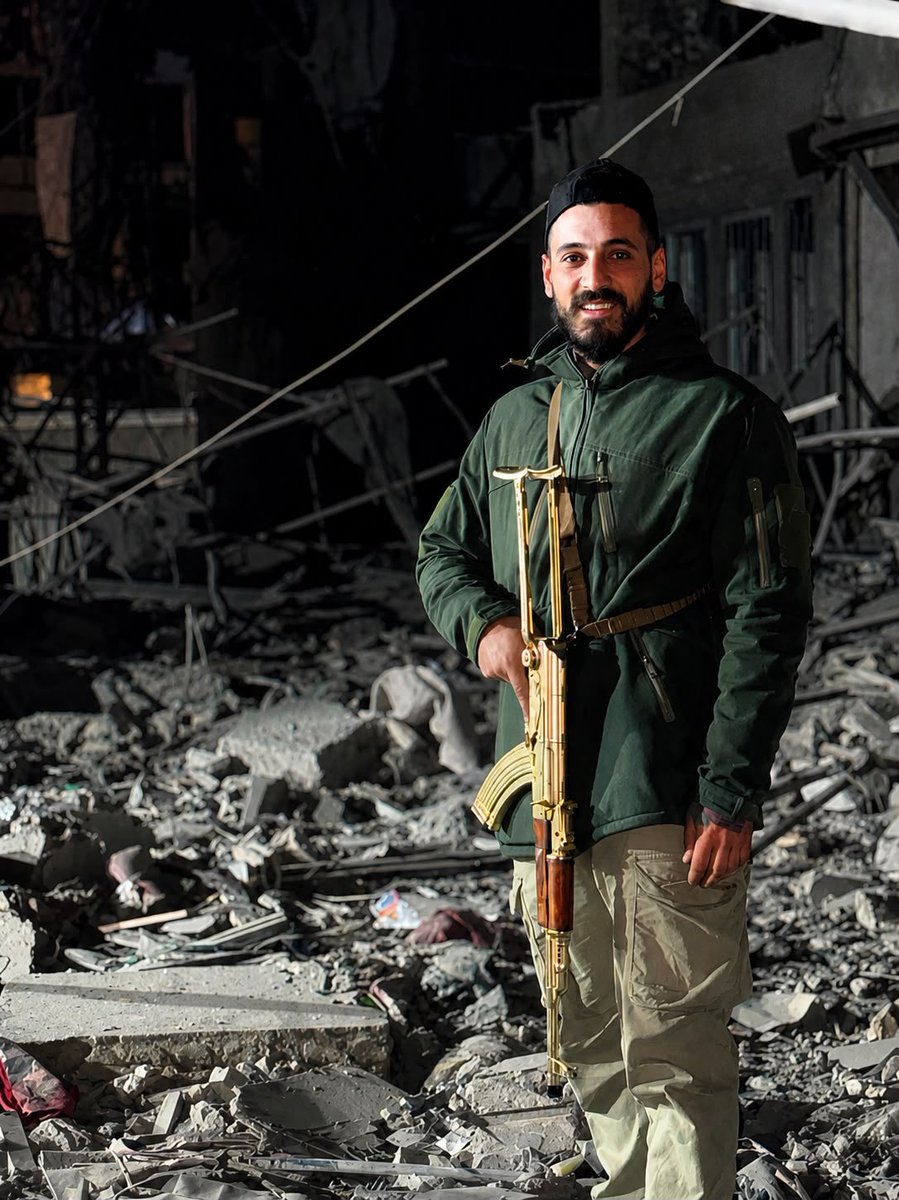
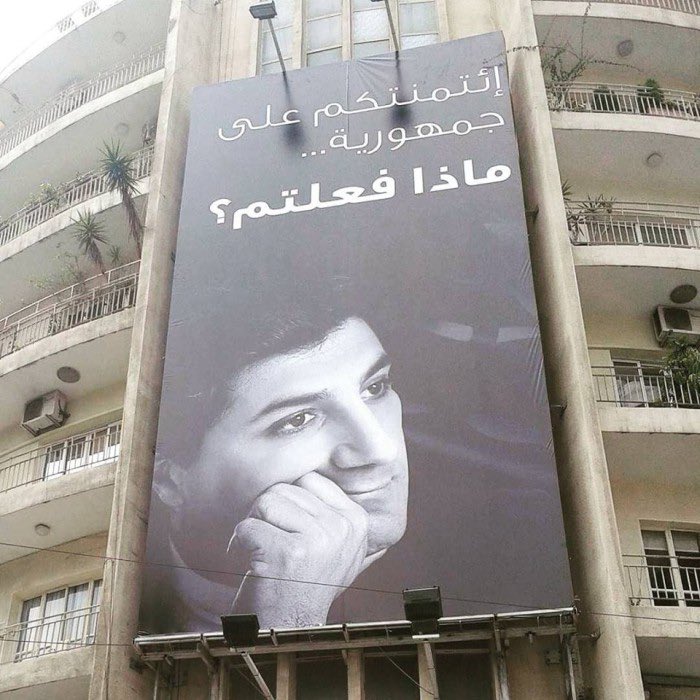
Joseph Abou Khalil (left), ideologue and "compass" of the Kataeb Party, Founder of Voix Du Liban, editor of Al Amal newspaper, and senior party executive. William Hawi (right), founder and first Commander in Chief of the Kataeb Regulatory Forces, and member of its politburo.
Two different oppressors, yet one same sword, crushed them both.
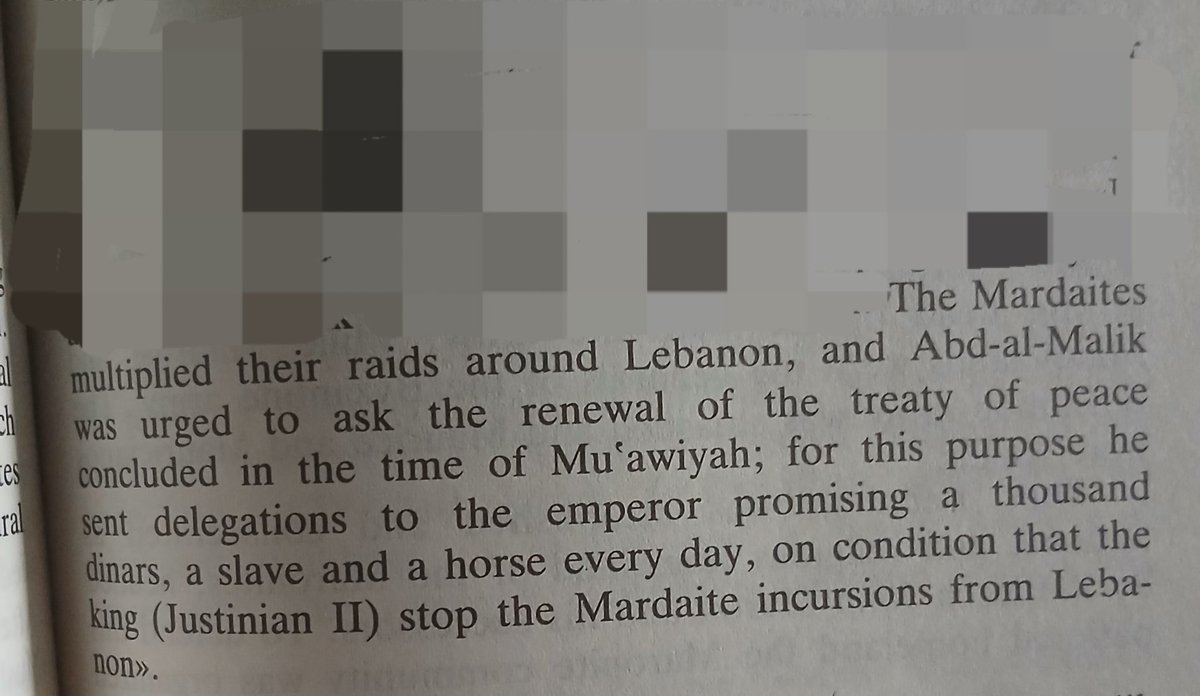
The continuous resistance lasted a millenia and will continue until the last soldier of evil dies by our sacred blade.
« La presse de gauche fabrique pour la gauche les grands hommes que ni la nature ni l'histoire ne lui fabriquent.
Le sceau ne croit en aucune vérité qui ne soit validée par l'opinion publique. »
Nicolas Gomez Dávila, Carnets d'un vaincu, 2009
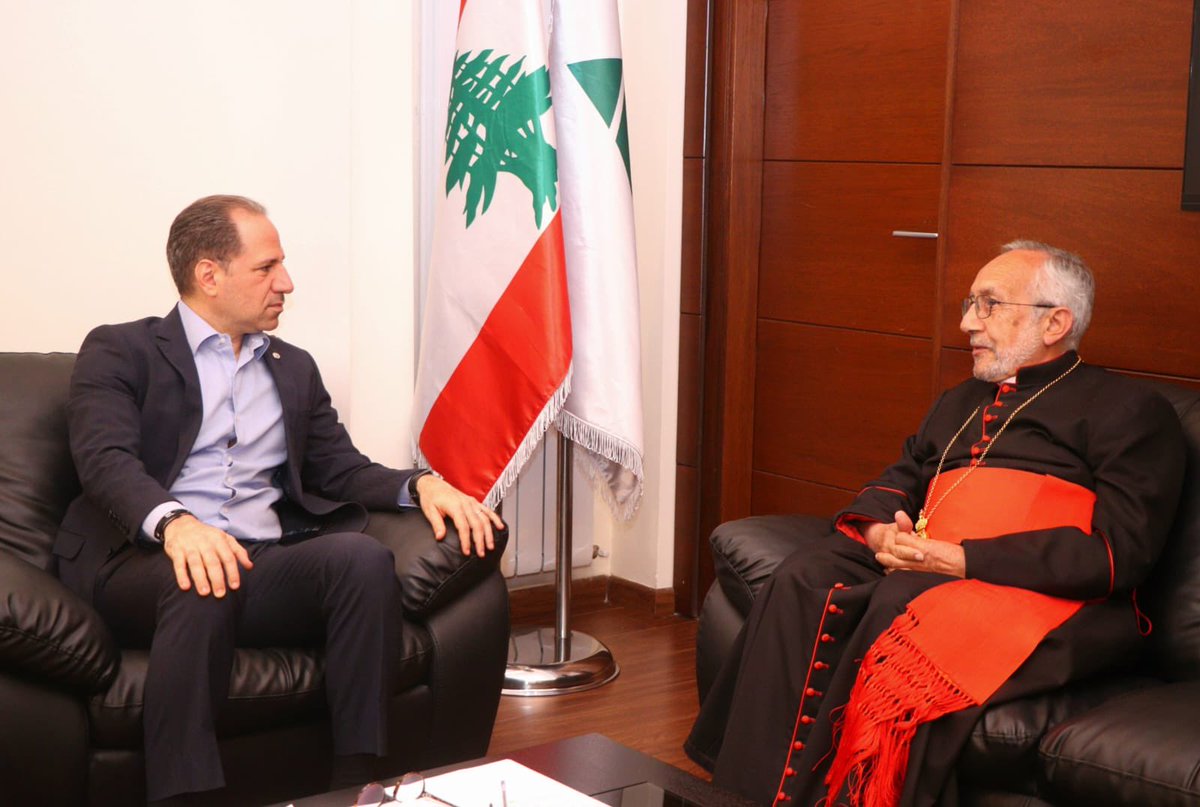
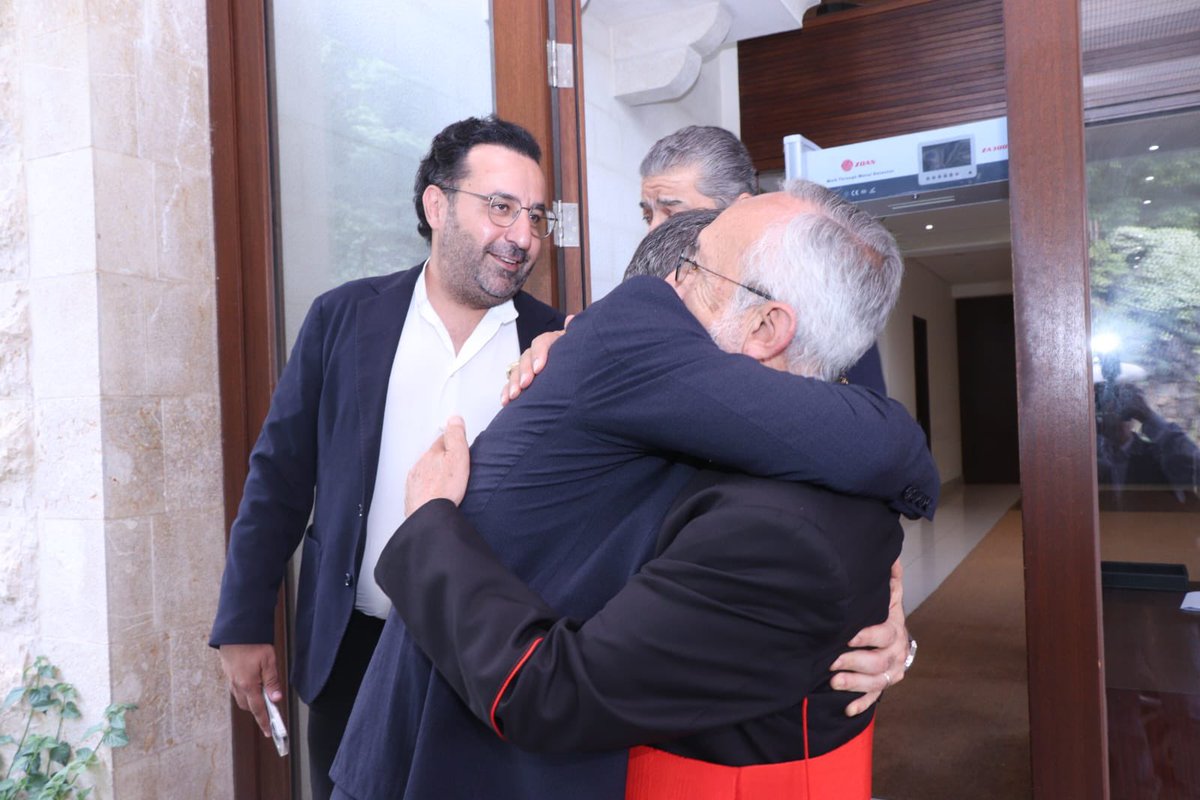
لقاء غبطة بطريرك الأرمن الكاثوليك روفائيل بيدروس الحادي والعشرون ميناسيان وجرى البحث في الأوضاع العامة في لبنان والتحديات التي تواجه البلاد على مختلف المستويات إضافة إلى سبل تعزيز الحوار والتعاون بين مختلف مكوّنات المجتمع اللبناني.
This appeared in today's WSJ. It reflects the familiar bias that characterizes much of Western reporting on the Middle East in general, and Lebanon in particular.
Interestingly, in an article about Hezbollah-controlled Lebanon, the shaming epithet "gang" is used to describe and stigmatize Hezbollah's opponents. The journalists write: "In an area of Christian East Beirut known for its right-wing gangs, groups of black-clad men hung out near a building that displayed a four-story portrait of a rifle-wielding Bachir Gemayel."
I live in Christian East Beirut. I grew up here, and I am writing these very words from East Beirut. There are no "gangs" here, let alone Christian "right-wing gangs." A handful of young men—some unemployed, others doing odd jobs—hardly constitutes a gang.
The real super-gang in Lebanon is Hezbollah itself: an organization guilty of political assassinations, of dragging the country into war with Israel on behalf of Iran, and, according to numerous reports, of involvement in narcotics trafficking. Yet the article carefully avoids using any negative terminology to describe Hezbollah while casually applying pejorative labels to its opponents.
In fact, Christians are mentioned three times in the piece: first in connection with these alleged "gangs"; then as collaborators with Israel; and finally as armed men flashing pistols at a funeral. Reading the article, one might conclude that Lebanon's Christians are little more than a collection of hooligans who somehow manage to be both neo-Nazis and pro-Israeli at the same time. The portrayal is absurd.
The article also gives space to pro-Hezbollah narratives lamenting the Lebanese state's indifference to displaced Shiites: "The state? Where is the state?" What it fails to mention is that: (1) Hezbollah and Amal are among the most powerful actors within the Lebanese state; (2) decades of corruption by Amal weakened state institutions, while Hezbollah subordinated much of the country to Iranian interests. If the remnants of the Lebanese state are unable to adequately assist the Shiite population today, the responsibility lies, to a significant extent, with the very political forces that have dominated Shiite politics for decades.
Had this article appeared in The New York Times or The Washington Post, it would not have seemed out of place. It is disappointing to see it published in the Wall Street Journal. The WSJ is a serious newspaper and should demand better reporting on Lebanon.
@omarabdelb: If your knowledge of Lebanon is this limited, why write about it?
@ElliotKaufman6
Letter from United Nations Chairman and renowned philosopher Charles Malik to Cheikh Pierre Gemayel, founder and President of the Kataeb Party, thanking him for his work for Lebanon and telling him he's ready to give his all to work under him.
17/5/1979.
Hayek recalls what cured him of socialism:
“I turned to economics because I was half a socialist. I was crying for social justice. But it didn’t long survive my study of economics.”
“In 1922, when I was 23, Mises’s book on socialism came out—and that cured me forever.”
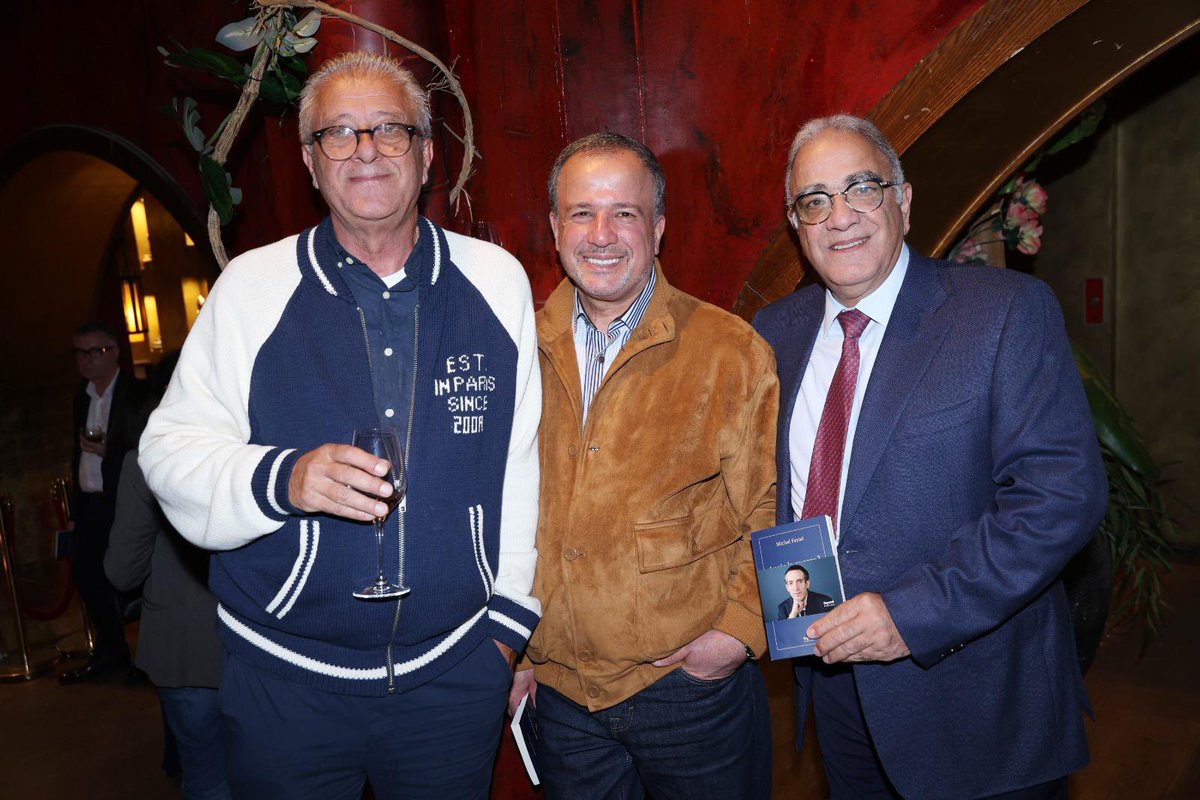
Avec mon père Najib Fayad et mes amis Jean Tannoury, Tony Chedrawi, Razouk Chalita, Lina Murr Nehmé, Carlos Issa ou encore Fadi Ghosn (qui a échappé aux photos) et d’autres encore, la Résistance libanaise (c’est-à-dire les anciens combattants et héros des Forces libanaises de Bachir Gemayel, Fady Frem et Fouad Abou Nader et, avant la création des Forces libanaises, des Kataëb ou Phalanges ; du Parti national libéral c’est-à-dire les Tigres ; des Gardiens du Cèdre ; et, du Tanzim) était bien représentée à la soirée de lancement de mon livre "Après la guerre ? La menace est à nos portes" (@EditionsFayard) et pas par n’importe qui ! Des héros ! D’Achrafié à Zahlé en passant par Tal el-Zaatar, Karantina, la ligne de démarcation, la Montagne et autres ! La Cause et la Résistance par les armes, la parole et l’écriture !
A long piece on why Britain became as poor as America's poorest state. But Manchester is an exception in the gloomy British picture. Why? Because it snatched autonomy from London:
"Manchester has succeeded in part because it gained some independence from the shambolic central government in London. In an experiment in devolution begun in 2011, London granted the city more power over taxes and transportation. The bus network was brought under public control, and a local £1 billion “Good Growth Fund” was set up to distribute investments across the city. Manchester, as a result, is now better able to set its own economic course. “You can’t order growth from the top down,” Andy Burnham, the mayor of Greater Manchester since 2017, told me. “The U.K., for most of our lives, has been an overly centralized country."
Reading this, the Lebanese malaise came to mind, since Lebanon too is "overly centralized." If Manchester did better after freeing herself from London, perhas, just perhaps, so can Tripoli, Akkar, etc, after freeing themselves from the ruling gangs in Beirut. We can't be sure a new way of doing things will lead us to a better place. But we know for sure the status-quo won't.
We are a people with a distinct identity - and choices. We don't aim to impose our choices on others. But we refuse being subjugated to choices that are not our own. Self-rule is not "extremism"; but forcing us to pay the price of liberating Palestine or avenging Khamenei is.
La gauche hypocrite
النائبة الفرنسيّة-الفلسطينيّة اليساريّة ريما حسن خلال زيارتها السابقة إلى لبنان، وهي تقف أمام لوحة لقدوتها ومثلها الأعلى ياسر عرفات في السفارة الفلسطينيّة في بيروت.
النائبة حسن التي تحاضرنا صباح مساء عن الإنسانيّة وحقوق الإنسان ونصرة المظلومين، تُبدي إعجاباً كبيراً برجل ارتكب مجازر ضدّ لبنانيّين مسيحيّين. لكن الضحايا هنا مسيحيّون، ومبادئ حقوق الإنسان لا تُطبّق عليهم على ما يبدو.
@RimaHas
In her visit to Lebanon, leftist hypocrite Rima Hassan decided to stay in Lebanon's most "Anti-Palestine" cities, Ashrafieh, Beirut.
The hypocrite is staying in one of Beirut's finest hotels.
Why won't you stay in a Palestinian camp or in a pro-Hezbollah area?
We hope you're enjoying Bachir Gemayel's pictures anywhere you walk.
@RimaHas
From the speech of President-elect Martyr Cheikh Bachir Gemayel, leader of the Lebanese Christian Resistance, in the Hospital of th Covenant of the Cross in Jal El Dib some time before his death.
Septembee 14, 1982.
La gauche caviar
تفيد المعلومات التي وصلتني بأنّ النائبة الفرنسيّة-الفلسطينيّة اليساريّة ريما حسن، والمعروفة بمواقفها الداعمة للحركات الجهاديّة والإسلاميّة في المنطقة، أقامت في زيارتها الأولى إلى لبنان في فندق فاخر في الأشرفيّة. لذلك آمل هذه المرّة أن تكون النائبة حسن أكثر انسجاماً مع خطابها، وألّا تلجأ إلى منطقة يمينيّة مسيحيّة طائفيّة فاشيّة انعزاليّة متطرّفة، وأن تتوجّه مع عديدها وعتادها فوراً نحو جنوب نهر الليطاني، وذلك حرصاً على مصداقيّتها.
@RimaHas
Never forget when Lebanese Christians helped Assyrians fleeing ISIS 12 years ago.
“I’m facing a difficult situation in Lebanon, but at least I have security.”
Middle Eastern Christians should always support eachother. Operate as one unit.
Not as pawns of powers who will discard you when your usefulness has expired.
I wonder if organizations like @indefchristians, in all their years of lobbying, have made any progress on this front.
Why isn’t there a unified Middle Eastern Christian lobby & media effort?
Why are Eastern Christians reduced to tokens for PR by one group or another?
Where is all the money going?
Where is the strategic thinking?
Where is the resourcefulness & energy?
What is the fifty year plan?
I see this not only in the Assyrian community, but amongst all Eastern Christians.
This level of disorganization & incompetence is unacceptable when ancestral Christians are losing everything in the homeland.