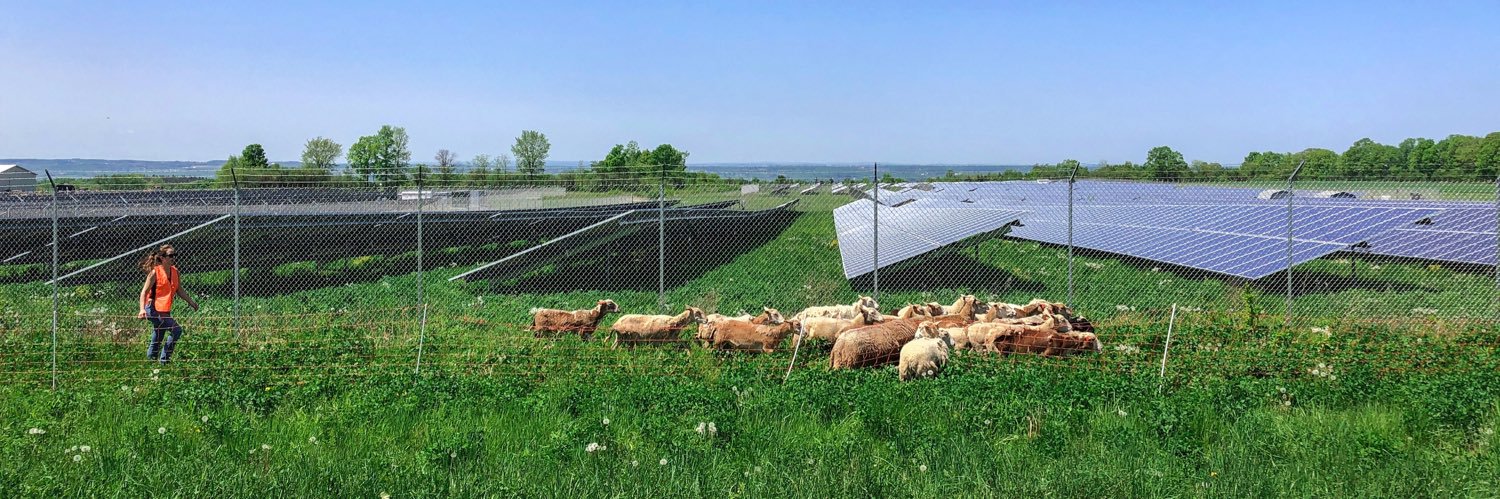
@shagbark_hick@serraotweets Panels create a lot of opportunities in ag - not least from small grazing farms like ours. Our family milked cows for 40 years and sees this as the future. Many others like us including in your part of the state. They also last much longer than 10 years - warranteed for 35+.
@pnshdvermonster Tough for new generations to grow a farm in the commodity world today - especially in VT. Hard to match the Midwest for efficiency, etc etc. We milked cows for 40 years until 2024. Our future is in sheep production and grazing solar sites.
It’s not an energy crisis til the dudes with the straight piped cummins don’t let it idle in the parking lot while they go in to grab camels and a white monster
@StinkyTheGrillf@ok_post_guy@MattZeitlin If you want to use sheep as your main form of veg management you want really absolutely no less than a sheep per acre and more like 2-3 plus some additional mowing capacity. 50 sheep on 2k acres you wouldn’t even notice.
@StinkyTheGrillf@ok_post_guy@MattZeitlin Some weeds yes some weeds no. You’d want to clip after them once per year or so like any other pasture. We’re usually aiming to do 70-90% of the work with sheep and the rest mowing.
@StinkyTheGrillf@ok_post_guy@MattZeitlin This sounds like you need more sheep. We service about 2,000 acres with sheep grazing and the US overall has somewhere north of 130,000 acres of solar grazed with sheep.
@bennirubber@alex_fasulo@RizomaSchool I think this is a very important question and I don’t think it’s totally settled until we have these sites for their whole lifespan. BUT, all the research I have seen seems to suggest there is negligible amounts, and less than come from ag fertilizer application.
@RizomaSchool@bennirubber@alex_fasulo The biggest benefit for us on the ag side is the shade. We have a consistent 10-15 degree cooler environment under the panels in the heat of the summer and the sheep drink a lot less water on site because they’re less heat stressed.
@RizomaSchool@bennirubber@alex_fasulo We have slightly lower production under the panels but the grass gets less lignified because the temp difference and shade, and the cool season varieties produce better through the summer slump.