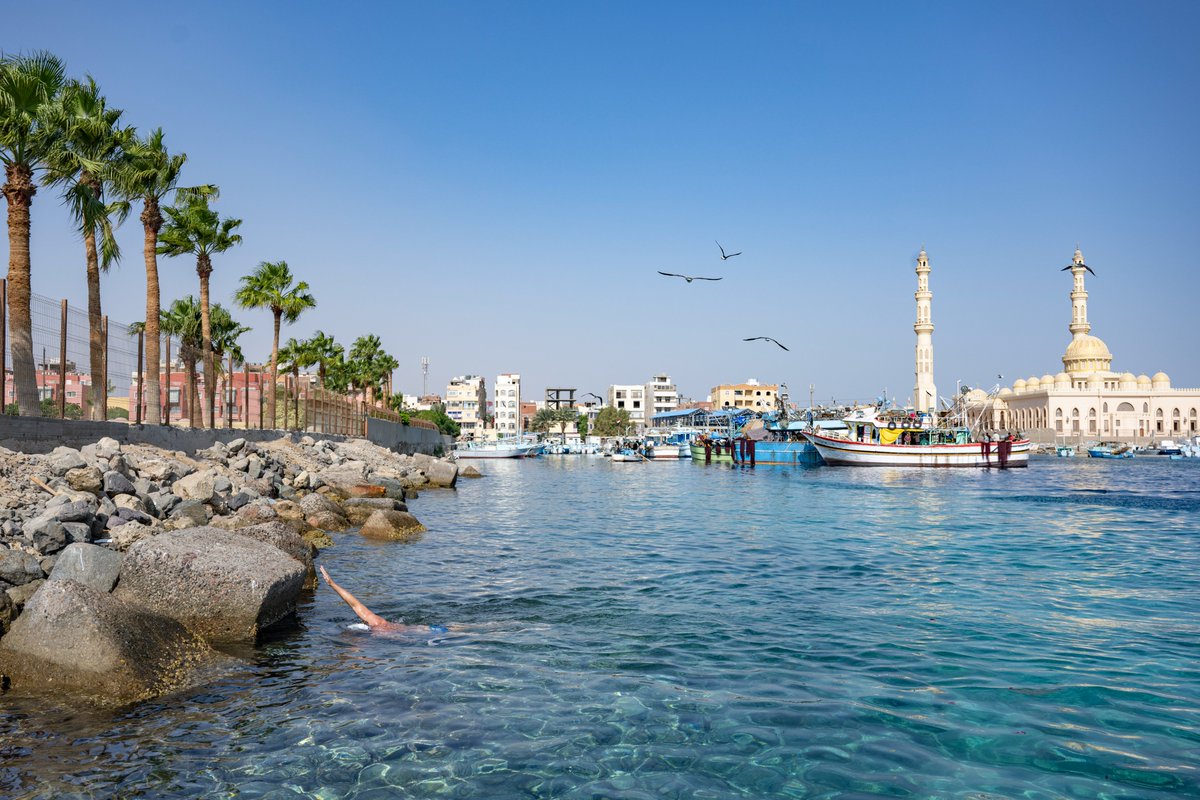
Today is World Oceans Day.
Take a deep breath and join me underwater for a moment, surrounded by these extraordinary creatures.
The ocean is full of wonders. Let’s keep it that way.
#WorldOceansDay
I loved accompanying my father on his hospital rounds, and I remember how much the veterans enjoyed seeing the doctor’s children, especially at Christmas. Perhaps he also wanted me to understand the realities of war. Sadly, he passed away when I was young, so I’ll never really know.
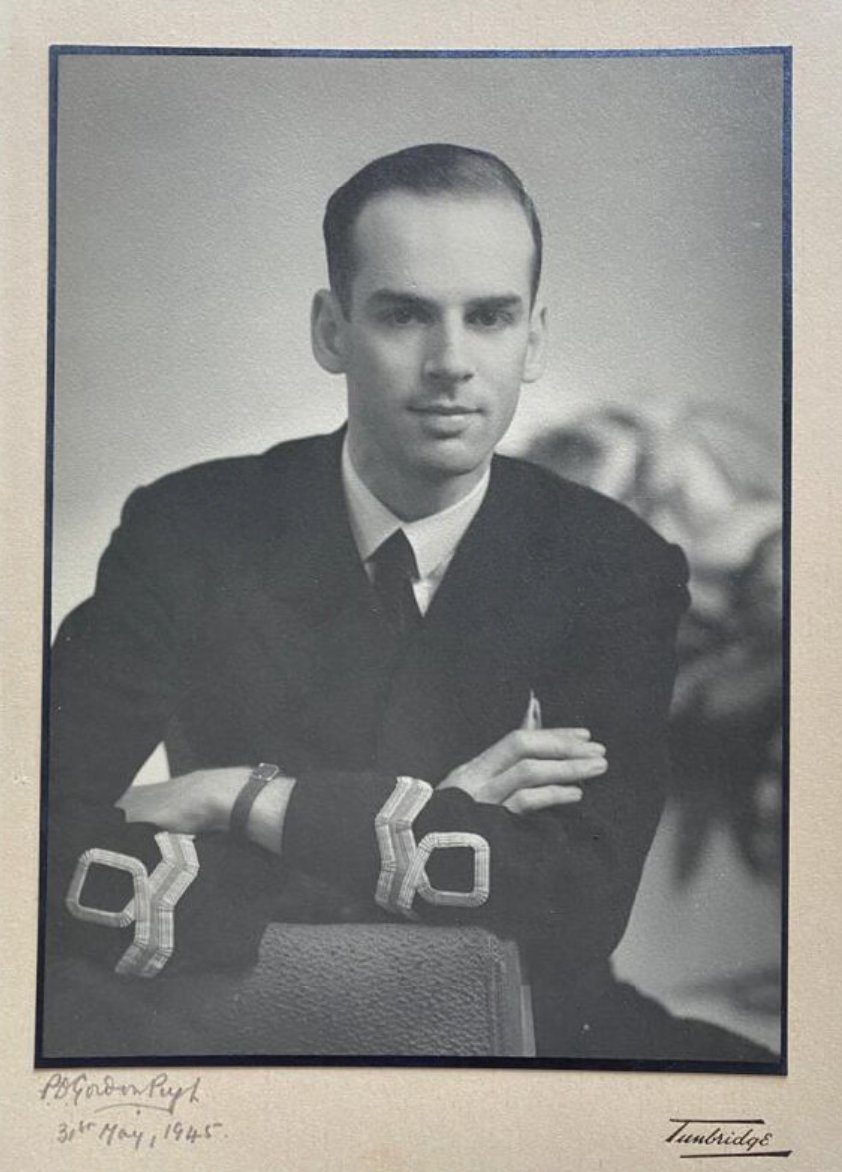
Today is Remembrance Day, a day when I always think of my late father.
My father was an orthopaedic surgeon in the Royal Navy. As a young boy, I grew up in the grounds of the Royal Naval Hospital in Plymouth, where we lived alongside other doctors and their families.
When I was about five years old, my father would sometimes take me on his hospital rounds. One memory has stayed with me all my life: seeing soldiers and sailors who had lost arms and legs in war.
Some had been wounded in the Second World War, but others had been wounded as far back as the First World War, between 1914 and 1918.
Today, I remember those men and my father, who devoted his life to caring for them.
#RemembranceDay2026
(7/7) With COP31, the annual UN climate summit, starting in Turkey on tomorrow, that message is as urgent today as it was four years ago.
Protecting coral reefs requires local action. Saving them from climate change requires the whole world to act.
📸 @kelvintrautman / @LewisPughFDN
(1/7) Four years ago, I undertook the first swim across the Red Sea, covering 123 km from Saudi Arabia to Egypt over 16 days.
📸 @kelvintrautman / @LewisPughFDN
(6/7) In the months that followed, Egypt made a landmark commitment to protect 2,000 km of its Red Sea coastline and the extraordinary coral reefs found there.
📸 @kelvintrautman / @LewisPughFDN
Conflicts don’t just destroy lives. They pollute land, air and water and devastate ecosystems. In turn, environmental degradation drives conflict.
Understanding the links between environment and conflict is key to lasting peace.
More: https://t.co/cKq9SOX6Pn
Why do some people push themselves to the very limit?
Why climb the highest mountains, swim across freezing oceans, or venture into places where the risks are enormous?
I recently spoke with @rohitdbrijnath about what drives people to take on these challenges. He has written a fascinating piece on the subject for @Mint_Lounge, the weekend magazine of India’s business newspaper @livemint.
Read it here: https://t.co/q12xznUEQz
Fear can be your friend.
I've been swimming for nearly 40 years, and I've been frightened before almost every major swim.
At the North Pole, I felt raw fear as I was about to dive into the freezing water. And more recently, when I swam around Martha’s Vineyard, I was certainly worried about what might be swimming beneath me. The island has become a global hotspot for great white sharks.
Over the years, I've learnt that the best thing to do is not to fight fear, but to accept it.
Fear makes me prepare more carefully, listen to those around me, and question my own assumptions. Those are all good things.
I'm preparing for another swim now. The dangers are very different this time. But I know fear will be coming with me again. And I'll be listening.
🎥 @LewisPughFDN
When I swim past a glacier, I think about time.
My father was born in 1920. A child born late in my life could live until 2150.
That’s 230 years, connected by just three generations.
What will those children say about the choices we make today?
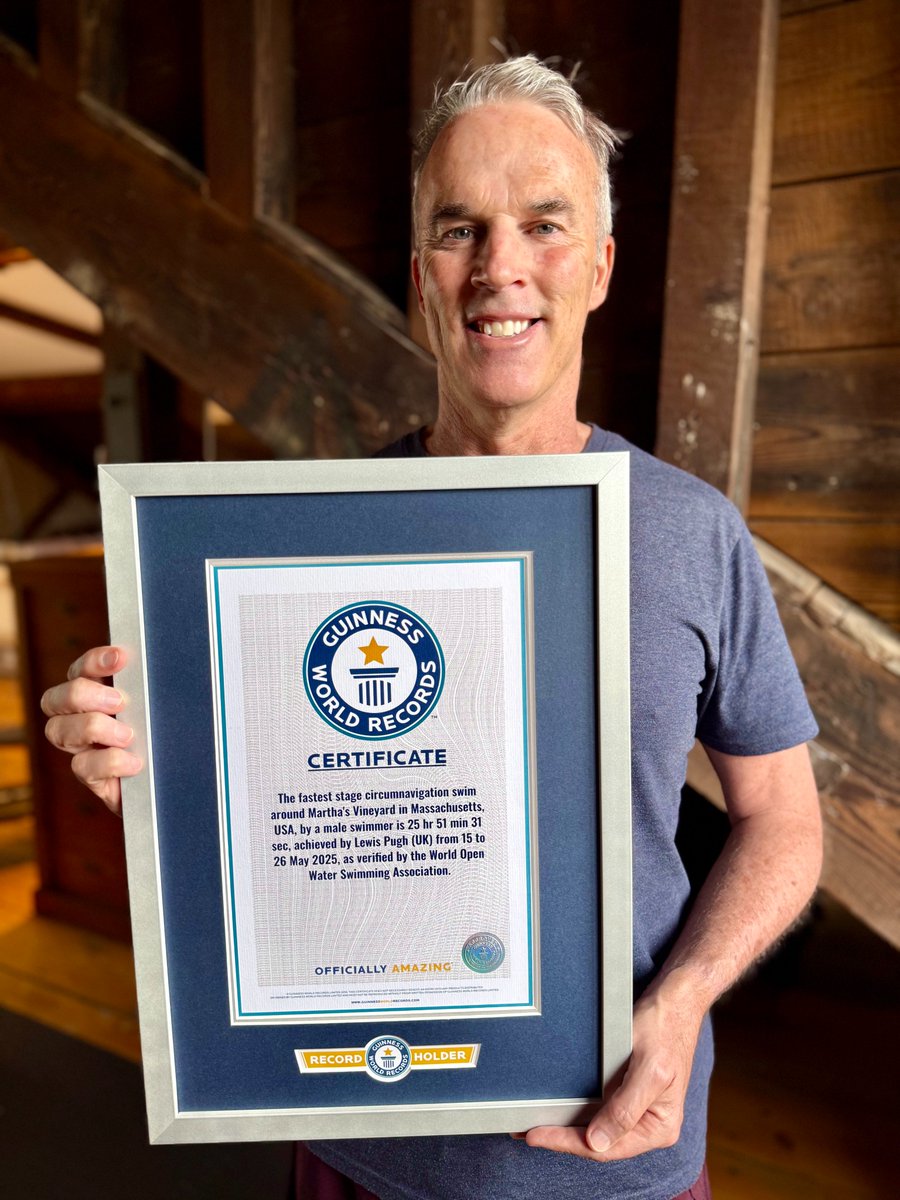
Look what’s just arrived in the post!
Thank you Guinness World Records. 🏊♂️🏆
Swimming around Martha’s Vineyard was mentally one of the toughest swims of my life. 🦈
A huge thank you to my team who kept me safe. I could never have done it without you.
There comes a point when more planning does not make you better prepared.
Before a polar swim, we plan obsessively. But eventually you reach the limit of what you can predict. You cannot write a contingency plan for something you haven’t imagined.
So we prepare the team for what the plan might miss: making decisions with incomplete information, adapting quickly, and understanding the overall objective rather than just their own role.
There is a paradox here: the better prepared you are, the less dependent you become on the plan.
Yesterday I watched Fatima Elfeky swim the final leg of a four-person relay across the English Channel.
The team had covered nearly 33 kilometres. France was right there. But the tide had turned, and a powerful current was sweeping her around Cap Gris-Nez. She had to find another gear. And then, right at the end, she had to find another gear again. We tend to measure progress by distance. When we are 90% of the way towards something, we assume we have roughly 10% of the effort left. But life doesn’t work like that. Sometimes the difficulty is increasing at precisely the moment our resources are decreasing. Distance remaining tells you almost nothing about effort remaining. Congratulations, Fatima, on an extraordinary finish, and congratulations to Mostafa, Christophe and Hayley on crossing the English Channel.
I’ve been coming to this lake for over 20 years.
It’s where I learnt to swim in very cold water.
Just look at what’s happened to the glacier.
Nigardsbreen, Norway.
The ocean is one of our planet’s greatest treasures. From today, a landmark international agreement to protect it comes into force in the UK.
This is an important step towards protecting at least 30% of the world’s oceans by 2030.
Find out more: https://t.co/HusskO2gs7
Cette photo mérite absolument tous les prix. Elle a même sa place au Louvre.
Elle relate précisément l’inertie de l’individu face à l’effondrement.
Regardez la composition. Un chef-d’œuvre involontaire.
Au premier plan, le sable doré, les tongs abandonnées, la glacière. Le décor ordinaire du bonheur estival. Deux personnages assis, de dos, comme dans un tableau de Caspar David Friedrich. Sauf que Friedrich peignait des hommes contemplant le sublime. Ici, ils contemplent la catastrophe. Et ils ne bougent pas.
Au centre, le parasol. Publicitaire, criard, dérisoire. Un pastis face à l’apocalypse. C’est presque trop parfait : la France qui prend l’apéro pendant que le monde brûle. Aucun scénariste n’aurait osé.
Et puis le ciel. Les deux tiers de l’image. Cette muraille de fumée qui avale la lumière, ce dégradé d’ocre et de noir digne d’un Turner. La nature qui reprend la palette des maîtres pour peindre notre propre fin.
La femme photographie l’incendie avec son téléphone. Mise en abyme totale : nous documentons notre disparition au lieu de l’empêcher.
Cette image dit tout. Le déni, le confort, l’habitude. Nous sommes tous sur cette plage. Nous voyons tous le nuage. Et nous restons assis, parce que l’eau est bonne et qu’on a posé nos congés.
Les historiens de l’art parleront un jour de cette photo comme on parle du Radeau de la Méduse.
Sauf que cette fois, le naufrage, c’est nous qui le regardons depuis la plage.
💔🌍