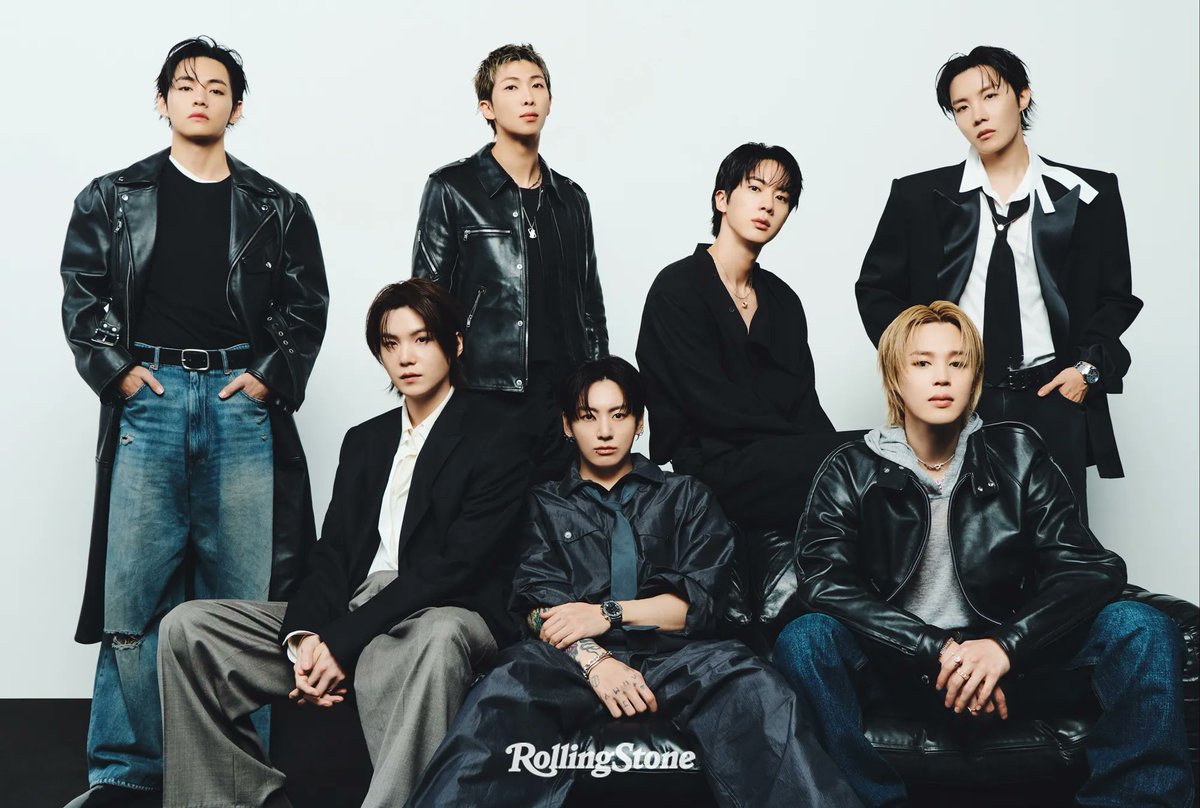
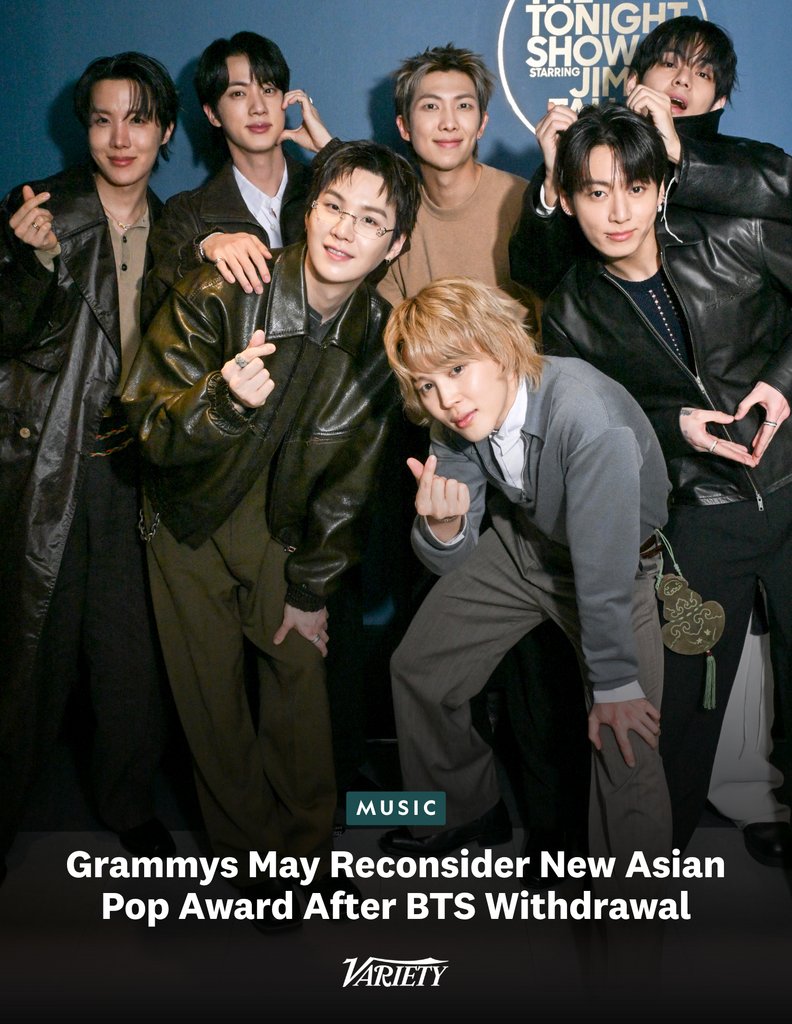
The Grammys appear to be rethinking the new award for Asian pop just weeks after BTS announced they would not submit their music for the 2027 awards.
“It’s clear from our numerous conversations with many stakeholders over the past two weeks that, regardless of our intent and desire to be even more inclusive, there are some artists in this space who feel that this category isn’t representing the music they work so hard to create, in the way they wish... The management and Board are committed to working together to keep pace with that progress and ensure the musicians we intend to honor feel truly seen and heard by our actions,” Recording Academy CEO Harvey Mason Jr. said in a statement.
Sources tell Variety that Mason and other Grammy executives have been in discussion with artists and execs representing K-pop, J-pop, C-pop, India and more. The Academy is convening its full Board and Awards & Nominations Committee to work with members of and leaders from this community to seek further advice on the category, as well as its process for introducing new categories and awards.
https://t.co/pwzV2B11ja
Hablar de una "metodología repetible" para explicar a BTS reduce el talento, el trabajo y la autenticidad de siete artistas a una simple estrategia empresarial. Nadie niega la importancia de Bang Si-hyuk ni su visión, pero HYBE no sería la empresa que es hoy sin BTS. Si esa fórmula realmente existiera, la compañía no habría vuelto a depender de su regreso para impulsar su crecimiento y sus resultados.
Además, si su éxito fuera el resultado de una fórmula tan fácil de replicar, ya habríamos visto otro fenómeno del mismo nivel. Y no podemos negar que prácticamente todas las grandes empresas, incluida Hybe, lo han intentado. Los nuevos proyectos que se mencionan siguen dependiendo del ecosistema del K-pop: sus fandoms, su forma de promocionarse y las dinámicas propias de esa industria. Su principal audiencia sigue siendo el propio público del K-pop, no personas que llegaron desde fuera de esa industria, como sí ocurrió con Bangtan.
Ellos hicieron algo diferente. Trascendieron la industria. No solo llegaron a quienes ya la conocían, sino también a millones de personas que nunca habían formado parte de esta. Eso no se consigue siguiendo una fórmula. Se consigue con artistas que escriben desde la autenticidad y convierten su música en un espacio donde millones de personas, sin importar su idioma, su cultura o su realidad, encuentran algo con lo que identificarse.
BTS no fue el resultado de una fórmula; BTS construyó HYBE. Reducir su historia a un modelo de negocio o a una receta que cualquiera puede repetir no solo simplifica lo que ocurrió, sino que termina atribuyendo su éxito principalmente a una estrategia empresarial, dejando en un segundo plano el aporte de sus siete integrantes.
Y la verdad, no me sorprende que este medio vuelva con una narrativa como esta. Justo cuando ellos decidieron no validar una categoría que consideraron limitante en los Grammy, vuelve a aparecer un discurso que pone el foco en la empresa antes que en los artistas, como si el fenómeno BTS pudiera explicarse únicamente por una estrategia de negocio y no por siete artistas que transformaron su historia en una voz con la que millones de personas alrededor del mundo nos sentimos identificados.
ART HAS NO ALIENS
#ArtHasNoAliens
Forbes publicó una columna de opinión sobre la decisión de BTS de no presentar ARIRANG a los GRAMMYs 2027. Más allá de tomar partido, el autor sostiene que el debate nunca ha sido si BTS podía competir también en las categorías generales, sino lo que representa la creación de una categoría exclusiva para el pop asiático.
Según el artículo, el verdadero problema es que una categoría definida por el origen geográfico de los artistas puede interpretarse de dos maneras: como un reconocimiento o como un límite. Y mientras no exista la misma lógica para otras regiones —por ejemplo, una categoría de "Mejor Interpretación de Pop Europeo"— será inevitable que muchos artistas cuestionen el mensaje que transmite esa diferencia.
El autor concluye que BTS no solo rechazó una categoría, sino que puso sobre la mesa una pregunta que la Recording Academy lleva años evitando: ¿la música debe clasificarse por la identidad de quienes la interpretan o evaluarse en igualdad de condiciones en las categorías más importantes? Ese, sostiene, es el verdadero debate.
"Nadie creó una categoría de 'Mejor interpretación de música pop europea' para Dua Lipa o Ed Sheeran."
ART HAS NO ALIENS
#ArtHasNoAliens
🔗https://t.co/MkGIMlhKg7
My Friends' and Former Students' Reactions to BTS's Decision
I have to admit, many of my male friends and former students, especially my old SNU buddies, have spent years busting my chops for being ARMY. To be fair, I probably deserve some of it. There aren't many middle-aged men who openly tell everyone they love BTS. Every chance I get, I talk about their music, their lyrics, or another charitable project they had supported. I even managed to convert a few of them into BTS fans, if not full-fledged ARMY.
After BTS announced that they wouldn't submit their music to the Grammys, I've never received so many phone calls and Kakao messages about BTS in my life. The Kakao group chat with my former students exploded. The reactions ranged from, "그 형들 시발 멋있다 (Those hyungs are f***ing awesome)," to "They're choosing principles over awards," to "I've always liked the way they operate, but this makes me admire them."
One wrote, "BTS is probably the only artist with guts that could pull something like this." Another simply said, "BTS가 BTS 했네." In other words, "BTS did what BTS would do." But my favorite message was this: "Now I finally understand why you like BTS so much." I smiled when I read that.
My friends, much older and professionals, reacted a little differently. They were less emotional and more philosophical, but they arrived at the same conclusion. One friend who is a business journalist called me, and we ended up talking for quite a while. He told me that many of his fellow journalists had been surprised by BTS's decision. But the more they talked about it, the more they came to admire the group for willingly giving up the possibility of winning an award in order to stand by what they believed was right.
And among the messages from my old SNU boarding house friends, one of them, a lawyer, said BTS's decision reminded her of what happened at Korea's oldest film awards, the Grand Bell Awards, in 2015. That year, the organizers announced that actors who did not attend the ceremony would not receive their awards, regardless of whether they had won. The policy caused such outrage that every nominee for Best Actor and Best Actress refused to attend and declined the awards altogether. It was one of the best examples of artists standing together against an institution they believed had become authoritarian and unfair.
She told me that it takes real courage for entertainers to do something like that. The people with power don't usually appreciate being challenged. Actors may stop getting cast. Musicians may stop getting nominated. In BTS's case, who knows if they'll ever receive another Grammy nomination after this? But all seven members stood together anyway. She ended her message by saying that she was finally going to listen to the BTS albums I had been recommending to her for years.
I also spent some time in an online community made up mostly of middle-aged professionals. The day the news broke, there must have been 50 posts about BTS. At least a dozen made it onto the HOT board, where the most-read discussions appear. One post alone was viewed nearly 15,000 times.
I read almost every post and comment, and I could not find a single negative reaction toward BTS. People, nearly all of them not ARMY, all praised the members for standing by their principles. They admired their courage. Some joked that the Grammys had just created the world's biggest BTS promotional campaign. Some, well, let's just say the creativity of the cursing directed at the Grammys was quite impressive..
One comment made me laugh the most. A member wrote that not only was everyone at his company talking about BTS's decision, but even his parents, both in their seventies and about as far removed from pop music as you can get, had asked him what had happened. BTS had become the topic of conversation for everyone in Korea.
Then, on Friday, the short-sighted music critic I wrote about on Wednesday appeared on Kim Ou-joon's program alongside two other music critics and argued that BTS probably wasn't going to win anyway, and that this was merely a power struggle between BTS and the Grammys.
The community completely lost its mind. People tore the argument apart, and there was a lot of profanity involved. Some even said they had emailed the program asking not to invite those critics back because they had completely missed the point, and are incompetent. Some even lamented that if Kim Young-dae were still alive, he would have been the one sitting there, giving us the thoughtful, nuanced perspective that only he could.
Judging by what I've seen here in Korea, and by the reactions I've been reading from around the world over the past few days, I believe BTS made exactly the right decision.
By choosing principles over trophies, they earned something that can't be placed on a shelf: the respect of people who had never considered themselves fans.
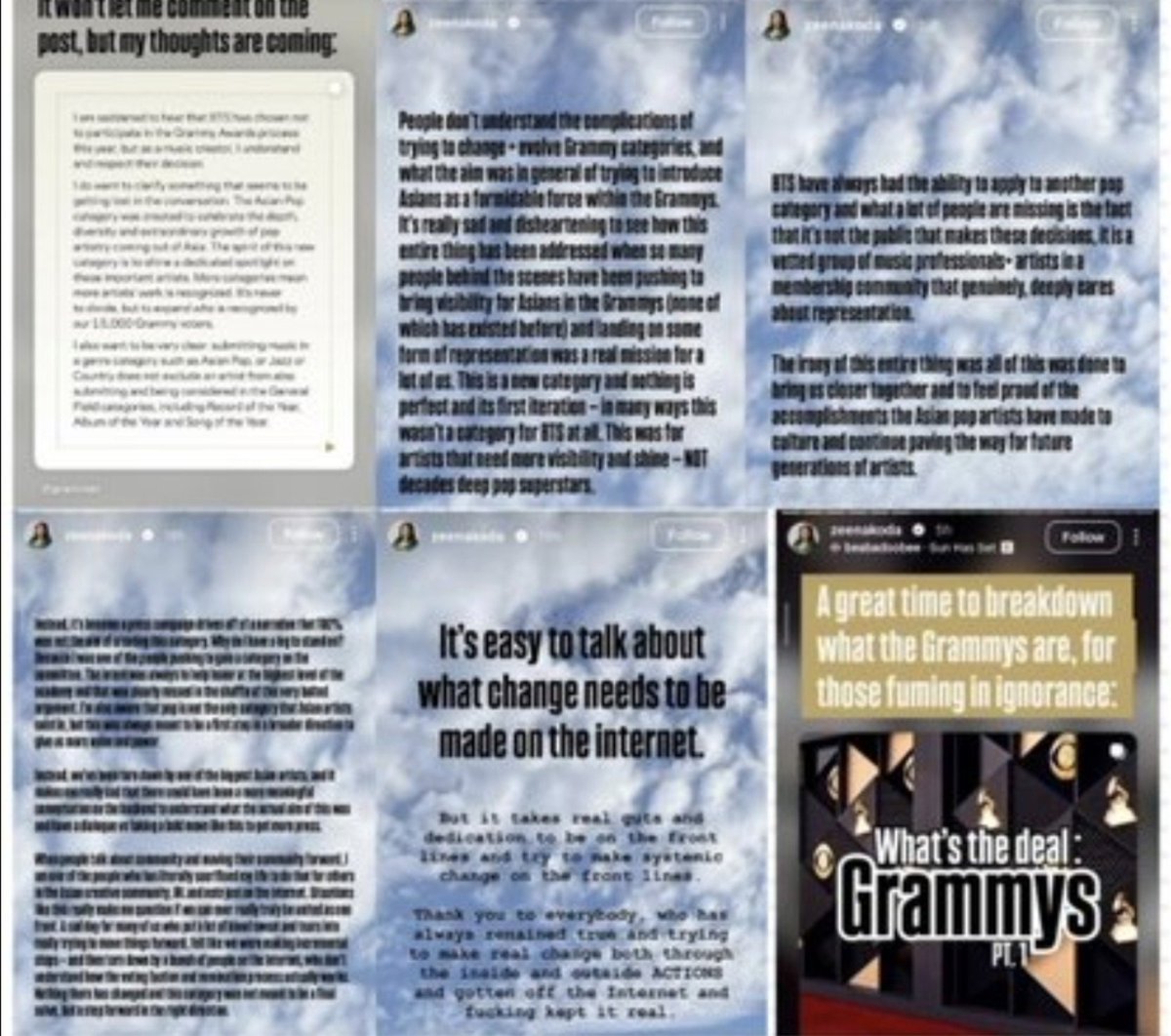
This must be true inside source. Zeena Koda in her statement said something that clearly clearly implied ultimate goal was more categories for Asians
This shit gets better and better. Grammys damages:
— lost huge global audience for their expensive first ever global livestreaming deal
— lost BTS validation for this category and segregation categories in general
— lost their launch plan to further expansion, that was based on BTS soldifying it
— lost in general the clout and validation of the biggest artist this year
— public backlash and massive PR blowback
— committee is being exposed on incompetence
— CEO is being exposed for shady personal business involvement, with media beginning to pick up on it
absolute gold
So according to inside sources, the 🧑🏻🦳 were banking on BTS submitting their music and being available to win the inaugural Best Asian Pop Performance award because they felt that win would give the award more prestige in future years and help launch expansion of the Asian 🧑🏻🦳s.
Bao Nguyen, director of #BTS' Netflix documentary via Instagram 💜
"What I found wasn't just one of the biggest bands in the world. I found seven artists who have remained remarkably grounded through extraordinary success, who lead with conviction, and who never lose sight of who they are or who they do it for.
It's been one of the greatest privileges of my career to spend time with them and to better understand the extraordinary bond they share with ARMY. The trust they placed in me to tell this chapter of their story is something I'll never take for granted.
Looking back at these stills, I'm grateful to BTS, to ARMY, and to everyone who made this unforgettable year possible.”
https://t.co/IlYQg9huQE
Lately anytime something big happens with BTS, Oreo and Netflix will be like “we have BTS btw, we are on very good terms with them in fact, the best terms, you’re gonna love the BTS we have, look at this OT7 video, I will commence the fanchant now-”
Dear Grammys, BTS' legacy never needed validation | @filmybugB
For over a decade, the question surrounding BTS was always the same: When will they win a Grammy? Perhaps we were asking the wrong question. Because after everything BTS have achieved, the more interesting one is this: What happens when the world’s biggest band decides it no longer needs to ask for a seat at the table?
In a unified statement shared across all seven members’ Instagram accounts, RM, Jin, SUGA, j-hope, Jimin, V and Jung Kook wrote, “We have decided not to enter the Grammys this year. I hope music itself can be heard and loved rather than being distinguished by region or language.”
Three sentences only, and it may well be the most consequential statement the group has made about the global music industry in years.
#BTS #Grammys
https://t.co/3KU0NEXOcA
[Forbes] With the success of their most recent album, ARIRANG, dominating the charts and breaking numerous sales records, many experts have slated it as a leading contender for the Grammy Awards.
The BTS members have spoken in the past about their desire for the golden gramophone.. But as time went on, BTS grew even bigger, breaking records and receiving other awards and recognition. Over their 13 years as a group, BTS has won over 500 awards domestically and internationally.
So when the album did eventually release and received global and critical acclaim, with the poise to dominate this awards season, the Recording Academy announced in June that there would be several rule changes and five new categories for the upcoming 69th Grammy Awards next year including Asian Category.
But with the Asian Pop Performance category, BTS’s refusal to participate in the Grammy Awards is a sign of protest over the new category that is meant to divide. The group has proven with this album, ARIRANG, that language has no barrier, as the group continues to embark on their World Tour across North America, Europe, Asia, Latin America, Oceania, and more from all walks of life will sing along to the traditional Korean folk song, “Arirang,” during their “Body-to-Body” segment.
BTS’s lack of presence in “music’s biggest stage” is their way of saying they’ve had enough with them. The members have mentioned their disdain towards the awards show
https://t.co/l9BJHGYlWE
#westandwithbts
Harvey Mason Jr.’s response is a masterclass in corporate gaslighting that completely ignores how the Recording Academy actually operates.
While the "separate but equal" defense sounds perfectly reasonable on paper, anyone who closely follows the music industry knows that sub-categories are routinely used as containment zones for diverse artists. The Grammys have a long, documented history of using genre and regional brackets to keep non-Western, non-white, and non-English-speaking acts away from the Big Four main stages.
The Structural Flaws in the CEO's Argument
The Vote-Splitting Reality: Mason claims genre categories do not exclude artists from the General Field (Album, Record, and Song of the Year). However, in practice, the 15,000 Grammy voters use these niche categories as a convenient box to check. Once an artist is tucked safely away in a regional or genre slot, voters rarely feel compelled to reward them in the top-tier categories.
The "Urban" Parallel: We have seen this exact playbook before. For years, Black artists were systematically funneled into the "Urban Contemporary" or R&B categories while being locked out of Album of the Year. The Academy renamed the category after intense backlash, but the structural habit of keeping diverse, chart-topping music out of the main spotlight remains identical.
Clout Chasing vs. Artistic Respect: The Academy's sadness over BTS’s withdrawal is deeply financial. The Grammys desperately need the massive social media impressions, live viewership, and cultural relevance that global acts bring to a dying linear television broadcast. They want the traffic, but they refuse to evolve their voting pool to genuinely evaluate global music on equal footing.
The Language and Geography Barrier: Music is a universal medium. By drawing a geographic boundary around pop music coming out of Asia, the Academy is fundamentally stating that Western pop is the "default" and everything else is a foreign anomaly requiring a special, segregated spotlight.
BTS's decision to withhold their submissions is a monumental power move. They are exposing the fact that the industry's most prestigious institution relies on outdated, Western-centric biases, proving that true global impact no longer requires a stamp of approval from a stagnant committee.
Creo que no precisamente el tour por europa, creo todo el tour en general les dió ese impulso o valor de tomar la decisión, ir a lugares donde antes no se habían presentando, ver qué tienen ese apoyo en cada rincón del mundo pese a la barrera del idioma, su música a superado eso, este tour les hizo ver qué no necesitan ese premio para sentir que su música vale y es increíble. Este tour POR COMPLETO les ha ayudado bastante.
#Opinion | Popstars BTS have spent years proving they belong on the world's biggest stage. They've topped charts, sold out stadiums and built fanbases that stretch across continents. And every single time they seem ready to be judged by the same standards as everyone else, the rules somehow change. The septet choosing not to submit their record-breaking album Arirang for the 2027 Grammy Awards is one of biggest and bold moves in recent times, following The Weeknd who stopped submitting his music since 2021.
Tap to read: https://t.co/fcUz6t4E7q
(@monicayadav08 ✍🏻)
Billboard on BTS' bold decision not to submit their music for this year's GRAMMYs:
— “BTS’ decision not to enter their music is a blow to the GRAMMYs’ prestige, but the biggest impact could be the GRAMMY telecast losing a powerhouse draw.”
La Federación belga acaba de decir que, a esta hora, no tiene ninguna comunicación o explicación oficial de FIFA y que "en estas circunstancias, no tiene más opción que contestar la elegibilidad del jugador para el partido".
Sin más avances, y si el jugador es inscrito esta noche para el partido, Bélgica podría entender que se trata de un caso de alineación indebida.
La UEFA (es decir, las federaciones española, francesa, alemana, inglesa, italiana...) debería dar una patada.
🚨🎙️🇩🇪 AHORA |
Jurgen KLOPP cruzó a Gianni Infantino y Donald Trump tras la polémica decisión de la FIFA por Bolagun:
“Estas dos personas no saben nada de fútbol, no deben meterse en esto. Fue una tarjeta roja. No hay discusión”
“Si la Casa Blanca realmente intervino, entonces es ABSURDO. El fútbol es nuestro, NO DE ELLOS”.
Bei aller Liebe, aber diese WM ist doch zu Ende. In dem Moment, wo ein Staatschef auf den ausführenden Verband eines Turniers einwirkt, um rote Karten rückgängig zu machen, ist das Spiel doch einfach im Eimer. Trump zerstört alles, was er berührt …
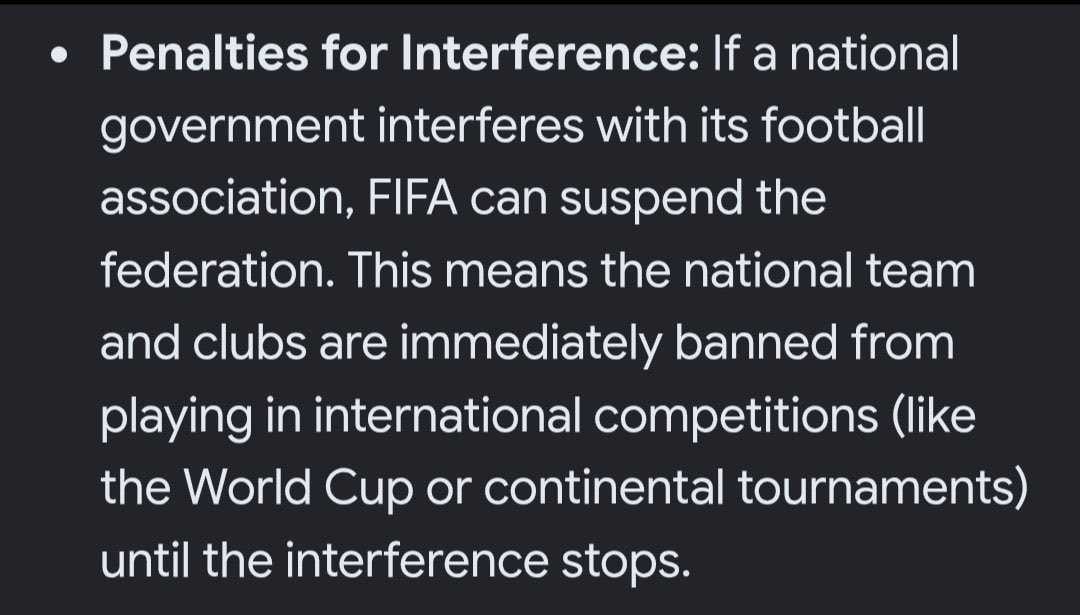
If FIFA want to stay consistent with their statutes, suspension of the United States Federation and team from the World Cup for political interference should follow! #FIFAWorldCup
Red cards are not overturned by political phone calls. They are overturned by rules, evidence and independent bodies. If a U.S. President intervenes with the FIFA President — and a player is suddenly cleared before a World Cup knockout match — the question is unavoidable: Quo vadis, FIFA?
Football must never become a playground for political power. #FIFA #WorldCup #GianniInfantino #DonaldTrump



![btschartsxdaily's tweet photo. [Forbes] With the success of their most recent album, ARIRANG, dominating the charts and breaking numerous sales records, many experts have slated it as a leading contender for the Grammy Awards.
The BTS members have spoken in the past about their desire for the golden gramophone.. But as time went on, BTS grew even bigger, breaking records and receiving other awards and recognition. Over their 13 years as a group, BTS has won over 500 awards domestically and internationally.
So when the album did eventually release and received global and critical acclaim, with the poise to dominate this awards season, the Recording Academy announced in June that there would be several rule changes and five new categories for the upcoming 69th Grammy Awards next year including Asian Category.
But with the Asian Pop Performance category, BTS’s refusal to participate in the Grammy Awards is a sign of protest over the new category that is meant to divide. The group has proven with this album, ARIRANG, that language has no barrier, as the group continues to embark on their World Tour across North America, Europe, Asia, Latin America, Oceania, and more from all walks of life will sing along to the traditional Korean folk song, “Arirang,” during their “Body-to-Body” segment.
BTS’s lack of presence in “music’s biggest stage” is their way of saying they’ve had enough with them. The members have mentioned their disdain towards the awards show
https://t.co/l9BJHGYlWE
#westandwithbts](https://pbs.twimg.com/media/HOZlZQ8XQAAn1q8.jpg)