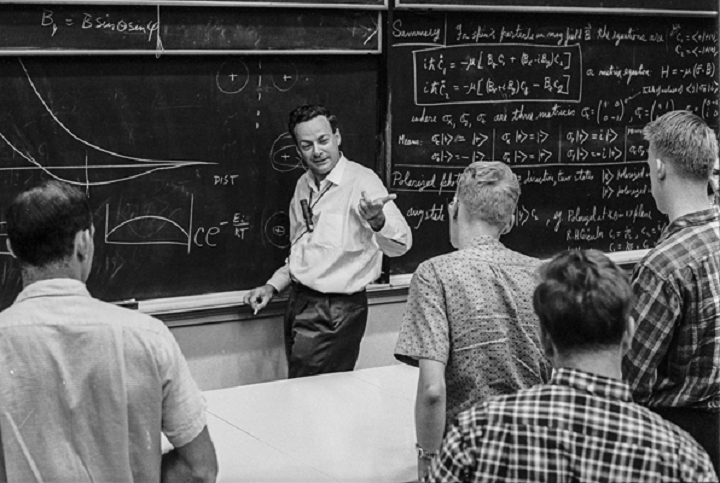
In 1964 a soon-to-be Nobel laureate walked into a Cornell auditorium and spent seven evenings explaining the nature of physical law to a general audience. Bill Gates paid the BBC out of his own pocket to keep those recordings on the internet forever.
His name was Richard Feynman, and the lectures are called The Character of Physical Law.
He was 46 years old when he gave them. He would win the Nobel Prize in physics the following year for his work on quantum electrodynamics. The BBC filmed every session. The tapes then went into distribution at universities through the 1970s, disappeared in the 1980s, and stayed lost until Gates licensed them for a Microsoft research project in 2009 specifically so they would never go offline again.
Here is the framework buried inside those lectures that changed how I think about knowledge itself.
In the final lecture of the series, titled Seeking New Laws, Feynman stops the philosophy and tells the room exactly how scientific discovery actually works. Not in metaphors. In three sentences.
He says in general we look for a new law by the following process. First we guess it. Then we compute the consequences of the guess to see what would be implied if the law we guessed is right. Then we compare the result of the computation directly to nature, to experiment, to observation, to see if it works.
And then he delivers the line that has outlived him by forty years.
If it disagrees with experiment, it is wrong. In that simple statement is the key to science. It does not matter how beautiful your guess is. It does not matter how smart you are, who made the guess, or what his name is. If it disagrees with experiment, it is wrong. That is all there is to it.
Read that again slowly.
He is not describing physics. He is describing the only intellectually honest way to hold any belief about the world. The method is indifferent to credentials, indifferent to elegance, indifferent to how much you want the idea to be true. Reality is the only referee, and reality never explains its rulings.
The second thread running through the whole series is the one Feynman kept circling back to across all seven nights.
He argued that the deepest beauty of a physical law is not in what it depends on but in what it refuses to depend on. Newton's law of gravitation works the same way on a falling apple, a moon in orbit, and a galaxy at the edge of the observable universe. That is not a detail. That is the entire point. A law that only works in one place is not a law. It is a coincidence. The test of a real generalization is whether it survives contact with situations its inventor never imagined.
The part that hits hardest comes in the opening lecture on gravitation.
Feynman is walking the audience through how Newton assembled the theory, and he pauses to say something most scientists never say out loud.
The importance of a physical law, he tells the room, is not how clever we were to find it. It is how clever nature was to pay attention to it. The universe did not have to be lawful. It did not have to reward pattern recognition with deeper pattern. The fact that it does is what makes science possible at all, and it is a standing miracle no one has ever explained.
Feynman ends the final lecture with a warning almost everyone misses.
He says the principles we now have may still be wrong in places we have not noticed. He suspects, out loud, that space being continuous is one of them. He offers no replacement. He just marks the edge where his own confidence runs out and tells the audience that honest uncertainty is the correct default for anyone actually trying to find the truth, instead of defend a position.
Sixty years later the full series still streams for free. Seven hour-long lectures. The best of Feynman at the peak of his powers, filmed before he was famous to the general public, speaking to a crowd that was never supposed to understand physics at this level.
Bill Gates kept them online because he understood what most people still miss.
A three-sentence method for testing any belief against reality is worth more than most of what graduate school teaches in three years.
Cam Manyawu on that fact that Iowa’s NCAA Tournament run gave joy to Iowa fans: “That’s what it’s all about: Bringing joy to everybody. It’s a game at the end of the day. So, making sure we have fun, bringing joy to our fans. I know that the program hasn’t been exactly where they’ve wanted. Just to come in year one and try and elevate it as much as we can and build off this and continue elevating even further.”
Doing what others are unwilling to do, making yourself uncomfortable for growth.
Ben McCollum is a leader or Men & everyone’s life he touches is a reflection of that. Like Ferentz It must be an incredible experience to be coached by someone of that cloth.
Must watch 👇🏻
This team made memories that will last forever in our community (and across the country).
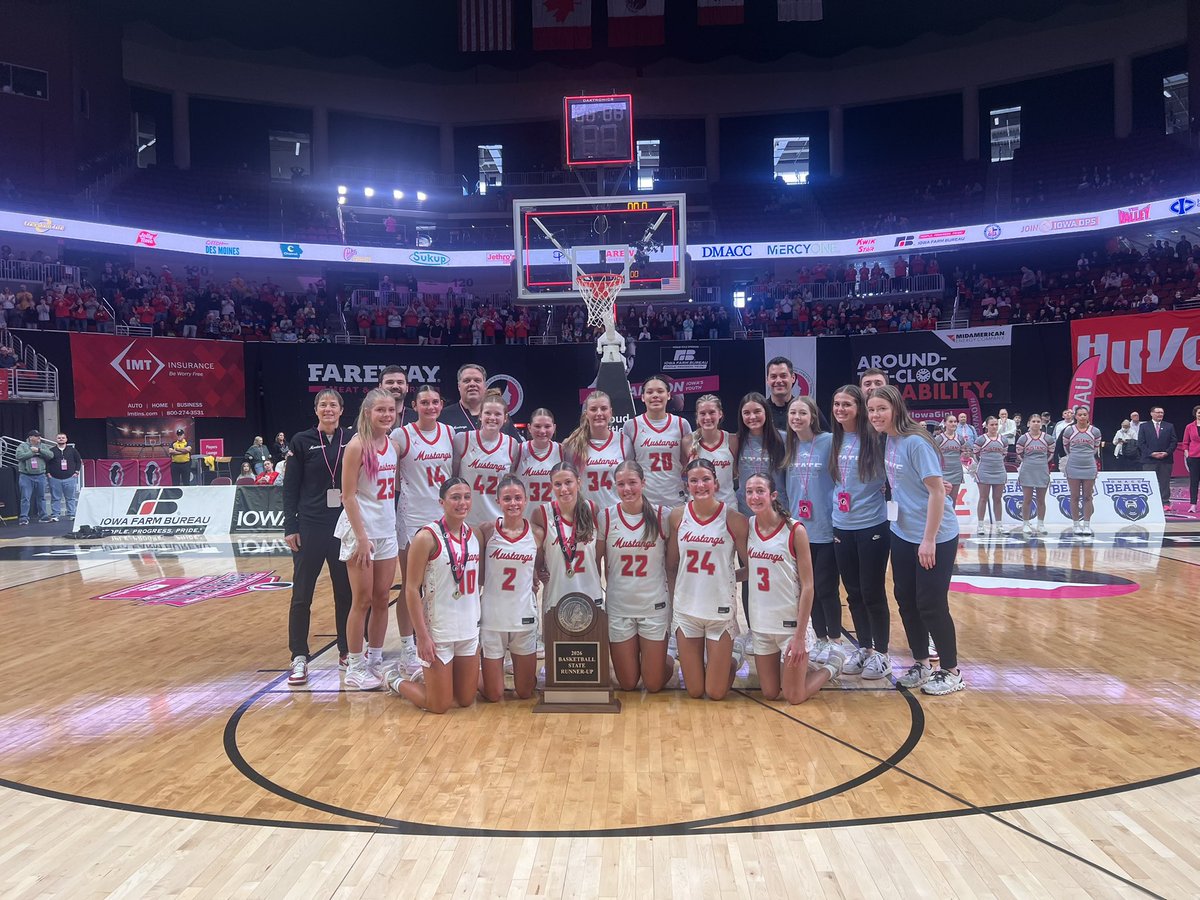
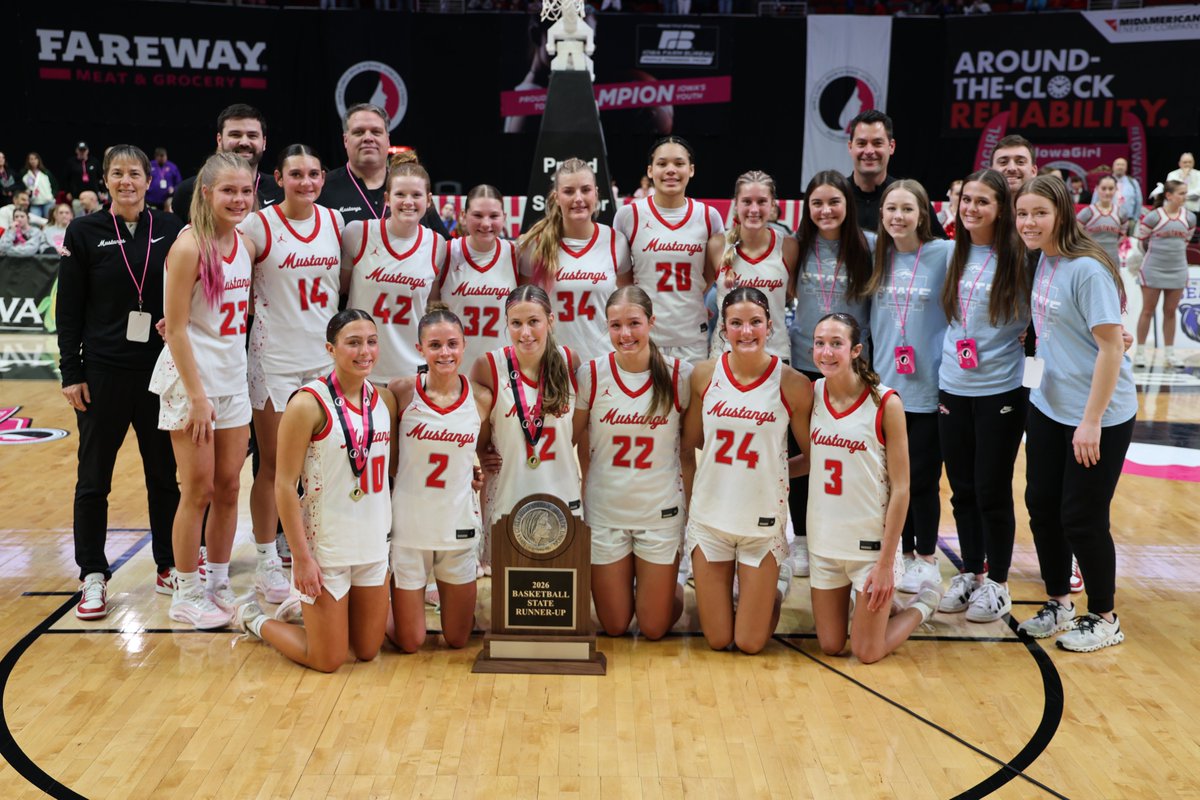
We are proud of you! Congratulations on your state runner-up finish!
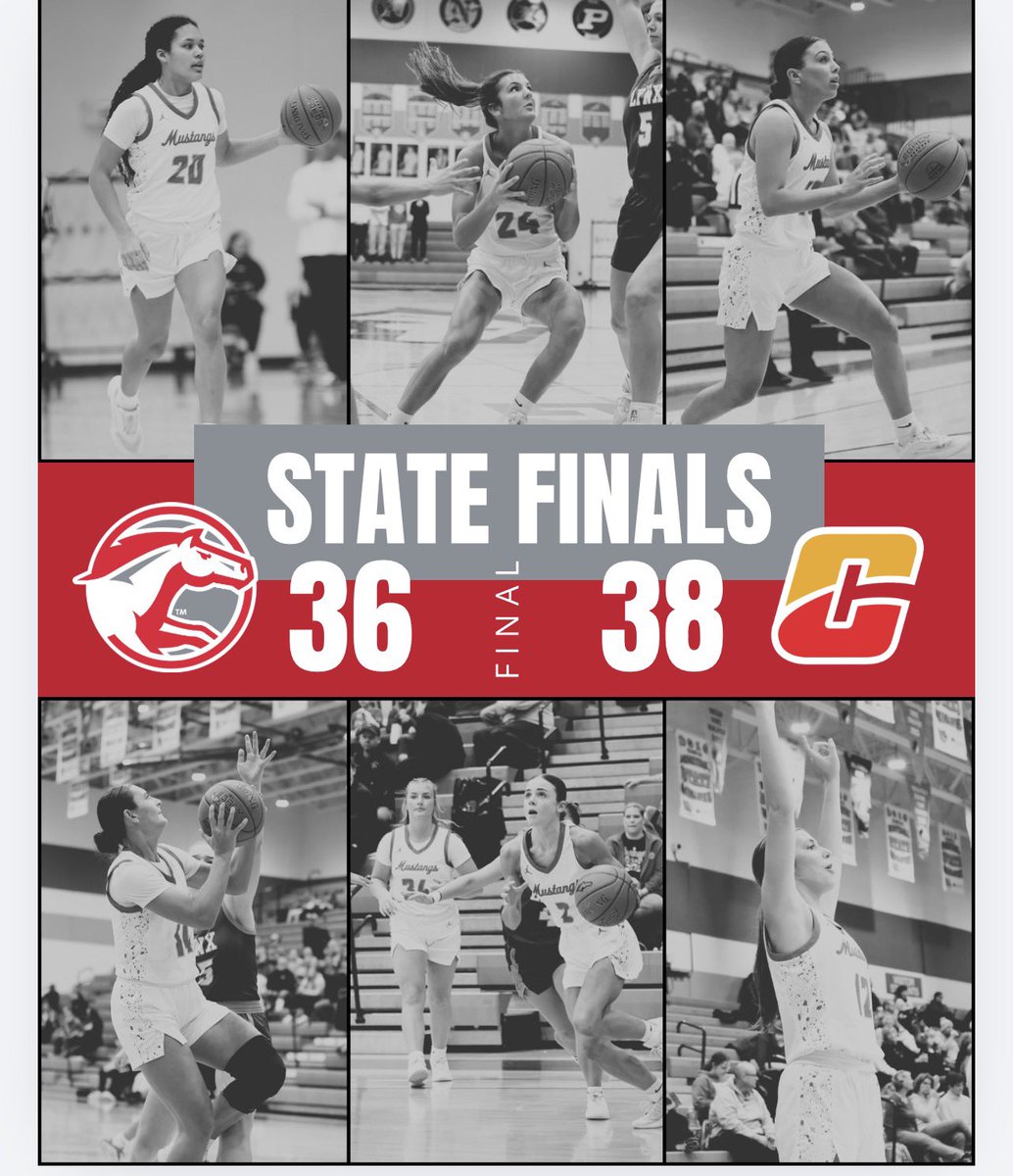
DCG came out firing, building a 21-16 halftime lead, but the Wildcats kept battling. The future Cyclone Macy Comito scored a game-high 17 points, and for the first time in school history, Carlisle are girls basketball state champions. They win it, 38-36.
@SoundOFF13
Mustangs end the 2026 season as State Runner Ups. Thank you to the seniors and all the special moments this group let us witness this year. Keep fighting, never give up. Go Mustangs!
Trailing in the final minute, Iowa high school sophomore Ava Smid delivered a stunning comeback -- scoring 8 points in just 19 seconds to win the girls' state basketball semifinal. @DavidMuir shares our Person of the Week. https://t.co/e0DlKJMfJc
I’ve shot a lot of basketball highlights, never anything quite like this one.
Never say never! I can’t believe this finish!
Mustangs to the title game!!!
@DCG_GirlsBball@keithmurphy@SoundOFF13 Jack Campbell is DCG leading scorer Macy Meyer’s brother-in-law. Jack along with her other brother-in-law, Joe Wieskamp, are frequent fans in the stands and watching the livestream while in their season. Neat Central Iowa story!
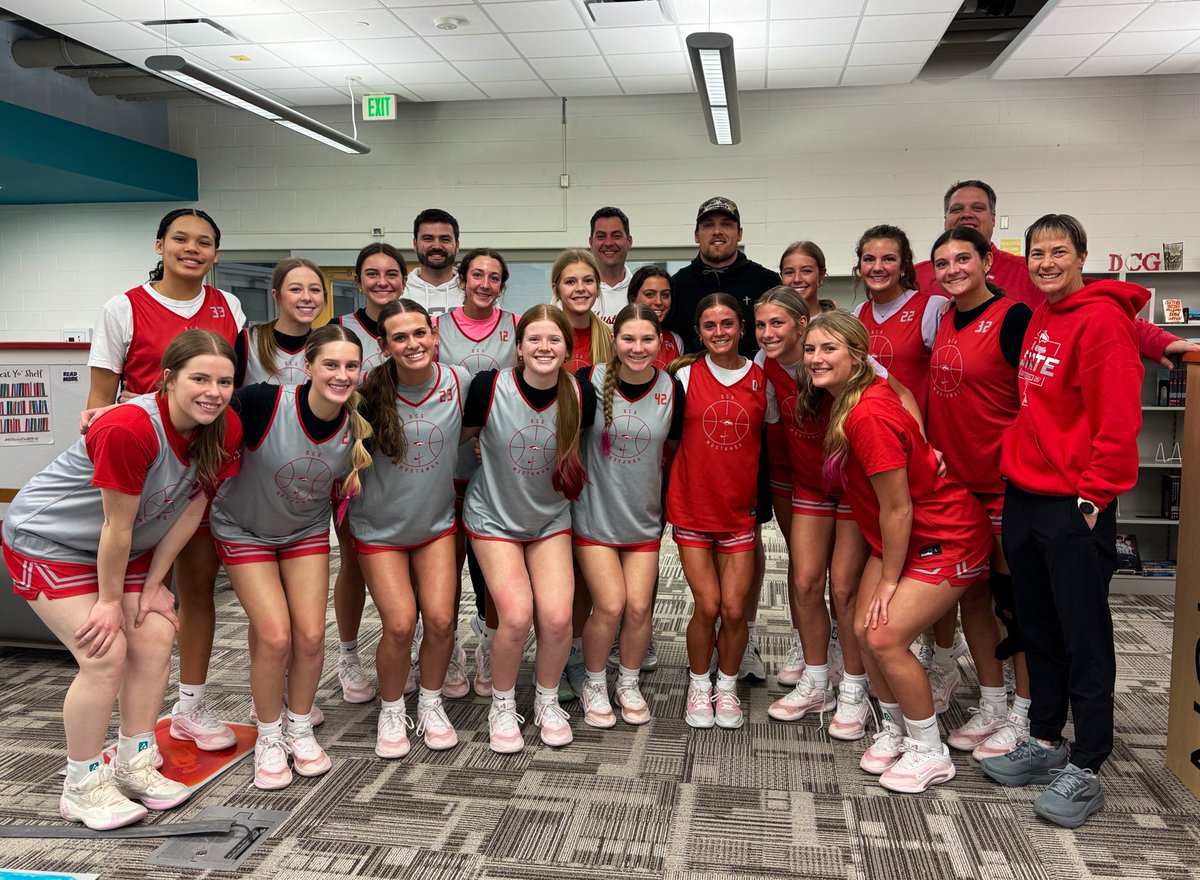
We were fortunate to have former Hawkeye great and current Detroit Lions linebacker, Jack Campbell, talk to our team today! He shared his insights on the mental side of sports and the importance of preparation! Jack is a class act who is humble, genuine, and driven! Thank you!