Je propose de limiter le RSA à 3 ans maximum.
Aujourd’hui, un bénéficiaire du RSA sur 6 le touche depuis plus de dix ans ! Le RSA ne doit pas être un statut à vie, mais un filet de sécurité.
C’est la base de la JUSTICE SOCIALE à l’égard de ceux qui travaillent et financent les aides de ceux qui ne travaillent pas.
« Beaucoup de ces jeunes lycéens de Seine-Saint-Denis se servent de prétextes pour mettre le feu aux poubelles, casser et ne pas aller en cours.
Monsieur @BallyBagayoko devrait avoir honte de les encourager dans cette chienlit. »
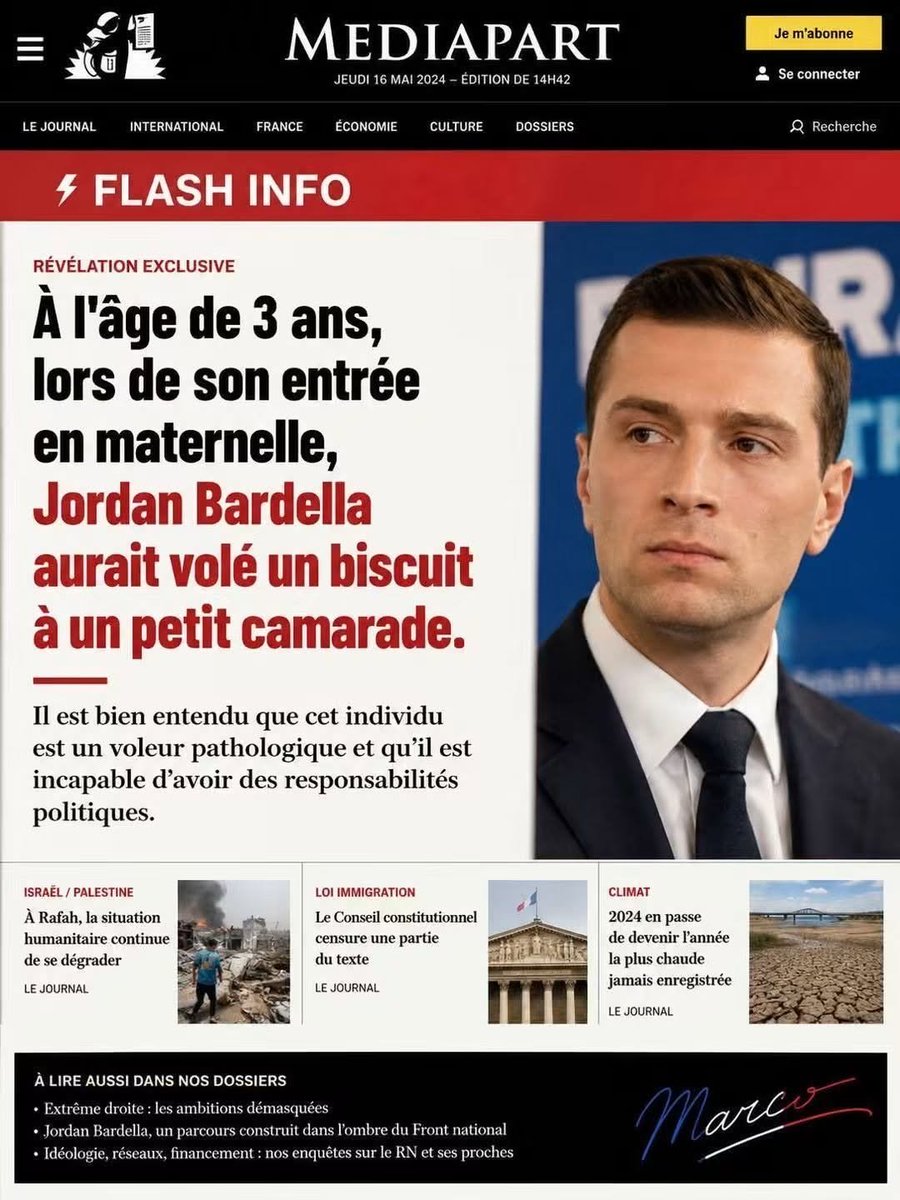
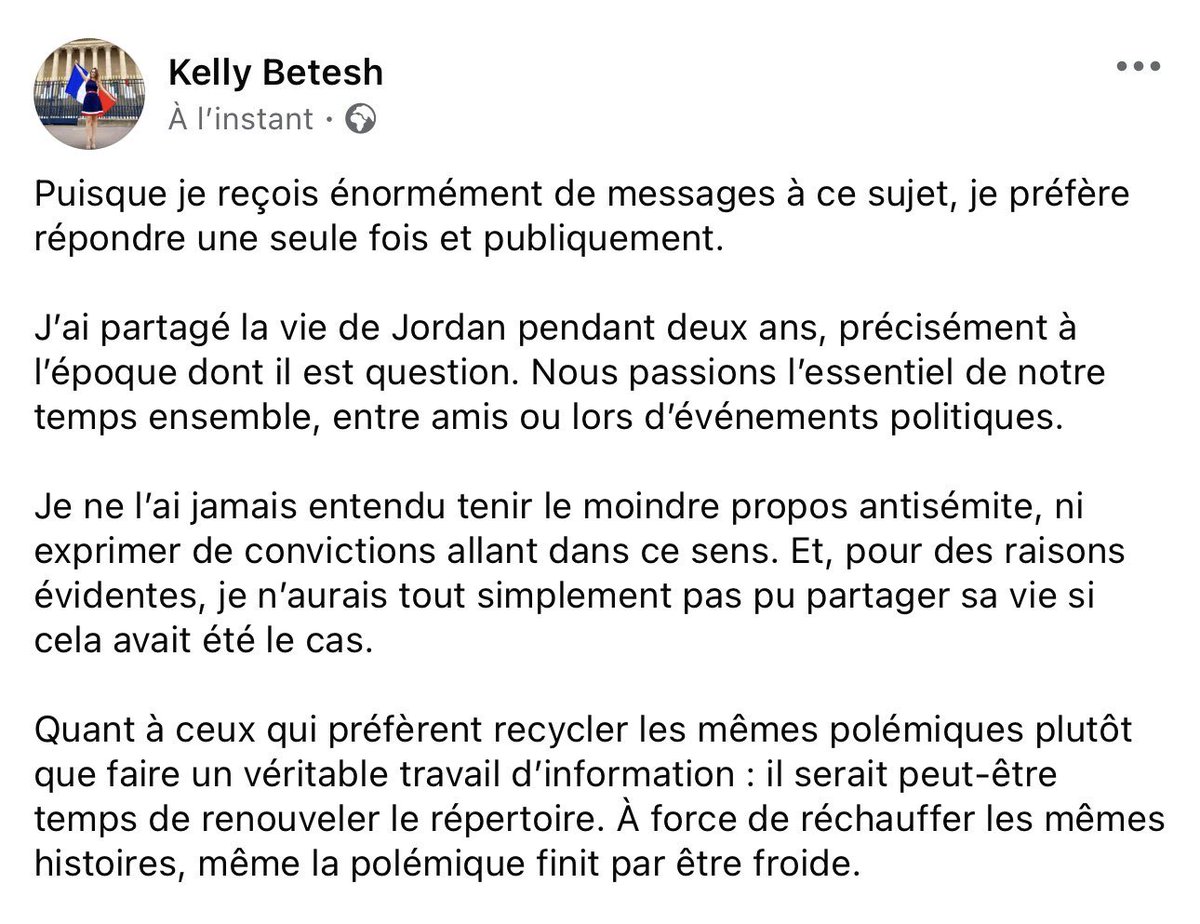
🗣️ Kelly Betesh, ex-copine de Jordan Bardella d’origine juive — avec qui elle était en couple quand il avait 17 ans, c’est-à-dire au moment des faits qui lui sont reprochés par le média d’extrême gauche Mediapart — S’EXPRIME :
La politique n’a de sens que là où l’on peut agir librement.
Hannah Arendt : « La raison d'être de la politique est la liberté, et son champ d'expérience est l'action. »
(« Qu'est-ce que la liberté ? », La Crise de la culture)
🕊️ #Liberté#PhilosophiePolitique
Je conteste formellement les accusations de Mediapart.
En matière de lutte contre l'antisémitisme, je n'ai aucune leçon à recevoir d'un journal dont le fondateur a tenu des propos de soutien à des terroristes qui ont assassiné des athlètes israéliens lors des JO à Munich.
Il faut le privatiser ! Euh... En tout cas, le "dé-nationaliser" !! 😉 🙂
J'essaie d'en plaisanter, mais c'est triste quand même, qu'il continue à agir en toute impunité.
Lola, torturée et assassinée : Patrick Cohen a minimisé.
Thomas, tué à Crépol : Patrick Cohen a minimisé.
L’émotion de toute la France lors de la visite du Pape : Patrick Cohen minimise.
Chaque fois que le peuple français s’émeut, Patrick Cohen le méprise.
Je propose de privatiser France TV. Les journalistes paniquent :
"alors on devra vendre de la pub, les prix de la pub baisseront et ça nuira à TF1 et CNews !"
Le monde à l'envers : Nathalie Saint-Cricq protège les finances de Bouygues et Bolloré !
Moi je défends les Français.
Edwy Plenel fit autrefois l’apologie des terroristes qui assassinèrent 11 athlètes israéliens durant les JO de Munich en 1972. Il prétend aujourd’hui jouer les chevaliers blancs de l’antisémitisme en exhumant des messages attribués à Jordan Bardella. Je sais bien que tout est possible dans la vie, mais tout de même… #Bardella #Mediapart #Plenel
« La liberté, dans la société civile, consiste à n'être soumis à aucun pouvoir législatif, qu'à celui qui a été établi par le consentement de la communauté. »
— John Locke, Second traité du gouvernement civil (1690)
🕊️
#Liberté#PhilosophiePolitique
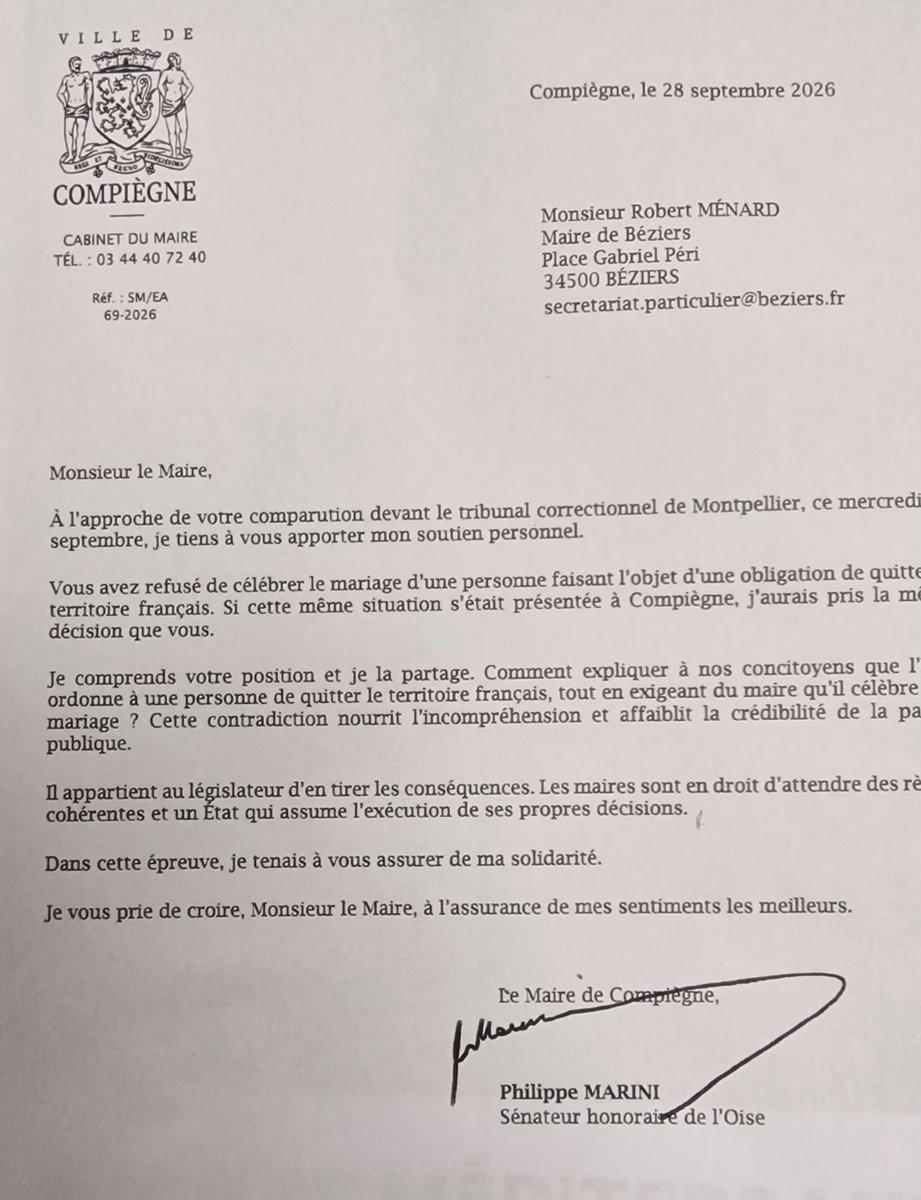
Un maire n’est pas un manifestant lambda.
Quand un élu apparaît hilare, en train de danser comme un abruti au milieu d’une scène où des poubelles brûlent et où des dégradations ont lieu, ce n’est pas une image anodine.
Un maire représente une institution, une ville et ses habitants. Il ne peut pas, dans le même temps, donner l’image de quelqu’un qui célèbre au milieu du désordre et du chaos.
Un costume peut changer l’apparence d’une racaille. Il ne change ni ses réflexes, ni son comportement.
Regardez bien ces images.
Elles disent beaucoup de l’époque.
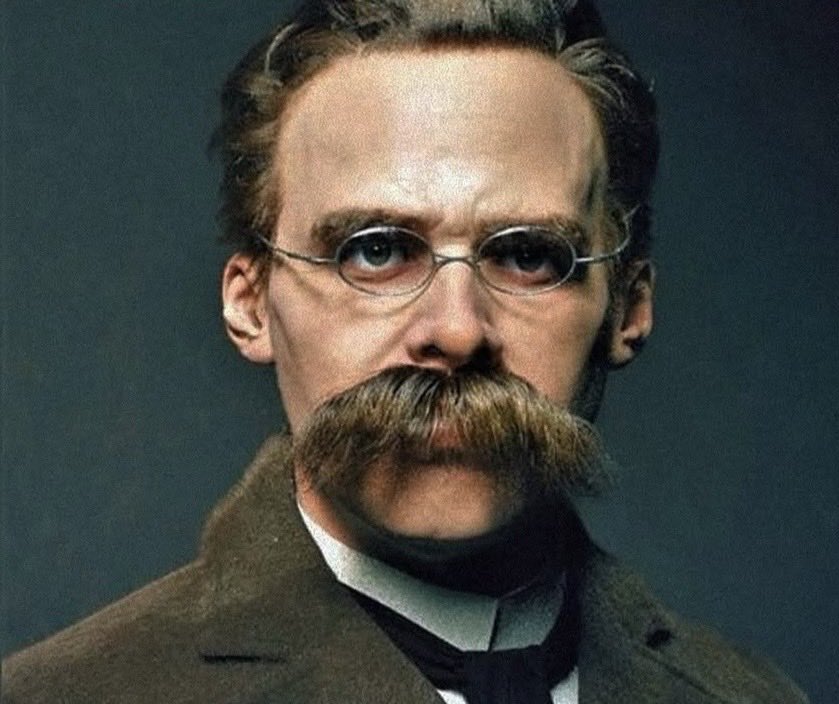
“You should not be afraid of someone who has a library and reads many books; you should fear someone who has only one book; and he considers it sacred, but he has never read it.”
- Friedrich Nietzsche
Friedrich Nietzsche was born in Germany in 1844 and experienced the death of his father at a young age. Growing up surrounded by grief and solitude helped shape his deeply questioning nature. Rather than finding comfort in traditional beliefs, Nietzsche constantly challenged accepted ideas and pursued difficult truths. Much of his life and philosophy centered on understanding suffering, purpose, and what it truly means to live fully.
A major turning point came when Nietzsche began distancing himself from the beliefs, thinkers, and institutions he had once respected. He increasingly questioned religion, conventional morality, and social expectations, arguing that people often inherit their values instead of forming them independently. This rebellious approach influenced works such as Thus Spoke Zarathustra and helped establish him as one of philosophy’s most influential figures.
Nietzsche’s own experiences also reinforced his belief that hardship can contribute to personal growth. His life included chronic illness, loneliness, troubled relationships, and periods of isolation. Rather than viewing suffering only as something to escape, his philosophy often explored how confronting adversity could build resilience and transform a person. Instead of seeking a life without difficulty, he emphasized developing the strength to endure and overcome it.
The quote about fearing someone devoted to a single sacred book reflects a warning against blind allegiance and unquestioned certainty. A person exposed to many different ideas has more opportunities to compare perspectives, challenge assumptions, and think critically. By contrast, someone who unquestioningly treats one belief or text as absolute—especially without seriously examining it—may become rigid or dogmatic.
The larger message is that knowledge itself is not necessarily dangerous. The greater danger can arise when limited understanding is combined with complete certainty. The passage encourages skepticism, intellectual curiosity, and a willingness to examine even the beliefs a person holds most strongly.
« Soyez résolus de ne servir plus, et vous voilà libres. »
— Étienne de La Boétie, Discours de la servitude volontaire (vers 1548)
🕊️ #Liberté#PhilosophiePolitique
Alexis de Tocqueville, De la démocratie en Amérique :
« Il n'est rien de plus fécond en merveilles que l'art d'être libre ; mais il n'y a rien de plus dur que l'apprentissage de la liberté. »
🕊️ #Liberté#PhilosophiePolitique