Libertarians believe that liberty is the most important political value. Everyone wants freedom for themselves, but libertarians protect the freedom of others.
Most people learn that the American Revolution began over taxes. But the real conflict was much deeper: who has the right to rule?
Listen to our new interview with @TimothySandefur, out now!
https://t.co/mJXwIBpmH7
At its core, libertarianism is a political philosophy built upon one foundational premise: that individual liberty is the highest political value. To be a libertarian is, above all else, to believe that human beings are self-owning individuals who have the right to live their lives as they see fit, so long as they do not infringe upon the equivalent rights of others.
Custom, conformity, and collective opinion can crush individuality. In "On Liberty," John Stuart Mill reminds us that a free society allows people to pursue their own good in their own way.
Adam Smith’s work explored how markets enable strangers to cooperate for mutual benefit—and his insights help us understand the workings of the modern, hyper-connected world.
Where did the @CatoInstitute get its name?
Most people assume it honors Cato the Younger, the Roman statesman who defied Julius Caesar. Close. But not quite. It's named for "Cato's Letters," a series of over one hundred essays published in London in the 1720s.
"Cato," the pen name used by John Trenchard and Thomas Gordon, refers to Cato the Younger. Trenchard and Gordon started "Cato’s Letters" by attacking the corruption exposed by the South Sea Bubble but eventually discuss the deeper nature of liberty and power.
So how do you keep power in check? Cato's answer: constitutional restraints, separation of powers, and free speech. Don't rely on rulers being virtuous. Build a system that assumes they won't be.
Cato called free speech "the great bulwark of liberty" and warned that silencing critics is a would-be tyrant's very first move. Sound familiar?
"Cato's Letters" became a sensation in the American colonies, where Trenchard and Gordon were household names. A young Benjamin Franklin, writing as "Silence Dogood," quoted Cato on free speech; some historians rank the essays alongside John Locke in their influence on the revolutionaries.
Inalienable rights, harnessing self-interest, and preserving liberty through limited government—the themes of "Cato's Letters" are core libertarian ideas three centuries later.
Can the law legitimately force you to be a better person—even when your "vices" harm no one but yourself? In this new essay, Bill Glod discusses how natural law theories of morality are in tension with classical liberalism when they are employed to justify coercive laws. https://t.co/dP20hrGelO
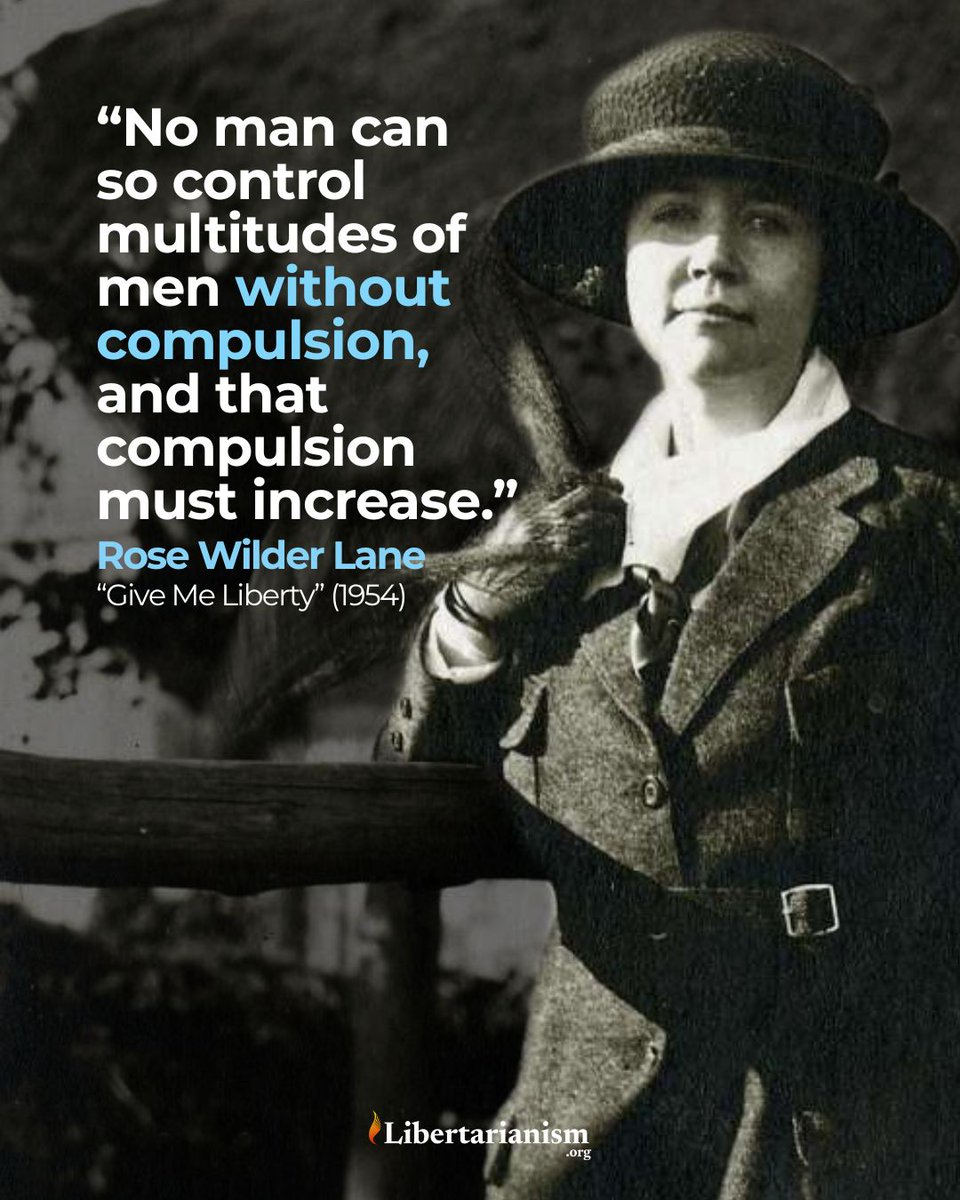
Despite starting out as a communist, Rose Wilder Lane became a staunch advocate of individualism. Lane has rightly been dubbed one of the mothers of the libertarian movement for her tireless efforts to bring about a world in which individuals, and not the state, decide their own fate.
H. L. Mencken, a journalist, satirist, and prevalent critic of American political life, spent decades exposing the gap between the promises of government and the reality of its results.
Adam Smith authorized the pursuit of honest income. But what should we do with that income? Max Laraia explores whether Peter Singer’s moral imperative to reduce suffering is consistent with Smith’s ethical outlook. Read the new essay here: https://t.co/Ihzj3xSCDr
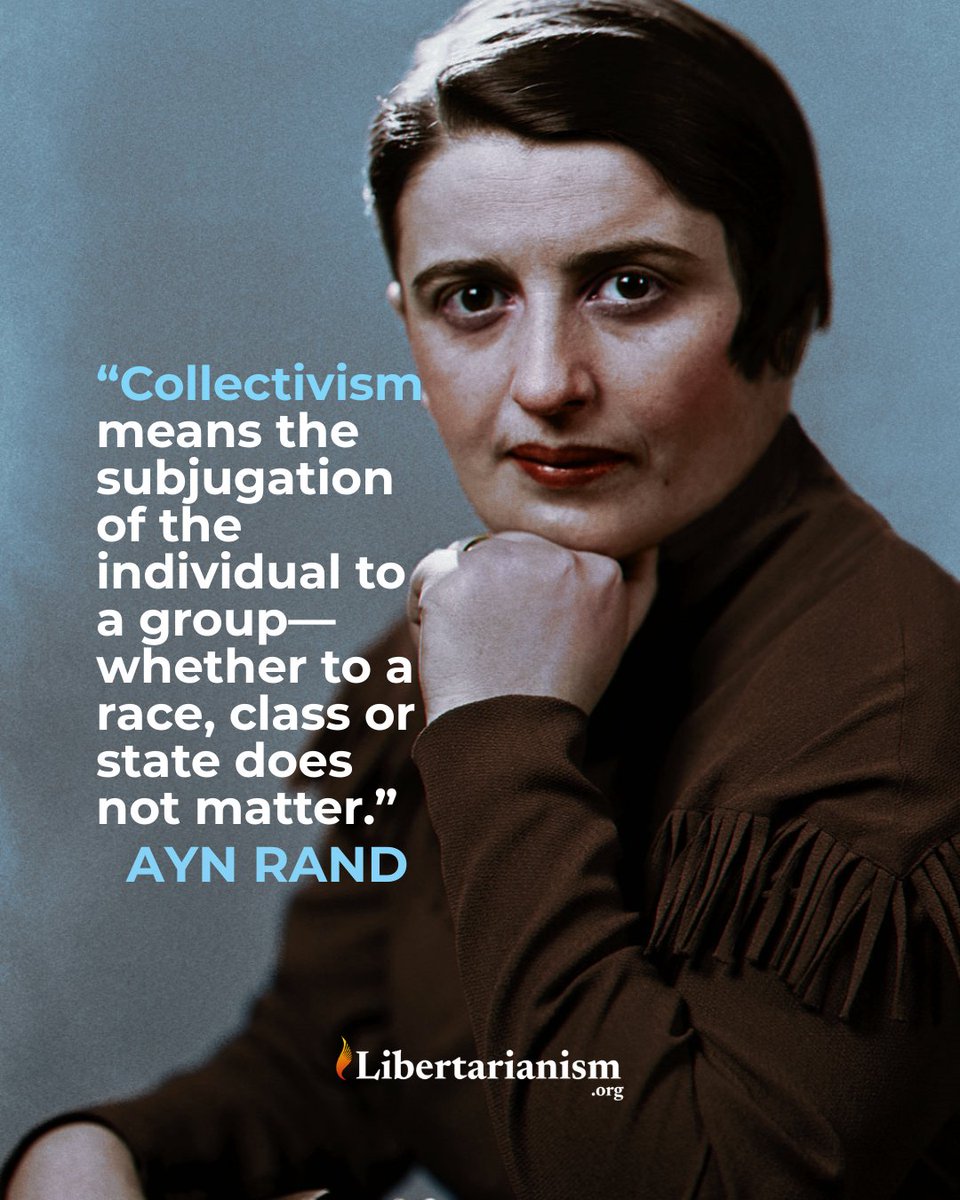
Collectivism holds that the state should control or regulate the economy and civil society, favoring the collective over the individual. It stands in direct contrast to individualism, which emphasizes individual action and its consequences as the foundation of social and political life.
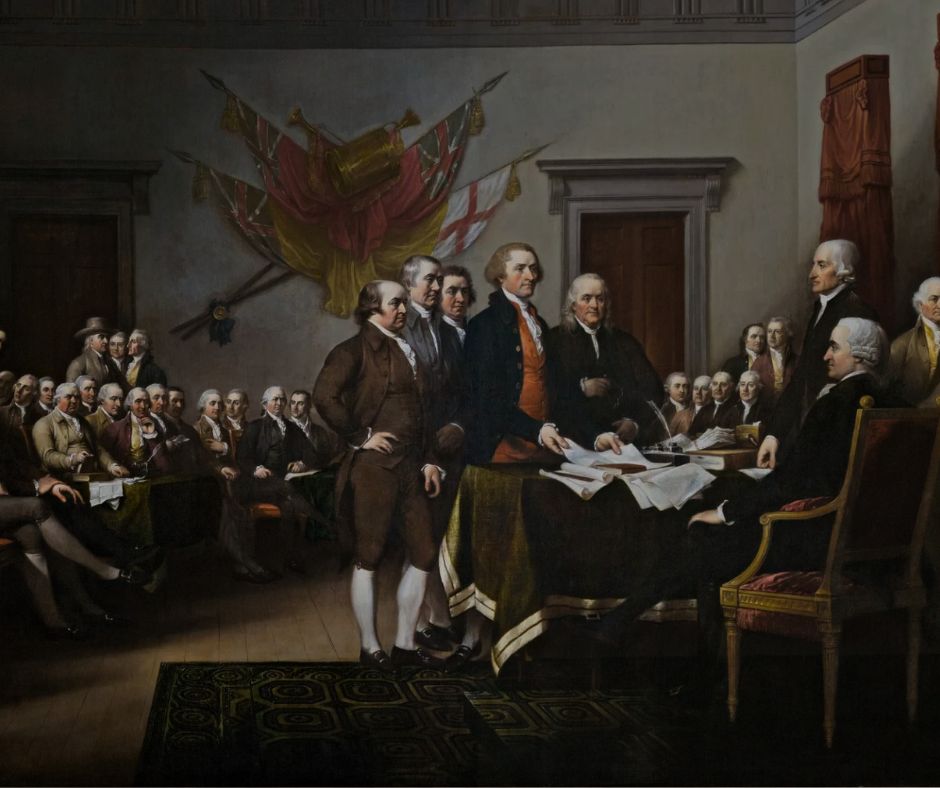
Do you have the courage to defend your principles? It’s easy to take for granted the risks the signers of the Declaration faced when they put their names on a document that would become foundational to the nation’s history. If the British won, the signers likely would have faced execution. Their belief in the cause of American liberty outweighed their fear of death.
The 250th anniversary of the Declaration of Independence is a good opportunity to consider our own courage in the face of injustice. It’s easy to claim we will stand on principle when called to do it, but it’s more difficult when faced with real ramifications. Even when there are personal costs, living with freedom means carrying the burden of protecting it. It is only by bolstering our courage and standing on principle that freedom can endure.
What is bureaucracy? And why do libertarians think it's a problem?
Unlike a private business, where success or failure is measured by profit or loss, a bureaucracy's operational principle is compliance with detailed rules and regulations fixed by a hierarchical authority. There's no market check on whether it's actually working.
And without that check, the problems compound. As Gordon Tullock observed, "the inefficiency of the overexpanded bureaucracy leads to still further expansion and still further inefficiency."