For almost every year of the 20th and early 21st centuries, the average immigrant paid more in taxes than the average US-born resident, reports Cato’s @David_J_Bier.
Learn more: https://t.co/zSHUHYnojb
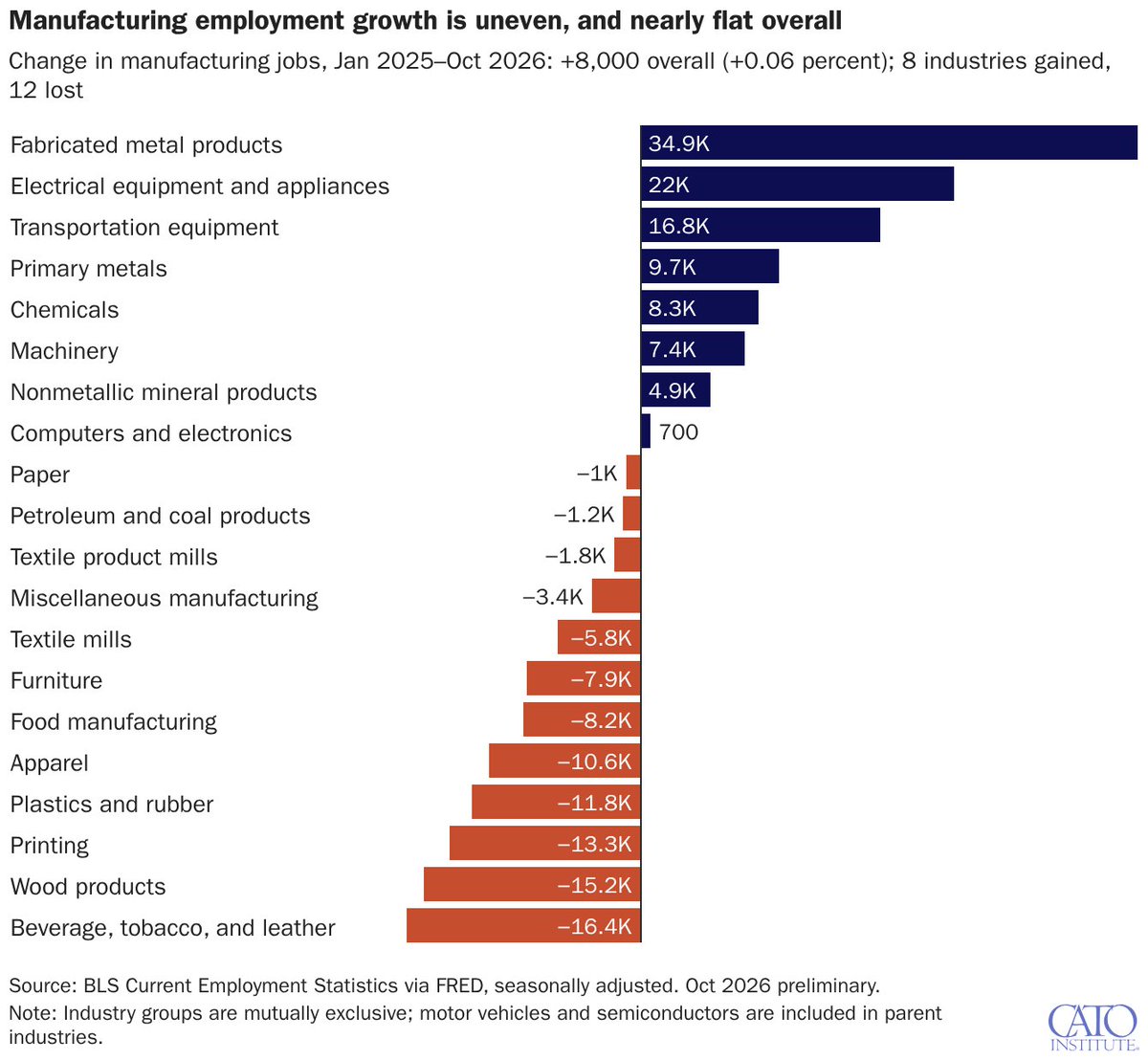
Tariffs are taxes on the imported parts and materials factories need. Since January 2025, manufacturing has added a net 8,000 jobs, and 12 of 20 industries lost workers. Congress can end the trade war, writes Cato's @KyleLHandley.
https://t.co/1TX8Ks4yjy
As the left and the right compete for Gen Z’s political allegiance, some young Americans are still finding their way to liberty. @RIKKISCHLOTT traces their paths in the new Free Society: https://t.co/aC7w3RBXVT
Foreign governments shouldn't be able to censor Americans. If Britain or Brazil orders a US platform to silence protected speech, the GRANITE Act would require US courts to reject that order and let Americans sue their foreign censors, says Cato's @dr_inserra.
https://t.co/qzP42R4JLK
This Thanksgiving, take a moment to be grateful for what our ancestors could scarcely imagine: plentiful food, well-lit homes, and lives long enough to watch our grandchildren grow up.
Cato’s @chellivia reminds us why the world is richer, healthier, and freer than ever.
When access to the grid depends on who holds political power, a single executive order could halt growth. Private grids would mitigate risks for data centers of a future president turning against them, says Cato’s @ts_fisher.
Amtrak has failed for decades. Congress should privatize it and open passenger rail to competition. Cato’s @CatoEdwards explains how private businesses could make rail service more efficient. #CatoRFE
https://t.co/6ygax3tCIz
Although Democrats condemn President Trump’s tariffs for raising prices, they also support protectionism. As Cato's James Bacchus notes, steel tariffs raise costs for US manufacturers, making cars and appliances more expensive.
https://t.co/k036VVZHf9
Democrats want lower health care prices, but expanding Medicare is fiscally irresponsible. There’s a better way both parties can support.
Universal Health Accounts would deliver higher wages, lower prices, and a large effective tax cut for all workers, says @mfcannon.
An equity portfolio won't fix the budget. Washington needs to cut spending, not find new ways to raise money using powers it was never meant to use. Cato’s @adamnmichel and @SantiagoForster explain why. #CatoRFE
https://t.co/Frxib8lyJi
“The idea that all this debt won’t bring a reckoning may sound tempting, but it’s questionable at best.” @veroderugy explains what the federal debt is already costing us.
https://t.co/gEY6IKdZbh
Data centers need power fast. You need affordable electricity bills. Can private grids help deliver both? Cato’s @ts_fisher joins @MrRBourne on “The Economics of It” podcast to explain.
YouTube: https://t.co/3ddRa0wFAX
Apple: https://t.co/jcTxnFzhDs
Spotify: https://t.co/FmomK2LJZN
The Cato Institute is launching the Vision for Liberty Award, which will pay $50,000, $25,000, and $12,500 to the three best written cases for individual liberty, limited government, free markets, and peace.
Submissions open March 1, 2027.
https://t.co/Yym6iCSrz1
“These humble creatures, who now bow down before you, will soon look down upon you.”
Cato's Letters advice for elections still holds up 300 years later. @PaulMeany2 revisits it in Free Society: https://t.co/HDVDBA3d8t
The jury is the most direct form of democratic power in America. When you sit in a jury box, you hold authority that no judge, prosecutor, or elected official can override.
Know your rights: https://t.co/rMqPooqkNO
“While President Trump has stopped immigration deals before, he has never actually had to veto immigration legislation. That means Democrats may have a stronger position than ever before,” say Cato’s @David_J_Bier and Irina Manta.
https://t.co/6LcAhY8n7n