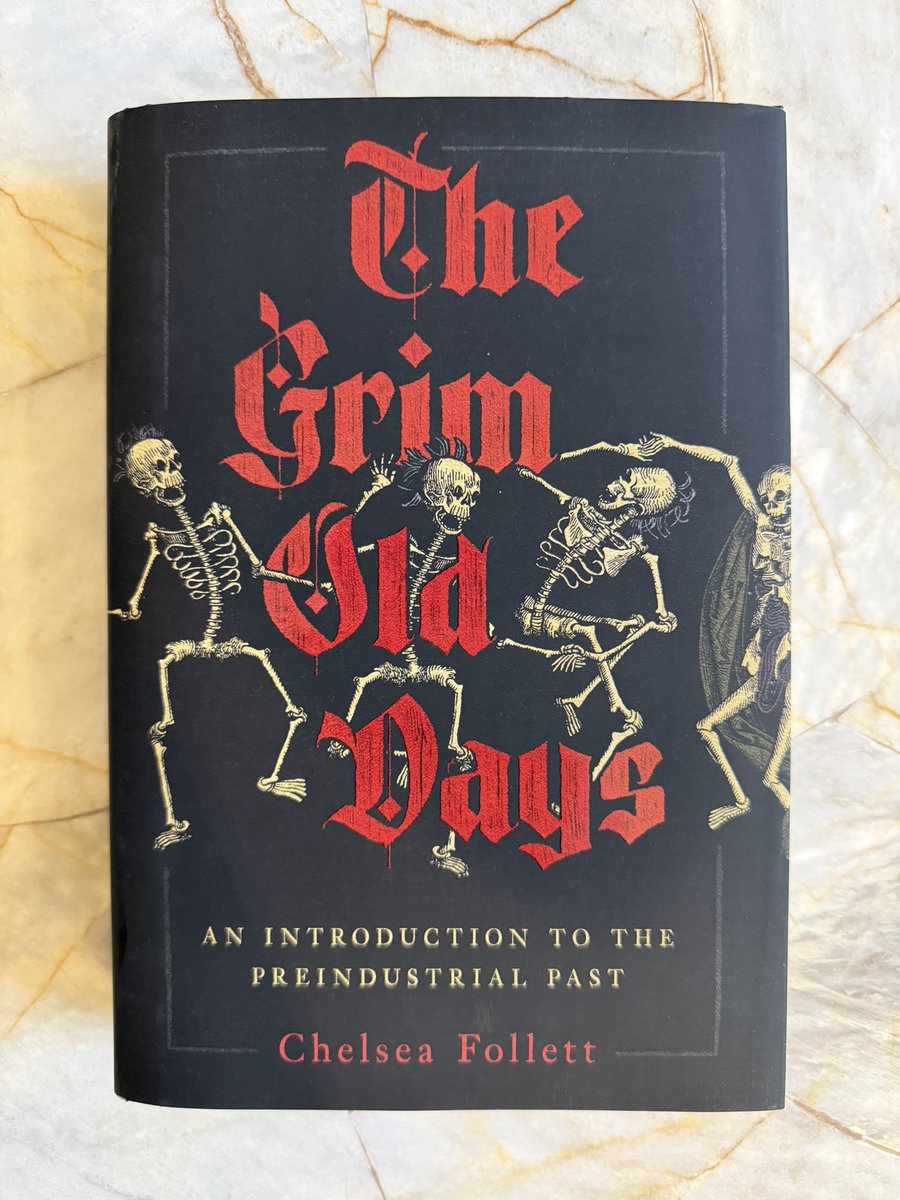
1/ 🧵 Raising children is expensive, but my chapter in the @CatoInstitute's new Handbook on Affordability outlines specific policy changes that reduce costs for families with kids.
For much of history, alcohol was not an occasional indulgence. It was woven into daily life.
@chellivia explains that people in the past drank at levels that seem almost impossible by modern standards — and that even children drank from very young ages.
Virginia wants “affordable childcare.” But more subsidies without cutting red tape can push prices up, not down. @chellivia argues that childcare is already heavily regulated—focus on barriers to entry, not bigger checks.
https://t.co/VkzswhCRXa
@Aethelcynd@politicalmath Putting PR and philanthropy aside, I would assume that the people who work at Google want a mosquito-free world for themselves and their children just as much as you and I do.
@jposhaughnessy@chellivia The good old days is a myth constantly adhered to… even Plato and the Pythagoreans talked about them, and wanted to arrest change
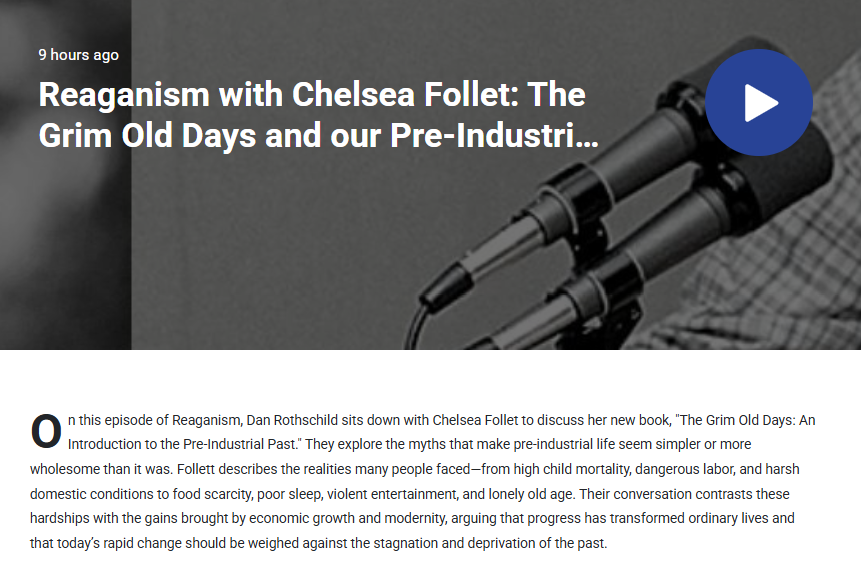
“The actual world that our ancestors experienced… was very far removed from this romanticized notion that some people have today of family life in the pre-industrial era.”
~@chellivia
London’s King’s College Hospital opened a rooftop ward to treat patients.
“Waking up in critical care can be disorienting and terrifying,” the hospital’s charity wrote in a statement. “To reduce fear and aid recovery, we’ve reimagined what critical care can look and feel like.”
#3: Falling fertility just reflects delayed births that will show up at older ages.
For delayed births to stabilize or increase fertility, older cohorts should be having at least twelve times more children.
Technically possible, but historical evidence makes it very unlikely.
The Trustees assume the current fertility rate of ~1.6 children per woman will increase to 1.9 by the early 2040s.
By 2100, SSA's projection is ~30% higher than Census and CBO — both project fertility will continue to decline.
@jposhaughnessy@chellivia Were my son born a year, maybe two, earlier, he wouldn't be here. The changes to some of the inputs in his IV's that he requires to live evolved at just the right time during his life to save him. I've always been aware of the need to make it to the point where these leaps occur.
For most of human history, child loss was tragically common.
Chelsea Follett (@chellivia) shares a personal story about childbirth, modern medicine, and the kind of progress we often take for granted.
“Jimmy Lai has been undaunted and he’s become an example for all of us. He’s become a symbol for the world.”
At Freedom House’s Annual Awards and 85th anniversary celebration, former National Security Advisor to President Trump @robertcobrien highlighted the bipartisan work to bring Jimmy Lai home and his courageous example in the face of repression in Hong Kong. Freedom House was honored to award Jimmy Lai this year’s Freedom Award. Learn more: https://t.co/VMmNDgbqBL
‘I know what the dark green environmentalists are proposing. They want us to deindustrialize deliberately and go back to the premodern era, adopting a radically techno-pessimist position. “The existing political and economic system is set to destroy civilisation and much if not all life on earth if allowed to continue” says Gail Bradbrook, the co-founder of Extinction Rebellion. The radical environmentalist and philosopher Derrick Jensen puts it still more plainly: “I want to bring down civilization.”
‘They will never find popular support for such a proposal. Some of us might be willing to abandon the more garish baubles made available by modernity, but almost no one truly wants to abandon the fundamentals: safe drinking water, antibiotics, electric lighting, plentiful food, obstetrics and the rest. No one wants to return to the Malthusian trap, not even antimodern groups like the Amish. You can tell, because when their children are gravely ill, they abandon the old ways and take them to modern hospitals. So do the dark green environmentalists. The revealed preference among humans is that we desperately want to live in technological societies.’
I wrote for @WSJFreeEx about the drive towards techno-optimism.
https://t.co/07RSatgMDB
Why politicians still need to read Adam Smith
In this week's episode of The Capitalist, @DrSamuelGregg sat down with CapX editor @marcsidwell to discuss why the 'success' of industrial poicy is an illusion, and why the bad ideas of the 1770s need to be fought all over again