Hello @SBLsite . In the Study Bible under Isaiah 14:4 footnotes, it reads that Sargon -II or Senncherib both were listed as Babylonian kings, but are Assyrian kings. The verse itself is meant to taunt Babylonian king. If I understood your footnotes wrongly, please pardon me.
@NadyaWilliams81@ZonderAcademic Hello Ma'am. Why do you think that the early Christians tried to link the past historical figures like Assyrian Sennacherib and Ashurbanipal with the present day Christian believers as if they are too closely related though having centuries apart in history?
I think I'm clear!?
Here's my new blog writing "Daniel - From the Lions' Pride to the Godly Pride".
Please do read it and comment back. Your comments are much valued.
Follow the link to read the blog -
https://t.co/SWJKQUfNqx
@Lanier_Greg Hello Sir.
There's already a book by the title "The Septuagint", and there's one more by the title "The Authority of the Septuagint". Of both which one would you recommend first to read for the benefit of the Church and as an individual? Thank you. Regards.
@WCCollier1@DrDavidAFalk@plainrunner2@MichaelFKane Hello Sir.
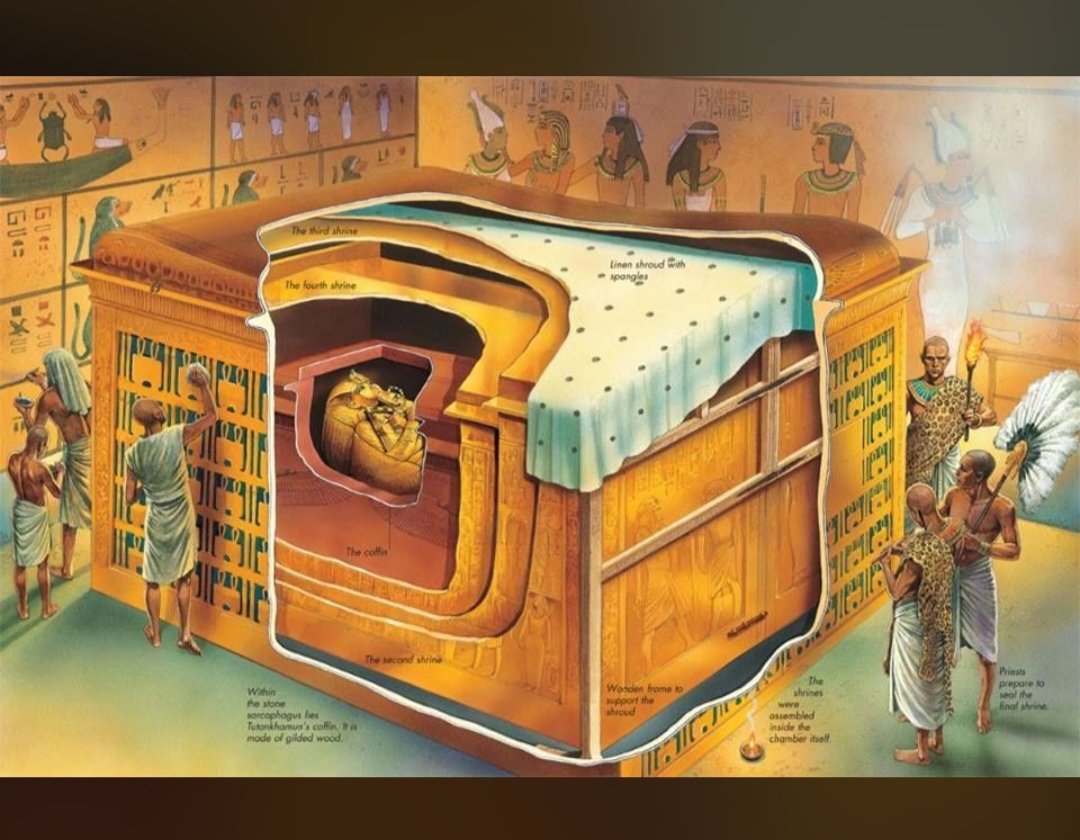
Sending you a picture of coverings over Tutankhamun's burial.
My question is - The coverings that we see in this picture has to do anything with the coverings over the Tabernacle by Moses?
Hope I conveyed my question clearly. Thank you.
In a world of technology it is difficult for someone to understand the redemptive work of Jesus Christ on the Cross of Calvary until we understand it in our present scenario.
Read my New Blog "Nehushtan, the Cross, and the Hadza tribe - a Nous".
https://t.co/ntTzql6MQW
This is the link to my new blog post "Psalm 23:5 and The Eucharist - An Insight".
Hope you'll read it and comment back either for corrections or encouragement. Your comments are much appreciated.
https://t.co/g8ePTlbhRx
This is the tomb of Xerxes-I (probably the king of the Book of Esther) located in Naqsh-e Rostam, in Fars Provience, Iran.
To know how God used him and Esther for the liberation of Jews, read my blog https://t.co/7zwlo8BzcC
📌Ermenek’te M.S. 7.–8. Yüzyıla Ait “Kominyon Ekmeği” Gün Yüzüne Çıkarıldı
Ermenek ilçesinde yer alan Topraktepe (Eirenopolis Antik Kenti) kazılarında, M.S. 7.–8. yüzyıla tarihlenen karbonlaşmış beş ekmek tespit edilmiştir. Bu ekmeklerden birinin üzerinde Hz. İsa tasviri ve Grekçe bir yazıt bulunmaktadır.
Yapılan epigrafik incelemelerde, yazıtta
“Kutsanmış İsa’ya Şükranlarımızla”
ifadesinin yer aldığı belirlenmiştir.
Ekmek üzerindeki figür, klasik “Kurtarıcı İsa” (Pantokrator) betimlerinden farklı olarak “Ekici” veya “Çiftçi İsa” biçiminde tasvir edilmiştir. Bu ikonografinin, dönemin dini anlayışında bereket ve emeğin sembolik önemine işaret ettiği değerlendirilmektedir.
Diğer ekmek örneklerinde Malta Haçı biçiminde baskı bezemeler tespit edilmiştir. Uzmanlar, bu buluntuların erken Hristiyanlık döneminde ayinlerde kullanılan “Kominyon Ekmeği” (Eucharist bread) olabileceğini değerlendirmektedir.
Ekmeklerin karbonlaşarak günümüze ulaşmış olması, koruma koşullarının olağanüstülüğünü göstermektedir. Buluntular, Anadolu’da bugüne kadar belirlenen en iyi korunmuş örnekler arasında yer almaktadır.
Kazılar, Kültür ve Turizm Bakanlığı, Kültür Varlıkları ve Müzeler Genel Müdürlüğü’nün izinleriyle, Karaman Müze Müdürlüğü Başkanlığında ve Müze Müdürü Ercan ER başkanlığında yürütülmektedir. Çalışmalar, Selçuk Ecza Deposu’nun sponsorluğunda ve Kazancı Beldesi İnşaat Tarım ve Hayvancılık Sanayi Ticaret Ltd. Şti.’nin destekleriyle sürdürülmektedir.
This is my new blog. An old Bible story in new light. Hope you read and comment back. If you like reading it, please share the same. Thank you.
https://t.co/Iw5D3THPZw