El sistema interno NSA Net reporta fallas este 17 de noviembre, según indican fuentes a CNN. La red permite a los empleados de esta agencia de seguridad enviar información clasificada. https://t.co/I5wVyxNhmX
#VíasECU911#LosRíos
Informamos que en la vía E-25 📍 Babahoyo - Jujan, km 55, el nivel del agua alcanza los 35 cm en el centro de la calzada y 39 cm en los carriles derecho e izquierdo y en el tramo Ecuavegetal, se registra 25 cm en el centro y 31 cm en ambos carriles.
En diferentes puntos se encuentran agentes de @transvialep y @CTEcuador, indicando a los conductores a reducir la velocidad.
#LíneaÚnicaParaEmergencias 9-1-1
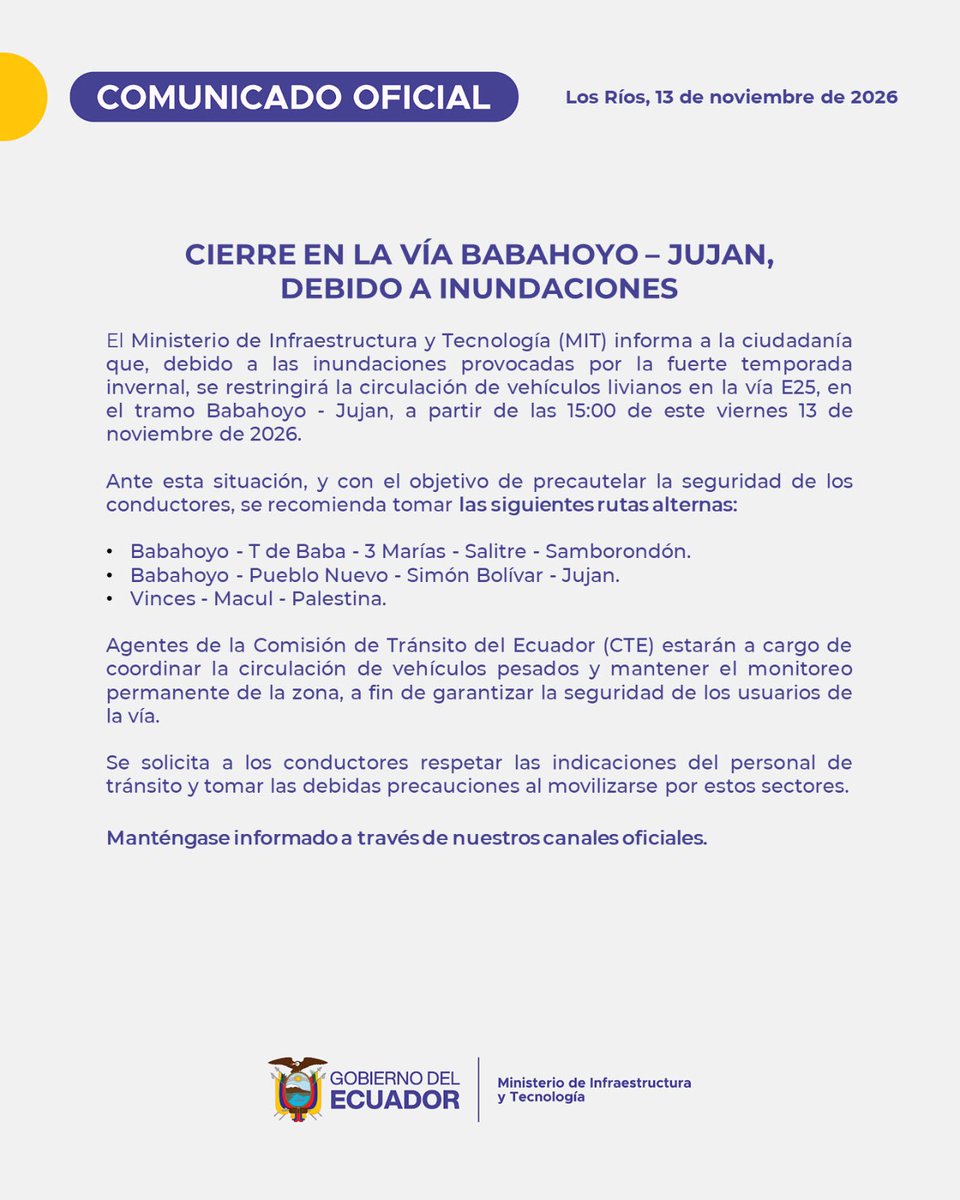
📌 #Comunicado | Debido a inundaciones por la temporada invernal, se restringe la circulación de vehículos livianos en la vía E25, tramo Babahoyo–Jujan, desde las 15:00 de este viernes 13 de noviembre.
Recomendamos utilizar las rutas alternas detalladas a continuación ⤵️
🚨🇪🇨 El presidente Daniel Noboa renovó por 30 días adicionales el estado de excepción por grave conmoción interna, mediante el Decreto Ejecutivo 532, firmado este miércoles 11 de noviembre de 2026.
📍 La medida rige en ocho provincias: El Oro, Esmeraldas, Guayas, Los Ríos, Manabí, Pichincha, Santa Elena y Santo Domingo de los Tsáchilas.
Entre las disposiciones que se mantienen constan la participación de las Fuerzas Armadas en coordinación con la Policía Nacional, la suspensión de la inviolabilidad de domicilio y correspondencia, y las requisiciones temporales de bienes y servicios.
🕒 ¿Qué pasa con el toque de queda? El nuevo decreto no especifica si esta restricción se renueva ni establece nuevos horarios. El toque de queda anterior, según la información publicada, finalizó el 10 de noviembre a las 05:00.
⚠️ La renovación del estado de excepción no significa que exista automáticamente un nuevo toque de queda.
#Ecuador #EstadoDeExcepción #DanielNoboa #Seguridad #VitoTVO
⚠️ 🇪🇨 💳 🗄️ PREVENTION ALERT - ALLEGED CRITICAL BREACH AND EXFILTRATION AT BANCO PICHINCHA (ACTOR: WHITELOTUS)
[STATUS: ALLEGED / UNCONFIRMED / THREAT ACTOR: WHITELOTUS / DATE: NOVEMBER 8, 2026]
Centralized cyber-intelligence systems have intercepted a disclosure and extortion post on underground forums (made on November 8, 2026) by the actor WhiteLotus. The report claims the exfiltration of confidential information and corporate databases from Banco Pichincha in Ecuador, further suggesting a potential compromise or exposure of a vector linked to the SWIFT financial network, following three months of persistence within the systems.
The actor provides a detailed breakdown—categorized by varying levels of criticality—that includes unmasked credit card data and personally identifiable information (PII), as well as irreversible biometric data, active session tokens, JWTs, cryptographic keys, and raw responses from internal APIs.
It is strictly noted that the veracity of this intrusion, the alleged exposure of the SWIFT system, and the overall authenticity of the exposed records have not been officially confirmed by Banco Pichincha or incident response centers in Ecuador.
Threat Actor: WhiteLotus.
Victim / Target: Banco Pichincha — 🇪🇨 Ecuador.
Sector: 💳 Banking, Financial Services, Technology, and International Payment Infrastructure (SWIFT). Publication Date: November 8, 2026.
Nature of the Incident: Alleged long-term compromise of banking networks (exceeding 3 months), involving the exfiltration of over 100 MB of data across thousands of structured files. This includes sensitive financial information, corporate credentials, biometric data, and access points to internal microservices.
🔍 TECHNICAL BREAKDOWN OF THE DATA (ALLEGED)
According to the technical categorization published by the author on the forum, the files and levels of exposure include:
N1 · Critical (Financial Data + Identity): 104 files in an SQL dump , containing full, unmasked 15–16-digit card numbers, linked in the same record to identification numbers, full names, and the name as it appears on the card. This includes 347 entries for "Cash Management" token requests following the loss or theft of a card.
N2 · Mass PII (Personally Identifiable Information): 1,413 files containing 65,290 records (associated with 7,683 unique identification numbers), including names, addresses, email addresses, phone numbers, dates of birth, and account numbers.
N3 · Biometric (Irreversible): 123 files located in `biometria_facephi/`, containing 307 KB biometric templates, 400 KB raw (unprocessed) selfies, and the complete FacePhi SDK in `wasm` format.
N4 · Credentials and Sessions: 2,840 files, including 296 JWT RS256 tokens, 122 active JWT session tokens, 267 password exports (`pw5_exports`), artifacts from "password spraying" attacks against Entra ID, and account recovery records. N5 · Internal Surface Area and API: raw API responses exposing internal hosts , 271 public keys in .pem format, and JavaScript bundles for the single-page application (SPA).
N6 and N7 · Traces, Methodology, and Corporate Data: Execution logs and methodological reports (writeups), along with corporate identifiers in JSON format, indicating the availability of over 100 MB of corporate data and an intent to negotiate access to the SWIFT network vector.
🛡️ TECHNICAL PREVENTIVE AND CONTAINMENT RECOMMENDATIONS (SOC / CSIRT / BANKING)
Audit and Immediate Revocation of Tokens and Credentials: Banco Pichincha’s security teams must immediately invalidate all active JWT tokens, rotate exposed cryptographic keys (.pem), revoke Entra ID credentials, and verify the integrity of authentication gateways.
Perimeter and SWIFT Network Monitoring: Conduct a comprehensive forensic review of SWIFT network connection nodes and payment systems to rule out any form of persistence, lateral movement, or transaction manipulation.
Customer Protection and Early Warning: Given the leak of unmasked card numbers, personally identifiable information (PII), and biometric records, it is imperative to activate strict transactional fraud monitoring protocols and notify affected users in accordance with data protection regulations.
🖥️ CENTRALIZED THREAT MONITORING SYSTEM
Intelligence System: https://t.co/wk9bZJ2Nli
Quickly check your security at: https://t.co/QZhWp0kFrO
Quotes and services: https://t.co/sx3BM5zbnK
#Ecuador #BancoPichincha #Banking #SWIFT #DataLeak #DataBreach #BreachAlert #DarkWeb #Hacking #ThreatIntel #ThreatIntelligence #InfoSec #CyberAlert #VECERT #SOC #CSIRT #Unconfirmed #SecurityAlert #CyberDefense #CyberRisk
#AlertaDigitalEC
Se reporta filtración de datos de @IESSec@SRIoficialEc, entre los expuestos estarían nombre, identificación, email, teléfono, domicilio, datos migratorios, referencias internas relacionadas con la afiliación o servicios de seguridad social, vía @VECERTRadar
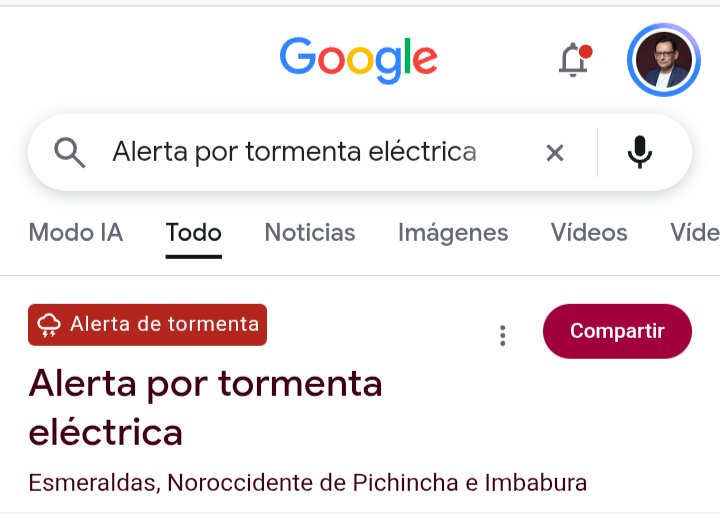
🚨 ¡Urgente! | Enjambre de Actividad Eléctrica Severa en Guayaquil 🇪🇨
Se observa una altísima densidad de rayos superpuestos exactamente en el corredor Daule – Samborondón – Guayaquil. Esta concentración masiva evidencia un pico de descargas intra-nube (IC) y nube-tierra en pleno desarrollo sobre la ciudad.👇
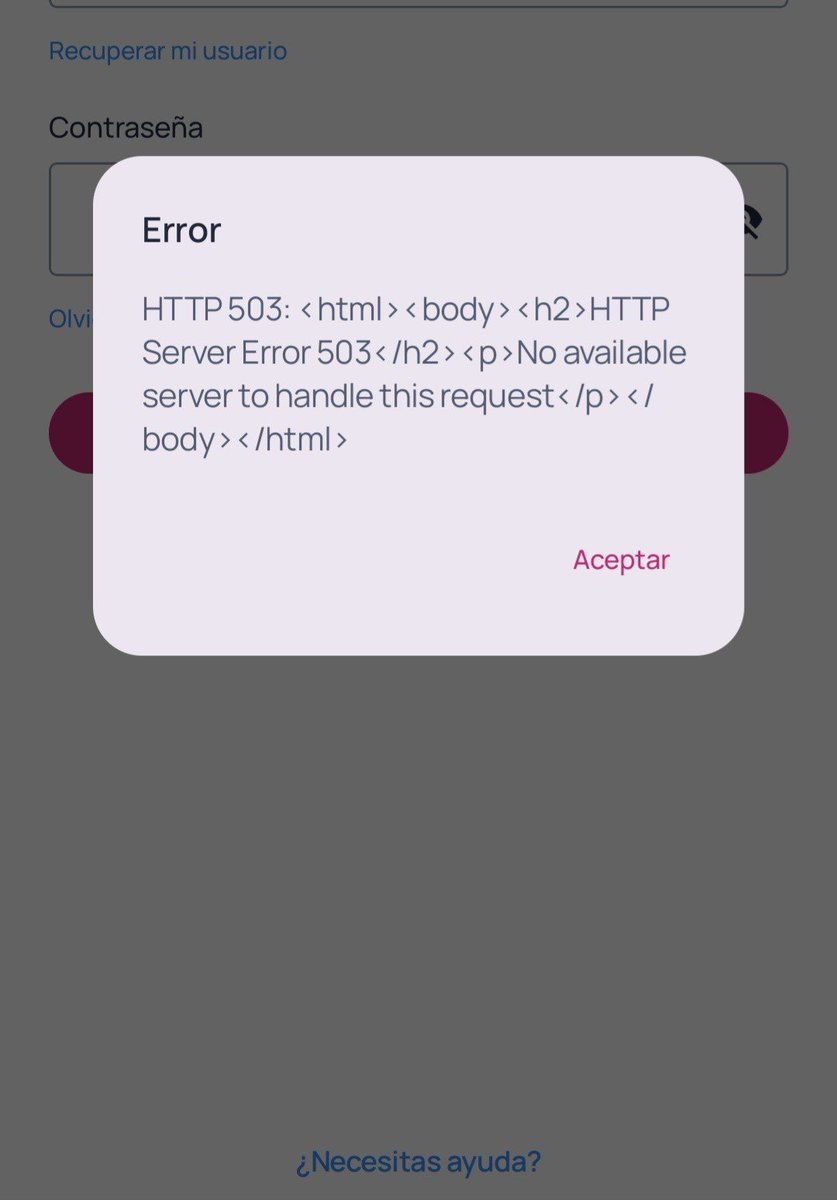
@BancoGuayaquil No es intermitencia, es caida. No se puede acceder. Por favor resuelvan porque estamos prácticamente iniciando un feriado de 4 días. Esperemos que la @superbancosEC tome acciones
@BancoGuayaquil@superbancosEC esta semana se ha caido 2 veces la app. No puedo acceder tampoco por banca web y requiero realizar pagos. ¿Que acciones van a tomar? Los usuarios no tenemos acceso a los servicios financieros y estamos en víspera de un feriado
Me cambié de @BancoPichincha a @BancoGuayaquil precisamente por su porquería en los servicios digitales, sobre todo en la app. Segundo día en menos de una semana que la app de @BancoGuayaquil está caída.
Definitivamente se necesita abrir el mercado.