#JNeurosci: Adkins et al. explored how binge alcohol exposure and protracted abstinence impact the S1-insular circuit in mice, revealing how alcohol can reshape sensory processing to drive alcohol use disorder-related behavior.
https://t.co/SZpF2V8hmD
This Week in The Journal #JNeurosci | Exploring Backpropagating Signals in Foveal Cones; Why Do Cochlear Implants Lead to Residual Hearing Loss? https://t.co/WZBI03R5QB
Calling all SmartBatch+ users! Have you validated a new antibody or tissue type?
Send us proof and receive 15% off your next reagent order for 1 new validation, or 25% off for 2+ validations.
📆 Submit your data by June 17th: https://t.co/3vdi0uijHb
The quality of your #lightsheet 🔬 data is directly dependent on how your sample was prepared. This video shows a general comparison of some popular #tissueclearing methods, followed by Clear+ results from several mouse tissue types.
What tissue type do you study? DALISPIM makes #lightsheet imaging simple + scalable for...
🧫 Organoids and other #NAMs
👥 Human clinical tissue samples
🐁 Rodents and other animal models
These were all imaged directly in multiwell plates! #FluorescenceFriday#microscopy
What tissue type do you study? DALISPIM makes #lightsheet imaging simple + scalable for...
🧫 Organoids and other #NAMs
👥 Human clinical tissue samples
🐁 Rodents and other animal models
These were all imaged directly in multiwell plates! #FluorescenceFriday#microscopy
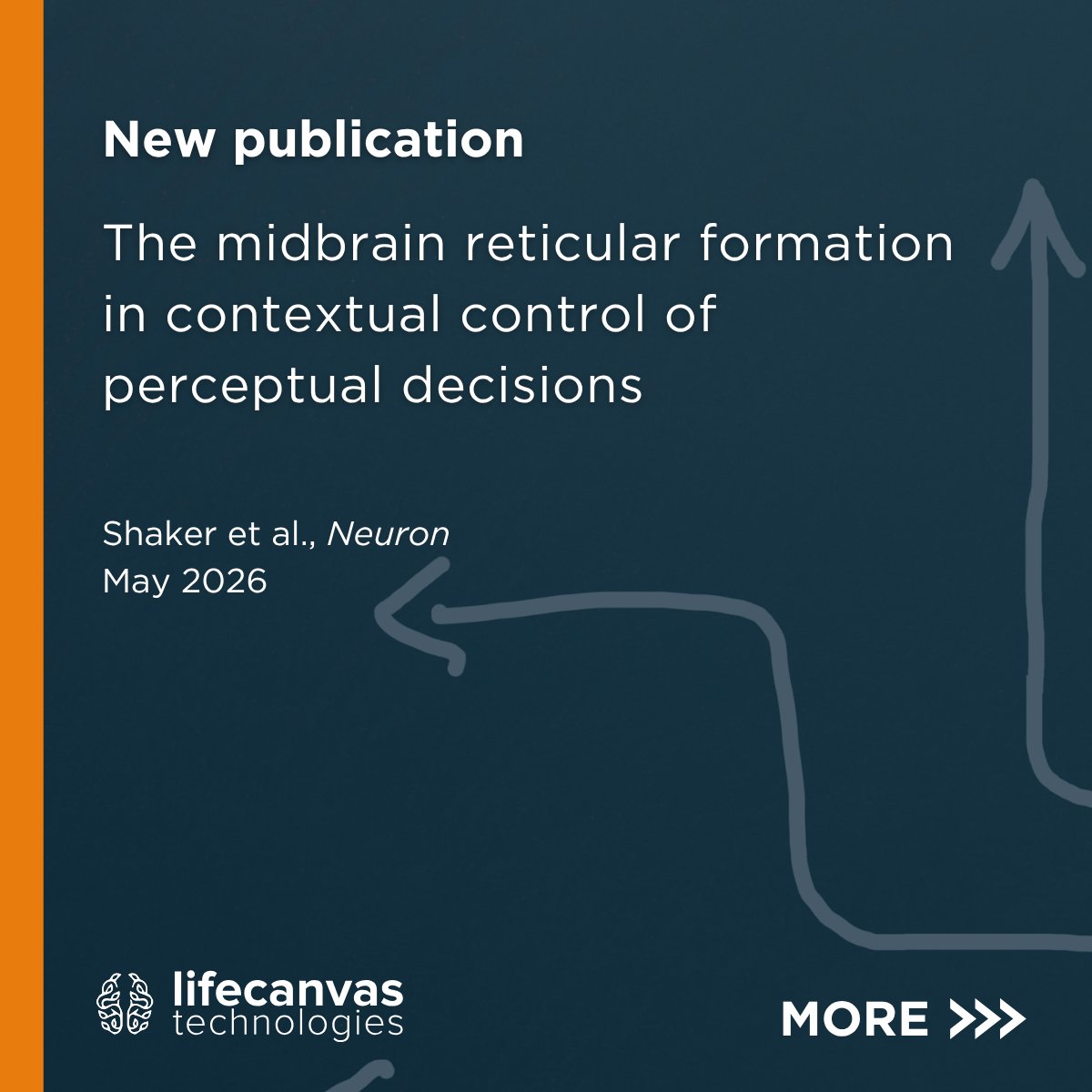
A new study from @SteinmetzNeuro’s lab dissects the neural circuitry of context-dependent responses – like deciding what to do during a fire drill vs a random fire alarm – honing in the role of a region called the midbrain reticular formation (MRF). (1/3) 🧵
By using anterograde viral tracing combined with Clear+ #tissueclearing and #SmartSPIM imaging to map axonal projections from the MRF throughout the brain, they found that MRF neurons connect to decision-making circuits underlying flexible behavior. (2/3)
This turtle embryo 🐢 was cleared by @MBLScience Embryology course students with SmartBatch+ & labeled with acetylated tubulin to see innervation. MBL scientists Paul Maier + Carsten Wolff imaged the embryo on a #MegaSPIM light sheet microscope #FluorescenceFriday
Hello from the last day of @CAN_ACN in Montreal! 🇨🇦 We've had a jam-packed week, including checking out the Neural Circuits & Behavior satellite event hosted by Mark Cembrowski & @Franklandlab.
Love microscopy and want to work in a dynamic imaging CoRE? 🔬 We’re hiring! Join our team to support cutting-edge microscopy, train users, and help drive exciting research projects. Apply now 📧
@liye_tsri By correlating whole 🧠 neural activity data w/ whole 🧠 in situ hybridization data, @EricJNestler's lab IDed genes affected by repeated use of cocaine & morphine. They then delineated a shared reward pathway by which these drugs interfere w/ homeostatic need fulfillment. (5/5)
How do you use c-FOS and other neural activity markers in your research? What if that data were brain-wide and spatially resolved?
Check out these studies to see how scientists are using LifeCanvas whole-brain c-FOS mapping to drive their investigations. 🧵 (1/5)
#neuroscience
@liye_tsri 📝 # 2: Drugs of abuse hijack a mesolimbic pathway that processes homeostatic need (Bowen Tan et al., Science 2023). Read it here: https://t.co/ITLvArfuCW (4/5)
Beautiful cleared heart samples 🫀 acquired with the @LifeCanvasTech SmartSPIM at our CoRE ✨ Proud to support this amazing work and publication through advanced imaging.
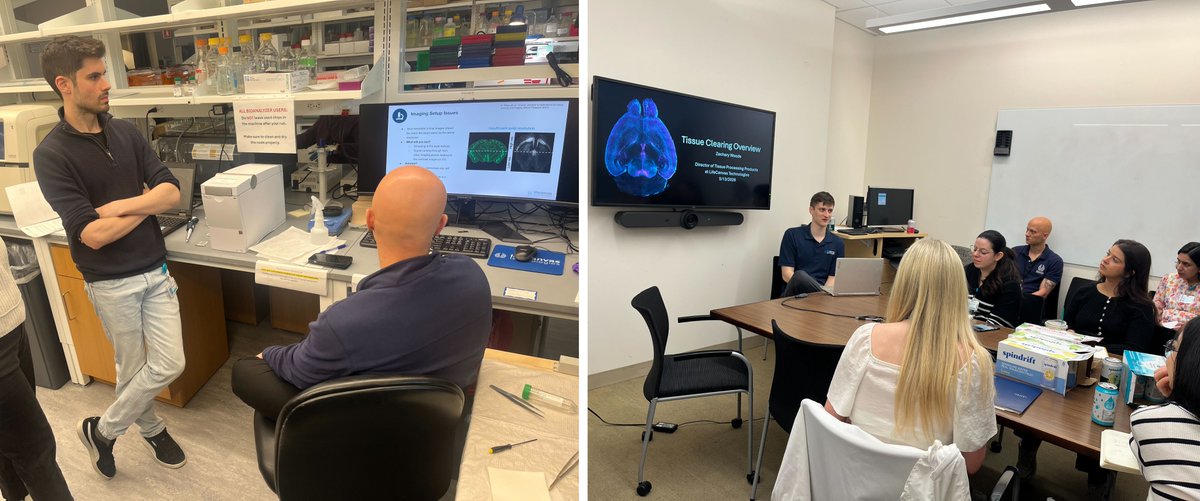
Last week, we dove into 3D #tissueclearing and #lightsheet imaging with researchers at Brigham & Women's Hospital. Thanks Drs. Charles Jennings & Lai Ding for hosting us at the NeuroTechnology Studio! Want to host a LifeCanvas workshop at your core? ✉️: https://t.co/QXfCc4PMeh
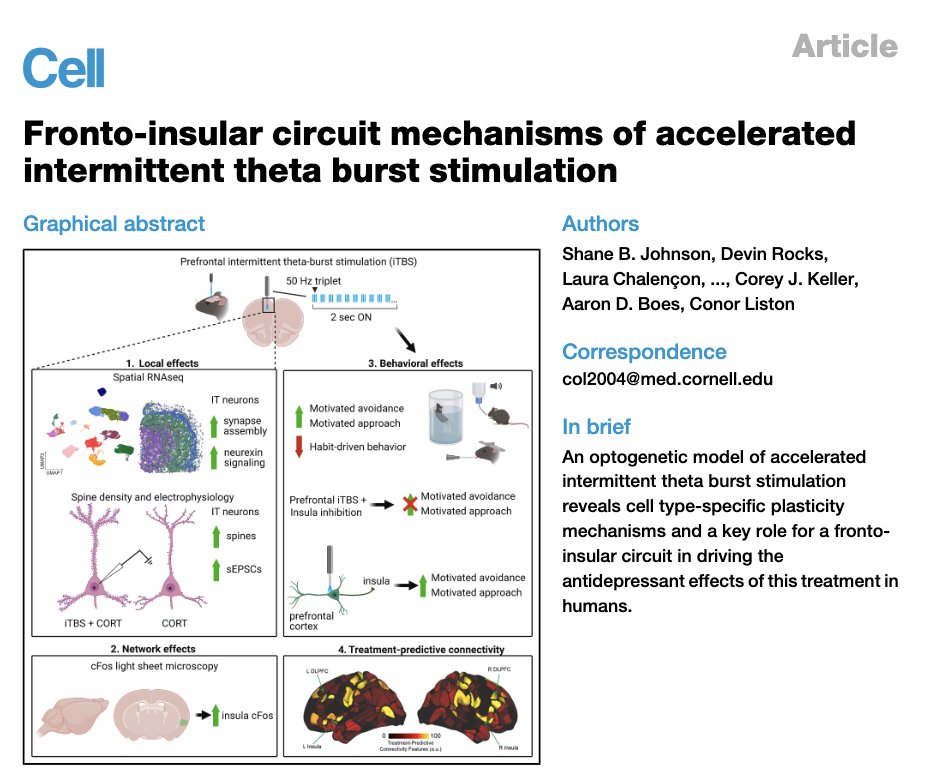
@DrocksNeuro By combining optogenetics, chemogenetics, & fiber photometry with LifeCanvas #tissueclearing, c-FOS labeling, & #SmartSPIM imaging, they were able to see that aiTBS activates a fronto-insular network that is necessary + sufficient for an antidepressant-like response. (5/5)
Happy #MicroscopyMonday! Today we're highlighting new findings from Conor Liston’s lab @WeillCornell that can help us improve non-pharmacological treatments for depression. Read on to learn more... (1/5)
Check out the paper: https://t.co/qvFoMjBXAy
@DrocksNeuro 💡 Cell-type specific effects on synapse-related gene expression
💡 Increased spine density & increased excitatory currents in prefrontal intratelencephalic projection neurons (4/5)