Bob Iger tells @khobi_price that new Lakers ownership intends to honor Mark Walter’s pact with Jeanie Buss to stay team governor.
Iger: “If things change, they’ll change, but we’re going into this with enormous respect and appreciation for who she is and what she represents …”
Brian Shaw explains why Phil Jackson had to coach Kobe differently during the first three Lakers Championships:
"Phil had no problem cussing Shaq out or getting on Shaq, but he would never say anything to Kobe early on."
"So I have German Shepherds and they are protection trained.. And my dog trainer always said to me the first six to eight months that you had his puppy don't ever tell it no because what we want to do is we want this dog to be so confident that he feels like he could do everything."
"The discipline part can come later on, once his confidence is at a certain point."
"So he gonna chew up your house dig up your yard or whatever. You just got to deal with it let your dog do what it feels like, he's the dude, he's the man."
"When we had the team meeting and I remember asking Phil how come you don't never say nothing to Kobe, I mean you always say everything to Shaq, you don't say nothing to Kobe... and he said because for this team we always need Kobe to be in attack mode."
"And then that immediately made me think about what my dog trainer said about my German Shepherd needs to be in attack mode, and it was exactly what our team needed."
"Shaq came from a disciplinary his father was his stepfather was military. Yes sir, no sir, and whatever you asked him to do, told him to do. He was obedient."
"Kobe was that German Shepherd puppy that nobody ever said no to... He had sisters, he was the only boy, father played in the NBA, and he was the The Golden Child..."
"Phil nurtured that confidence in him, at the expense of the rest of us on the team, getting the brunt of him yelling and screaming and what have you. But not saying a whole lot to Kobe.."
"But we needed that, he was always in attack mode."
"You talk about Phil just knowing personalities and how to kind of Coach everybody differently... Phil Jackson was the only man for that job."
“If LeBron wonders why he's not universally loved... THIS IS WHY. You're playing with people who are genuinely waiting for you to announce where you're going.”
-@MonseBolanos
“The words you used there are ‘people who genuinely care,’ and that's the part of this that just...LeBron isn't. He isn't being genuine.”
-@danbeyeronfox:
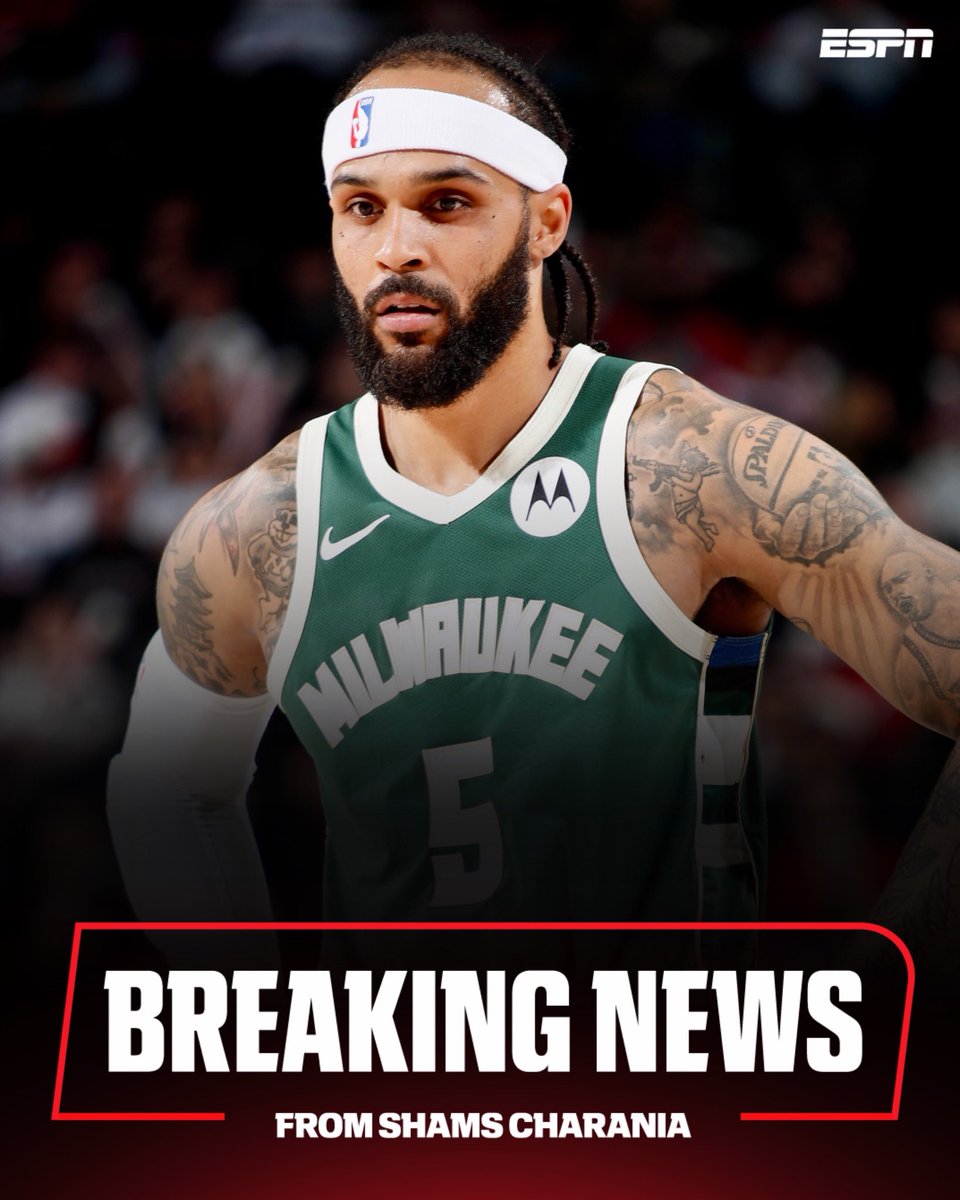
Free agent guard Gary Trent Jr. has agreed to a four-year, $64 million deal to stay with the Milwaukee Bucks, Klutch Sports CEO Rich Paul and agent Lucas Newton tells ESPN.
Most agree that the Russell Westbrook trade is what broke the relationship between LeBron and the Lakers (and derailed the rest of the tenure). But whose fault was the deal?
Here's (a long) thread on how it actually went down. All reporting is from my book, A HOLLYWOOD ENDING: THE DREAMS AND DRAMA OF THE LEBRON LAKERS.
1. The Lakers, coming off their 2020 bubble title, fell in the first round of the 2021 playoffs to the Suns. LeBron and AD were both hurt in that series. The offseason was 71 days long. (Everyone remembers 2020 as the Covid year, but 2020-21—remember empty arenas and "health and safety protocols"—was the truly strange one.)
2. The obvious move was to run it back. Maybe tweak along the margins. Instead, everyone—meaning LeBron and the Lakers—went looking for a third star. LeBron and AD talked to Damian Lillard, Bradley Beal, and DeMar DeRozan, but the Lakers didn't have the assets to trade for Lillard/Beal or the cap room to sign DeRozan.
3. LeBron and AD moved on to Westbrook, who was coming off a good season with the Wizards. The three talked. Westbrook told them he wanted in, that he'd sacrifice numbers, that he didn't care how many points he scored, that winning was all that mattered. The conversations went well. Westbrook called his agent, Thad Foucher, and told him he wanted to be a Laker.
4. Foucher called Pelinka, whom he'd worked with years earlier at the agency SFX. Pelinka didn't respond. But soon after Linda Rambis did. She told Foucher that, for now, she'd be his contact.
5. Somewhere between then and the draft, the Westbrook talks stalled. Pelinka opened a second, cheaper track: the Kings, for sharpshooter Buddy Hield, a package built around Kyle Kuzma. By draft day, all the Lakers needed was Montrezl Harrell picking up his player option to make the money work. He did a few hours before the draft. Woj then reported that the Lakers were moving "toward completing a deal to acquire Kings guard Buddy Hield for forward Kyle Kuzma and Harrell."
7. Only problem: that morning, Pelinka had gotten a call from Wizards GM Tommy Sheppard, who'd received a call from Westbrook, who'd heard about the Lakers' impending deal. Westbrook told Sheppard that he wasn't demanding a trade, but that if there were any way to get him to LA, he'd be grateful. Sheppard put Westbrook on the phone with Wizards owner Ted Leonsis, who told Sheppard to call Pelinka and see what could be done.
8. Westbrook had also spoken with LeBron, who told Pelinka that he preferred Westbrook over Hield. "We thought it'd be a good trade," Jared Dudley, who'd helped advise LeBron and Davis that offseason, told me for the book. Pelinka agreed. Everyone was on board. They just had to negotiate terms.
9. The only sticking point was draft compensation. The Wizards wanted the Lakers' first-round pick, No. 22 overall. Pelinka refused to budge, but the Wizards, knowing LeBron was leaning on him, held firm. A few hours later, and after Jeanie Buss had gotten on the phone with Leonsis, Pelinka gave in, and the deal got done.
10. So: whose fault was it? LeBron pushed for Westbrook, but the front office was fully on board. In other words: everyone had a hand in it, which made it easier for each side to blame the other. Which is exactly what everyone did.
Again, this was all in my book, which you can purchase at the link below.