@Picturesque_AI_ Yes, that wasted spend is real, and it often hides because early test clips look decent. Writing down what can't change before anyone opens a tool usually saves the rework later.
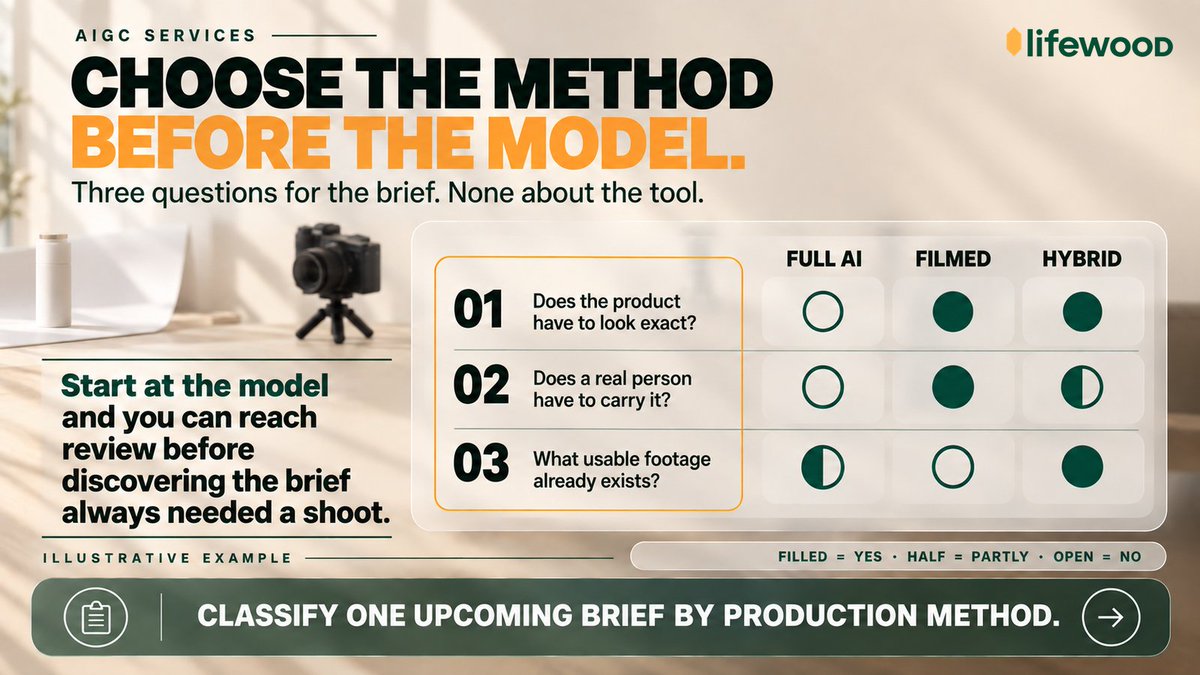
"Which AI video tool should we use?" is the wrong first question.
Does the product have to look exact? Does a real person have to carry it? What footage already exists?
Those three answers pick the method. Then the model question makes sense.
#AIGC#Lifewood
@Hsenju True, trust falls apart when nobody can prove which file got the yes. An approval that doesn't name the exact asset is basically a sticky note. The painful part usually shows up weeks later, when someone asks for the trail.
Two versions of the same AI generated ad. One approval message.
Nothing in either records which version the approval was for.
Open your last released asset and try to trace it without asking anyone.
#AIGC#Lifewood
@swarleylivies That shift matches what we see too. A prompt people reuse every day needs an owner and a version like any other ops asset. Starting with the one your team uses most keeps the habit small.
A prompt three people use every day isn't a shortcut. It's an operations asset.
So give it what assets get: an owner, a purpose, approved inputs, a version, evaluation examples, and a retirement trigger.
Start with the one your team uses most. #AIGC#Lifewood
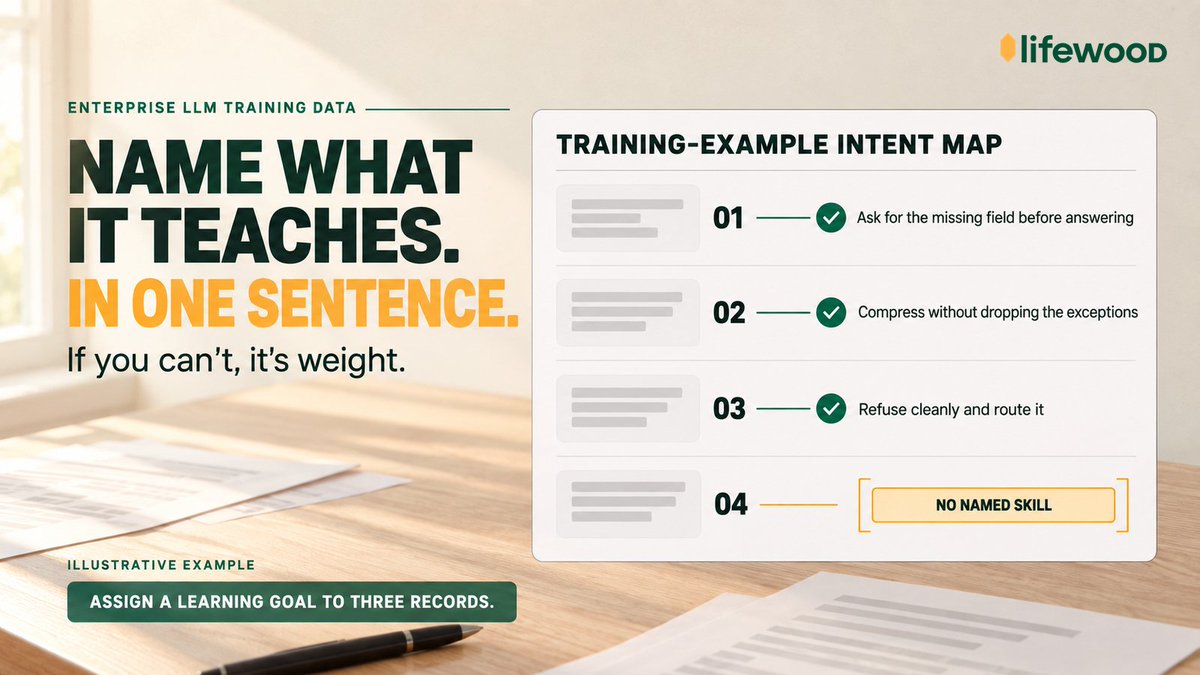
Pick one record from your LLM training set and name what it teaches, in one sentence.
If you can't, it's adding weight and not coverage.
Assign a learning goal to three sample records before you collect more.
#LLMTrainingData#Lifewood
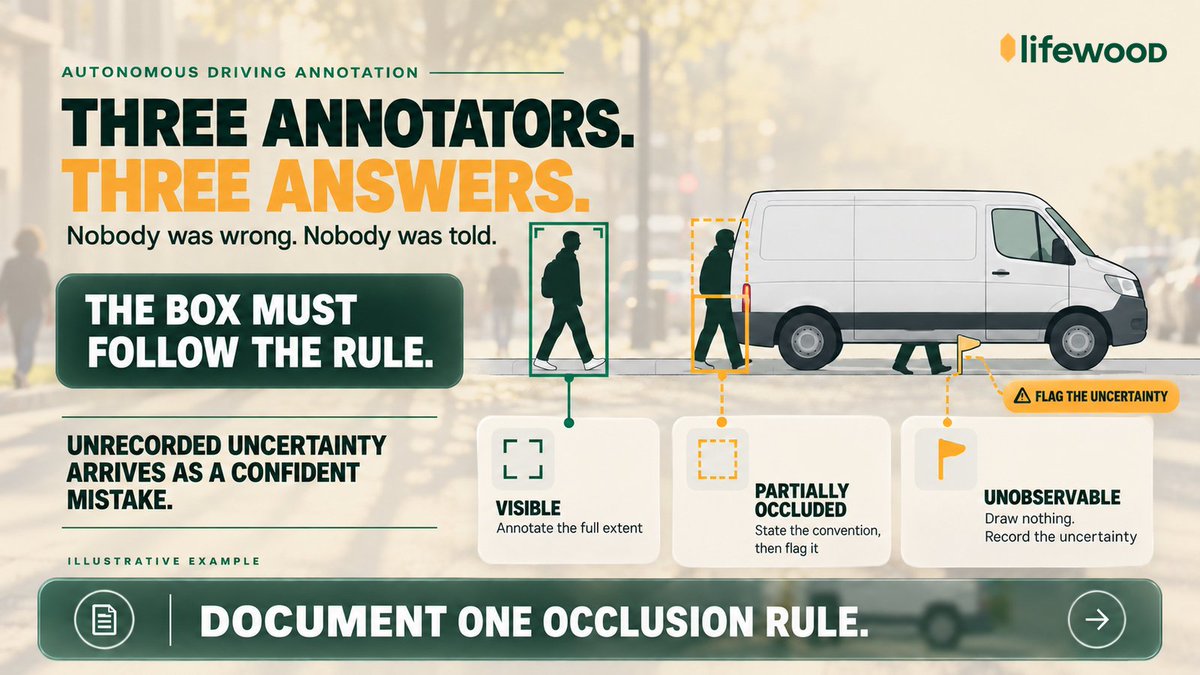
A parked van hides most of the pedestrian.
One annotator boxes the visible shoulder. One boxes the estimated full body. One skips it.
Nobody is wrong, because nobody was told.
Document the occlusion rule before labelling.
#DataAnnotation#Lifewood
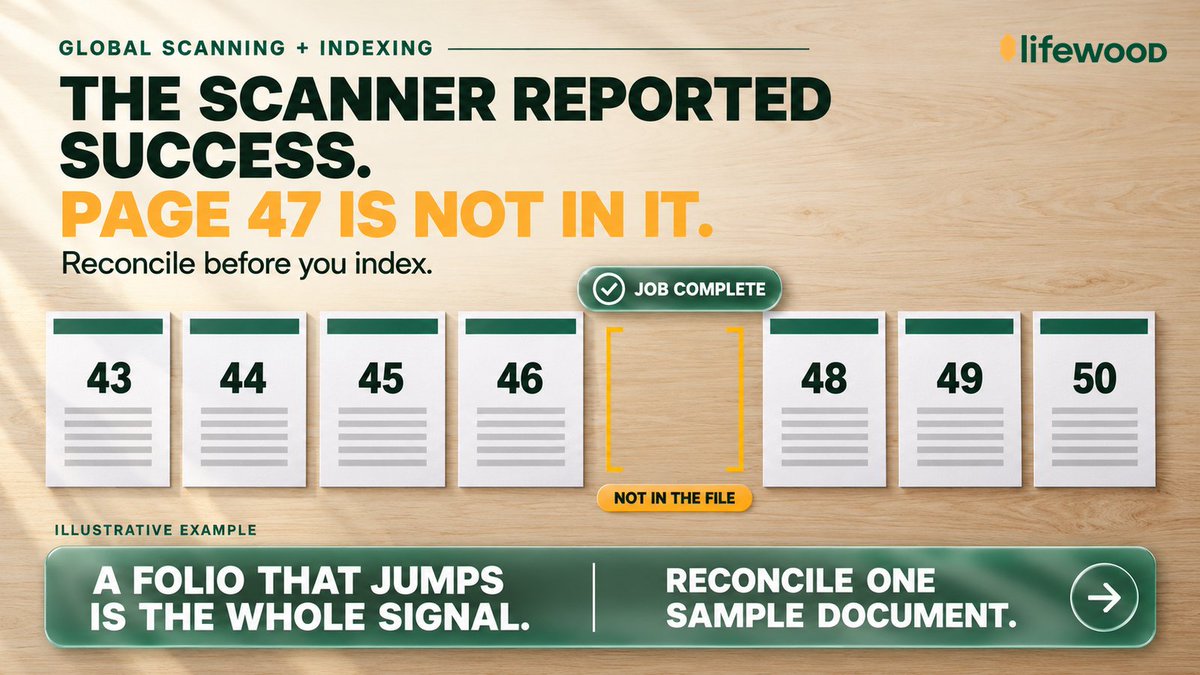
The scanner reported success. The file opens. Page 47 is not in it.
A double feed leaves no trace except a folio that jumps from 46 to 48.
Reconcile the page order before you index, not after.
#DocumentDigitization#Lifewood
"Fifty thousand documents."
One side is counting files. The other is counting pages.
Nobody finds out until acceptance.
Define the counting unit before you quote it.
#AIData#Lifewood
Play the first frame and the last frame of your video back to back, with nothing in between.
If they don't belong to the same video, the hook was bait.
Promise, evidence, resolution, ask. Every frame has to earn the next.
#AIGC#Lifewood
Your most detailed source is usually your least independent one.
Owned pages, directories, partner pages, editorial, reference entries. Five kinds, seven criteria, and most portfolios are almost all the first kind.
More content will not change the shape.
#GEO#Lifewood
Human review should be routed by risk, not spread evenly.
Six questions first: consequence, reversibility, audience, facts, rights, regulation. The answers set the tier. The tier sets the reviewer.
Tier the next piece before review.
#AIGC#Lifewood
Subtitles are the easy part of localising a video.
Language length, voice, casting, gestures, symbols, on-screen UI, legal context, shot duration, platform norms. Nine checks, before production, scene by scene.
Run one scene through them this week.
#AIGC#Lifewood
A strong article can still lose as an answer when the answer is four screens down.
What buries it: a long intro, a heading that doesn't match, two questions on one page, evidence somewhere else.
Count the screens on one article this week.
#AEO#Lifewood
AI visibility can rise while brand accuracy falls.
Did we appear? is half the check. The other half: right company, accurate claims, a next step that still works?
"Visible and wrong" is the square to fix first. Score one answer this week.
#GEO#Lifewood
Code has version control. Most AIGC content doesn't.
Six links per released piece fix that: prompt version, source inputs, tool context, reviewer, approved output, release destination.
Pick one piece you published this month and trace it back. #AIGC#Lifewood
The costliest reshoot starts with a missing rule.
Separately generated scenes drift: the jacket changes colour, the window moves, the cup vanishes.
Seven fields lock it: character, wardrobe, location, props, camera axis, light, screen state. #AIGC#Lifewood
Third-party profiles only help when they agree with your own page on the facts: name, description, location, services.
A system reading you has to guess when they differ.
Pick one listing you don't control and check it against your home page. #GEO#Lifewood
Two pages. Identical schema. Only one gets used as an answer.
Markup can describe a page. It can't supply an answer the visible text never states.
Open your best page and find the one sentence that answers its question. If you can't, neither can the system. #AEO#Lifewood