What needs to be proven in the records of history to make a good case for the Papacy as defined @ Vatican 1?
I would say that if you can show that Jesus Himself, being God-made-Man, designed the outward government of His Church to be led by one universal head, the Apostle Peter, and the person of his successor in the Roman bishopric, then I think you have everything you need to establish an extremely high probability for the truth of the Papacy of Vatican 1.
Because if Jesus drew the blueprint for His Church in this way, that the Petrino-Roman headship is an essential part of the DNA of the structure, then you have a high probability that such a thing is meant to remain with the Church until the end of time.
With that, we could just take that one element, i.e., the perpetual Petrine succession as the apex of Church government, and throw out all the ecclesiastical options in the world to see which one matches the best.
And this exercise doesn't even have to get into the measurements of "jurisdiction" and the neatly described power of "infallibility."
You could literally avoid those 2 matters and make a good case.
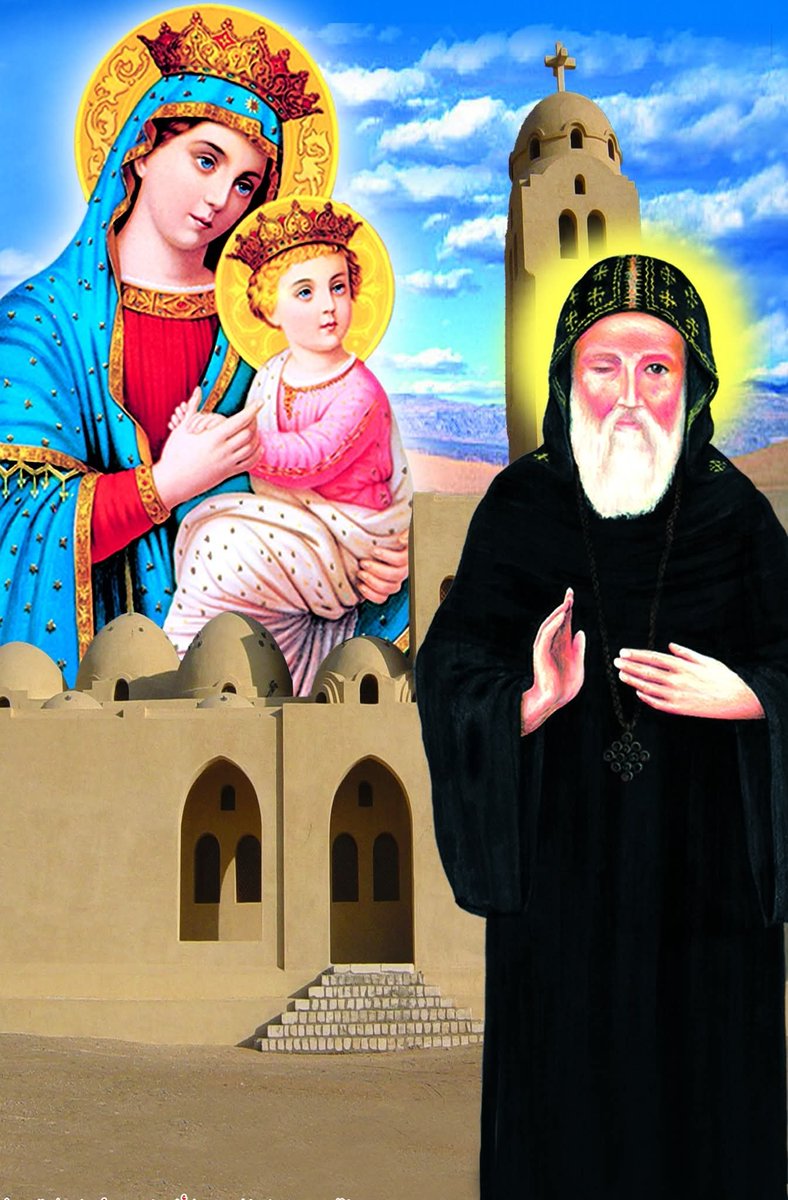
Saint Barsoum the Naked, clothed with virtue!
He is Saint Barsoum... a saint from the thirteenth century. He was born to a wealthy Coptic family and, from a young age, loved the Holy Scriptures. When his parents reposed, his uncle seized his inheritance and did not observe the bonds of kinship. Barsoum renounced the world and went to the wilderness on the outskirts of Cairo, worshipping the Lord. After that, he went to live in a cave or an underground room at the Church of Mercurius Abu Sefein in Old Cairo. There he lived for about 20 years, worshipping and practicing asceticism, spending his week fasting...
At the beginning of his life in the cave, a huge snake attacked him, but he overcame it by the power of the Cross and began calling it “Blessed.” The snake would share his food. Visitors would see it and become frightened, so the saint said to it, “From today, O Blessed One, do not show yourself to the people.”
Barsoum was strong in his faith. He lived as a monk even though he did not wear monastic clothing. He lived wearing only a little woolen clothing that covered his nakedness but did not protect him from the cold or heat. When they closed the churches in Egypt, he did not leave his place, so they arrested him, beat him with whips, and imprisoned him for a period. After that, he was released and was not shaken, and he went to live in rooms above the Church of St.Mercurius Abu Sefein. Then he completed his life in the Monastery of Shahran in Helwan until he reposed.
A certain dress was imposed on the Copts, and their turbans had to be blue. The saint did not want to change his white turban and was not afraid of anyone. On an old icon of him, the one who painted it wrote: “Saint Ava Barsoum the Naked from vice, clothed with virtue.” This is how he lived and this is how he struggled, so he was a martyr without shedding blood.
May his prayers be with us. Amen.
#عضمةزرقا
Dr. Yasser
WHILE THEY WERE PRAYING💔
Stones rained down on Christians inside St. George Church.
in Cairo back in July.
Our brothers and sisters in Christ were attacked and harassed simply for worshipping.
This is the reality too many refuse to talk about.
#EndChristianPersecution
#StandWithChristians
#PrayForEgypt
Este fragmento de la película Scoto recrea una de las grandes discusiones teológicas de la Edad Media: la Inmaculada Concepción de la Virgen María.
En tiempos del beato Juan Duns Escoto, a comienzos del siglo XIV, la Inmaculada Concepción todavía no había sido definida como dogma. Por tanto, su formulación y su explicación podían ser objeto de legítima discusión entre los teólogos.
La dificultad era importante: si María nunca estuvo bajo el pecado original, ¿cómo podía decirse que también ella había sido redimida por Cristo?
Duns Escoto dio una respuesta decisiva: María fue verdaderamente redimida por Cristo, pero de la manera más perfecta. No fue liberada del pecado después de haberlo contraído, sino preservada de él desde el primer instante de su concepción, en previsión de los méritos de Cristo. Es lo que se conoce como redención preventiva.
Siglos después, el 8 de diciembre de 1854, Pío IX definió solemnemente como dogma que la Virgen María fue preservada inmune de toda mancha de pecado original desde el primer instante de su concepción.
Conviene entender bien qué significa que algo sea definido como dogma. La Iglesia no «inventa» una nueva verdad ni hace verdadero algo que antes no lo era. Reconoce solemnemente y propone de manera definitiva como revelada una verdad contenida en el depósito de la fe.
Antes de una definición dogmática puede existir una legítima discusión teológica acerca de una determinada cuestión. Después de que la Iglesia la define solemnemente como verdad revelada, ya no estamos ante una simple opinión teológica: estamos ante una verdad de fe que debe ser creída por todos los fieles.
Ahí está también la grandeza del beato Juan Duns Escoto: ayudó a expresar teológicamente, siglos antes de la definición dogmática, el misterio de María concebida sin pecado.
#InmaculadaConcepción #DunsEscoto #VirgenMaría #FeCatólica
The Prophecy of Anba Samuel the Confessor About the End Times… Words As Though They Were Written for Our Time!
Attributed to Saint Anba Samuel the Confessor, one of the Fathers of the Church, are words of grave seriousness about the generations that will come in the end times, as though whoever reads them today sees before his eyes scenes from our reality!
He said about that time:
“Christians will greatly decline in that time and will be lazy about worshiping God.”
And they will be lovers of eating, drinking, and desires more than remaining in the house of God.
And they will frequent places of festivals, where there is eating and drinking, more than remaining in the love of God.
And they will sit in markets and streets, occupied with worldly matters, and will not care about the matters of the Church.
And the chapters of the Holy Bible that are read will not become firmly rooted in their hearts, nor will they benefit from the words of the Gospel as they should.
And some will come to church, but after the Divine Liturgy has ended, as though their coming is no longer for prayer and worship.
And he warns of a time in which people will do everything they want, without discipline, teaching, or rebuke.
And he says:
“Each one acts according to his own desire.”
The priest does not rebuke…
The elder does not teach…
The younger does not obey the elder.
And he warns of generations that abandon the laws of the holy Fathers and take the fasts lightly, to the extent that even those who fast do not complete their fasts as they should because of the desire of the belly.
And he describes the church as becoming a place for being occupied and talking, so people talk during prayer, chanting, reading, and preaching, instead of their hearts being occupied with God.
And he warns of people who do not pay attention to the Body of Christ and His Blood on the altar, as though the Mystery of the Eucharist has become an ordinary thing that does not fill the heart with reverence.
And the most serious…
He says that the one who speaks with holy zeal about the ecclesiastical laws and teachings, they open their mouths against him like a lion, as though he were an enemy!
Then he speaks about the pride that will increase in those days:
They will become proud toward one another,
they will complain against one another,
they will mock the words of the Holy Scriptures,
and not even some of the servants, priests, and monks will be spared from this.
He also speaks about a time in which vain glory and love of leadership will increase, and desire, evil looks, impurity, hatred, and deception will become among the illnesses of that generation.
Then he warns about monasticism itself, saying that a time will come when there will be many monks who joke and play, and monasticism will be blasphemed because of them, because they cast away from themselves the laws and teachings of the Fathers.
And he returns in the end to the most important thing:
Prayer… fasting… purity… humility… asceticism… patience… love… peace… and love of strangers.
And he says that if a person repents and turns away from his evil deeds, establishes prayer, and preserves uprightness, God will lift the troubles and discipline from him.
These are not words about the comfort of man in the end times…
They are words about spiritual decline:
When the number of Christians increases, but worship decreases.
When the churches are filled, but the hearts are emptied.
When people know the news of the world more than they know the Word of God.
When desire becomes stronger than prayer.
And when the one who holds fast to the teaching and ecclesiastical tradition becomes the stranger among the people!
And the most serious thing is that many of these manifestations we have begun to see before our eyes today.
Therefore, the words are not merely a prophecy to be read with amazement…
Rather, they are a severe warning of a time in which man leaves God, while remaining a bearer of