I CAN. I WILL. I AM.
Three simple statements that have become something of a personal philosophy.
This photograph was taken at Sentinel Pass in the Canadian Rockies. Standing there was more than a physical achievement. It represented determination, resilience and the belief that we are capable of far more than we sometimes imagine.
I'm Andrea, formerly known on social media as Lilith Mountainclimber.
Lilith represents female independence, defiance and the refusal to submit to expectations simply because society demands it.
Mountain climbing represents my determination to challenge limitations, including my own.
My interests span politics, women's rights, freedom of expression, independent thought, spirituality and personal transformation.
To me, these aren't unrelated subjects. They're connected by a common thread: personal sovereignty.
I believe in questioning narratives, challenging conventional thinking and standing by my convictions.
I don't expect everyone to agree with me. Nor do I need them to.
I believe in the freedom to think independently, the courage to speak openly and the determination to keep growing.
I CAN. I WILL. I AM.
Welcome to my corner of X.
“BE KIND.”
Two words that sound harmless. But what happens when they're used to discourage women from questioning, disagreeing or establishing boundaries?
Kindness should never require us to surrender our judgment.
My latest essay explores intuition, social conditioning and women's autonomy.
https://t.co/6QlPuyzdkx
THE MOMENT I BECAME GENDER CRITICAL
People sometimes talk about their “peak trans” moment — the moment something happened that caused them to question ideas about sex and gender they had previously accepted.
Mine happened around 2017.
At the time, I attended a women's group in another town. There were a number of women in the group, and one attendee was a man who identified as a woman.
And, at that point, I went along with it.
I called him “she.” I accepted what I was being told. I knew very little about the broader debate over gender identity, women's spaces, or what any of this would eventually become.
We actually got along quite well. We discovered we'd read some of the same books years earlier — books like Creative Visualization — and on a couple of occasions we met outside the group for coffee.
Then one evening he told me something that produced an immediate, almost visceral reaction in me.
His gender therapist, he said, had encouraged him to stop calling himself a “transgender woman” and simply call himself a **woman**, because that was what he was.
Something in me said: *No.*
Not out of hatred. Not out of cruelty.
I could not reconcile that claim with my understanding of biological sex.
I told him that whatever his experience of gender might be, he had not lived his life as a woman.
I talked about the experience of moving through the world as a woman, conscious of our physical vulnerability to men. The calculations women learn to make almost without thinking: Where am I? Who is around me? Is it safe to walk there? Should I get into that elevator? Who is behind me? Where are my keys?
I referred to the history behind Take Back the Night and why women's experiences of male violence mattered.
The atmosphere between us changed.
I could sense it.
For the first time, I was openly questioning something I had previously accepted without much thought.
Eventually, we finished our coffee and prepared to leave. Before driving home, I said I was going to use the washroom.
He followed immediately behind me.
Into the women's washroom.
I asked why he wasn't using the men's.
He told me he could be beaten up in there.
And then he walked into the stall beside mine.
I remember my discomfort vividly, even all these years later. I felt violated.
There I was, alone in an enclosed women's washroom with a man, immediately after I had explained why women sometimes need boundaries from men.
And suddenly, this wasn't an abstract philosophical discussion anymore.
It was happening to me.
It was only afterward, reflecting on the sequence of events, that I fully understood what I believed had happened.
I had challenged his claim to womanhood. I had explained why women's boundaries and lived experiences mattered. And immediately afterward, he followed me into a space where I felt particularly vulnerable.
I didn't experience that as a coincidence.
I experienced it as intimidation. An assertion of power. A reminder that my objections did not matter.
My background in counselling psychology and behavioural therapy had taught me to pay attention to interpersonal dynamics, changes in behaviour, and the relationship between what people say and what they do.
And decades of navigating the world as a woman had taught me something equally important.
Intuition isn't necessarily the absence of reasoning. Sometimes it's the rapid recognition of patterns we've spent a lifetime learning to identify.
I wasn't simply reacting to his presence. I was interpreting his behaviour within the context of everything that had just transpired between us.
That was the moment something fundamentally changed in my thinking.
I began asking questions I hadn't asked before.
When does compassion require us to surrender our own boundaries?
Does someone's identity automatically override another person's need for privacy?
Can we respect how another person chooses to live while still recognizing that biological sex matters in some circumstances?
And perhaps most importantly:
Why had I believed that being kind required me not to question any of this?
That night was my peak moment.
My views developed considerably afterward as I read, listened, and thought more deeply about the issue. But that was the crack in the foundation.
Once I questioned one assumption, I began questioning the others.
And I never went back to simply accepting something because I was told that accepting it was the compassionate thing to do.
I had been willing to accommodate his beliefs. But I was no longer willing to abandon my own judgment to do so.
I'm curious about the experiences of others.
If you've had your own “peak trans” moment, what was it?
Was there one particular incident, argument, or contradiction that made you stop and think:
Wait. Something about this doesn't make sense.
#PeakTrans #GenderCritical #WomensSpaces
In December 2025, Mélanie Joly announced a notice of default against Stellantis.
Nearly a year later, the Brampton plant is still idle, workers remain displaced, and Joly is announcing another notice and threatening to sue.
What happened to the earlier enforcement process?
In my view, Joly has failed on this file. Canadians deserve results, not another press conference.
#Cdnpoli #MelanieJoly #Stellantis
Looks can be deceiving. So can the stories attached to them.
This photograph is circulating with claims that it depicts a pro-Palestinian demonstration in Ottawa on Remembrance Day. But that date remains unverified, and there are indications the footage may be considerably older.
This is confirmation bias at work. When something reinforces what we already believe, we're more inclined to accept it without question.
But here's the real test of intellectual integrity: Are you willing to question something even when it supports everything you believe?
You can hold strong convictions without having a careless relationship with the truth.
#ConfirmationBias #CriticalThinking #TruthMatters
**Canada's immigration numbers: Are Canadians being told the whole story?**
Parti Québécois leader Paul St-Pierre Plamondon is raising concerns about the federal government's immigration figures, echoing questions recently raised by Conservative immigration critic Michelle Rempel Garner.
Speaking to reporters in Quebec City, Plamondon argued that while the government publicly emphasizes immigration targets of approximately 300,000, additional pathways allowing people already in Canada to obtain permanent residency push the overall figure considerably higher. He suggested the total could reach approximately 580,000 next year, exceeding even the levels established under Justin Trudeau.
His central criticism? **The government is not being transparent about the full picture.**
There is an important distinction between new arrivals and people already in Canada transitioning to permanent residency. But that distinction does not eliminate the need for transparency about the government's immigration policies or their cumulative impact.
Canada is already facing serious pressures involving housing affordability, healthcare access, infrastructure, and public services. Immigration policy cannot be developed in isolation from the country's capacity to accommodate population growth.
Canadians deserve clear, comprehensive numbers, not selective figures that make immigration reductions appear more substantial than they actually are.
**Transparency is not simply making numbers available somewhere in a government document. It is presenting those numbers in a way that gives Canadians an accurate understanding of what their government is actually doing.**
#CanadaImmigration #ImmigrationPolicy #MarkCarney #GovernmentAccountabilit
Mount Everest: The world's highest mountain, and one of the world's most expensive garbage dumps.
Climbers spend tens of thousands of dollars, sometimes considerably more, to stand on the summit of Everest. They pay expedition companies, hire Sherpas, and pursue what many regard as the ultimate personal achievement.
Yet behind the breathtaking photographs and triumphant summit stories lies a disturbing reality: abandoned tents, oxygen cylinders, discarded equipment, human waste, and mountains of garbage.
Yes, mountaineering provides valuable employment and revenue for Nepal. But at what cost?
There is something profoundly hypocritical about claiming to love the mountains while contributing to their destruction.
And while Sherpas risk their lives supporting expeditions, they are also frequently involved in the dangerous work of removing the waste left behind.
As someone who has climbed mountains myself, I have enormous respect for both the mountains and the physical and mental challenges of mountaineering. But there is a fundamental principle of hiking etiquette: Leave no trace. Pack out what you pack in. Respect the environment that has given you the privilege of experiencing it.
There is a difference between challenging yourself in nature and treating nature as a disposable backdrop for personal glory.
#MountEverest #Mountaineering #Sherpas #LeaveNoTrace
**When does freedom of religion become an assertion of dominance over public space?**
In this video, a group of Muslims is reportedly conducting communal prayers on a public street in New York City. When someone attempts to record the gathering, participants reportedly tell him he cannot film.
This raises a larger question about boundaries, authority, and the use of public spaces.
Freedom of religion is a fundamental right. But that freedom does not automatically extend to controlling public streets, obstructing others, or dictating what members of the public may record.
From a behavioural perspective, dominance is not always expressed through aggression. It can also be expressed through territorial behaviour, the assertion of authority, and the expectation that others accommodate one's demands.
We have seen public prayer gatherings in Western cities, including Toronto. The question is not whether Muslims have the right to practise their religion. Of course they do. The question is whether religious observance should take precedence over the equal rights of everyone sharing that space.
**Religious freedom deserves protection. But public space belongs to everyone. At what point does accommodation become an expectation of submission?**
#ReligiousFreedom #PublicSpaces #FreedomOfExpression
When did holding the government accountable become an interrogation of the opposition?
In this CTV Power Play interview, host Mike Le Couteur repeatedly challenged Conservative immigration critic Michelle Rempel Garner about what a Conservative government would do differently. Fair question. But the interview then turned to immigration policies under Stephen Harper in 2006 — twenty years ago — with repeated questioning about decisions made by a government that has been out of office for more than a decade.
Meanwhile, it is the Liberals who have governed Canada since 2015 and who are responsible for defending their current immigration policies. There is a legitimate place for examining the Conservatives' record and proposals, but that scrutiny should not displace accountability for those presently in power.
This also raises a fundamental question about journalistic independence. When governments provide financial support to the media industry, public scrutiny of those arrangements is entirely reasonable. Financial assistance does not automatically establish political bias, but it makes transparency and consistent journalistic standards all the more important.
Rempel Garner ultimately returned to the substantive issue: immigration levels must be assessed against Canada's capacity to provide housing, healthcare, infrastructure and employment opportunities. She also made the essential distinction that Conservatives would need to be elected to implement their own policies.
Journalists should challenge every political party. But the government of the day must answer for the decisions it makes today.
When does an interview stop being an exercise in accountability and start becoming a distraction from it?
#JournalisticIntegrity #MediaBias #CanadianMedia #CanadianImmigration
📌 Source: Michelle Rempel Garner, Conservative Immigration Critic
Watch her full commentary on the Carney government's immigration plan and the economic implications of Canada's immigration policies.
🎥 YouTube: https://t.co/H6LbIJIglf
Canada doesn't just need an immigration plan. It needs a plan for the people already here.
Conservative immigration critic Michelle Rempel Garner is sounding the alarm over the Carney government's latest immigration plan, questioning why Ottawa continues to pursue such substantial immigration numbers while Canadians face job losses, housing shortages, strained healthcare services, growing food bank demand and increasing economic insecurity.
She makes a particularly striking observation about what she sees as Mark Carney's approach to immigration: treating people as “sterile units of production and consumption.”
Her criticism goes beyond immigration numbers. It raises a fundamental question about the economic model driving Canada's immigration policies.
When businesses can continually access a large supply of temporary foreign labour, what incentive remains to compete for Canadian workers by offering better wages, benefits and working conditions?
Although employers are legally required to meet Canadian wage standards, the Temporary Foreign Worker Program has faced serious criticism over exploitation, wage violations and the vulnerability of workers whose employment and immigration status are tied to a particular employer.
The concern is that a system intended to address genuine labour shortages can instead become a mechanism for maintaining a supply of relatively inexpensive labour, benefiting employers while weakening workers' bargaining power.
There is another issue that deserves scrutiny.
The Carney government is creating additional permanent residency opportunities for temporary residents already in Canada, without first demonstrating that the underlying problems with temporary labour programs have been adequately addressed.
What does that mean for applicants who have spent years navigating Canada's established immigration system? And does transitioning temporary residents to permanent status resolve the structural problems, or simply change their immigration classification?
Immigration has historically contributed enormously to Canada's development. But successful immigration requires more than admitting people. It requires housing, meaningful employment, functioning healthcare and the infrastructure to support population growth.
People are not simply economic inputs. And a country's prosperity cannot be measured by population growth alone.
The question Canadians should be asking is whether our immigration policies are being designed around the long-term interests of the country, its workers and newcomers, or around the demand from large businesses for a continually expanding labour supply.
Who ultimately benefits from this economic model, and who is being asked to bear its costs?
#CanadianImmigration #TemporaryForeignWorkers #MarkCarney #MichelleRempelGarner
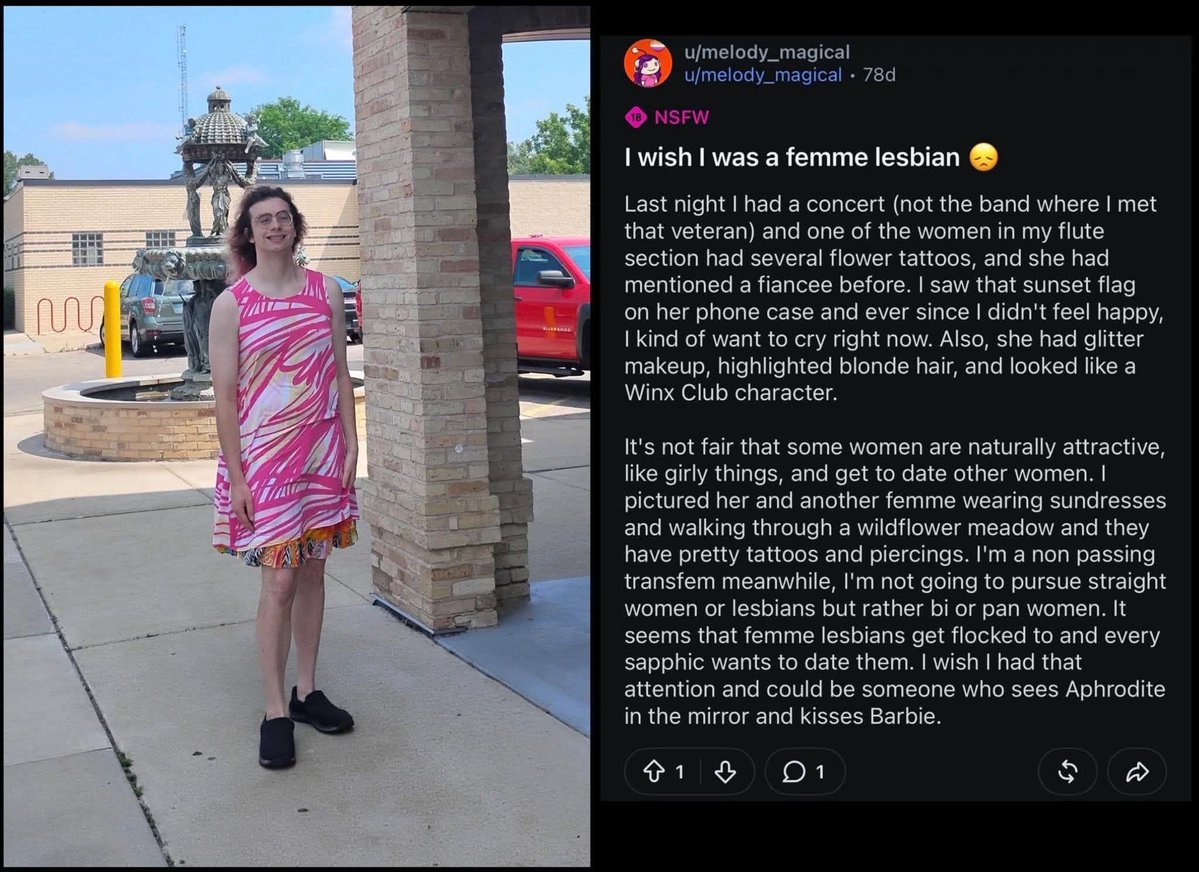
Is this womanhood, or the performance of a fantasy?
This man's description of his ideal self is revealing. He envies beautiful lesbians, dreams of looking like Aphrodite and imagines kissing Barbie. What he describes is not the reality of being female, but an idealized, highly feminized fantasy of womanhood. From a gender-critical feminist perspective, this raises a fundamental question: when men adopt stereotypically feminine clothing, appearances and behaviours, are they expressing an identity or performing their own conception of what a woman should be? And when that performance is presented publicly for affirmation, what role does social reinforcement play? Women are not costumes, aesthetic ideals or romantic fantasies.
Why should women be expected to validate a man's interpretation of womanhood as though it were equivalent to their own reality?
#GenderCritical #SexNotGender #RadicalFeminism
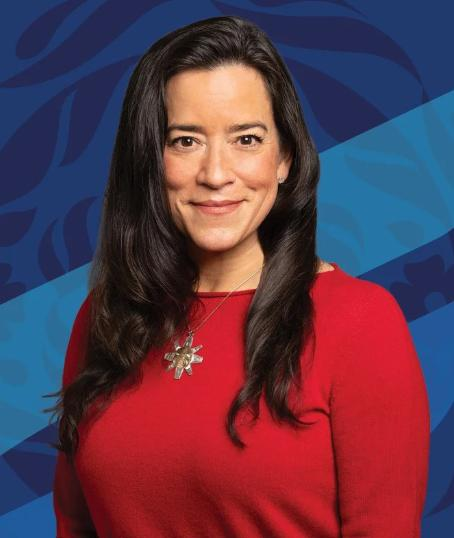
Canada doesn't have a shortage of politicians. It has a shortage of leaders people trust.
Last week, I wrote about Jody Wilson-Raybould and her refusal to compromise her principles during the SNC-Lavalin scandal.
The response was extraordinary. Hundreds of Canadians shared their thoughts. Some wished she had become Prime Minister. Others expressed admiration for her integrity and frustration with the state of Canadian politics.
Several asked what became of her.
Wilson-Raybould left Parliament in 2021, but she certainly hasn't disappeared. She has written several books, including Indian in the Cabinet: Speaking Truth to Power, and recently released The Inbetween Leader, which explores courage, accountability and leadership in an increasingly divided world.
I find that particularly interesting.
Seven years after the SNC-Lavalin affair, Canadians are still discussing a woman who refused to yield to political pressure.
Perhaps that tells us something about what people are searching for in their leaders.
We have become accustomed to political messaging, partisan loyalty, carefully managed public images and promises of accountability. Yet when someone demonstrates independence of judgment, it becomes memorable precisely because it seems so uncommon.
There is a fundamental difference between holding a position of power and demonstrating the character required to exercise it responsibly.
And perhaps the question Canadians should be asking isn't simply who deserves to be Prime Minister.
It's why integrity has become such an exceptional quality in the people we elect to lead us.
#JodyWilsonRaybould #PoliticalAccountability