Developers are saving 80% on Claude & GPT API costs. for shortcuts
Here's how it works:
KryxAI routes your API requests to the same Claude and GPT models — at a fraction of the official price.
→ Claude Sonnet 4.6: from $3.00 to $1.38/M tokens
→ Claude Opus 4.7: from $15.00 to $2.29/M tokens
→ GPT-5.4: from $3.00 to $0.58/M tokens
One line to switch:
ANTHROPIC_BASE_URL="https://t.co/u49xp7V5Ly"
Works with Claude Code, Cursor, VS Code, and any OpenAI-compatible tool.
✓ Same models, same quality
✓ No subscription — pay as you go
✓ From $10
✓ Crypto & card accepted
Start building for less → https://t.co/kj7Osxr3TT
Are you overpaying for AI APIs? 🧮
I used to spend $135/month on Claude Sonnet just for daily coding in Claude Code.
That’s $1,620/year.
Then I built KryxAI — an API proxy gateway that lets developers access Claude, GPT and more with lower pay-per-token pricing.
Real price comparison:
📊 Claude Sonnet 4.6
Official: $3.00 input / $15.00 output per 1M tokens
KryxAI: $1.38 input / $6.86 output
→ Save 54%
📊 Claude Opus 4.7
Official: $15.00 / $75.00
KryxAI: $2.29 / $11.44
→ Save 85%
📊 GPT-5.4
Official: $3.00 / $10.00
KryxAI: $0.58 / $3.44
→ Save 81%
Setup is simple:
export ANTHROPIC_BASE_URL="https://t.co/u49xp7V5Ly"
export ANTHROPIC_AUTH_TOKEN="your-key"
claude
Works with Claude Code, Cursor, Cline and other API-based tools.
No subscription.
Pay per token.
Minimum top-up: $10.
Crypto and credit card accepted.
No VPN or region restrictions.
My API bill went from $135/month to about $27/month.
If you use AI APIs daily, KryxAI can help you reduce your costs.
👇
https://t.co/kj7Osxr3TT
Cheap Claude & GPT API access for developers 🚀
KryxAI offers an OpenAI-compatible API gateway with pay-as-you-go pricing.
✅ Claude API discount
✅ GPT API gateway
✅ No subscription
✅ Minimum top-up $10
✅ Great for bots & AI agents
https://t.co/6e9xVs4WuQ
#ClaudeAPI #GPTAPI#AIAPI
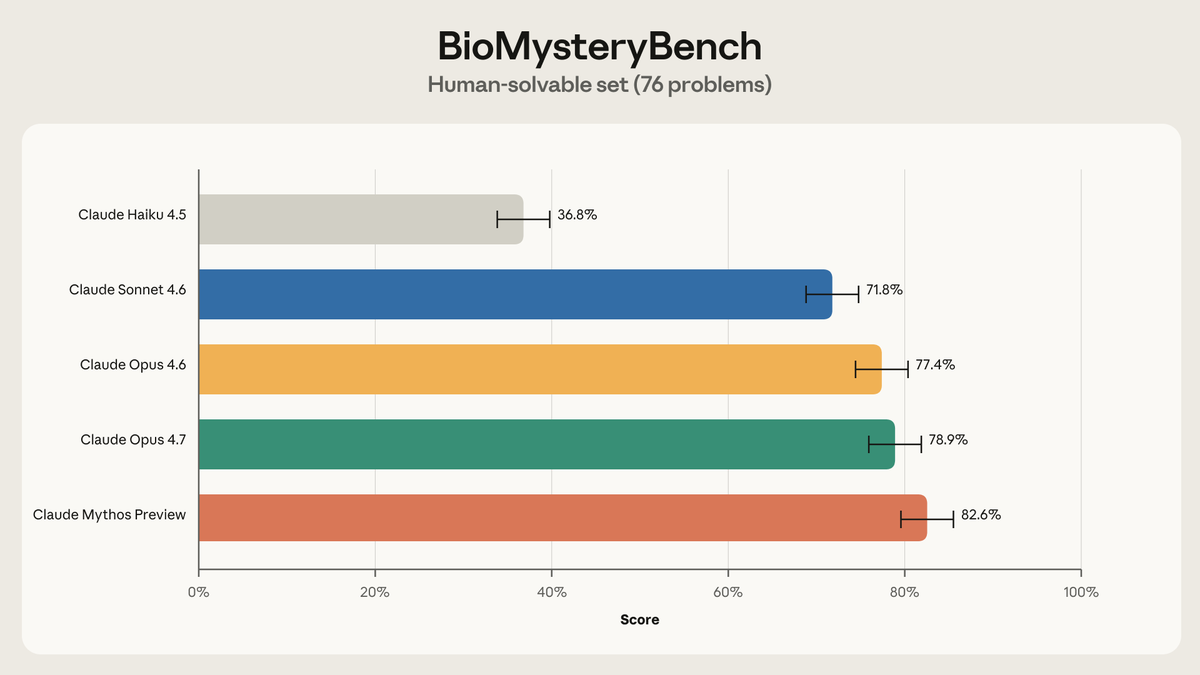
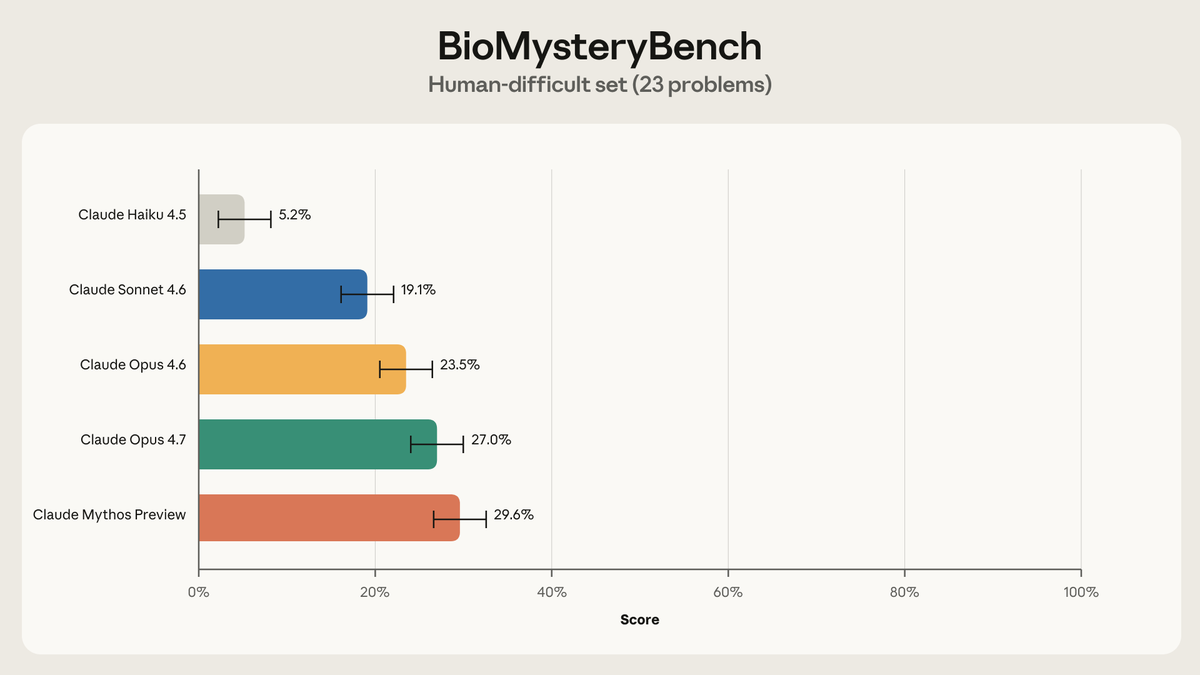
New on the Science Blog: We gave Claude 99 problems analyzing real biological data and compared its performance against an expert panel.
On 23 problems, the experts were stumped. Our most recent models solved roughly 30% of those—and most of the rest.