DO YOU WANT TO KNOW MORE?
*If you speak Serbian, please visit:
- X in Serbian: https://t.co/5NM8m2WogX
- FB in Serbian: https://t.co/rZho2Fcrnf
*If you speak German, please visit:
- WHATSAPP: https://t.co/ipAtN7f9f1
- INSTAGRAM: https://t.co/ST9oeFGigR
- X in German: https://t.co/Lu8LG4WNBA
*If you speak Russian, pleas visit:
- X in Russian: https://t.co/W0sdlYTk25
💫 𝗢𝗡𝗘 𝗢𝗕𝗝𝗘𝗖𝗧, 𝗢𝗧𝗛𝗘𝗥 𝗟𝗜𝗚𝗛𝗧𝗪𝗔𝗩𝗘
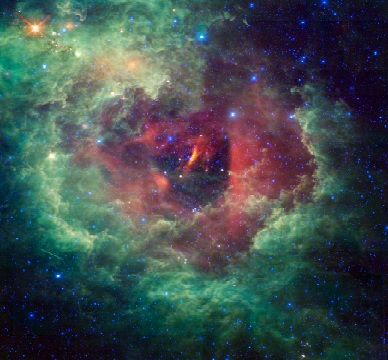
- LEFT we see the Rosette Nebula in visible light. Bright clouds of ionized hydrogen surround the young star cluster NGC 2244. The radiation from these young stars causes the gas to glow, giving the nebula its distinctive flower-like appearance.
- RIGHT we see the same object in infrared light. This wavelength penetrates the clouds of cosmic dust and reveals numerous young stars that remain hidden in visible light. It also highlights intricate dust structures spread throughout the nebula.
🌟 𝗔𝗦𝗧𝗥𝗢𝗡𝗢𝗠𝗜𝗖𝗔𝗟 𝗖𝗨𝗥𝗜𝗢𝗦𝗜𝗧𝗜𝗘𝗦
PLANETS WITH TWO SUNS
Some planets do not orbit a single star but a pair of stars. These worlds are known as circumbinary planets because they travel around an entire binary star system. To an observer on such a planet, two suns would rise and set across the sky. At times both stars would shine together, while at others one would pass in front of the other. Once considered the realm of science fiction, these remarkable worlds have now been confirmed by astronomical observations.
👽 𝗥𝗘𝗔𝗟 𝗜𝗠𝗔𝗚𝗘𝗦 𝗢𝗙 𝗘𝗔𝗥𝗧𝗛 𝗧𝗛𝗔𝗧 𝗟𝗢𝗢𝗞 𝗢𝗨𝗧 𝗢𝗙 𝗧𝗛𝗜𝗦 𝗪𝗢𝗥𝗟𝗗
Original photographs by professional photographers.
TODAY
At first glance, this looks like a giant glowing jellyfish drifting across the sky. In reality, it is the trail of a rocket. The photograph was taken shortly before sunrise. While the photographer was still standing in darkness, the exhaust plume from the rocket's second stage had already climbed high enough to catch the first rays of the Sun. Water vapour and carbon dioxide scattered the light, creating a shape that looks more like an alien creature than a launch into space. It is a reminder that Earth's atmosphere can sometimes create scenes that seem to belong to another world.
👀 𝗠𝗬𝗧𝗛 𝗖𝗛𝗘𝗖𝗞: Question for next Tuesday:
- Does the Sun rotate on its own axis?
A) Yes
B) No
We will reveal the answer next Tuesday.
*******************************************************************
👀 𝗠𝗬𝗧𝗛 𝗖𝗛𝗘𝗖𝗞: Question from last Tuesday:
- Is Jupiter's Great Red Spot a volcano?
A) Yes
B) No
ANSWER: B) No.
Jupiter's Great Red Spot is not a volcano. It is a gigantic storm in the planet's atmosphere that has been raging for at least several centuries.
👀 𝗠𝗬𝗧𝗛 𝗖𝗛𝗘𝗖𝗞: Question from last Tuesday:
- Is Jupiter's Great Red Spot a volcano?
A) Yes
B) No
ANSWER: B) No.
Jupiter's Great Red Spot is not a volcano. It is a gigantic storm in the planet's atmosphere that has been raging for at least several centuries.
******************************************************************************
👀 𝗠𝗬𝗧𝗛 𝗖𝗛𝗘𝗖𝗞: Question for next Tuesday:
- Does the Sun rotate on its own axis?
A) Yes
B) No
We will reveal the answer next Tuesday.
🔭 𝗛𝗨𝗕𝗕𝗟𝗘 𝗜𝗠𝗔𝗚𝗘 𝗢𝗙 𝗧𝗛𝗘 𝗪𝗘𝗘𝗞
At first glance, N11 looks like a delicate pink cloud drifting among the stars. Hidden within it, however, is one of the Universe's most remarkable processes – the birth of new stars. Located in the Large Magellanic Cloud, N11 is the second-largest star-forming region in its galaxy. It has also given rise to some of the most massive stars known.
Seen up close, the glowing gas resembles a soft swirl of candy floss. From farther away, its distinctive shape earned it the nickname the Bean Nebula. The beautiful shades of pink and blue are more than just eye-catching colours. They reveal glowing gas and young stars whose powerful radiation is shaping the surrounding space.
💫 𝗢𝗡𝗘 𝗢𝗕𝗝𝗘𝗖𝗧, 𝗢𝗧𝗛𝗘𝗥 𝗟𝗜𝗚𝗛𝗧𝗪𝗔𝗩𝗘
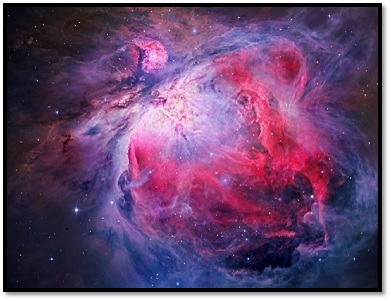
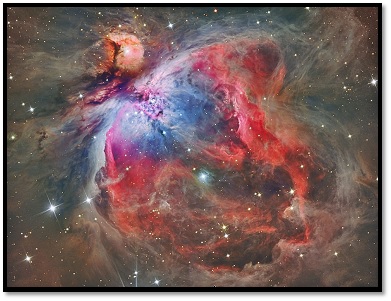
- LEFT: The infrared view penetrates clouds of cosmic dust, revealing parts of the Orion Nebula that remain hidden in visible light. It uncovers cooler clouds of gas and regions where new stars are being born.
- RIGHT: In visible light, glowing hydrogen clouds dominate the scene, illuminated by young, extremely bright stars at the nebula's core. This view reveals the intricate gas structure sculpted by their powerful radiation.
🌟 𝗔𝗦𝗧𝗥𝗢𝗡𝗢𝗠𝗜𝗖𝗔𝗟 𝗖𝗨𝗥𝗜𝗢𝗦𝗜𝗧𝗜𝗘𝗦
WHY DO WE ALWAYS SEE THE SAME SIDE OF THE MOON?
Many people think the Moon does not rotate because we always see the same side from Earth. In fact, the opposite is true. The Moon does rotate on its axis, but one rotation takes exactly the same amount of time as one orbit around Earth—about 27.3 days. As a result, the same hemisphere always faces our planet. This phenomenon is known as tidal locking. Over billions of years, Earth's gravity gradually slowed the Moon's rotation until it became synchronized with its orbit. That is why we almost always see the same side of the Moon, while its far side remained unseen until the beginning of the space age.
👽 𝗥𝗘𝗔𝗟 𝗜𝗠𝗔𝗚𝗘𝗦 𝗢𝗙 𝗘𝗔𝗥𝗧𝗛 𝗧𝗛𝗔𝗧 𝗟𝗢𝗢𝗞 𝗢𝗨𝗧 𝗢𝗙 𝗧𝗛𝗜𝗦 𝗪𝗢𝗥𝗟𝗗
Original photographs by professional photographers.
TODAY: ANTICREPUSCULAR RAYS
At first glance, it looks as if the Sun is sitting on the horizon in front of us, sending enormous beams of light across the sky. In reality, the opposite is true. The Sun is actually behind the observer. The clouds do not bend the sunlight. Instead, they block it in some places, creating long bright and dark bands that stretch across the entire sky—from one horizon to the other. When we look toward the side of the sky opposite the Sun, we see the far end of those same bands of light. Although they are almost perfectly parallel, perspective makes them appear to converge in the distance, just like railway tracks that seem to meet at the horizon. Whenever sunlight streams through gaps in the clouds, these bands extend across the whole sky. If you are standing in an open area with a clear view of both horizons, you may sometimes see their far end. That is when anticrepuscular rays appear.
👀 𝗠𝗬𝗧𝗛 𝗖𝗛𝗘𝗖𝗞: Question from last Tuesday:
- Could Saturn float on water if there were a lake large enough?
A) Yes
B) No
ANSWER: A) YES
As surprising as it sounds, Saturn's average density is lower than that of water. If there were a lake large enough, the planet could theoretically float. Of course, no such lake exists, and Saturn is a gas giant made mostly of hydrogen and helium. Even so, this fascinating fact shows just how different the planets in our Solar System can be.
******************************************************************************
👀 𝗠𝗬𝗧𝗛 𝗖𝗛𝗘𝗖𝗞: Question for next Tuesday:
- Is Jupiter's Great Red Spot a volcano?
A) Yes
B) No
We will reveal the answer next Tuesday.
🔭 ИЗОБРАЖЕНИЕ НЕДЕЛИ ОТ ХАББЛА
На этом впечатляющем снимке телескопа «Хаббл» показана область LH 95 — крупный район звездообразования в Большом Магеллановом Облаке, галактике-спутнике Млечного Пути. Красные облака состоят из светящегося водорода, который излучает под воздействием мощного ультрафиолетового излучения молодых массивных голубых звёзд. Тёмные пылевые нити отмечают более плотные участки облака, где ещё продолжается образование новых звёзд.
Астрономы обнаружили здесь около 2 500 очень молодых звёзд, в ядрах которых ещё не начались реакции термоядерного синтеза. Они продолжают накапливать вещество из окружающих газопылевых дисков и вскоре станут полноценными звёздами. Наблюдения также показали, что звёзды в области LH 95 возникали не одновременно. Уже миллионы лет здесь рождаются новые поколения звёзд, поэтому молодые и немного более старые светила сосуществуют в одной и той же космической колыбели.
🔭 𝗛𝗨𝗕𝗕𝗟𝗘 𝗜𝗠𝗔𝗚𝗘 𝗢𝗙 𝗧𝗛𝗘 𝗪𝗘𝗘𝗞
This spectacular Hubble image shows LH 95, a vast star-forming region in the Large Magellanic Cloud, a satellite galaxy of the Milky Way. The glowing red clouds are made of hydrogen gas illuminated by the intense ultraviolet radiation from young, massive blue stars. Dark dust filaments reveal denser parts of the cloud that still resist erosion by stellar winds and continue to hide new sites of star formation.
Astronomers have identified about 2,500 very young stars in this region that have not yet begun nuclear fusion in their cores. They are still gathering gas and dust from their surrounding disks and will soon become fully fledged stars. The observations also reveal that star formation in LH 95 has not occurred in a single burst. Instead, new generations of stars have been forming here for millions of years, allowing young and slightly older stars to coexist within the same cosmic nursery.
✨ 𝗘𝗔𝗦𝗬 𝗗𝗘𝗙𝗜𝗡𝗜𝗧𝗜𝗢𝗡 𝗢𝗙 𝗔𝗦𝗧𝗥𝗢𝗡𝗢𝗠𝗜𝗖𝗔𝗟 𝗧𝗘𝗥𝗠𝗦
- PERIHELION AND APHELION
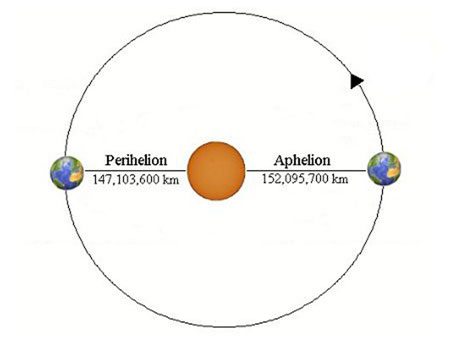
Earth does not orbit the Sun in a perfect circle but in a slightly elliptical path. As a result, there is one time each year when Earth is closest to the Sun and another when it is farthest away.
☀️ Perihelion – the point at which Earth is closest to the Sun (around 3 January), at a distance of about 147.1 million kilometres.
☀️ Aphelion – the point at which Earth is farthest from the Sun (around 4–6 July), at a distance of about 152.1 million kilometres.
The difference is about 5 million kilometres, but it is not the cause of the seasons. The seasons are caused by the tilt of Earth's axis, not by the changing distance from the Sun.
💫 𝗢𝗡𝗘 𝗢𝗕𝗝𝗘𝗖𝗧, 𝗢𝗧𝗛𝗘𝗥 𝗟𝗜𝗚𝗛𝗧𝗪𝗔𝗩𝗘
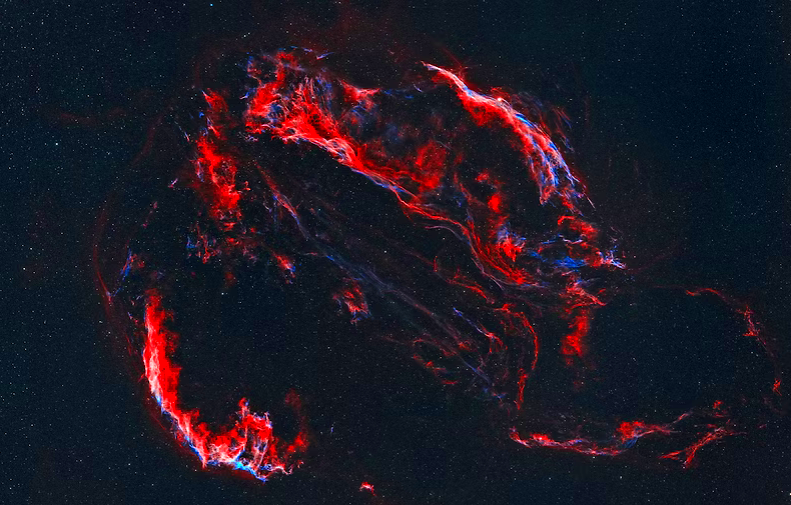
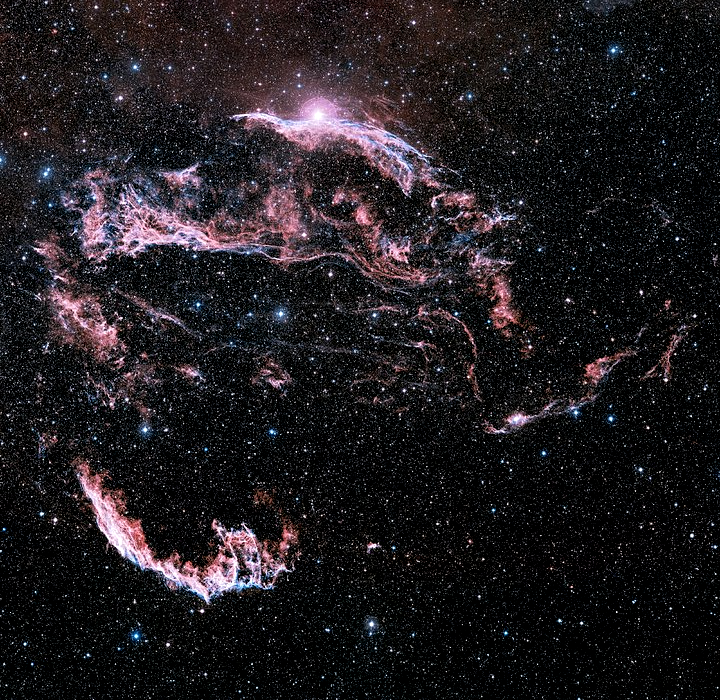
- LEFT we see the Veil Nebula photographed with a special filter that mainly records the light emitted by the gas within the nebula. This makes its delicate filaments stand out clearly, while the light from most of the stars is greatly reduced.
- RIGHT we see the same object in a more natural view. Here, both the stars and the nebula are clearly visible, allowing us to see where the Veil Nebula lies in the sky and how it appears as a whole.
👀 𝗠𝗬𝗧𝗛 𝗖𝗛𝗘𝗖𝗞: Question from last Tuesday:
- Does Earth pass through the asteroid belt?
A) Yes
B) No
ANSWER: B) No
Despite a common misconception, Earth does not pass through the asteroid belt. The main asteroid belt lies between the orbits of Mars and Jupiter, while Earth orbits much closer to the Sun. Individual asteroids can approach Earth's orbit, but they are not part of the main asteroid belt.
******************************************************************************
👀 𝗠𝗬𝗧𝗛 𝗖𝗛𝗘𝗖𝗞: Question for next Tuesday:
- Could Saturn float on water if there were a lake large enough?
A) Yes
B) No
We will reveal the answer next Tuesday.
🔭 𝗛𝗨𝗕𝗕𝗟𝗘 𝗜𝗠𝗔𝗚𝗘 𝗢𝗙 𝗧𝗛𝗘 𝗪𝗘𝗘𝗞
This Hubble Space Telescope image shows the galaxy cluster Abell 1689. The purple structure is not a photograph of matter but a map of the cluster's mass distribution derived from gravitational lensing. It reveals the location of the cluster's total mass, including dark matter that cannot be observed directly. Around the cluster, distant galaxies appear stretched and distorted. Their shapes are created as the cluster's immense gravity bends space-time and deflects the light travelling toward us. By studying gravitational lenses like this one, astronomers can investigate the distribution of dark matter and the geometry of the Universe.
✨ 𝗘𝗔𝗦𝗬 𝗗𝗘𝗙𝗜𝗡𝗜𝗧𝗜𝗢𝗡 𝗢𝗙 𝗔𝗦𝗧𝗥𝗢𝗡𝗢𝗠𝗜𝗖𝗔𝗟 𝗧𝗘𝗥𝗠𝗦
- BLACK HOLE
A black hole is a region of space where gravity is so strong that nothing, not even light, can escape once it crosses its boundary, known as the event horizon. Most black holes form when a very massive star collapses under its own gravity at the end of its life. At the centres of most large galaxies there are also supermassive black holes, whose masses can be millions or even billions of times greater than that of the Sun. Although black holes themselves emit no light, astronomers detect them by observing their effects on nearby stars, gas and light. Today we know that they are an essential part of the evolution of galaxies and among the most fascinating objects in modern astronomy.