2 weeks until #EHA2026, where the global #hematology community meets in person or online. This annual conference is a yearly highlight, with an exceptional scientific program, plenary sessions and symposia. Lilly is proud to support this event as a sponsor. Will you attend?
During Mental Health Month, we note mental health challenges are common in hematological malignancies (HM). Yet a study found under half of HCPs believe patients' psychosocial support is adequate. (Brett J, et al. BMJ Open. 2023;13(2):e060106)
Supporting mental wellbeing: Your top recommendation to patients with a HM?
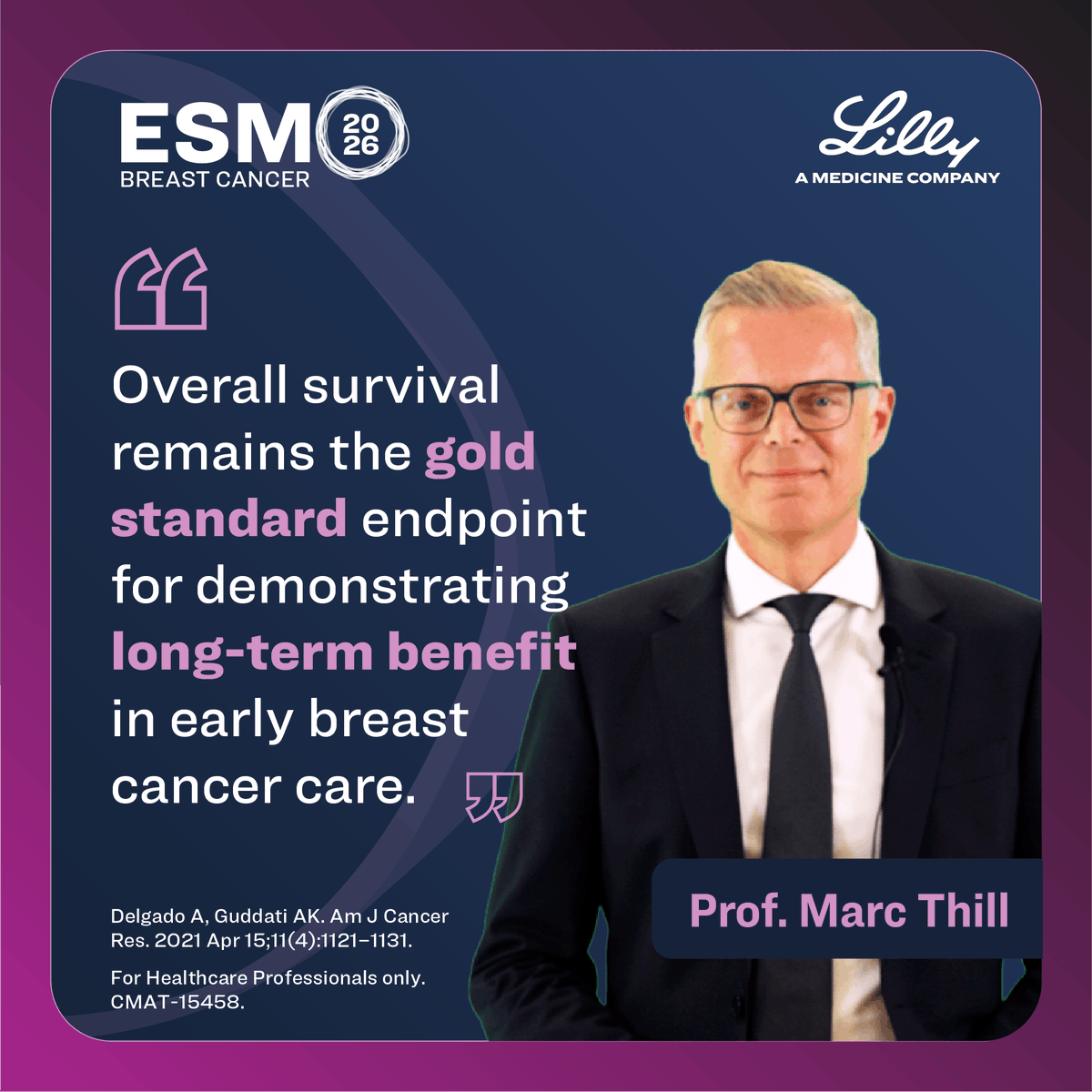
Overall survival is the gold standard in #BreastCancer, but is not always the primary trial endpoint.¹,² Listen to an expert explore why alternative endpoints may fall short.¹,² How do you rate endpoints in practice?
International Nurses Day: Celebrating oncology nurses! Vital in CLL/MCL, they translate complex science into essential daily support for patients & families across the entire cancer journey.
As #ESMOBreast26 wraps up, the conversations move forward.
We’re grateful to everyone who connected with us throughout the congress. Together, we continue helping shape the future of #BreastCancerCare.
Stay connected for our next event!
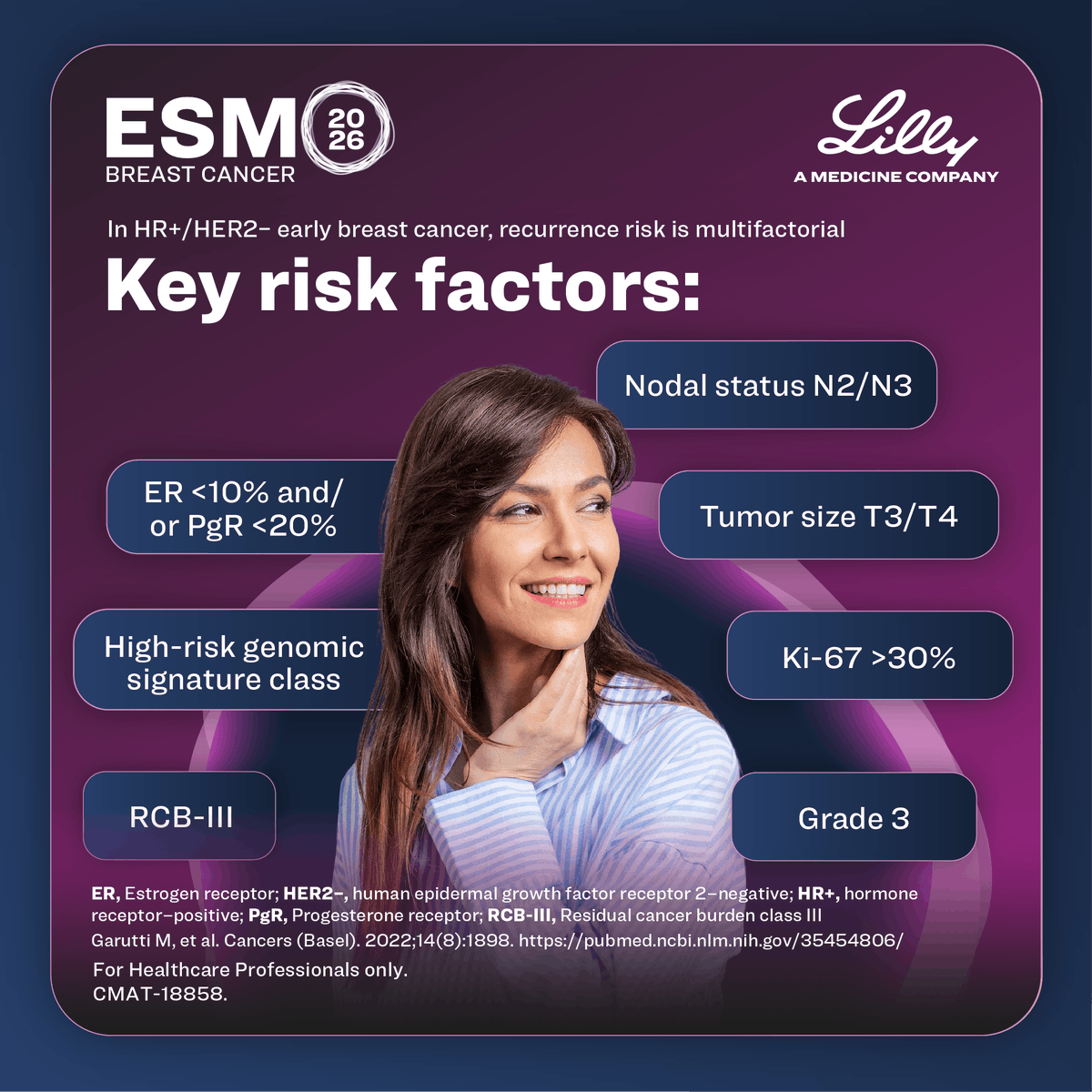
In HR+/HER2 #EarlyBreastCancer, multiple factors are considered together to estimate the #RiskOfRecurrence.
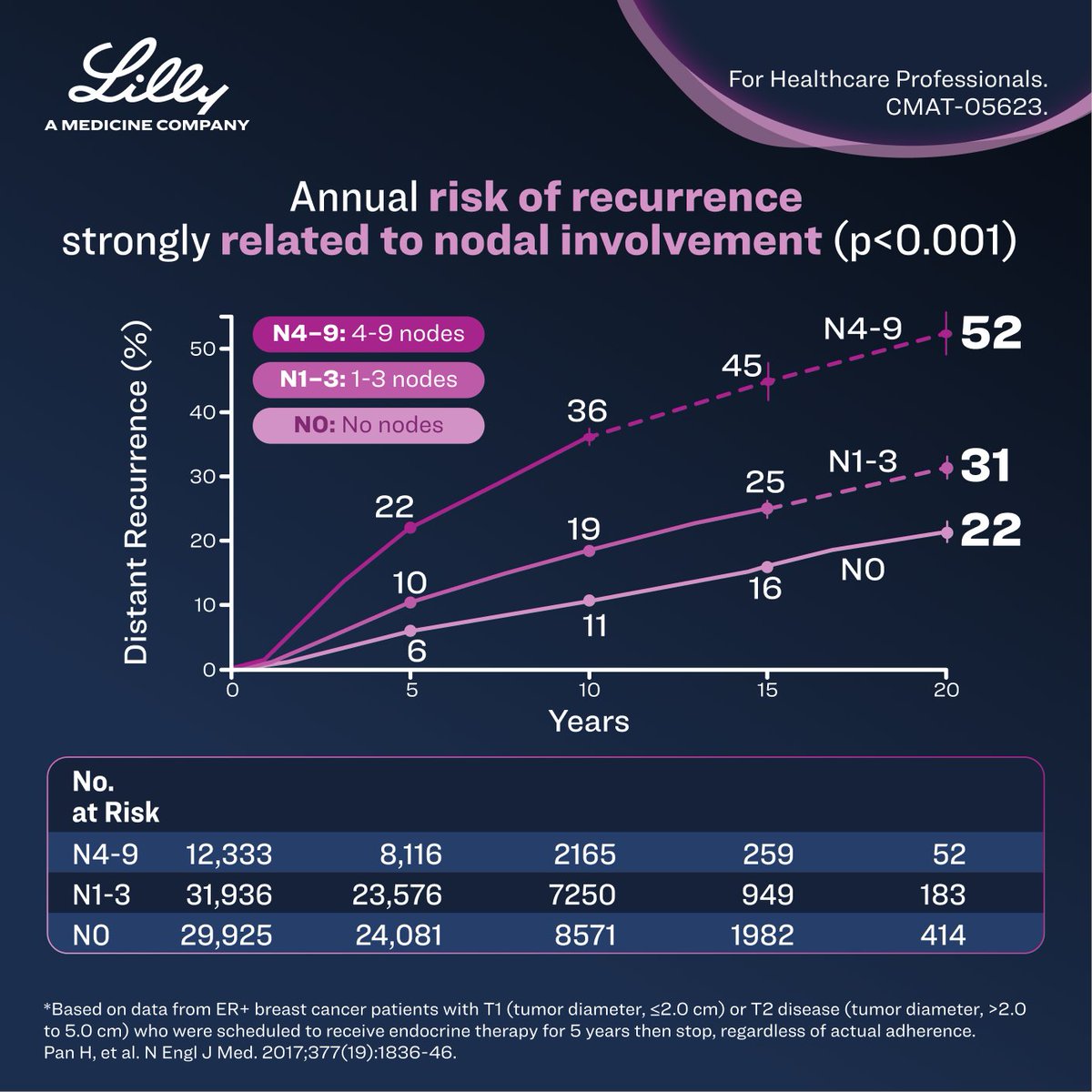
Nodal status remains one of the key determinants, with additional factors further contributing to risk stratification.
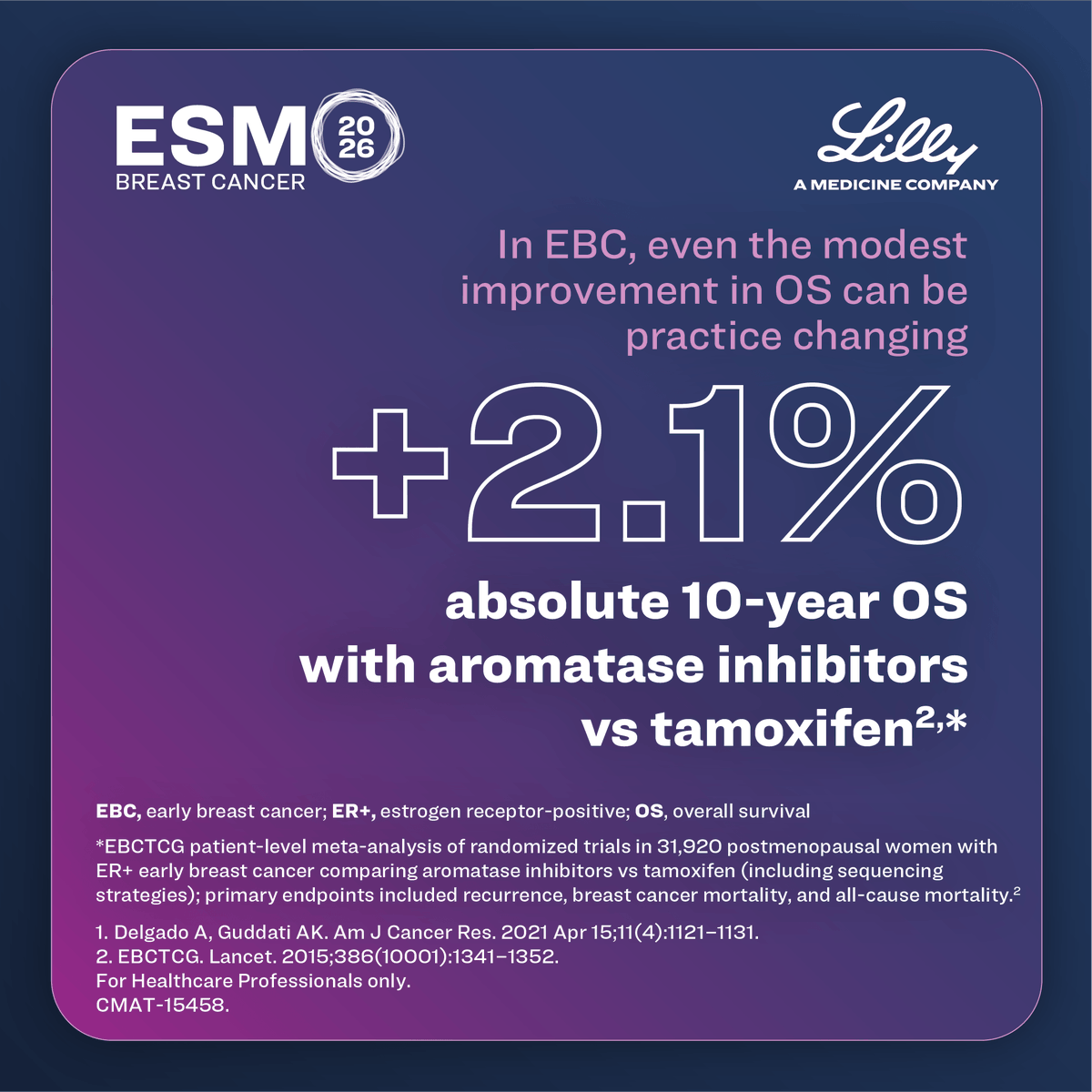
In #EBC, even modest improvements in overall survival can represent practice changing absolute benefit across large patient populations.¹,²
A 2015 meta-analysis reported a 2.1% absolute 10-year overall survival benefit with aromatase inhibitors vs tamoxifen.²
#ESMOBreast26
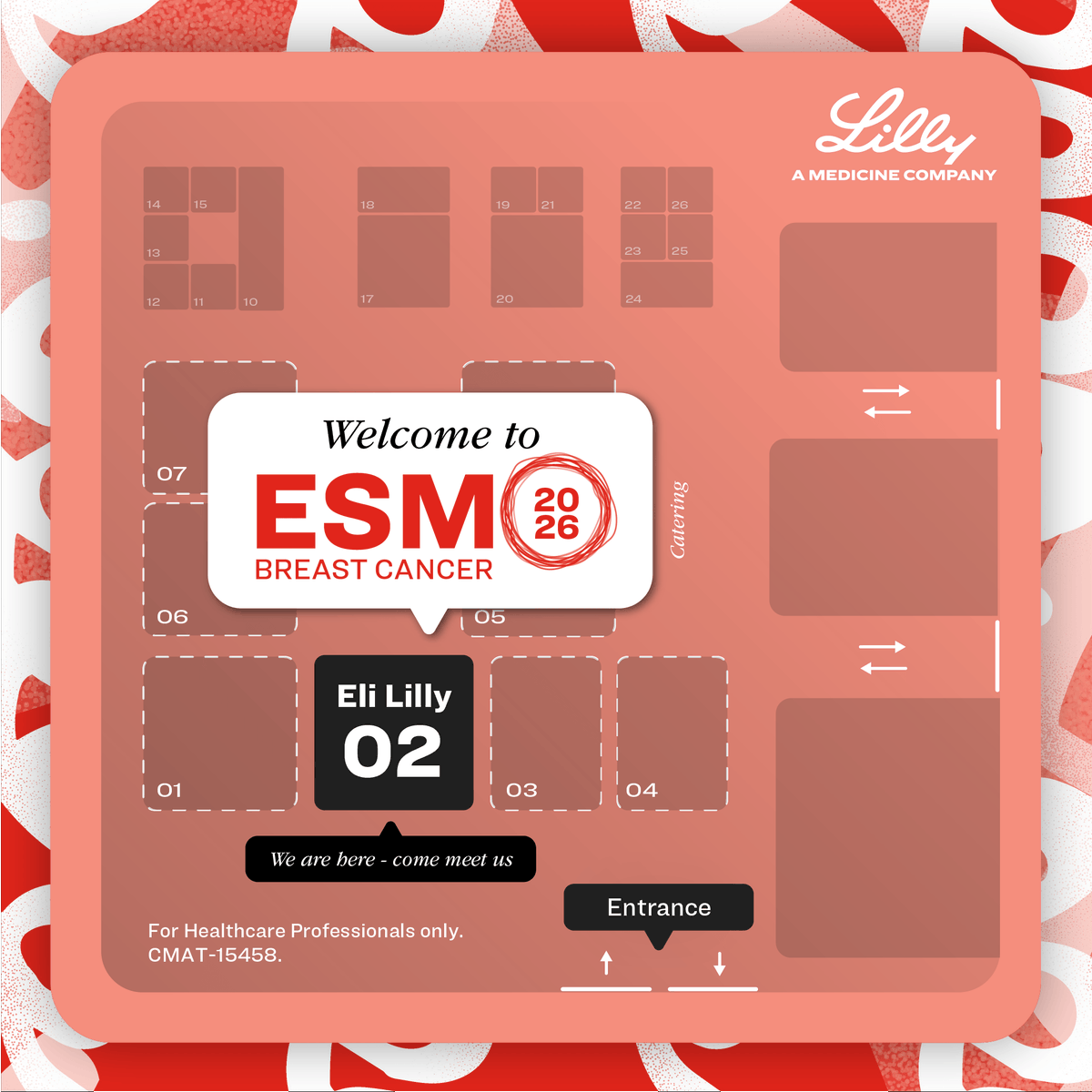
#ESMOBreast26 begins today!
As conversations around innovation and cancer care evolution take center stage, we invite you to visit the Lilly booth to engage with our team and join the dialogue shaping #BreastCancerCare.
See you there.
Many people with a haematological malignancy face a long, emotionally taxing journey.¹,² This Mental Health Month, let's recognize that comprehensive care includes mental health support. Build in routine check-ins and link patients to psychosocial resources.
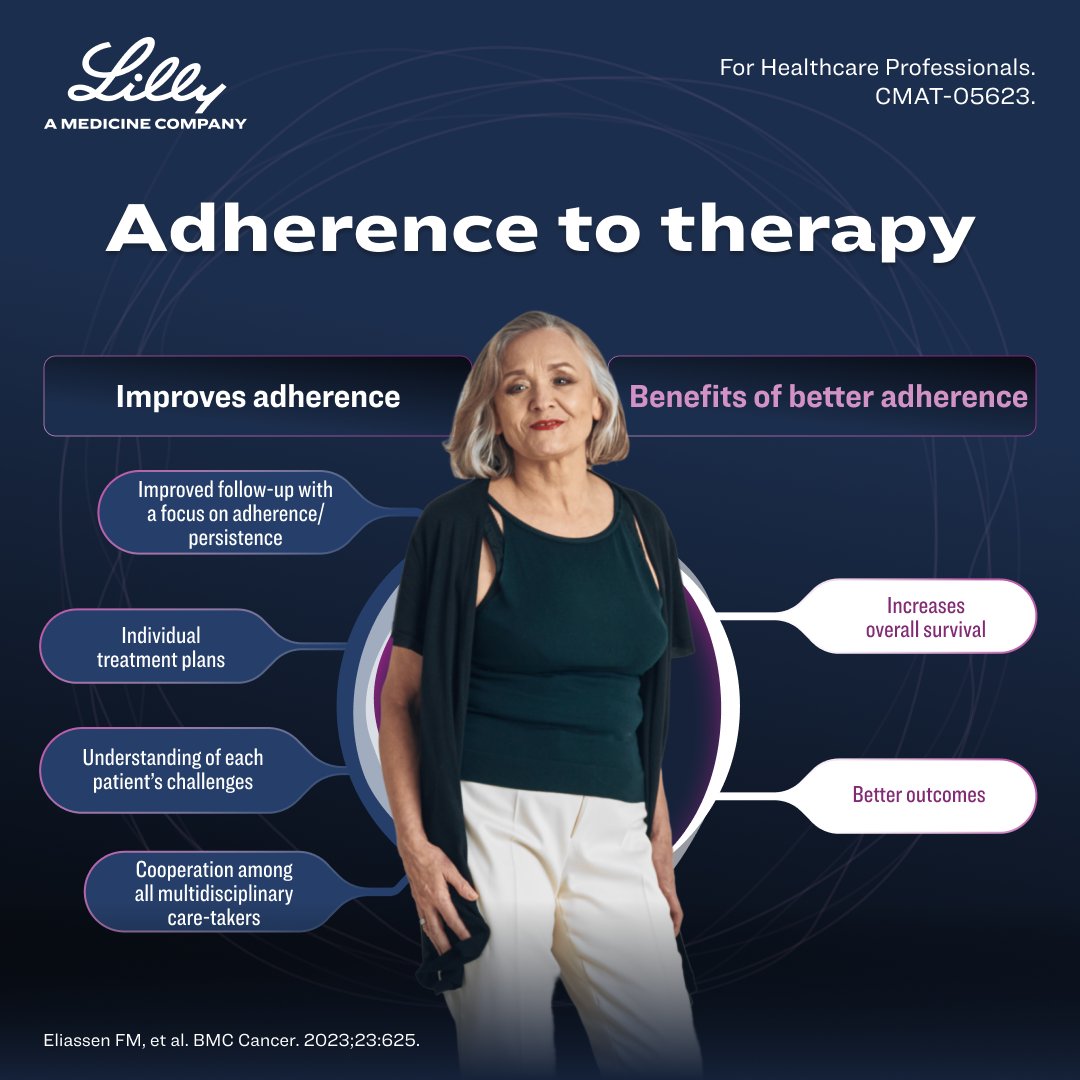
Continuing prescribed endocrine therapy is critical in #BreastCancer. Poor adherence or early discontinuation is linked to higher relapse risk and lower survival. How are you helping patients stay on treatment?
How important is overall survival in #EarlyBreastCancer?
Overall survival plays a central role in shaping treatment decisions and defining meaningful outcomes in curative settings.
Follow us for more on #ESMOBreast26.
Where will the next breakthroughs in #BreastCancerCare emerge?
At #ESMOBreast26, the global breast cancer community gathers to explore advances in research and evolving treatments. Lilly is proud to contribute to the dialogue driving progress.
See you there!
During World Immunization Week, we’re highlighting infection prevention in CLL. People with CLL face a higher infection risk, and immunization remains a critical mitigation strategy. Make vaccination status review routine and coordinate timing around therapy per local guidance.¹⁻³
For patients with #EarlyBreastCancer, long-term #RiskOfRecurrence is closely tied to nodal status: 20-year distant recurrence risk is 𝟮𝟮% with no positive nodes, 𝟯𝟭% with 1–3 nodes, and 𝟱𝟮% with 4–9 nodes. How does this affect your treatment planning?
Management options in mantle cell lymphoma (MCL) are expanding—and practice is evolving. Staying aligned with the latest evidence matters. The 2025 EHA–EU MCL Network guidelines cover diagnosis, staging, treatment & follow-up.¹
Up to ~80% of people with CLL are diagnosed early-stage and asymptomatic, not yet meeting treatment criteria, so a “watch and wait” approach is common. IPS-E can help guide patient conversations in this stage.¹⁻³
Despite advances in therapy, patients with node-positive HR+/HER2– #EarlyBreastCancer still face a high #RiskOfRecurrence. Dr @Rodrosb discusses his perspective on how to fine-tune risk calculations, including emerging biomarkers and gene expression profiling.
Younger patients with #BreastCancer may face a higher risk of recurring disease, highlighting the importance of long-term monitoring and raising the possibility of personalized treatment based on age. #RiskOfRecurrence