Our latest publication presents a simple and fun method for assessing local perceptions of different types of food environments. Big thanks to co-authors @PowellBronwen@shaunamdowns and Prof. Dr. Suwichan Phatthanaphraiwan!
https://t.co/UAxPPOqw1n
Excited to share my first PhD paper on wild-cultivated #FoodEnvironments, co-authored with my advisor @PowellBronwen and @shaunamdowns, published in Frontiers of Nutrition. Full OA version: https://t.co/EyszbNm1dX
@PowellBronwen Thank you @PowellBronwen for your support, mentorship and for transforming my understanding of diet quality and food environments over the last few years!
Fully-funded PhD @KewScience + @YorkEnvironment on widening participation in citizen science/humanities using Kew collections. Open to UK + international students, closing 9 March 2022. Please circulate! https://t.co/cslVm808H9 (scroll to end of page)
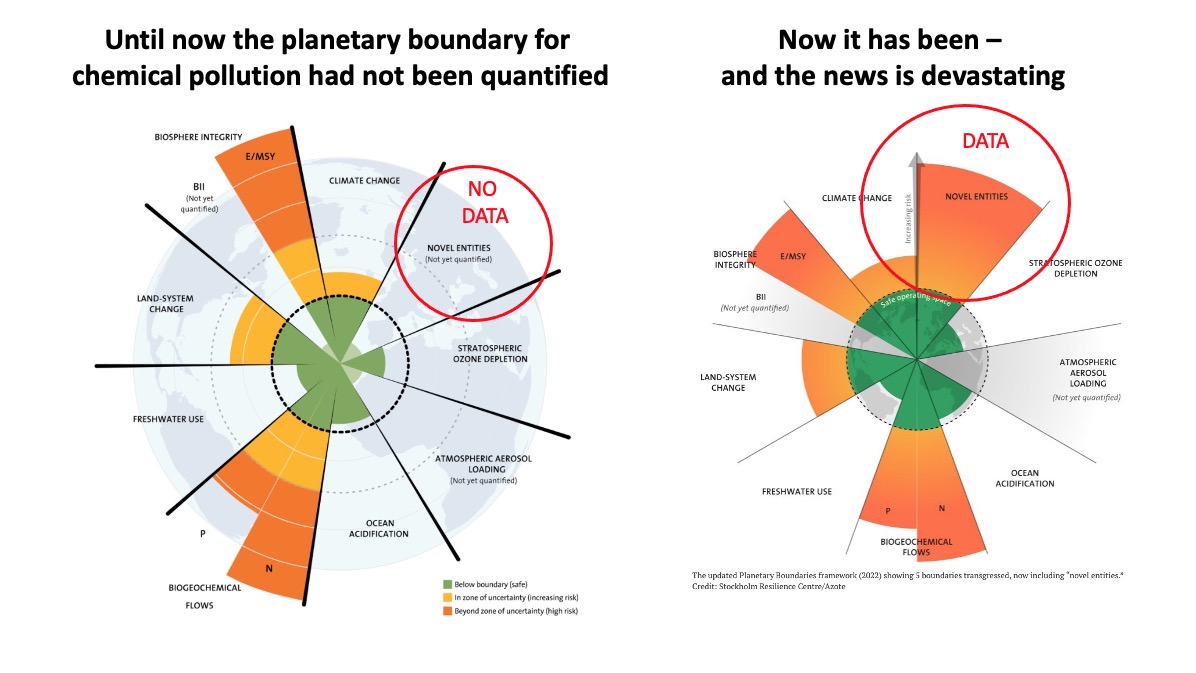
This is big and bleak news. The planetary boundary for chemical pollution (aka 'novel entities') has been quantified for the first time - and it's now clear that humanity is massively transgressing levels that are safe for life on Earth. Plastics! Read on. https://t.co/OEHWdSOX23
An ethnobotanical blast from the past with this new paper of Tinde van Andel (my first ethnobotany professor who got me hooked on ethnobotany) that pieces together the diverse tomato varieties first brought to Europe.
Another fascinating paper by Tinde van Andel & colleagues on historic herbarium specimens: Sixteenth-century tomatoes in Europe: who saw them, what they looked like, and where they came from https://t.co/Om7bcz0Cce
@wahgraphy @psugeography Thank you for coming! Very thought-provoking discussions.. I'm already rethinking/reframing some of my research questions. Thank you for sharing your knowledge 🙏
The economic cost of the global pandemic as well as conflict and climate change are fueling food security fears that in 2020 reached their highest level in five years, according to a UN report published Wednesday https://t.co/62Ffh4YDaF via @YahooNews
@ForrestFleisch1 They are driving Africa's second Green Revolution through AGRA, also leveraging public money ($90 million US taxpayer dollars) with little to show for those spent resources based on inferred evidence (no public monitoring and evaluation data available)
https://t.co/Vk6XEYEXOJ
@ForrestFleisch1 I do wonder about the outsize impacts of individuals on the economic and development trajectories of entire regions. One proposal is a heftier wealth tax, so that funds can be distributed democratically.
@ForrestFleisch1 Just now writing about the Alliance for a Green Revolution in Africa. Gates Foundation is their largest donor ($661 million). Also a major funder of CGIAR projects..
@LukasPawera Congratulations!!!🎇 Yes, I am interested! I am writing a paper on agroforestry and agrobiodiversity-health interlinkages and would love to cite your work!