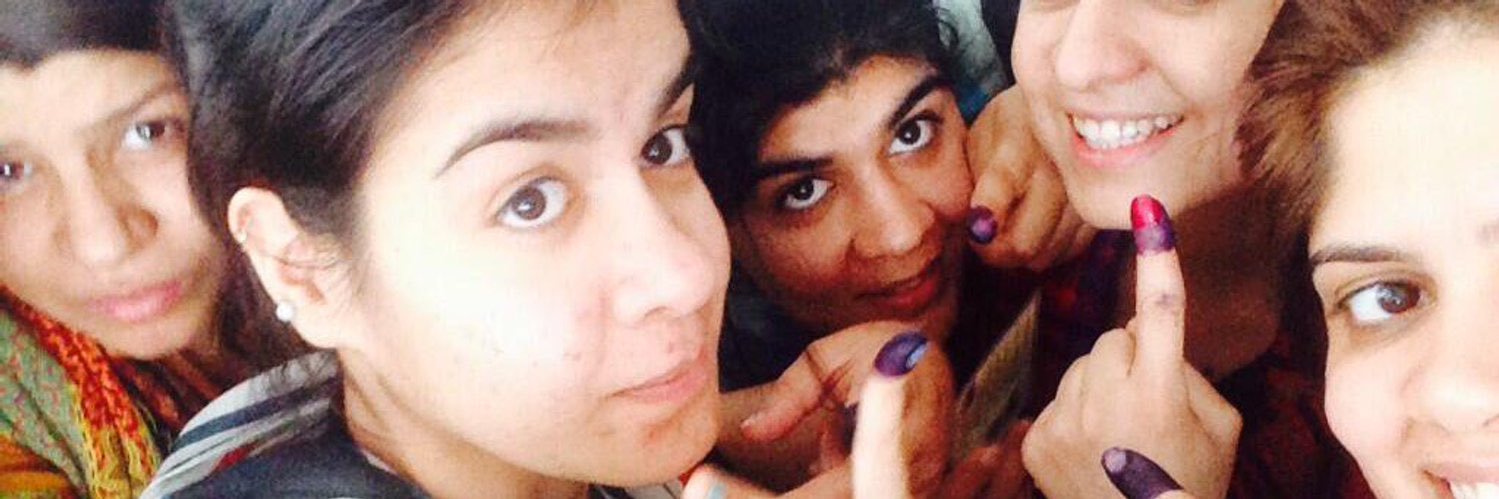
Ph.D. International and Human Security. You can see my sisters voted. Love writing stories, someday the world will read them. I find beauty in ugly situations
For the fifteenth and final story in my August 15 series, I wanted to return to the question with which I began:
Was “fall” ever a big enough word for what happened to millions of Afghans on August 15?
We say Kabul fell. We say after the fall of Kabul, as though a city falling was the whole event, and as though we all understand what happened because we have named it.
For fifteen mornings, I have tried to show what that word could never hold: fifteen people, fifteen lives, fifteen different endings, and fifteen different realities that began afterward.
Darya's story is the last. And perhaps it leaves me where I began: wondering whether we have been looking for the fall in the wrong place.
August 15: Where the Fall Landed
Link to the story: https://t.co/VOVDdNZ31V
For the thirteenth story in my August 15 series, I wanted to write about the atrocities the Taliban inflicted on women that were never spoken about.
Afsoon never knew exactly what her mother had endured during the Taliban's first rule. She only knew that their name could stop a conversation and change her mother's face.
Then August 15 came. Her mother returned home pale and crying, repeating only: “I have two daughters. I can't risk it.”
Afsoon could not know what memories had returned with the Taliban. But perhaps daughters inherit something of the fears their mothers cannot name. That night, Afsoon picked up her colors. And she never stopped painting.
August 15: The Fears Her Mother Never Named
Story link: https://t.co/vaIjZF1knQ
For the twelfth story in my August 15 series, I have been thinking about how much of who we are is inherited before we ever have the chance to choose.
In Afghanistan, this question has always felt particularly complicated. We inherit names, families, tribes, languages, geographies, histories, loyalties, and sometimes even the boundaries of who we are expected to become.
But what happens when a generation begins adding to that inheritance? Not necessarily rejecting it. Just making room beside it for something else.
This story is about that possibility, and about what August 15 interrupted before we could know where it might lead.
August 15: The Life You Furnished Yourself
Read story here: https://t.co/fVcI4n8Q5h
For the eleventh story in my August 15 series, I wanted to write about what happens when home was never the safest place to begin with.
We often think of home as the place we retreat to when the world outside becomes dangerous. But for some young women, safety had always existed in the opposite direction.
Outside was where Nazo could work, learn, speak, and slowly discover a version of herself that was not defined by fear. Inside was where she had learned to hide, sometimes beneath a table, waiting for the house to become safe enough for her to emerge.
Then August 15 complicated even that geography.
The men arriving outside did not create the violence inside her home. But their arrival made the man she feared inside it feel more powerful.
Nazo’s story made me think about how devastating it is when the place you have always escaped to begins to resemble the place you have spent your life trying to escape from.
Because for Nazo, eventually, there had always been outside. Until there wasn’t.
Story 11: “August 15: There Was Always Outside.”
Read the story here: https://t.co/OeWUpFD1gU
For the tenth story in my August 15 series, I wanted to write about a different kind of exile.
We often imagine exile beginning with departure. You pack and leave; perhaps you look back. Somewhere along the way, you understand that you are leaving home.
But what happens when you have already left for something as ordinary and hopeful as an education, believing that home will simply wait for you?
There is a particular cruelty in being denied even the choice to leave. In discovering, from somewhere else, that the country you loved, planned for, argued with, grieved for, and built your future around may no longer have a place for the person you were becoming.
Eidema's story made me think about how much we assume return is part of leaving. How rarely we memorize a place when we believe we will see it again.
Story 10: “August 15: The Two-Hour Walk.”
Read story here: https://t.co/0FClNGIpvi
For the ninth story in my August 15 series, I wanted to write about a different kind of loss.
We often understand loss through what someone already possesses: a career, a home, freedom, status, a way of life.
But what about those whose lives were already so constrained that most of what they stood to lose existed only in the future?
There is a particular cruelty in that kind of loss. When the present has given you very little room, the future becomes the place where you live more freely. You endure what is difficult because you believe it is temporary. You tell yourself: some day.
Some day things will be different.
Some day there will be more.
Shabnam's story made me think about how enormous those two small words can become when a person has very little else to hold onto. August 15 reached even there.
Story 9: “August 15: She Had Some Day.”
Read story here: https://t.co/8Dne71Fv0f
For the eighth story in my August 15 series, I write about Darman.
What stayed with me in his story was the stubbornness of hope.
Darman was not unaware of what was coming. He had seen the signs. He had heard the fear around him. But Darman had built his life around a simple conviction: Afghanistan’s problems could be changed through education. So even as the world around him was changing, he kept trying to imagine what might still be possible.
The morning after Kabul changed hands, he watched young Taliban fighters bring down the Afghan flag, the same flag he had once carried with his education volunteers.
And somehow, even then, his mind searched for possibility.
August 15: The Flag Came Down, He Stayed.
The eighth story in my August 15 series, drawn from the life histories at the heart of my research.
Link to the story: https://t.co/BlUAFEFOHI
Today’s story in my August 15 series is about hope, but not the kind we usually speak about.
Sometimes hope is not believing that your own dream is possible. It is borrowing evidence from someone else’s life that it might be.
For Emal, some of that evidence came from the people around him. From artists who had chosen an improbable life in Afghanistan and somehow made it work.
On August 15, Emal watched that certainty walk out of the gate.
What stayed with me from Emal’s story was not simply the grief of watching people leave. It was the terrifying moment when the lives that had given you evidence for your own future suddenly became uncertain too.
August 15: When Hope Walked Out the Gate.
Another morning. Another way of remembering what August 15 changed.
Read Story: https://t.co/KBuONAAxr7
#August15 #Afghanistan #AfghanYouth #HumanSecurity #OralHistory #ArtLords
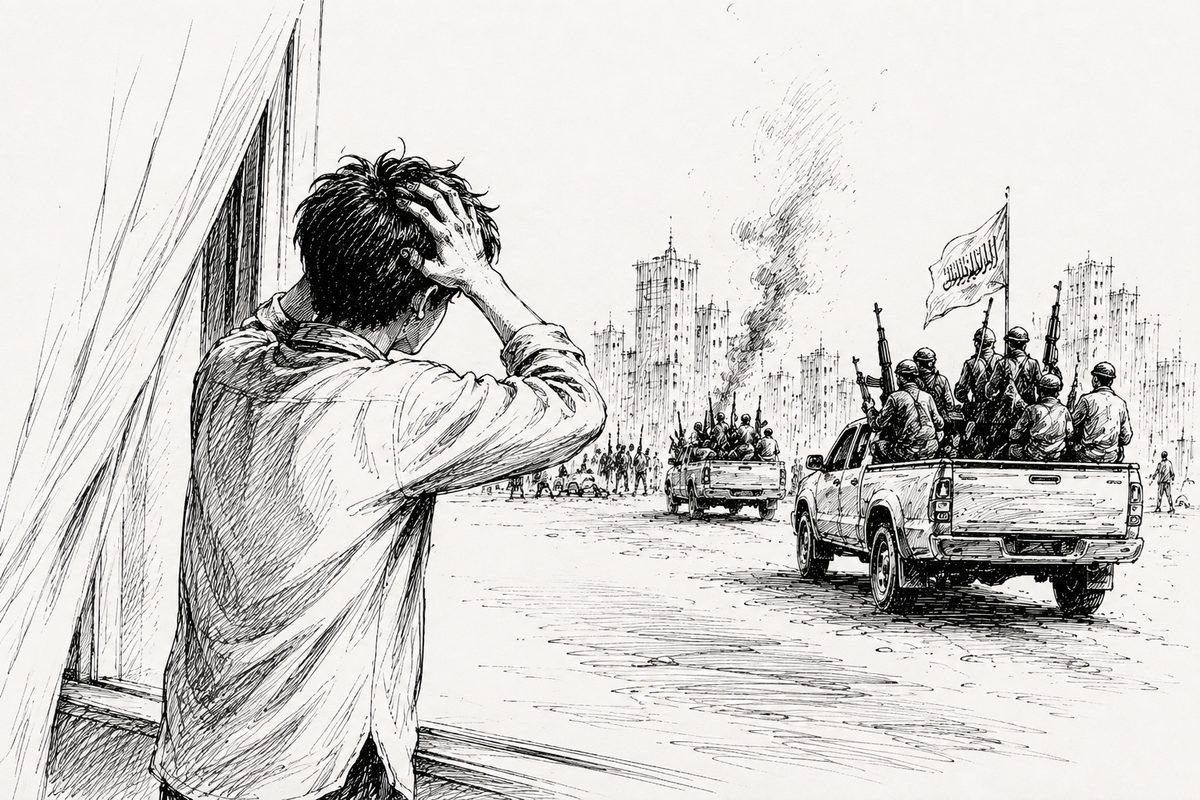
Today’s story in my August 15 series stayed with me differently.
Perhaps because fear is not always loud. Sometimes it is a curtain pulled closed. A window watched from a distance. The sudden need to know where everyone you love is. The strange belief that if you can keep them all within sight, perhaps the world outside cannot reach them.
Noorin had spent her life becoming free in ways her parents once feared would never be possible for their daughters. That morning, however, her imagination was no longer occupied by the life ahead of her.
It had narrowed to something much more immediate: Are they all still here?
I kept thinking about that question long after she told me her story.
Today’s story: August 15: Before She Counted Them Again.
Another morning. Another way of remembering what August 15 changed.
Read Story: https://t.co/8RvRDUH9Kb
#August15 #Afghanistan #AfghanYouth #HumanSecurity #OralHistory
Today’s story in my August 15 series is about something we rarely associate with the end of a political order: the ordinary.
For Sayed, there were no grand ambitions to lose. He had built a modest life and learned to be content with it. Somewhere along the way, he had also become someone his family could count on.
We often measure political upheaval by what happens to governments, institutions, borders, and leaders. But there is another measure: what happens to an ordinary person’s sense that tomorrow will still ask of him the things he knows how to do.
On August 15, even that certainty became a luxury.
Today’s story: August 15: What Do You Wear to an Uncertain Future?
Another morning. Another way of remembering what August 15 changed.
Read Story: https://t.co/9wSY2mWKbH
#August15 #Afghanistan #AfghanYouth #HumanSecurity #OralHistory
Today’s story in my August 15 series is about choice, and what happens when choices remain, but the cost of making them changes overnight.
Laleh once described herself to me in a sentence that, after revisiting her story, feels almost like the key to understanding it: “I’m a person of a choice.”
I have been thinking about that sentence a lot. We often speak about freedom as though it simply exists or disappears. But agency can survive even when the space around it becomes frighteningly small. Choice can remain, while the price of choosing becomes almost unbearable.
Sometimes resistance is loud. Sometimes it is knowing when not to speak. Sometimes survival itself requires a person to negotiate, again and again, how much of herself she can safely show to the world.
Laleh’s story made me think about August 15 through that more complicated space: not only what was taken away, but what remained hers to decide, and how hard she had to fight to keep deciding.
Today’s story is: August 15: What Was Left to Choose
Another morning. Another life. Another way the language we use for August 15 remains too small for what people actually lived.
Read here: https://t.co/csvYQIm8bV
Yesterday, Sohrab left Bamyan before dawn, not knowing he was leaving home for the last time. Today, the third of these fifteen mornings takes us to Jalalabad, where Palwasha never left her room.
She had spent the entire night awake, her wrist aching from holding her phone, watching province after province disappear into a new reality. By morning, almost everything she still believed could hold Afghanistan together had been concentrated in one place: Kabul.
The government was there. The president was there. The international community was there. The country’s strongest civil society and women’s movements were there. For Palwasha, and for many Afghans already living in places taken by the Taliban, Kabul was more than the capital. It was the last place still holding their hope. Then Kabul could no longer hold it.
August 15: When Kabul Could No Longer Hold Her Hope
Fifteen mornings. Fifteen different ways of ending. And today, a story about what happens when the world outside becomes smaller and smaller until, eventually, the loss reaches the person in the mirror. Read: https://t.co/yrfxq9oepV
Yesterday, the first of fifteen mornings began in 3rd Macroyan, with a family who thought they were only losing an ordinary day.
Today, the second morning begins before dawn, on a road leaving Bamyan.
Sohrab left home believing he would return. He did not know he should look back. He did not know that the mountains disappearing behind the car, his mother waking to another morning without him, and the home he had spent a lifetime returning to were already becoming memories.
Perhaps that is one of the cruelties of August 15: so many Afghans were denied even the dignity of knowing when to say goodbye.
August 15: The Morning He Thought He Was Coming Back
This is Sohrab’s morning.
Fifteen mornings. Fifteen different ways of ending. Let us see together what the word “fall” was never big enough to hold.
Read Sohrab’s story: https://t.co/8iZdL94Qq4
Yesterday, I wrote that Kabul did not fall on August 15, 2021. We fell from it, each in our own way. I promised to spend the next fifteen days returning to that morning through the lives of fifteen young Afghans, each carrying a different memory of what ended, what remained, and what they are still trying to make sense of five years later.
Today is the first of those mornings.
It begins in 3rd Macroyan, with a perfectly ordinary Sunday morning and a family that still believed they knew what the afternoon would bring.
August 15: The Exam They Thought They Were Missing
Fifteen mornings. Fifteen different ways of ending. Let us see together what the word “fall” was never big enough to hold.
https://t.co/BCYxLUUwYz
This tweet makes me so mad! You will decide when it’s time. It has always been time. You and any man in that country who limits women and girls’ rights should just simply die!
It is time for the Taliban leader to allow the return of girls and young women to public high schools and universities. #Afghanistan
https://t.co/hR6DLMph2F
“I don't know if these letters ever reach you. I don't know if somewhere, somehow, you already know everything I keep trying to tell you. But I will keep writing them anyway. Because loving you did not end on June 27. It simply changed its language.” Write Dr @Limaahmad writes about our @NKhalilAhmad
https://t.co/XbYMEN8orn
The EU has invited Taliban officials to Brussels to discuss a migration deal — and today I am shaken and deeply disturbed by this.
This is the same Taliban that banned girls from secondary schools and forced them into marriage. The same Taliban that, earlier this month, arrested dozens of women in Herat for how they were dressed. The same Taliban that detains, beats and executes women who dare to speak out or break their rules.
Through its system of gender apartheid, the Taliban have erased women and girls from public life. Europe must not legitimise a regime responsible for one of the worst human rights crises in the world.
Any engagement with the Taliban must begin and end with the rights of Afghan women and girls.
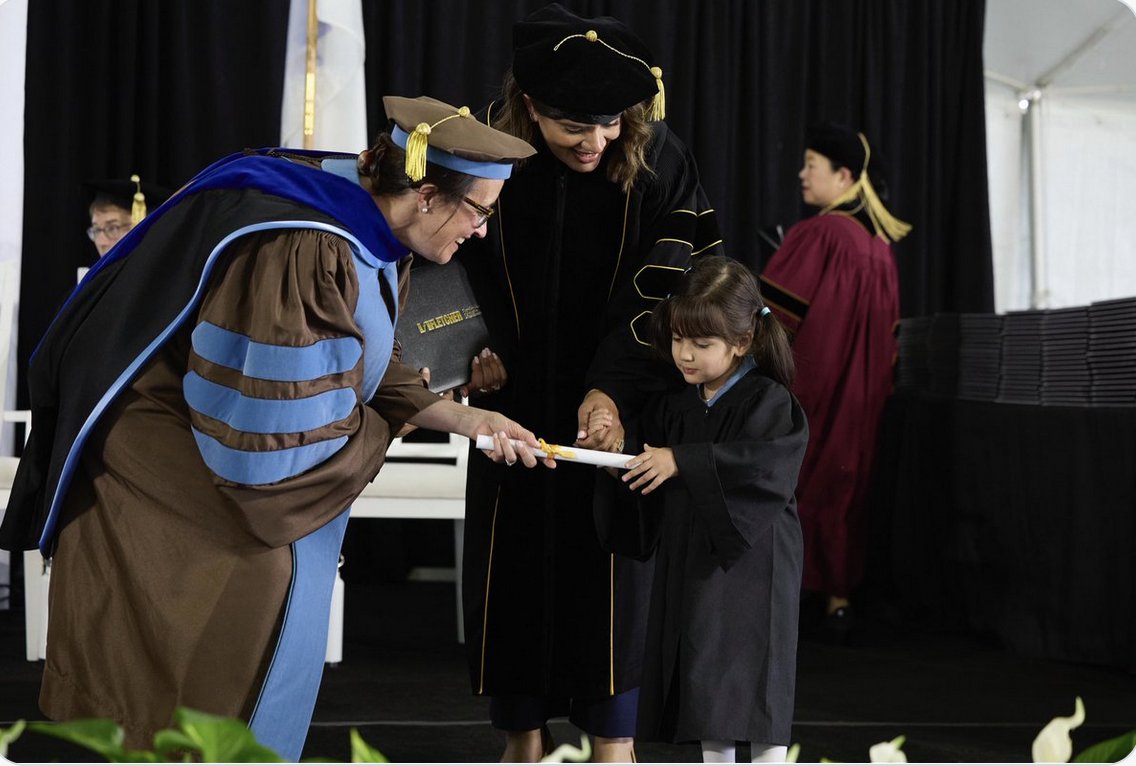
Congratulations Dr. @Limaahmad jan qand! So happy for you my kind and talented friend. You've worked so hard and wrote a powerful dissertation. I was honored to be on your committee. This is the sweetest photo. Together we rise!
@OmaidSharifi