Can MMA embolization safely treat chronic subdural hematoma in patients >90?
Our study by Li Ma et al. @PittStroke shows:
✅ >90% avoided surgery
⚠️ Nonagenarians had slower hematoma resorption
🔗https://t.co/5nUcWsoVZH
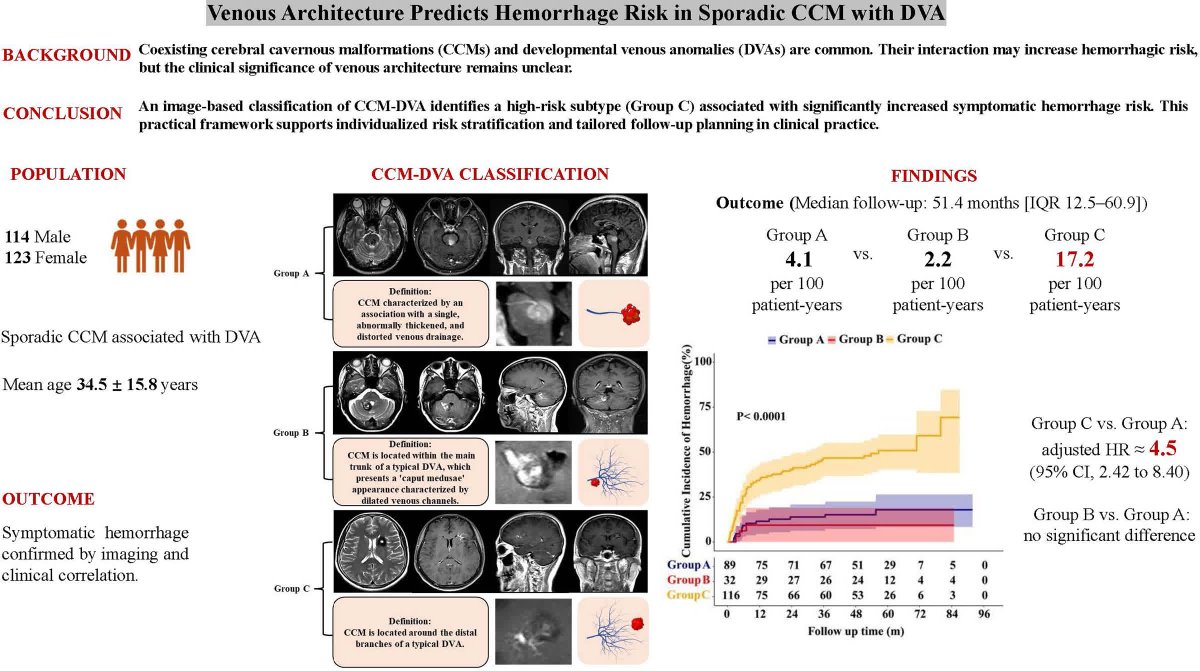
#STROKE: Patients with cerebral cavernous malformation + developmental venous anomaly subtype Group C face a much higher risk of symptomatic hemorrhage than other subtypes. @LimaNeuro#AHAJournals https://t.co/L5DA5QYAVn
have been trained using pterional, LSO, "mini-pterional", until meet this REAL Mini version of the KEY, and how to work it for clinoidectomy, anterior circulation aneurysms, friendly basilar apex, and even contralateral MCA in great hands!
https://t.co/1LoZLnaJAr
Have been meaning to share video of the minipterional exposure for a while, as I get asked about it all the time. Here's the opening in detail, used to clip a complex posterior communicating artery necessitating a tailored clinoidectomy to expose the neck and proximal lobule
Have been meaning to share video of the minipterional exposure for a while, as I get asked about it all the time. Here's the opening in detail, used to clip a complex posterior communicating artery necessitating a tailored clinoidectomy to expose the neck and proximal lobule
Compositing preoperative motor function👨🦽 and recurrent hemorrhages
Development and Validation of a Supplementary Grading Scale for Outcomes of Brainstem Cavernous Malformations | Stroke https://t.co/WWoifQSGz1
Impact of Embolisate Penetration, Type, and Technique on Results After Standalone Middle Meningeal Artery Embolization for Chronic Subdural Hematoma https://t.co/4yfgZngwNB @PittNeurosurg@PittStroke
Management of cerebral venous sinus thrombosis (CVST) based on pathogenesis; in traumatic CVST, likely no need for anticoagulation.
https://t.co/NaRKLO3Q3G
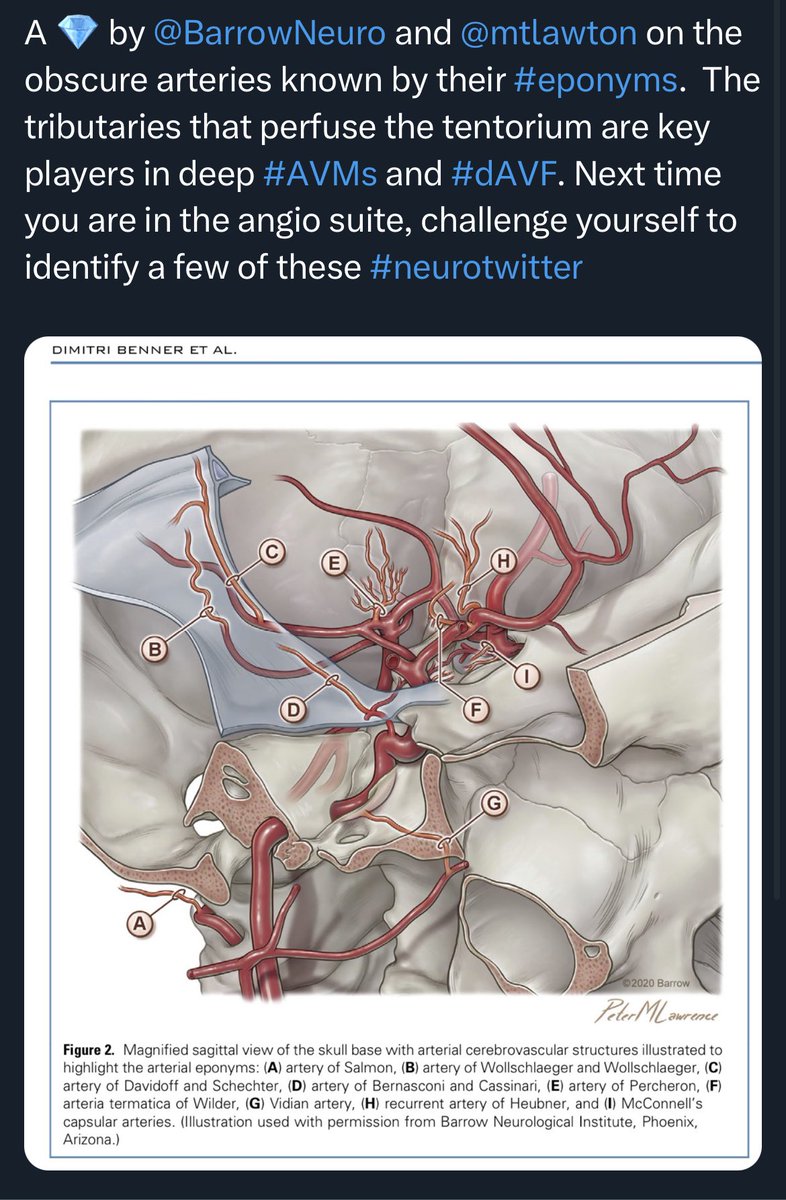
Love this arterial subway map!😜 take me home at PostTempA
Seven cavernomas and neurosurgical cartography, with an assessment of vascular waypoints, pathway by our leader @mtlawton https://t.co/6wPwOKfJKJ
My original tweet was deleted for some reason…🧐…posting it again for those who initially bookmarked it. Further, this is the publication doi: 10.1016/j.wneu.2021.01.115.
Hot off the press. The 2nd hemorrhage of brainstem CM could be more variable. Attention to the 'alarm' hemorrhage in high risk patients. Rehemorrhage of brainstem cavernous malformations: a benchmark approach to individualized risk and severity assessment https://t.co/rCn7i41L7U
An intracranial fetus ! A gradual lowering ICP before surgical removal might be better to avoid postoperative tissue collapsing and status epilepticus. Teaching NeuroImage: Intraventricular Fetus-in-Fetu With Extensive De Novo Gain in Genetic Copy Number https://t.co/HjKVHTA9ba
Quantitative imaging biomarkers for cerebral #CavernousMalformation, predicting both genetic phenotype and clinical outcomes, at CRESS study, https://t.co/pHmvDngCKk, still ongoing after 100-subjects enrollment.🎉🎉
Live now on neurosurgical TV - Quanitative Susceptibility Mapping as a Non-Invasive Tool for CCM Phenotype and Hemorrhage/Seizure Risk, by Li Ma MD from Tiantan Hospital. https://t.co/WFmEEa9IUr
#STROKE Nomogram approach to provide individualized risk assessment in patients with Cerebral #CavernousMalformation with symptomatic hemorrhage #CCM#ICH https://t.co/PlU19uYrjU