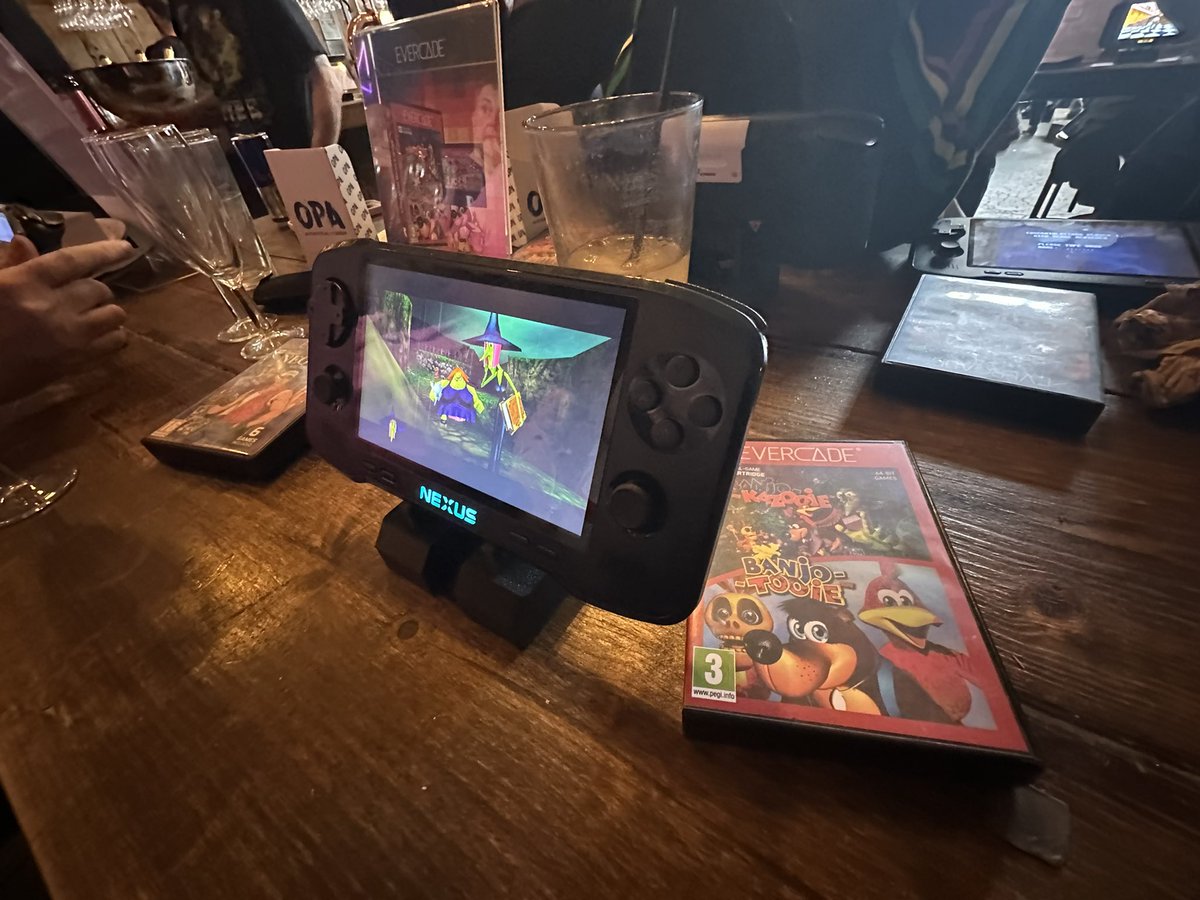
Popped to @evercaderetro Nexus event to get hands on, got to say Banjo-Kazooie & Tooie run flawlessly smooth! Great to see DOOM in action!
Next purchase for me HAS to be the Nexus! Great device and event! 👏
my indie game:
- dark fantasy bullet heaven
- 100% original metal soundtrack
- hand-crafted art by Polish🇵🇱 artists
- futuristic Templar warriors
- 65+ weapons to merge and evolve
- massive hordes of demons
- challenging boss fights
Get ready, major update coming in 2 days!
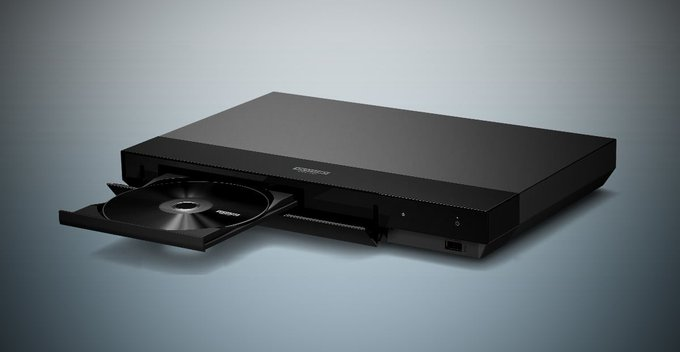
'Sony reportedly exits UHD Blu-ray player market' https://t.co/LwLGwTctWu
'Sony Japan has discontinued its last remaining UHD Blu-ray player, UBP-X700/K, seemingly marking the company's exit.
The news comes via Japanese blog Kunkoku, which happens to also be a Sony retailer. Sales are officially ending in Japan today, October 22.'
I see a lot of people expressing shock and sadness over BioWare shutting down. And I get it.
But here's the uncomfortable truth:
The BioWare that made Baldur's Gate, Neverwinter Nights, KOTOR, Dragon Age: Origins and the original Mass Effect trilogy had largely ceased to exist long before yesterday's announcement.
BioWare's decline began around the time the doctors left and much like what happened at Blizzard, most of the original talent responsible for building those legendary franchises had moved on years ago.
What remained was the brand. The IP. Basically just the name on the building.
But a studio's name doesn't make great games. Insanely talented people do.
And that's the lesson our industry somehow keeps refusing to learn.
The people who built those studios, who poured their blood, sweat and tears into establishing their creative identities were the actual assets. Their experience, their taste, their leadership, their ability to recognize what made a game special in the first place was always the thing that mattered, not the brand.
You can't simply replace those people, keep the logo on the door and expect the magic to continue.
Yet, that's precisely what publishers have been doing for the past 10-20 years.
They've spent billions acquiring studios and IPs, seemingly under the assumption that the creative output would continue regardless of who was actually making the games.
And when the original talent inevitably left, the remaining teams were expected to fill shoes that were often impossibly large, without necessarily having the experience, leadership or creative vision required to do so.
And... the results speak for themselves.
I think we'll eventually look back at the COVID-era acquisition frenzy as one of the most destructive periods in the history of our industry.
Publishers were buying studios left and right, paying absurd valuations mostly just to secure IPs... and developers were often all too happy to cash out.
At Moon Studios, we got quite a bit of crap for refusing to sell when seemingly everyone else was getting acquired.
I remember telling our team back then that I'd seen this movie before.
The exact same thing happened in the 90s, when EA went on its acquisition spree.
Studios were bought, their founders and creative leaders gradually lost the freedom to make the games they believed in, the original talent became frustrated and left and eventually the studios all became a Ship of Theseus.
History doesn't repeat itself perfectly, but it sure as hell rhymes, and that's exactly why I never wanted Moon to end up in that position.
And I don't think we're even halfway through the ultimate fallout of the latest acquisition frenzy.
There's going to be a very rude awakening for quite a few publishers when they discover that the studios they acquired for billions are worth a fraction of what they paid. And that shoving ideology down peoples throats ultimately came at a cost that they didn't quite grasp.
They didn't actually buy the creative vision, the institutional knowledge or the culture responsible for making those studios successful.
They bought the names, the buildings, the IPs and whatever teams happened to be there at the time.
But those things don't matter at all.
You can buy a studio. You can buy its IP. You can even buy its entire back catalogue.
But you can't buy the magic that made those games special in the first place.
And the sooner our industry understands that, the better.
A 40-hour paycheck should mean:
- Fridge full without a calculator
- Rent paid without anxiety
- A sick day without debt
We don't want luxury.
We want normal to feel normal again.
All jokes aside & hate farming aside, it’s genuinely concerning if Xenoverse 3 really took almost 10 years to develop and THIS is what the final product could look like
@DotterzReloaded It depends on the work when it comes to hybrid / WFH, as there are definitely some where you can’t do it remotely flat out without security concerns or team cohesion.
That being said, I’ll never go back to office and honestly wouldn’t even consider Hybrid roles.
There’s FAR too many benefits to WFH.
The only ones that WANT to go into the office, don’t invest in their own hobbies & interests so their work life is their only life.
The SECOND you get a WFH job don’t take it for granted 👏
Keep seeing chatter about WFH vs going into the office. Went into the office today for the first time in a few months, fuck me, completely forgot the waste of time travelling, the noise of everyone on teams calls and how much money you spend on shit. 🚮
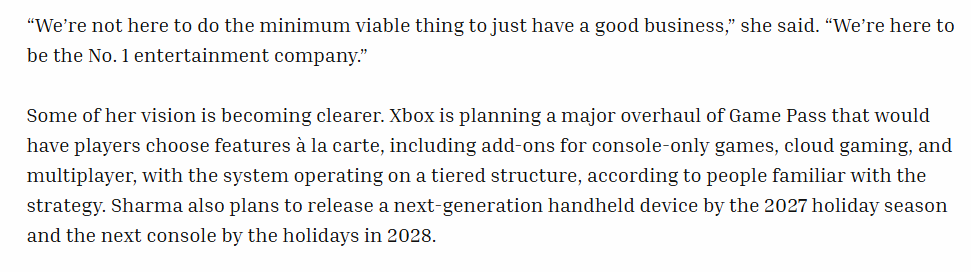
'the price of the [Xbox] Helix console has internally been projected to cost consumers between $1,200 and $1,800, unless Microsoft decides to subsidize the cost'
-Game Pass planning major overhaul (a la carte)
-next-gen handheld by 2027 holidays, console 2028 holidays
https://t.co/1eDCkReFX1
@ResidentLeon4R Bro I got my laptop that can run the latest games on high / ultra high & got that a few years back, the SAME spec is £2200.
Like sure let me spend 2-3 months rent / mortgage payment on a GODDAMN console
The first permanent physical Pokémon retail store is opening outside of Asia... and it’s coming to London by 2029! 🤩
Learn more: https://t.co/NR2wpoLfQl