Three days after D-Day, the Allies deliberately sailed 70 ships to Normandy and sank them on purpose.
This is the story of the most audacious feat of engineering in military history, conceived by Winston Churchill in a bathtub, built in secret by 45,000 workers, and tested by the worst storm in 80 years.
The problem with invading France was supply. You could land men on a beach, but keeping them fed, armed, and reinforced required ports. Every major port on the French coast was either heavily fortified or would be destroyed by the Germans before they gave it up. The Allies knew from the disastrous 1942 Dieppe Raid what trying to capture a defended port looked like.
So Churchill proposed building one from scratch. In the middle of the English Channel.
The idea reportedly came to him while traveling to Washington on the Queen Mary in 1943. His scientific adviser, Professor John Bernal, floated paper boats in the Prime Minister's bathtub to demonstrate the concept, agitating the water to simulate Channel swells, then used a loofah as a breakwater to show how calm water could be created behind a barrier. Churchill was convinced. He sent a memo to his staff: "Piers for use on beaches. They must float up and down with the tide. The anchor problem must be mastered. Let me have the best solution worked out. Don't argue the matter. The difficulties will argue for themselves."
Work had actually started in secret as early as 1941. By 1943, 45,000 workers across dockyards on the Thames and the Clyde were building the components, with no single worker knowing what the whole thing was for.
The plan had layers. The outermost defense came first: old ships. 70 obsolete merchant vessels and warships were gathered at Oban on the west coast of Scotland, stripped of anything useful, ballasted for stability, and loaded with explosive scuttling charges. Among them was the French battleship Courbet, built in 1911, and HMS Centurion, an old British battleship. Skeleton crews sailed them across the Channel under their own power and steered them into position off each of the five landing beaches.
Then the charges were detonated from the inside.
The hulls settled on the seafloor in rows, creating sheltered water behind them. These were the Gooseberries, and they went in between June 7 and June 10, three days after D-Day. Inside those lines of sunken ships, engineers then began assembling the next layer: 146 massive concrete caissons called Phoenixes, each one the size of a five-story building, towed across the Channel and sunk in sequence to form the outer wall of two full artificial harbors.
Inside the harbor walls came 6 miles of floating steel roadway, code-named Whales, riding on pontoons, connected to pierheads that rose and fell with the tide on steel legs drilled into the seafloor. Trucks could drive from ship to shore across open water.
On June 19, thirteen days after D-Day, the worst storm in 80 years hit the Normandy coast.
It blew for three days. The American Mulberry harbor was destroyed beyond repair, its pieces scattered across the beach. 800 vessels of all sizes were wrecked or grounded. The storm did more damage to the Allied supply operation than the Germans had managed in nearly two weeks of trying.
The Gooseberries held. The sunken ships, sitting on the seafloor, barely moved.
The French battleship Courbet, resting on the bottom with water up to her decks, continued to fly the French naval ensign throughout the storm. Her crew had stayed aboard and kept her anti-aircraft guns manned. A sunk warship, still fighting.
The British Mulberry harbor at Arromanches survived, was repaired using components salvaged from the destroyed American one, and kept running for ten months.
Through it passed 2.5 million men, 500,000 vehicles, and 4 million tons of supplies.
The invasion of Europe ran through a harbor made of sunken ships, concrete dropped in the open sea, and floating roads held together by pontoons, all dreamed up in a bathtub with a loofah.
I don’t want him restored to competency.
He should be executed.
It’s all on camera and it should not matter AT ALL whether he is competent to stand trial.
He was competent enough to kill Iryna, so he is competent enough to be put to death.
Period.
VICTORY!
The House just passed the budget reconciliation bill 214-212.
This means that ICE & Border Patrol are FULLY FUNDED for the next 3 years.
Every democrat voted against it.
President Trump’s promise to secure the border is funded for the rest of his administration.
Congratulations to @SpeakerJohnson for this huge win with one of the most narrow majorities in American history.
The bill is on the way to President Trump’s desk.
🚨For those who say there is NO election fraud in California:
The DOJ just prosecuted Brenda Brown for paying homeless people to register to vote under FALSE addresses.
OMG caught her on hidden camera doing this illegal activity in LA.
Months of work, condensed into seconds. Watch the transformation of the Lincoln Memorial Reflecting Pool as crews drained, repainted, and refilled one of America's most iconic landmarks ahead of a busy summer season in Washington, D.C.
June 9, 1944. D-Day plus 3.
Rangers finally silenced the gun battery that had been shelling Omaha and Utah Beach for 72 straight hours.
It was not Pointe du Hoc.
Most people have never heard of it.
---
You know the Pointe du Hoc story. 225 Rangers scaled 100-foot cliffs on D-Day. Found the guns missing. Two sergeants tracked them to an orchard and destroyed them.
What nobody tells you is this:
Pointe du Hoc was always the decoy.
The Germans had deliberately focused every piece of Allied intelligence toward that cliff. They made sure reconnaissance photos, agent reports, and pre-invasion planning all pointed to Pointe du Hoc as the primary threat.
Meanwhile, 6 kilometres to the south, they quietly built something else entirely.
---
The Maisy Battery did not appear on a single Allied soldier's invasion map on June 6, 1944.
It wasn't an oversight.
The Germans constructed it under total secrecy, using only forced laborers from Russia, Poland, and Czechoslovakia. No French workers. Not a single local. Specifically because French workers might leak its existence to the Resistance, who would tell London, who would tell the planners.
The site had over 2 kilometres of connected trenches, underground bunkers, a field hospital, a radar station, a kitchen, an officers' quarters, and ammunition storage. It housed a garrison of 450 men.
Its guns: six 155mm French World War One howitzers, four 105mm guns, and four 150mm pieces at a nearby farm. Enough firepower to cover the entire western end of Omaha Beach and the southern end of Utah Beach simultaneously.
Both beaches.
At the same time.
---
On June 6, while the Rangers bled and died climbing the cliffs at Pointe du Hoc, the Maisy Battery opened fire.
On June 7, it kept firing.
On June 8, it kept firing.
For three consecutive days, American soldiers landing on and moving inland from Omaha and Utah were being shelled by a battery that wasn't on their maps, that nobody had been sent to destroy, that the official plan had essentially ignored.
Here is where the story becomes strange.
Colonel Rudder, the Ranger commander, had a full intelligence dossier on Maisy. RAF aerial photographs. Detailed maps. A briefing. He knew it existed. But the orders to assault Maisy were apparently held back somewhere in the command chain and never reached the Rangers in the field.
The men who were sent to silence the guns were never told about the real guns.
---
On June 9, five companies of Rangers finally assaulted the Maisy Battery from three directions simultaneously.
The battle lasted five hours. Some of it was hand to hand.
When the German defenders retreated into the underground field hospital, the Rangers blew it up with them inside.
By late morning, the battery was silent.
The guns that had been firing on American troops since the first hour of D-Day were finally destroyed, 72 hours after they should have been.
---
Then something happened that has never been fully explained.
After the war ended, the United States military buried the Maisy Battery.
Not demolished. Not preserved. Buried. Under one to two meters of soil. Every bunker, every trench, every gun emplacement, covered and hidden. The site was returned to farmland.
No memorial. No marker. No museum. No mention.
For 60 years, Maisy vanished.
---
In January 2004, a British amateur historian named Gary Sterne was searching for a location to build a museum near Grandcamp-Maisy. He had found an old invasion map inside clothing that once belonged to an American veteran. Marked on the map, in the area between the beaches, were two words:
"Area of high resistance."
He started digging.
What he found was an intact German fortress. Trenches still connected. Bunkers still standing underground. Gun emplacements preserved. Canteen walls still bearing handwriting from 1943. Czechoslovakian 150mm guns exactly where they had been left.
The largest German gun battery capable of hitting Omaha Beach had been sitting buried under a farmer's field for six decades.
---
Why was Pointe du Hoc made the famous target while Maisy kept firing for three days?
Why did Rudder have the intelligence but the Rangers never get the order?
Why did the United States bury the site after the war?
Nobody has ever given a clean answer to any of these questions.
Pointe du Hoc got the memorial, the museum, and the presidential speech. Ronald Reagan stood there in 1984 and called it the site of the most important mission of D-Day.
Maisy got two metres of dirt.
The real story of what happened between Omaha and Utah Beach in June 1944 was buried on purpose.
It stayed buried for sixty years.
A British civilian with a dead veteran's map found it on a rainy morning in 2004.
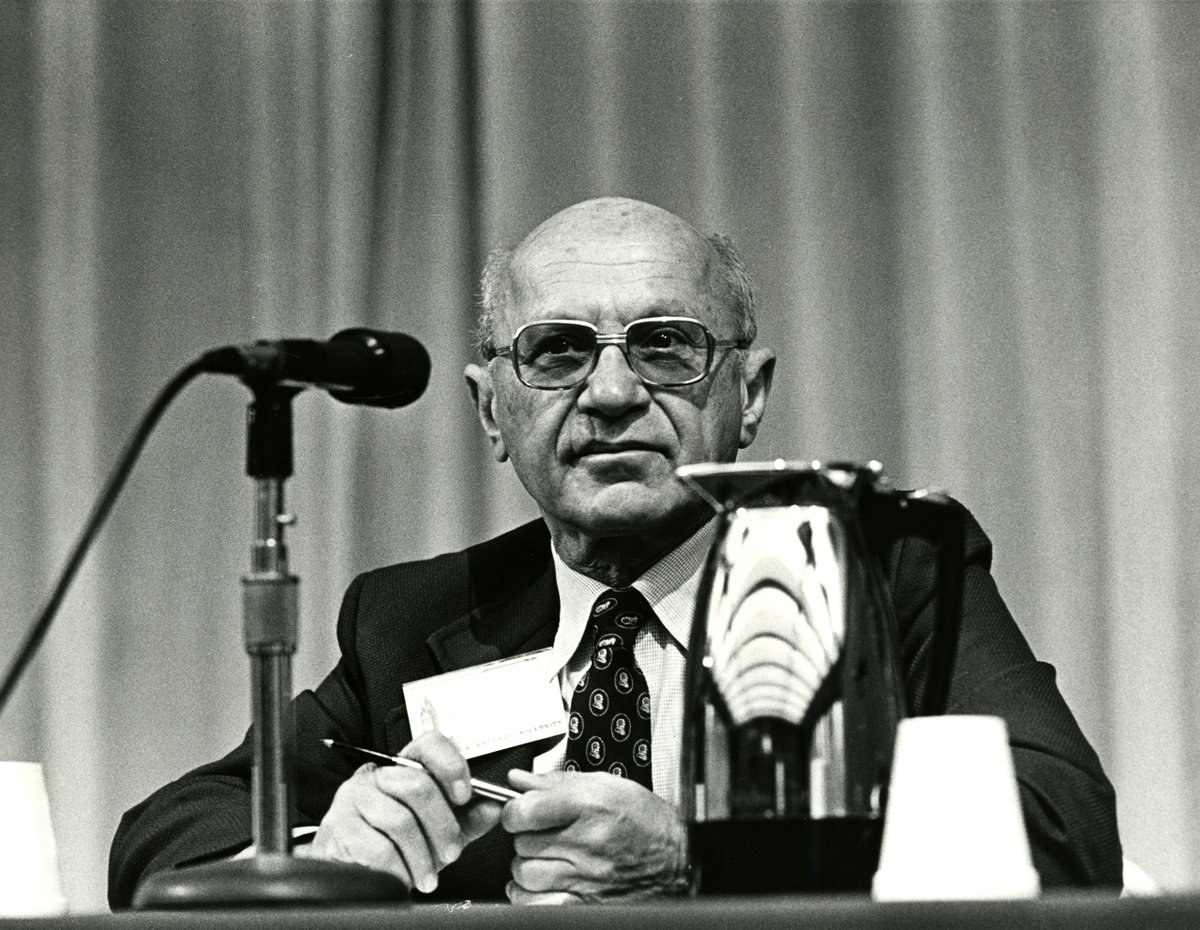
“We have been moving away from the fundamental principles that made this a great country—the principles of freedom, of relying on the individual, of keeping government in its place.”
— Milton Friedman
Milton Friedman:
“Over and over again, you’ll find that the reaction is: ‘What we’ve done in the past has not worked, but that’s because we haven’t done it right. We ought to spend more money on it.’”
“I can understand that attitude in the 1930s when we had not sufficiently absorbed the experience of other countries. But it’s much harder to understand it in the 1970s when we now have 40 years of experience behind us.”
I feel a little like Forrest Gump... but I was also on the flight in Bosnia when Hillary Clinton claimed we "landed under sniper fire."
We didn't.
She didn't.
The reporting I did on this for CBS Evening News led the broadcast two nights in a row.
On the night of June 5th, 1944, a villa near the central square of Sainte-Mère-Église caught fire. The Germans woke the town up at gunpoint and forced French civilians out of their beds to form a bucket brigade. While the locals passed water in the dark, trying to save the building, German troops stood around the square with weapons ready.
Then the planes came.
The 82nd Airborne had been tasked with securing Sainte-Mère-Église before the beach landings at dawn. The idea was to drop in, take the town quietly in the night, and hold it. What happened instead was one of the worst drops of the entire war. The planes came in scattered, the men jumped, and the burning building below them turned the sky into a shooting gallery. The fire acted like a floodlight. German soldiers in the square simply looked up and opened fire.
Paratroopers were shot while still in their chutes, before they ever touched the ground. Some drifted directly into the fire. One man, Private Charles Blankenship, landed in a tree and was shot dead hanging there. Another, Private Penrose Shearer, was killed the same way. Several men landed directly among the German troops in the square and were killed within seconds of hitting the cobblestones. The locals, still standing in their bucket brigade, watched in horror and could do nothing. One French woman later said it looked like the sky was raining dead men.
Private John Steele, Company F, 505th Parachute Infantry Regiment, came down on the wrong side of the church. His parachute caught the stone spire of the Église Notre-Dame and snapped tight. He jerked to a stop 60 feet in the air and just hung there, swinging slightly, directly above the chaos.
He had been shot in the foot during the descent. So he was wounded, suspended from a church steeple, in full view of German soldiers, with no way down and no way to fight. He could hear everything. Men screaming. Gunfire. The crackle of the burning building. He made a decision: he let his body go completely limp and kept it that way. For two hours.
Two hours.
Some of the Germans noticed him and left him alone, assuming he was dead. Meanwhile the battle for the square played out beneath his feet. Of the roughly 180 men who dropped over Sainte-Mère-Église that night, only a handful survived uninjured. The town, by a miracle of chaos and American stubbornness, was liberated by morning anyway, becoming the first French town freed on D-Day.
Eventually a German soldier climbed up and cut Steele down. He was taken to a command post inside the town. A few hours later, when American forces pushed through and the Germans scrambled to retreat, Steele simply walked out.
He found his unit. He kept fighting. He made it home.
In 1962, the film The Longest Day dramatized his ordeal. Actor Red Buttons played Steele, dangling from a movie steeple while the battle raged below, and the scene became one of the most iconic images of the entire film. Steele watched himself portrayed on screen. He reportedly thought it was pretty accurate.
The town of Sainte-Mère-Église never took the story down. They hung a dummy paratrooper from the church steeple permanently, chute caught on the spire, exactly where Steele had been. It is still there right now. If you fly into Normandy and drive to that town and stand in that square and look up, you will see a man hanging from a church, frozen in the worst two hours of June 6th, 1944.
John Steele returned to Sainte-Mère-Église after the war and was celebrated every time. The French treated him like a hero for the rest of his life. He died in 1969 at 57 years old, in Metropolis, Illinois, the same small town where he was born.
The dummy is still on the steeple. The town never forgot.
🇺🇸Most Badass Americans You Don’t Know D-Day Edition (D+2): Frank D. Peregory
Technical Sergeant Frank D. Peregory stormed ashore with the first wave on Omaha Beach on D-Day.
Two days later (D+2) he turned into a one man bayonet and grenade wrecking crew.
Born April 10, 1916, in Esmont, Virginia, Peregory grew up in a large hardscrabble family in Albemarle County.
At just 15 he lied about his age and joined the Virginia National Guard.
He served in Company K, 116th Infantry Regiment.
He was already a proven hero.
While guarding a beach in North Carolina in 1942 he twice dove into a submerged truck in a canal to pull a drowning comrade to safety.
He earned the Soldier’s Medal for that, the highest non-combat award a solider can receive for heroism.
By 1944 he was a battle hardened Tech Sergeant in the 3rd Battalion, 116th Infantry, 29th Infantry Division.
The famous Blue and Gray division that took the worst of Omaha Beach.
On the morning of June 8, 1944, his battalion was pushing inland toward the strongly held German defenses at Grandcamp.
Suddenly the advance slammed to a halt under devastating machine gun fire from an entrenched enemy force on the high ground.
Peregory did not wait for orders.
On his own initiative he charged straight up the exposed hill under withering fire.
Reaching the crest he spotted a deep trench leading 200 yards to the main German fortifications.
He leaped in and went to work.
He slammed into a squad of enemy riflemen. Attacking with grenades and bayonet in brutal close quarters combat he killed eight and forced three to surrender.
Then he kept going alone down the trench line.
Single handedly he forced the surrender of 32 more riflemen, captured the machine gun crew, and completely silenced the position.
His one man assault opened the way for the entire battalion to surge forward and seize the objective.
Six days later on June 14, 1944, Technical Sergeant Frank D. Peregory was killed in action in the Normandy hedgerows.
He was 28.
He was posthumously awarded the Medal of Honor.
One of the legendary heroes of the 29th Division and the only Virginia National Guardsman to receive the nation’s highest honor in World War II.
He rests today in the Normandy American Cemetery overlooking the beaches he helped secure.
Frank D. Peregory is an American Badass
Thank you, Frank! 🫡🇺🇸
On December 7, 1941, an NBC radio affiliate in Honolulu made an urgent phone call to New York. In it, he begins to describe what the world would later know as the attack on Pearl Harbor.