PhD candidate & @Researchirel scholar @ucdpolitics. Interested in authoritarianism, media control, & nationalism. Former journalist with a stint as a 互联网打工人
New paper out!
Using a text scaling approach on 17,000+ Chinese state media articles (2014–2023), I examine how international media are portrayed as external threats - and when this hostility intensifies.
Article: https://t.co/QST7iLCQX9
Free (first 50): https://t.co/XiXI1aM1W9
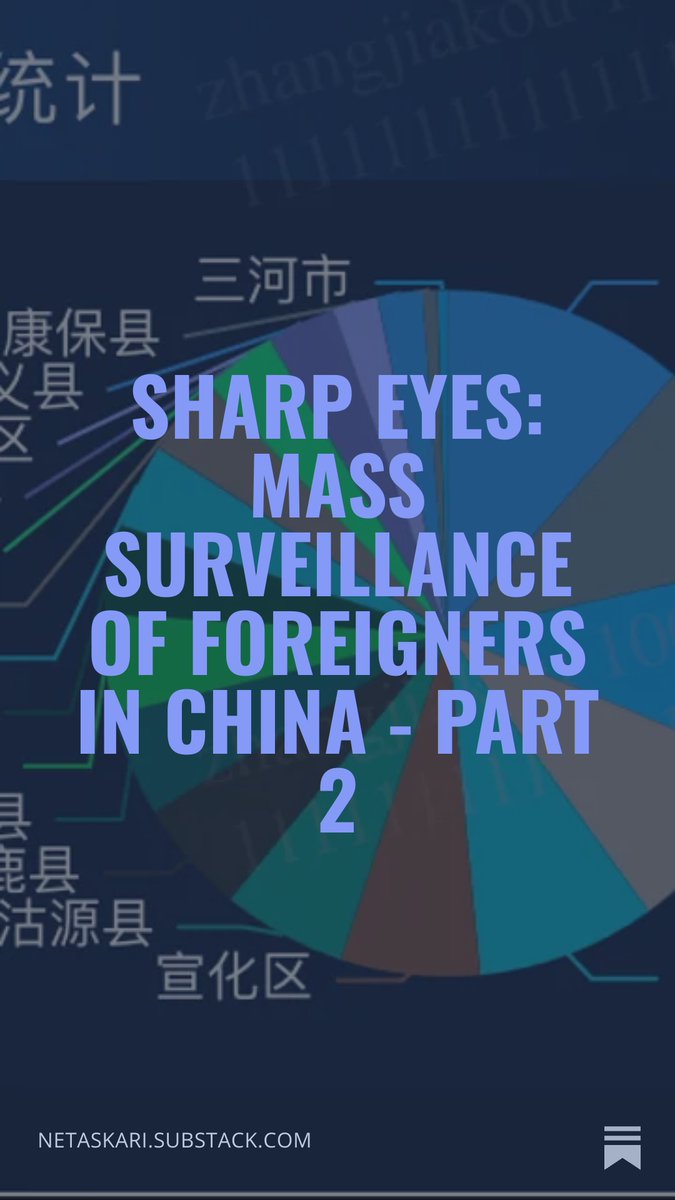
Here is PART 2 of our investigation into the "Dynamic Control Platform for Overseas Personnel". A test dashboard design that gives us exclusive insight into the world of Chinese surveillance of foreigners by its police service. This time we will introduce a few more elements, plus what else we found on the server and some thoughts. Let's go! 1/9
Der Blogger Marc Hofer entdeckte zuerst ein unbekanntes chinesisches Überwachungstool – und dann sein eigenes Passfoto darin. Hier berichtet er über die Fähigkeiten des Programms und darüber, wie es sich anfühlt, selbst zum Ziel zu werden. https://t.co/EfHg98WVRR
It takes an average of 595 days and 3.1 rejections to get a paper accepted in political science.
This is the face of rejection and a very sluggish publication system. This makes it very hard for graduate students who only get 5 years of funding and makes a lot of academic work irrelevant to the world (technology like AI develops far faster than our publication system).
I'd love to see a larger dataset. But this is not too far away from my own experience.
🚨 EXCLUSIVE: The Telegraph can reveal a secret Chinese surveillance platform used to track foreigners, journalists and individuals deemed “of interest” to the state
@sophia_yan explains how the platform's records label her as "trackable" ⤵️
https://t.co/TzrG4Jh1DM
EXCLUSIVE: How the track foreigners in China - We got rare access to demo system developed by the Ministry of Public Security in China for the prefecture of Zhangjiakou, to track and surveil foreigners visiting or being residents ( actually it applies to most nationals as well, but in this case it seems to be aimed at foreigners ). It is officially known as "Dynamic control platform for overseas personnel". 1/12
Great report by @eliotcxchen in @thewirechina. I found that the foreign press corps in China shrank from >700 in '08 to 500 in '21, & 400+ in '24. What’s less clear is how its makeup has changed & if access increasingly favors ideologically aligned media https://t.co/uXzHq3kfmc
"More recently, foreign correspondents looking to relocate to China have been issued J-2s for protracted durations. A reporter for the BBC, for example, was on J-2 status for six months before she was issued a J-1. Another correspondent, for The Guardian, is on her second consecutive J-2. The Associated Press’ new China bureau chief was also issued a J-2 in January, according to two people familiar with the matter.
Such non-resident visas can pose practical difficulties, making it harder for correspondents to open a bank account or sign a lease. J-2s also tend to be single entry, making it difficult for correspondents to travel back home." https://t.co/sr60Nc2ydx
If you are interested in academic research on this very subject, check out @ucdpolitics PhD candidate @LinetteMLim
here:
https://t.co/0UkUvtFFUg
and here:
https://t.co/5CJai66Pu7
Excited to be part of this event organised by APSG + APSA Democracy & Autocracy section! I'll be sharing my work on global media & authoritarian regimes alongside fantastic panellists. Join us Thu 9 April at 18:30 CET / 12:30 EST - sign up link in the thread of the original post
Congrats! 🫡 In our joint nomination, @leejunhyoung & I detailed how @AlexDukalskis combines rigorous academic guidance with genuine support for student well-being. Such a well deserved win (one of just two awardees) for the best mentor an early career scholar can wish for! 💐
Congratulations to our colleague, Dr Alexander Dukalskis @AlexDukalskis on receiving the UCD Dean of Graduate Studies Award for Excellence in Doctoral Supervision! 🏆🎓
https://t.co/1qD4M94ASq
Comhghairdeas leat, a Alex 🙌
Wrapped up my Media Politics under Authoritarianism class! Though we focused on autocracies, we discussed threats in democracies, like news avoidance & platform capture. Part of the solution lies in questioning biases & resisting essentialism- traits I felt many students embodied
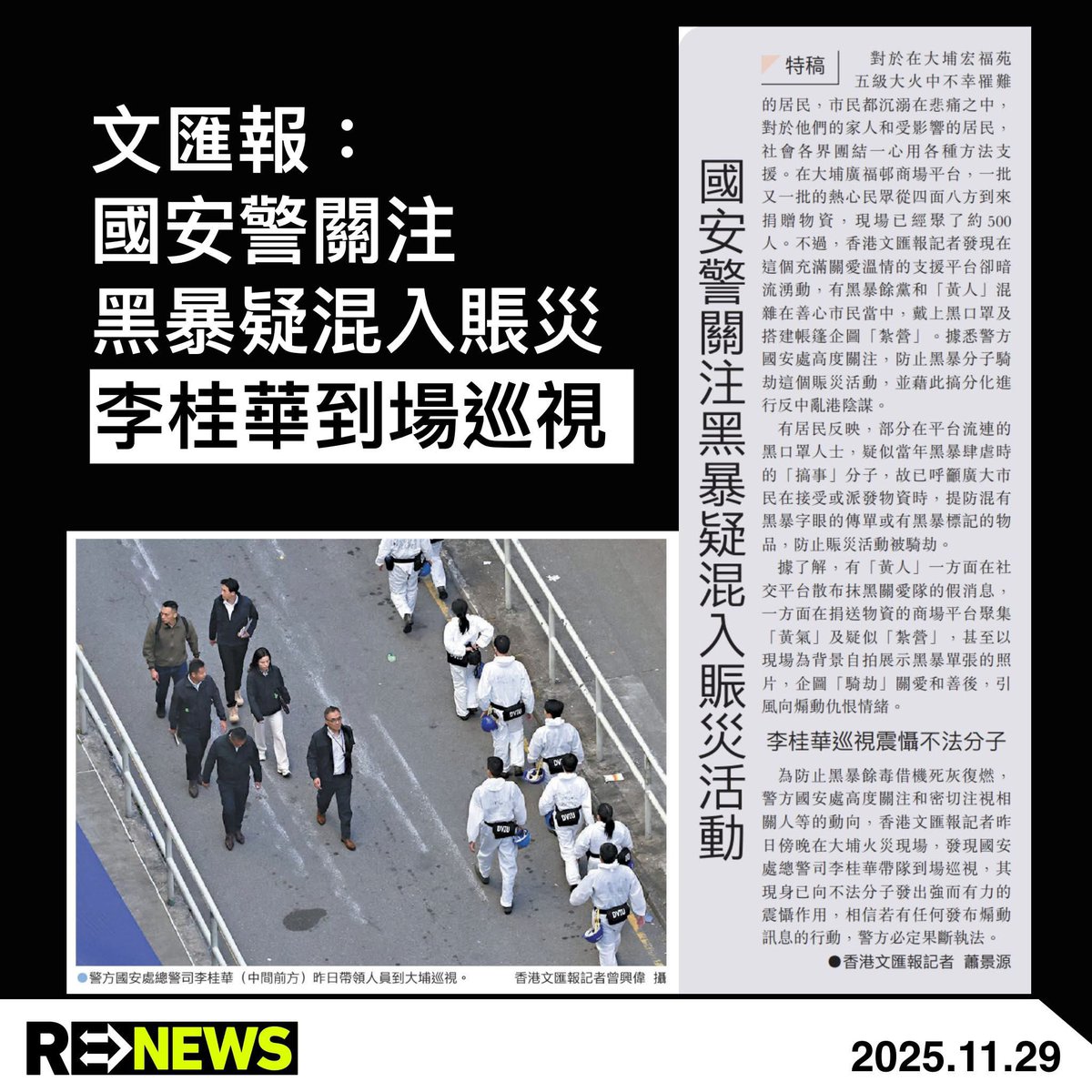
Surprise surprise. The Hong Kong police is now treating the mass self-mobilisation of citizen-led volunteers in aid of victims of the Tai Po fires as a national security threat, with Chief superintendent Lee Kwai-wah (who is sanctioned by the US for his leading role in Beijing’s crackdown on dissent in HK) from the National Security Division inspecting relief operations sites for “evidence” of national security crimes.
📑Applications are now open for the UCD Iseult Honohan Doctoral Scholarship 2026.
Closing Date: 30 Jan 2026
☑️Covers full fees (EU and Non-EU)
☑️Provides a living stipend of €25,000 per year for up to four years
☑️Is open to EU and non-EU applicants
👇https://t.co/xia60OffUd
Applications are open for two UCD Ad Astra Doctoral Scholarships💫
It covers:
☑️ Tuition fees (up to the non-EU rate)
☑️ A yearly stipend of €25,000
☑️ An annual research budget of €4,000
Deadline: 6 February 2026
@ElisaADAmico@nik_khokhlov
https://t.co/d4Ekvt3MdY
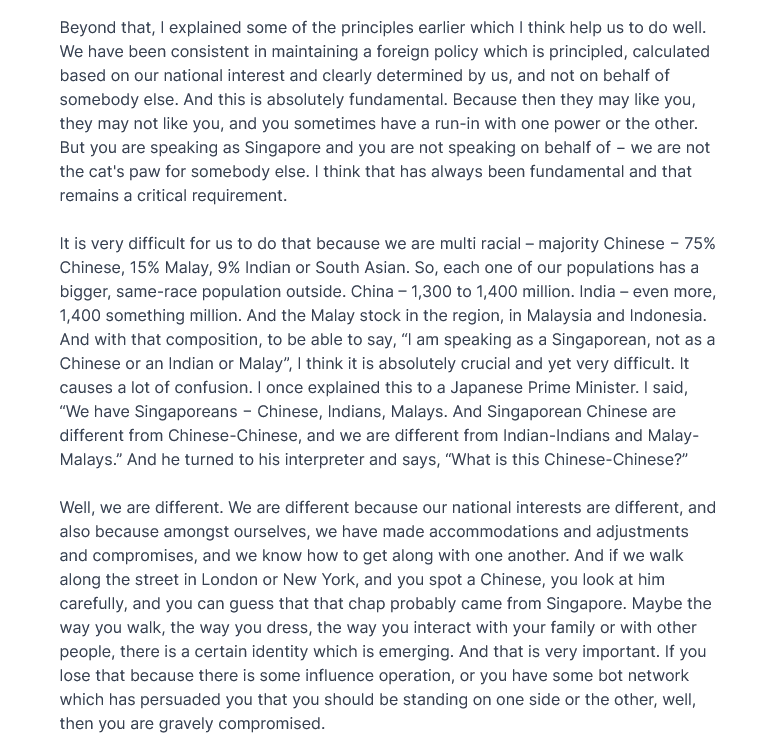
Speaks volumes that this is explicitly said. Perhaps a problem unique to a small, young country surrounded by large ethnostates. The US is multicultural too but it doesn't have issues around foreign influence exerted by say, Ireland or Italy, on citizens of Irish/Italian heritage
Senior Minister Lee Hsien Loong cogently pushed for the national ID issue for Singapore, in the context of geopolitics and foreign influence ops. https://t.co/TMc6aZYAGC
I must say this has always been consistent - a point missed or simply ignored by Beijing back in 2016-17.
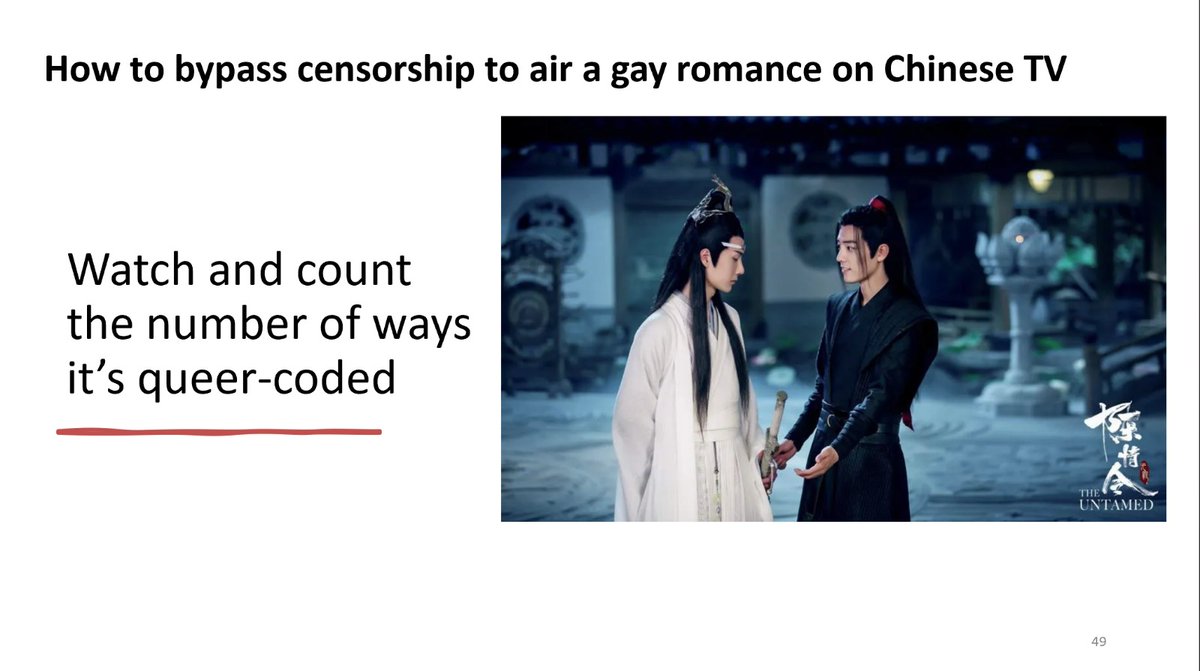
In my Media Politics under Authoritarianism class this week, we explored how to adapt a gay romance for Chinese TV whilst maintaining plausible deniability. We also discussed feminism & creative freedom. Showed students a clip of The Untamed. Their engagement made my week!
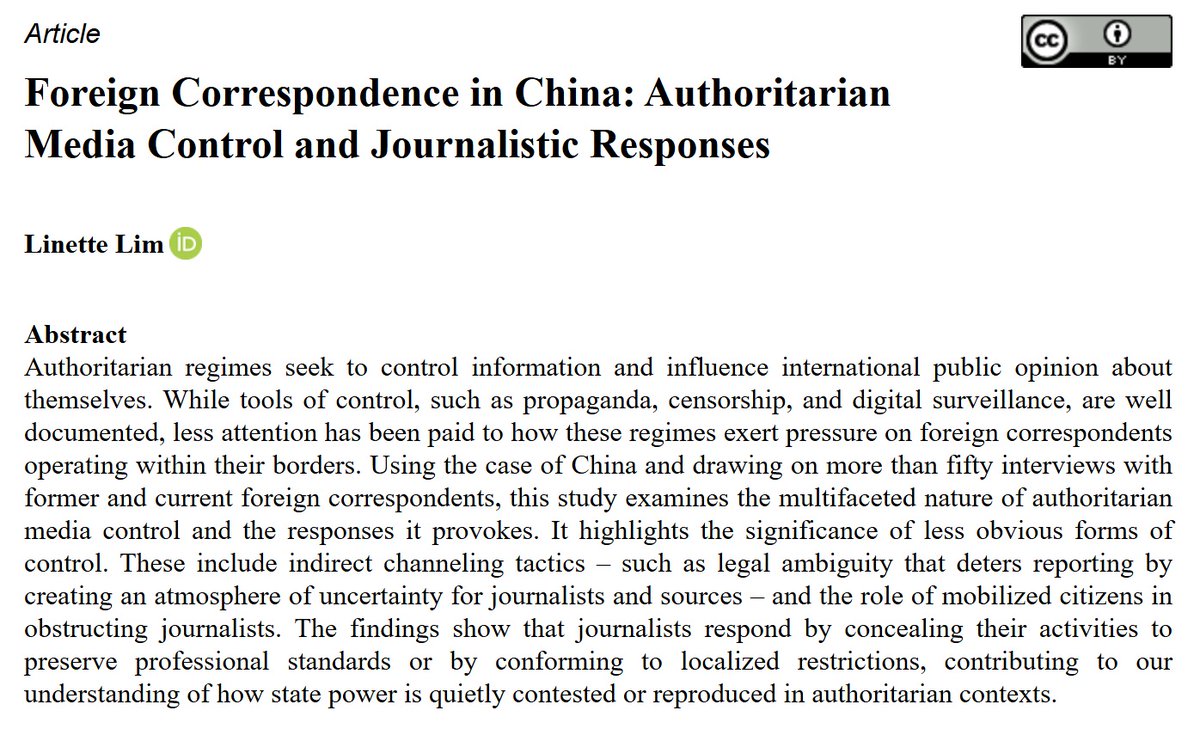
The findings carry implications for the integrity of global media in authoritarian contexts. Journalists broadly respond by concealing their activities or by conforming to localized restrictions, contributing to understanding of how state power is contested or reproduced. (3/3)
My first solo-authored publication is out in The International Journal of Press/Politics!
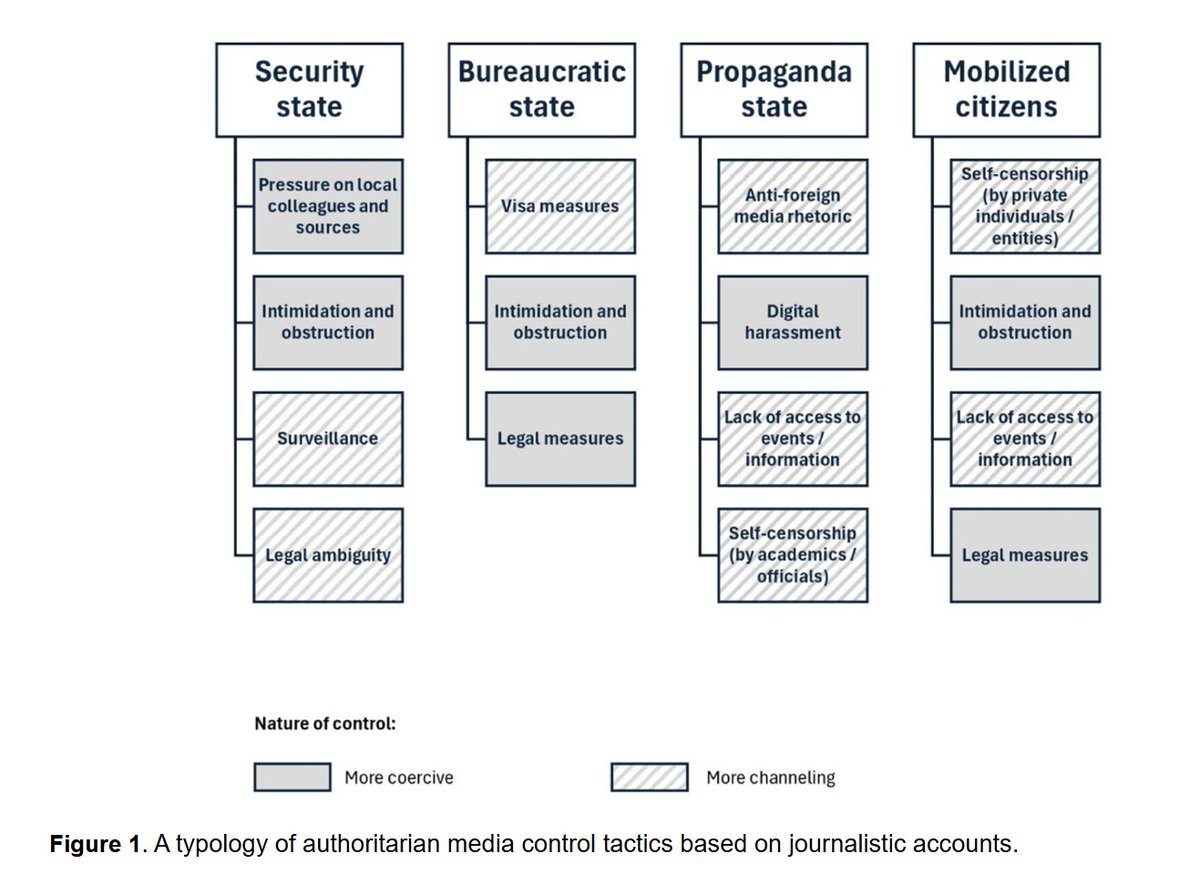
Based on 50+ interviews with foreign correspondents in China, it explores how authoritarian media control operates and the responses it provokes (1/3)
https://t.co/GEi42jUu2e
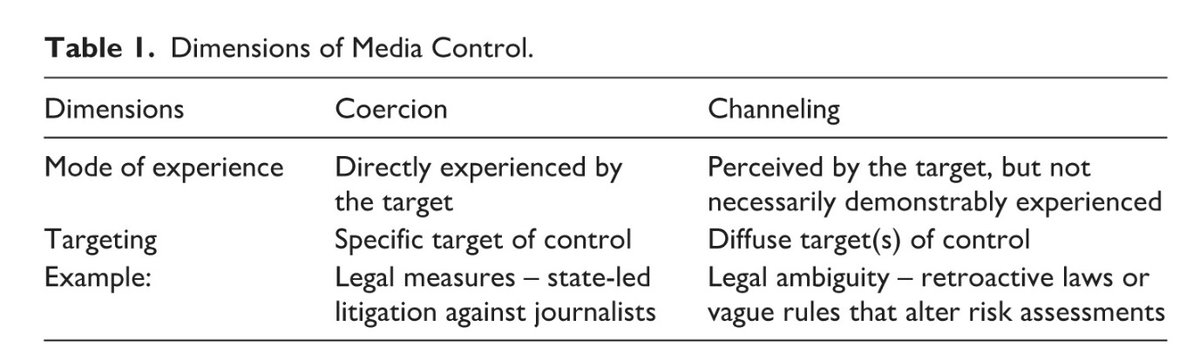
Particularly notable are indirect channeling tactics, such as legal ambiguity that deter reporting by creating an atmosphere of uncertainty for both journalists and their sources. Also significant is the role of mobilized citizens in obstructing journalistic activity. (2/3)