This is the Twitter page for Linguistics Online. We are an educational platform which publishes regular articles on anything and everything linguistics related.
Is "record" a noun or a verb? Well, it turns out it depends on how we pronounce this word, particularly which syllable is emphasised. Find out how stress placement can impact the grammatical function of a word in English as well as the question of why? https://t.co/YY2hyoSfYc
Consider the sentence "Only three women were left after Angela left." What is the meaning of "left"? Does it mean "no longer there" or "still there"? In this article, we discuss Janus Words - that is, words who are their own antonyms. Read more here: https://t.co/moQExfevii
Can you imagine a language without adjectives? Is it even possible? In this article, we look at the exciting world of adjectives. Read more here: https://t.co/yYtZLJ56ju
Ever noticed that many languages share unexpected sound patterns for words as diverse as "ma" and "coffee"? Well, in today's article, we look at the principal reasons for these "world words". Read more here: https://t.co/5n0BRRmO2x
How do you say "the"? Do you rhyme it with "thee" or "thuh" or indeed both? The question of multiple pronunciations of a word is what's discussed in today's article. Check it out here: https://t.co/YVtDNN4aqi
Did you know languages have families? English is often considered part of the Germanic family, being a sibling to German. However, anyone can see the influence languages like French have had on English. Knowing this, is English really a Germanic language? https://t.co/znbkMuucg9
Want to learn British Sign Language? Linguistics Online now has several classes on Skillshare for you to learn it. We update these classes every month. You can take our BSL classes or any other on Skillshare with this free-trial link for 2 months. Enjoy! https://t.co/k59PWU7lno
Idioms are a dynamic part of language. Why can we say "He kicked the bucket" to mean "to die", but not "The bucket was kicked by him" and still retain the idiomatic meaning? We discuss this and the origins of 21 idioms in this article. Read more here: https://t.co/nYLHD3gQzw
The ability to speak is taken for granted. We acquire this ability effortlessly and rapidly when we're babies through listening to language being used. But what happens if we're not exposed to language? Would we still be able to speak? Read more here: https://t.co/SpeqHMVFW6
We speak a lot about language. We want to know what it is, how language changes, how grammar works, and a flood more questions. However, today's article focuses on an often overlooked question: where is language located in us? Read more here: https://t.co/5A4O1w8SlB
How and why does language change is the topic of today's article. We look at the popular theories regarding language change and their usefulness at studying language change. Read more here: https://t.co/e9Y8KrCv05
How is the comma actually supposed to be used? Why is there even a comma in the first place? These are two of the questions discussed in today's article all about the comma. Read more here: https://t.co/YlINsSgtFE
Chinese and English can seem like they're the complete opposites of each other. But, perhaps they are a lot more similar than you may have previously thought. In this article, we look at the chief similarities and differences between Chinese and English. https://t.co/Y6Yl3Fysys
Do Spaniards actually speak more quickly than speakers of English? Is there any empirical evidence to support this claim or is it simply an illusion created by our brains? Read more here: https://t.co/eh8bBxmjc0
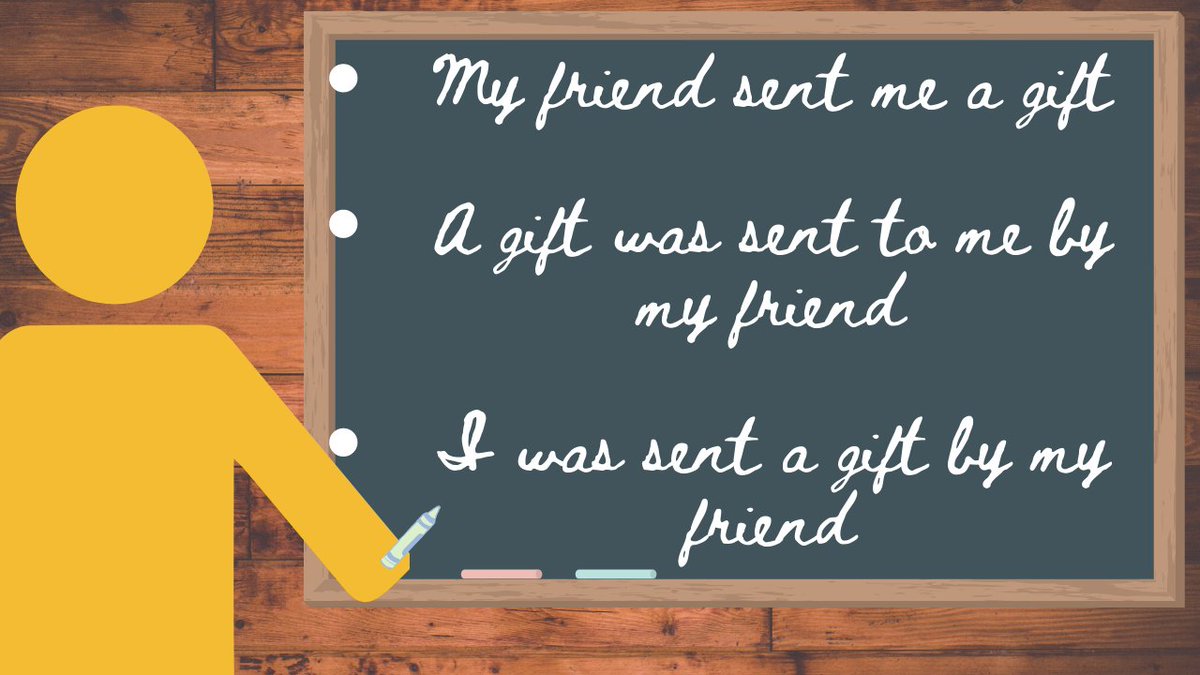
Passive sentences are controversial: many argue against them due to issues of ambiguity and correctness; others rally behind them due to the advantages gained from them. But, can you actually spot a passive sentence? You may be surprised. Read more here:
https://t.co/DbTY2F20m0
Are loanwords harmful or beneficial for languages? This is the topic discussed in today's article. We also consider the impact that political organisations such as the infamous Académie Française has had on this issue. Read more here: https://t.co/GrCCy8npt7
The next course in my series of the BSL basics has now been published to Skillshare. We will look at numbers as well as general phrases so that what you learn has practical and real life applications. You get a free 2-month trial when you use my link: https://t.co/Vm9chTE6Lq
Great news from GCSE and languages uptake! We should be able to see, perhaps, a comparable rise in A-Levels a couple of years down the line? #LoveLanguages
https://t.co/q5n7Ix3jdt
Today's article how different languages represent how how subjects and objects are demonstrated grammatically. For example, in English, we may say "I eat", but in another language, this may be expressed with the equivalent of "me eat". Find out more here: https://t.co/b970b0UFo3