I sent one of my Iranian friends in the United States a news report about the Speaker of the Norwegian Parliament, Masud Gharahkhani. He occupies the highest elected office in Norway after the King in the country’s constitutional order. Born in Tehran, Iran, he arrived in Norway as a refugee with his family in 1987. What began as sharing an interesting story quickly became a conversation about civilisations, and one observation proved difficult to dismiss.
For all its conflicts, and for all its hypocrisies and prejudices, Western civilisation remains the most accommodating of outsiders. You may marshal elegant arguments or even write a thesis against that proposition, but it is difficult to identify another part of the world that has consistently entrusted so much political, economic and social power to immigrants and foreign-born citizens. The evidence is visible in parliaments, city halls, universities, boardrooms and courts across the Western world.
Meanwhile, some of us are still trapped in societies where even a fellow citizen can be denied opportunities in the very town he was born and has lived all his life simply because his parents came from another region, or because he belongs to the wrong ethnic group or professes the wrong faith. That remains the primitive rung on which many societies outside the West are still stranded.
The fact that two of the world’s most influential cities, New York and London, have elected Muslim mayors is telling. It becomes even more striking when one considers the growing number of immigrants and foreign-born citizens who occupy sensitive public offices across Europe and North America. My Iranian friend is himself an illustration of that openness. He moved to the United States for postgraduate studies and has since risen to a senior position in a leading organisation. Whenever we discuss America, his dominant sentiment, despite his disapproval of the politics of certain American leaders, is gratitude for the opportunities it afforded him.
This openness is also one reason liberal democracies in the West have proved incredibly resilient. Despite the rise of populists, authoritarians and the far right, their greatest opponents are often their own citizens. The culture of relentless self-criticism, the independence of institutions, a free press, competitive elections and courts willing to check executive power have enabled these societies to correct themselves repeatedly. That does not mean the West is free of racism, Islamophobia, xenophobia, inequality, colonial legacies or political polarisation. It means that, despite these flaws, it has built institutions capable of challenging prejudice rather than permanently surrendering to it—and that’s a lesson for us. That capacity for self-correction may well be its greatest civilisational strength.
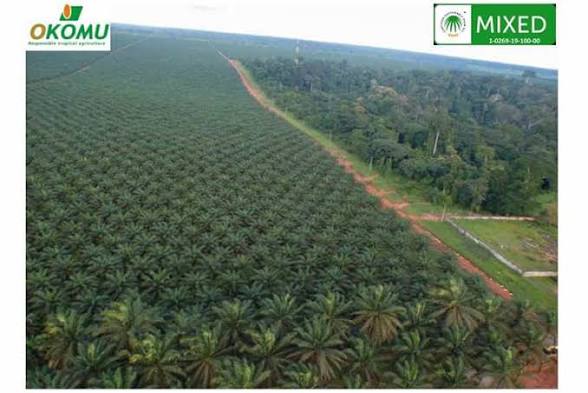
In 1975, Nigeria built Okomu Oil: a massive, state-funded agricultural manufacturing giant spanning over 15,000+ hectares of fertile land in Edo State. It was erected as a state-owned industrial powerhouse, fully equipped with modern power turbines, advanced palm oil processing mills, paved road networks, storage facilities, and fully built staff housing estates, meticulously designed to print money for the national treasury.
In the 1980s, the global crude oil market crashed, and the Nigerian military government under General Ibrahim Babangida panicked and ran straight to the World Bank and the IMF for emergency loans. The bailout was provided to Nigeria, but it came with devastating, non-negotiable Structural Adjustment Programmes (SAP) which strictly mandated Nigeria to aggressively privatize, dismantle, and sell off over 100 state-owned enterprises.
In 1990, Nigeria formally auctioned off Okomu Oil Palm to Western corporate oligarchs for pennies on the dollar. Today, Okomu Oil Palm Plc operates as a literal money-printing machine listed on the Nigerian Exchange (NGX), generating tens of billions of Naira in clear net profits every single year from Nigerian soil, Nigerian sunshine, and cheap Nigerian labor.
But the vast majority of those massive, astronomical dividend payouts are wired straight out of Nigeria into a corporate bank account in Luxembourg.
Student loan interest rates:
UK – 6%
USA – 8%
Kenya – 4%
Ghana – 6%
Nigeria – 0%
Nigeria is also the only country in Africa offering 0% interest on student loans while maintaining one of the lowest tuition fees.
NELFUND remains one of the best initiatives of this admin.
@MasterBolaji Hmmmmm, are you sure? They will have to modify the old Bessemer process equipment that is there. The quality of our ore is a big hindrance. Wrought, Pig and Cast Iron are great too.
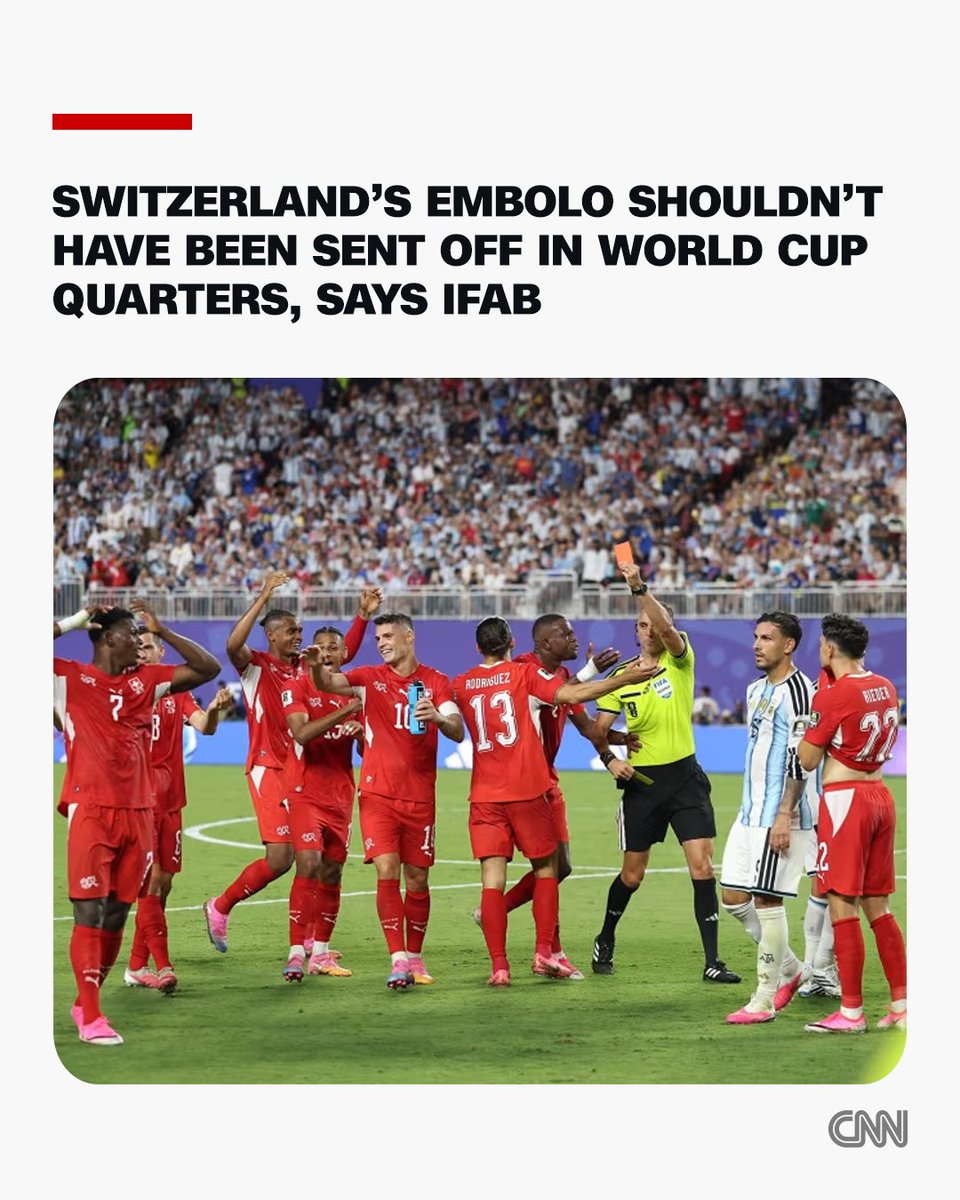
Soccer's law-making panel clarified its guidance to referees which confirmed Switzerland forward Breel Embolo should not have been sent off in the World Cup quarterfinals against Argentina. https://t.co/biicx5dYIN