We’re wrapping up our Season of Innovation with our eighth release, the new Agora mobile app. Now your investor pipeline can tag along to meetings, fundraising dinners, and site tours.
You can pull up an investor on your way in and see where you left off. My favorite part comes after. Tell Cortex, our AI, how the meeting went, and it’ll draft the note and the pipeline update for you.
The app is live on the App Store for iOS users and included in every Agora plan.
AI is changing how we build at Agora, but also how we do our own jobs. And I think there’s a lot to learn from doing both.
Aylon Fisch, a Group Product Manager on our team, recently shared how he applied the same discipline we use to evaluate our AI agents to improve his own workflow.
He looked at what wasn’t working, made changes, and measured whether they actually helped. I love seeing this mindset across Agora.
People experimenting, challenging how things are done, and sharing what they learn. The more we use AI ourselves, the better we understand what it takes to make it genuinely useful.
And that makes us better at building for our customers.
Great piece by Aylon. Worth a read!
https://t.co/mWiTJ91Oim
Building Agora means thinking about everything our clients need to run their firms well: the technology, the services, and how they work together.
That’s why I’m excited about our new nationwide strategic partnership with EisnerAmper.
EisnerAmper is one of the 15 largest accounting and advisory firms in the US, with more than 4,500 professionals. Through EA RESIG, it is also home to the largest private fund administrator serving the real estate fund market, by number of funds administered.
Bringing together our technology and EisnerAmper's extensive industry expertise and fund administration capabilities strengthens how we serve real estate investment firms.
A big thank you to the EisnerAmper and EA RESIG teams for the trust and partnership. We’re excited about what we can accomplish together, and more importantly, the value we can deliver to our clients.
Some of the investment firms we speak with at Agora have already tried building their own AI workflows for investor reporting.
That tells me something about where IR is heading.
Today, too much of the quarter goes into gathering numbers, chasing updates, and assembling a letter. Only then does the team get to decide what it actually needs to say.
That starting point is beginning to change. Increasingly, IR teams will start with a first draft built from the firm’s records, with every number linked to its source, ready for review.
But having the numbers doesn’t tell you how to explain a missed target. Or whether an investor should hear about a problem before the quarterly letter. Or when an email needs to be a phone call. Those decisions depend on knowing your investors and earning their trust.
My bet is that the best IR teams will spend less time assembling reports and more time deciding what investors need to hear, how to explain it, and when to pick up the phone.
I often describe AI to customers as a brilliant intern on their first day.
It can write and reason well, but you wouldn’t ask it to draft an investor update without first explaining the fund and what you’ve already told your LPs.
You’d give a new hire the previous letters, the fund terms, and the context behind the numbers. AI needs that onboarding too.
It can know a lot about real estate without knowing how your firm operates. Pasting that context into a chat can get you a useful result.
The question is how much of that setup you have to repeat for the next task, or when someone else on the team needs the same information.
That’s worth checking when you evaluate AI: can the context your team provides keep being useful?
A good intern becomes more valuable as they get to know the firm. You shouldn’t have to keep giving yours a first day.
Next in our Season of Innovation: Agora Connect.
Two weeks ago, I wrote that a connector is a window: you can see through it and ask questions, but you can’t reach through it and move anything on the other side.
Today, we’re opening the door in.
Agora Connect brings data from the systems you already use into Agora, automatically.
When integrations come up in customer conversations, the question is usually: “Do you have an API?”
We do. But behind that question is a simpler need: “Can our data show up in Agora, correct and on time, without someone on our team having to manage the integration?”
An API makes that possible. It still leaves you with a project to build and maintain.
That’s why Agora Connect is delivered and managed by our Professional Services team. We scope the integration with you, map your data to Agora’s model while preserving your definitions, and test it on your real data until it’s ready. Then we keep it running.
Even when the system on the other side has no API.
Agora now has a door out and a door in. And your team doesn’t have to build or maintain either one.
The hardest part of an investor report is not writing it, It's pressing send.
That's why when we built our investor reporting agent, we focused on one thing: making it something you can actually trust.
Every number traces back to its source
Permissions - The AI only sees what you’re allowed to see
Nothing moves without human approval
So when you're evaluating an AI reporting tool, don’t ask how fast it drafts. Ask what you still need to check before sending - If it is every number and every permission, AI saved you time. It did not remove the risk.
Speed definitely matters, trust matters more.
I cut about 60% of what AI writes for me.
That’s still a great trade. The other 40% gets me to a stronger draft much faster than starting from a blank page.
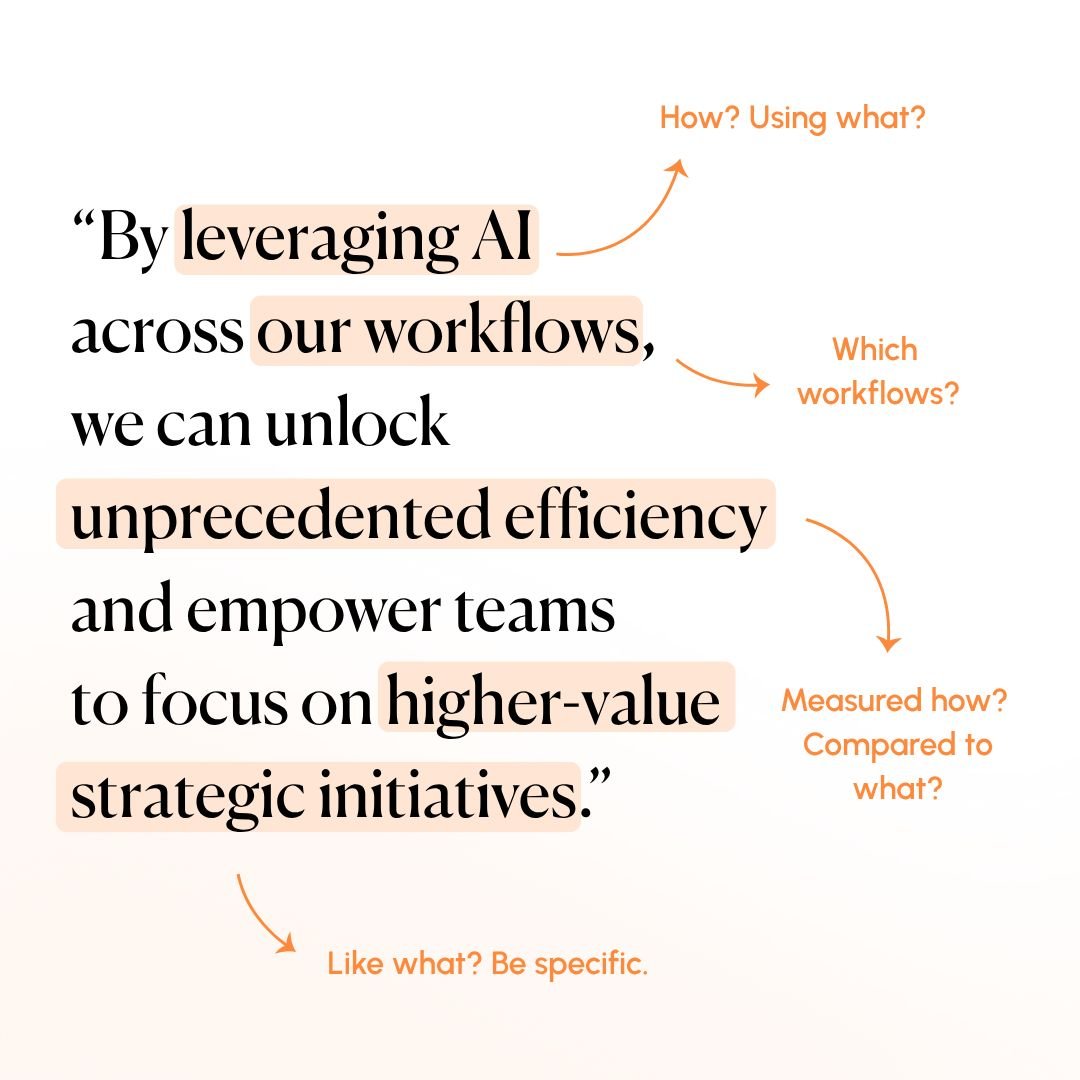
But AI is very good at writing sentences like this:
“By leveraging AI across our workflows, we can unlock unprecedented efficiency and empower teams to focus on higher-value strategic initiatives.”
There’s nothing technically wrong with it, it just doesn’t tell me anything.
Which workflows?
What became more efficient?
What will the team actually do differently?
If a sentence could appear in almost any company’s strategy document, it probably doesn’t belong in mine.
I apply the same test to decision docs and analysis drafts.
AI gives me a useful starting point. My job is deciding what is true, what matters, and what needs to go.
AI didn’t remove the work. It moved the work to the cut, and judgment became the work.
It runs on the data you already have with us. Same entities, same transactions, same investor records. Nothing to reconcile between systems, because it was never in two places. AI where it helps, human where it matters.
The Season of Innovation continues!
Today we're shipping Agora's Bookkeeping Center, a first of its kind workspace inside Agora for all your books, tasks and financial reports.
So we built this in a specific order. Connected books and investor data first. AI-assisted reconciliation on top of that. Then review by a dedicated Agora bookkeeper and CPA who knows real estate accounting.
The least impressive thing in our AI demo was the thing the customer cared about most. Last week, I showed a GP our new real estate investments AI platform, Cortex: Agents working overnight. Answers cited back to his own data. Documents turning into structured tables.
“What’s in it”? “Can we edit them”? “Can our team create and share its own”? Everyone is showing AI magic right now. But people don’t just need to see what AI can do. They need to know where to start on Monday morning.
Too many crypto founders are worried about who is on their advisory board, which fund logos they can put on their deck, and how large their Telegram groups are.
They should be much more worried about whether their products work and if people want to use it.