We find this across studies, tasks, countries, and issues. A concerning implication is that politicians misperceive public opinion the most when it is lopsided, which entails that policy responsiveness is undersupplied precisely when citizens demand it most. More in the paper!
New preprint: Jack Lucas, Christian Breunig and I reanalyze 70,470 assessments made by 12,860 politicians about their constituents' positions and demographics, from every available published study of elite perceptual accuracy and our own original data. /1
https://t.co/UiKA5VUlc2
We show that politicians' errors are primarily an expression of "midpoint hedging", a well-known cognitive quirk, leading them to skew their estimations towards 50% even when actual opinion is far from evenly split. Hedging accounts for two thirds (!) of politicians' errors./2
Our findings shed light on the personality selection funnel into higher-office politics, and help explain resulting leader behaviour patterns. Proud to be part of the team working on this paper, led by @bergeron_thom, and including @EranAmsalem , @JeroenJoly , and @PeejLoewen.
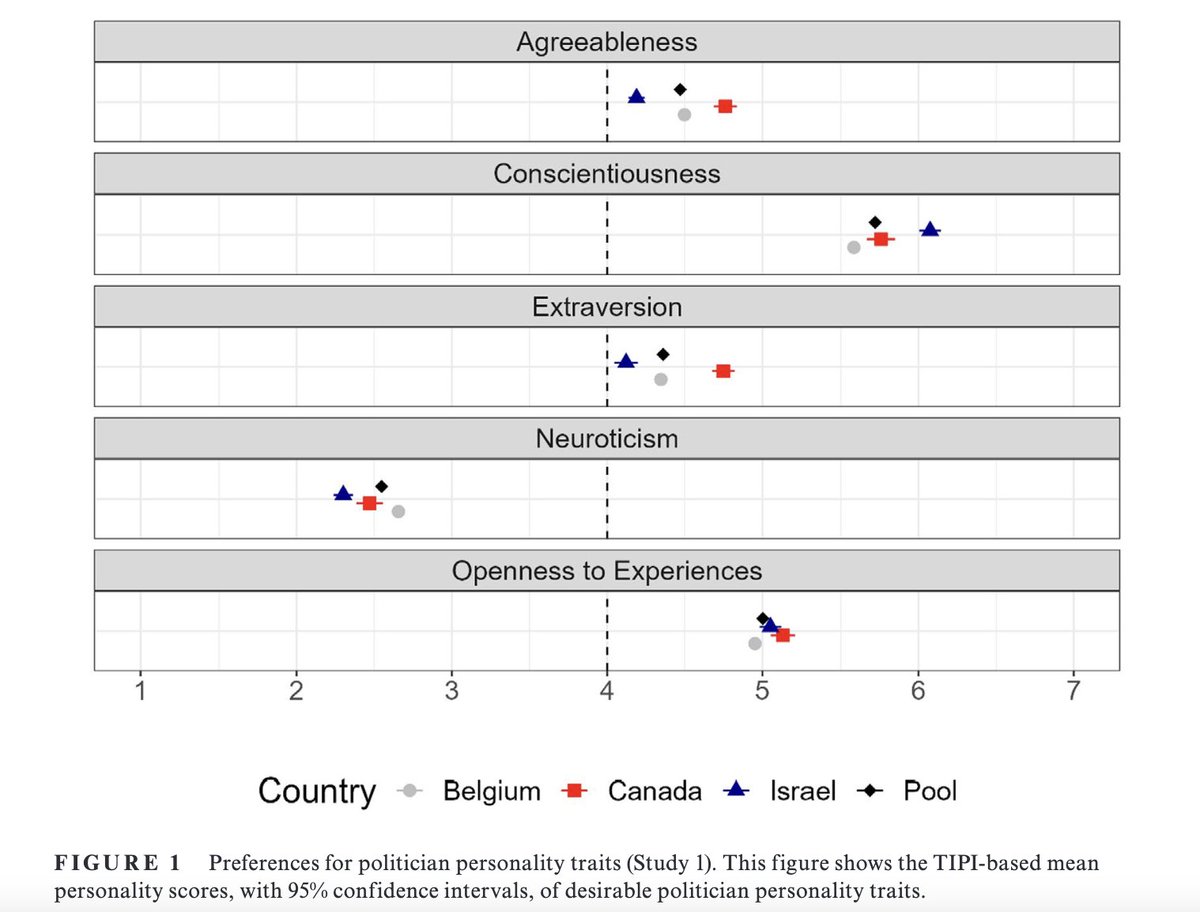
Now in @Journal_PoPs: what type of personality do citizens want in their leaders ? In a series of studies in Belgium, Canada, and Israel, we present voters with profiles of potential leaders with different personalities drawn using the Big Five traits /1
https://t.co/L2YfFrxT77
High levels of openness to experience, which characterize most politicians, are only weakly appealing, especially among right-leaning voters. In a conjoint experiment, we find that these effects on leader preference outweigh factors such as education, gender, and experience. /3
We find remarkable consistency across countries and ideologies when citizens choose their party leaders: they are extremely averse to displays of neuroticism, and strongly reward candidates who are conscientious, agreeable, and to a lesser degree extrovert /2
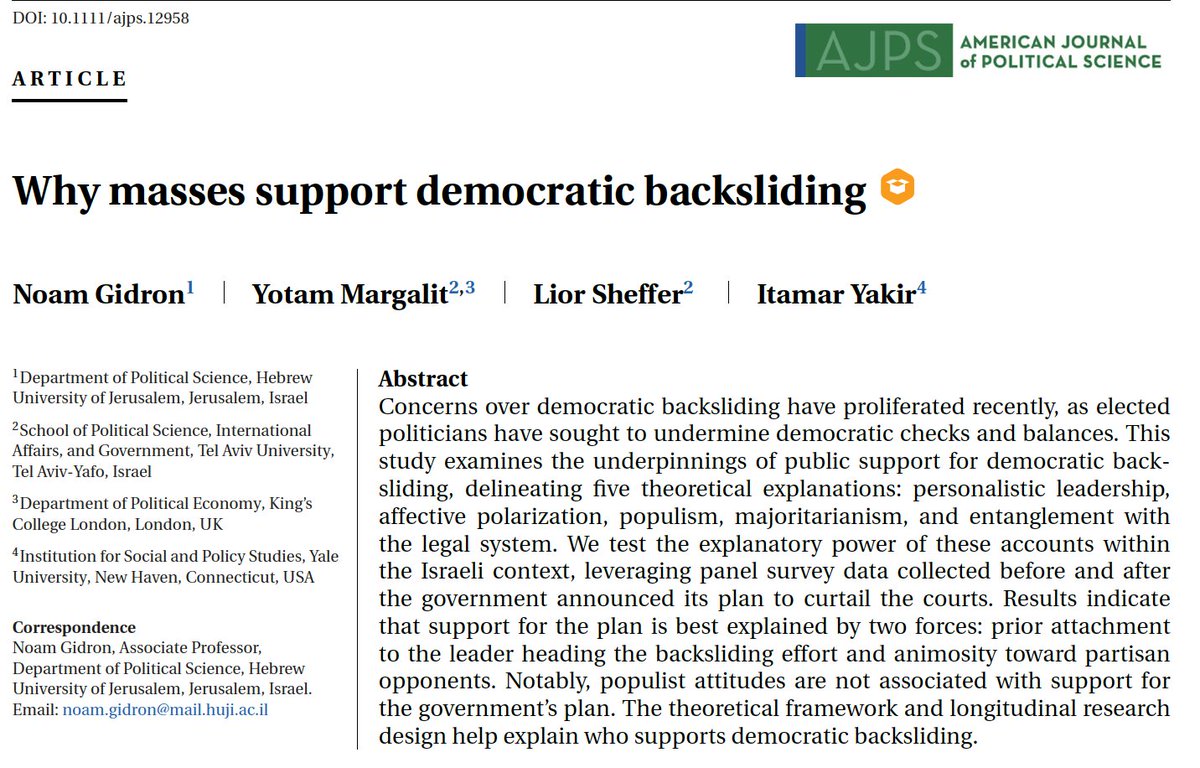
🚨Why do masses support democratic backsliding?🚨
A new @AJPS_Editor paper with Yotam Margalit, @LiorSheffer and @ItamarYakir explores this question in the Israeli context. Our findings emphasize the role of leader attachment and affective polarization.
https://t.co/jYM7yVp109
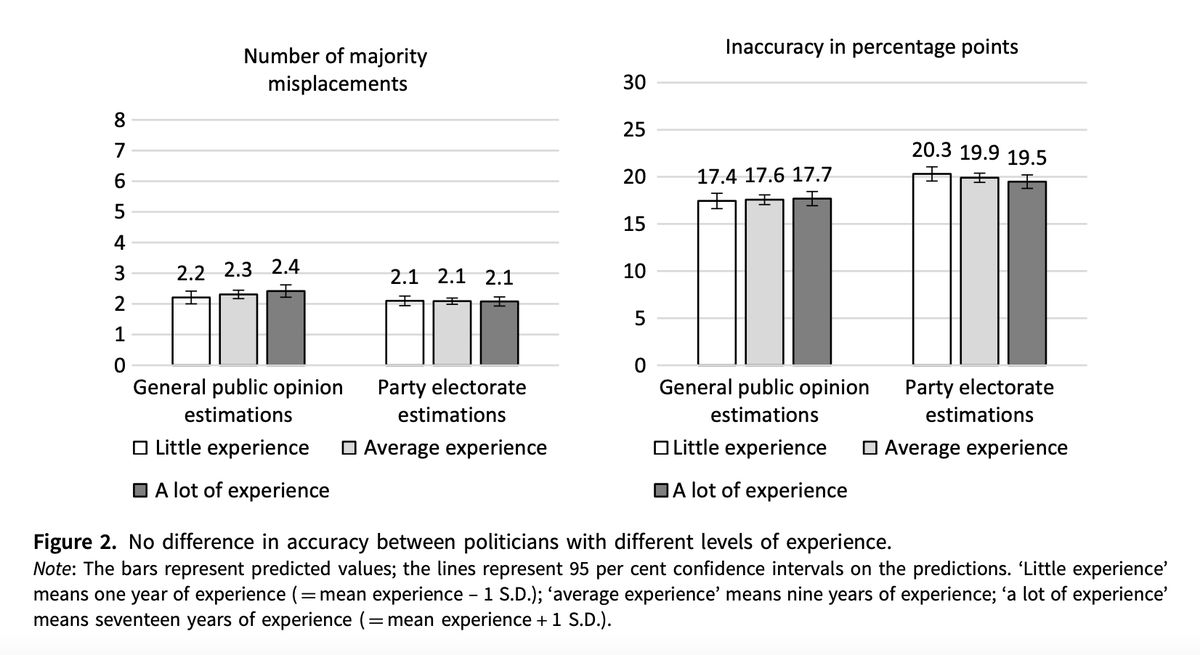
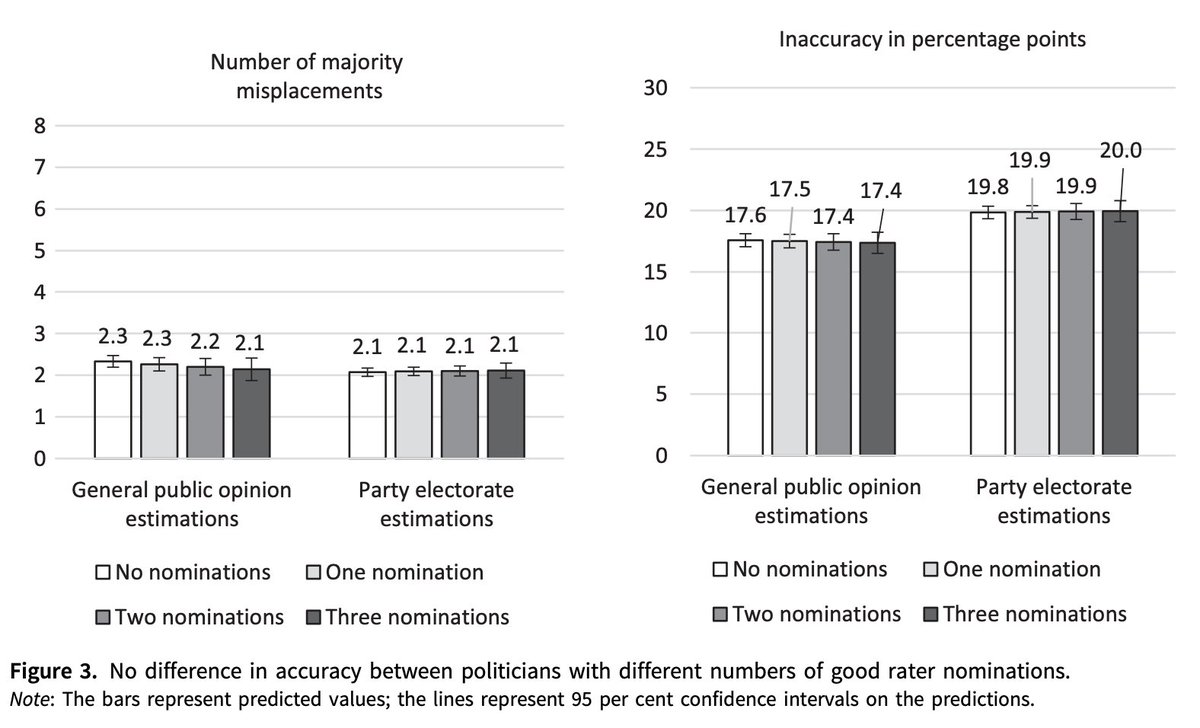
Our findings undermine the idea that leaders possess some unique ability to 'get' the public. Because they have more power to shape agendas and policies, their perceptual errors are especially concerning for the kind of representation citizens get in democracies. More inside!
Now in @BJPolS : Are leaders really better at reading public opinion? In a large-scale study led by Stefaan Walgrave and Julie Sevenans, we test the assumption that politicians in leadership positions have more accurate knowledge of public opinion. /1
https://t.co/2CbCyfxmry
This result holds when we ask politicians to think about the general public and about their own party voters; and even when we specifically look at those politicians who are (incorrectly) singled out by colleagues for being good at understanding public opinion. /3
Very cool paper on something I’ve often wondered about - how politicians’ theories of how voters think match up to how voters (claim to) think (voters can be wrong about their own motives! Introspection is hard and people are bad at it)
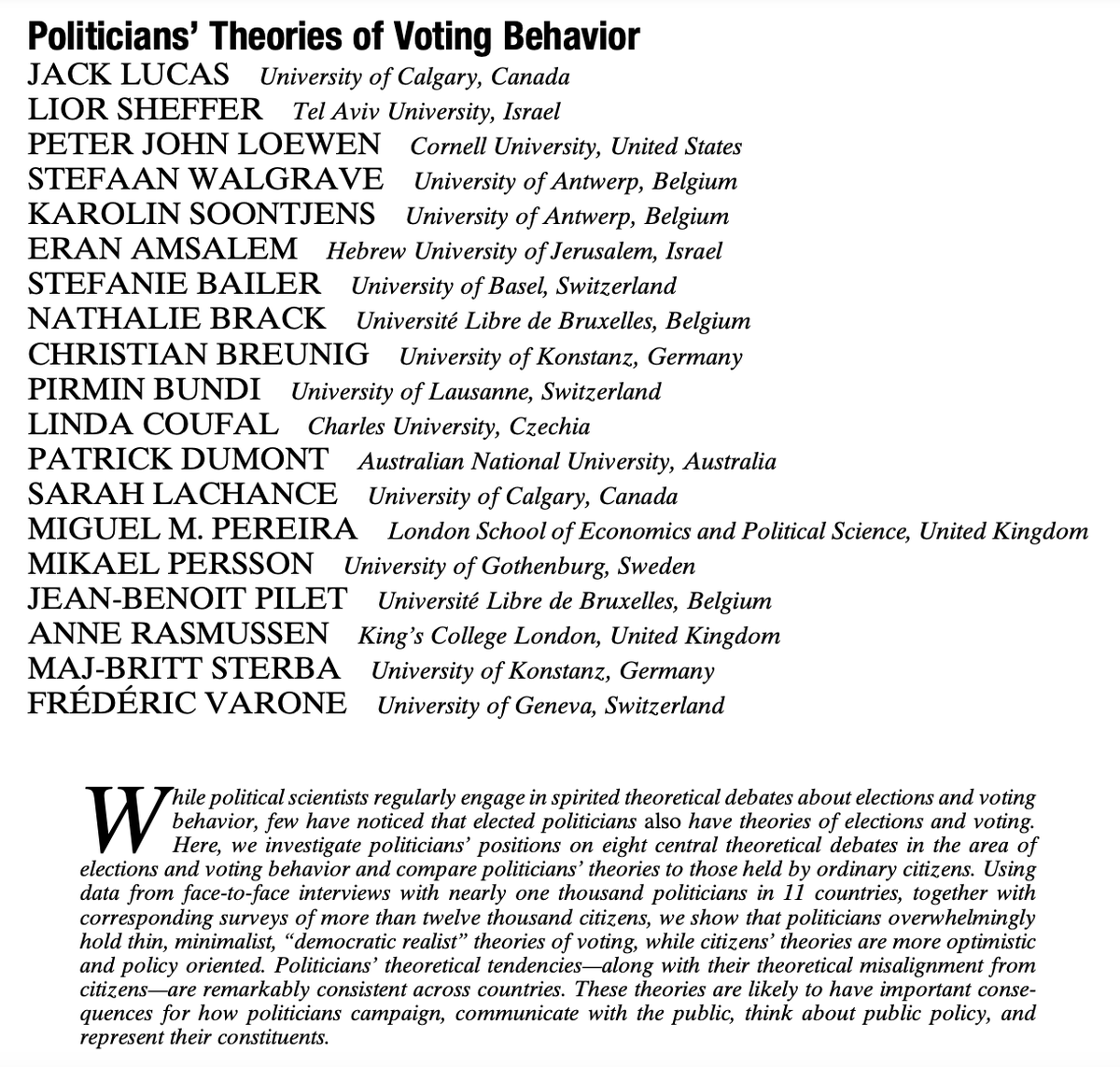
Now in @apsrjournal: What do politicians think about their voters? Fielding face-to-face surveys to 982 sitting politicians in 11 countries, and surveys of 12,000 citizens, we find they have remarkably consistent - and cynical - theories of voters: /1
https://t.co/RRVjarAb8M