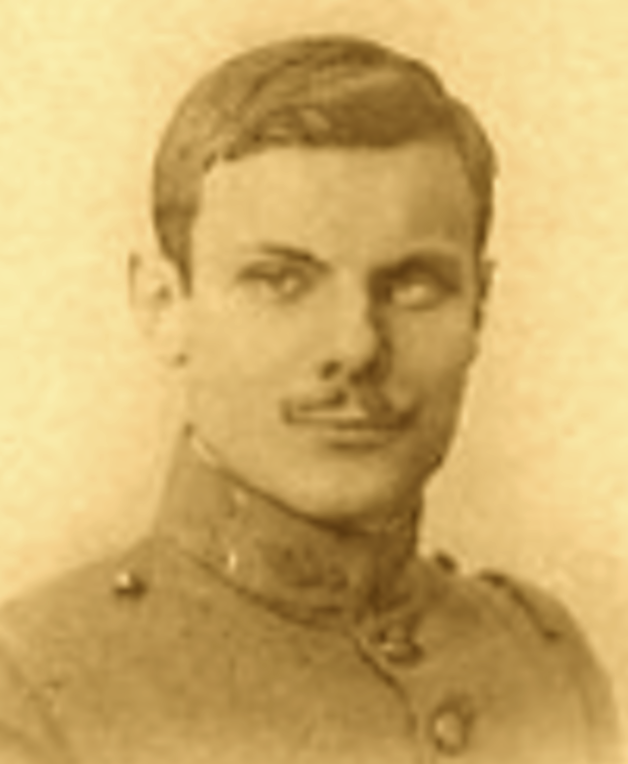
13 juin 1940. Le Havre est allemand. Un professeur refuse de l'admettre. Avec ses élèves et amis il fonde l'un des tout premiers réseaux. Pris, torturé, il écrit le 7 avril 1942 : "Il est 13h45, Roux rit, on a le temps, la vie est belle." Gérard Morpain est fusillé à 16h. 44 ans.
On June 9, 1944, the French Resistance captured a senior SS officer named Helmut Kämpfe near Limoges. The next morning, his unit, the 2nd SS Panzer Division Das Reich, was looking for a response. They had already hanged 99 men from the balconies of Tulle the day before, chosen at random from townspeople, leaving them to strangle slowly in front of their families because they couldn't find enough rope for a proper drop.
Now they needed something more.
On June 10, Sturmbannführer Adolf Diekmann led his men to Oradour-sur-Glane. Some historians believe he confused it with Oradour-sur-Vayres, a different village where the Resistance was actually active. Others believe he knew exactly where he was. Either way, at 2pm his soldiers blocked every road in and out of the village.
They told everyone to gather in the marketplace for a routine identity check. People complied. A dentist came. A farmer left his fields. Schoolchildren were told by their teachers not to worry, they'd be back by dinner. A man cycling through town stopped to see what was happening.
By 2:30pm, around 650 people were standing in the square.
Then the soldiers separated the men.
The women and children were marched to the church. The 190 men were divided into six groups and taken to barns across the village. The mayor, Dr. Paul Desourteaux, reportedly tried to negotiate. There was nothing to negotiate.
In the barns, the soldiers opened fire but aimed deliberately at legs. At thighs. At knees. The goal was not to kill but to incapacitate. To ensure that when they piled straw over the bodies and lit it, nobody could crawl away. Men who were on fire and still conscious screamed while soldiers stood outside the doors.
Six men survived by playing dead beneath other bodies. One died from his burns days later. Five lived.
In the church, the women had been waiting almost two hours with the children. Soldiers carried in a large wooden box and placed it in the nave. They lit a fuse and left. The explosion released a thick, suffocating smoke. Soldiers then entered and opened fire on anyone still moving. Then they piled wood, straw, and chairs onto the bodies and lit everything.
The church bell rang for hours as the fire climbed the tower.
Women broke windows. Those who reached the ledge were shot before they could jump. One woman, 47-year-old Marguerite Rouffanche, crawled behind the altar, found a small window, and squeezed through. She dropped three meters to the ground. A 19-year-old named Henriette Joyeux saw her and followed, throwing her seven-month-old baby out first. Soldiers shot the baby out of the air. Then shot Henriette. Then shot Marguerite five times as she ran.
Marguerite survived by lying still beneath pea plants in a garden while the village burned around her. She lay there until the next morning. She was the only person to leave the church alive.
The youngest confirmed victim was seven days old.
After the killings, the soldiers spent the afternoon looting every building. Food, valuables, livestock, wine. Some burned homes with elderly residents still inside. Then they ate dinner. That evening. In the area.
The next morning, relatives from surrounding villages arrived looking for their families. They found 642 dead and a village of smoking ruins.
The aftermath is almost as horrifying as the massacre itself.
At the 1953 war crimes tribunal, 65 men were indicted. Only 20 could be found. Fourteen were Alsatians, French citizens, and Alsace threatened to riot if its sons were convicted. An amnesty law was quietly passed. Almost everyone walked free within a year.
Nobody spent meaningful time in prison for Oradour-sur-Glane.
By French law, nothing in the original village may be moved, repaired, or altered. The rusted cars sit in the street where they burned. The sewing machines are fused to the shop floors. The baby carriages are still there. The church stands open to the sky with a plaque listing the names of the children killed inside.
You can walk through it today.
82 years ago this morning, those 642 people had no idea. The dentist was thinking about his afternoon appointments. The teachers were relieved the children were behaving. The man on the bicycle was annoyed about the delay.
By 6pm they were all dead, and the soldiers who killed them were eating dinner.
Never forget Oradour-sur-Glane.
14-18 lui prend son premier mari. Son seul fils meurt en 1940.Mais la résignation, à d'autres! Espionne à 56 ans, elle est trahie fin 1943. Également résistante,sa fille se dénonce alors pour ne pas la laisser seule. Toutes deux reviendront de Ravensbrück. Tiphaine de Boisboissel
Rather than a snap general election, let's have a snap Father's Day pressie RT comp to win a signed copy of "BLITZ: When WW2 Came Home"
RT 4 chance to win, or signed copies available ONLINE alongside Stella & Chablis for your Dad!
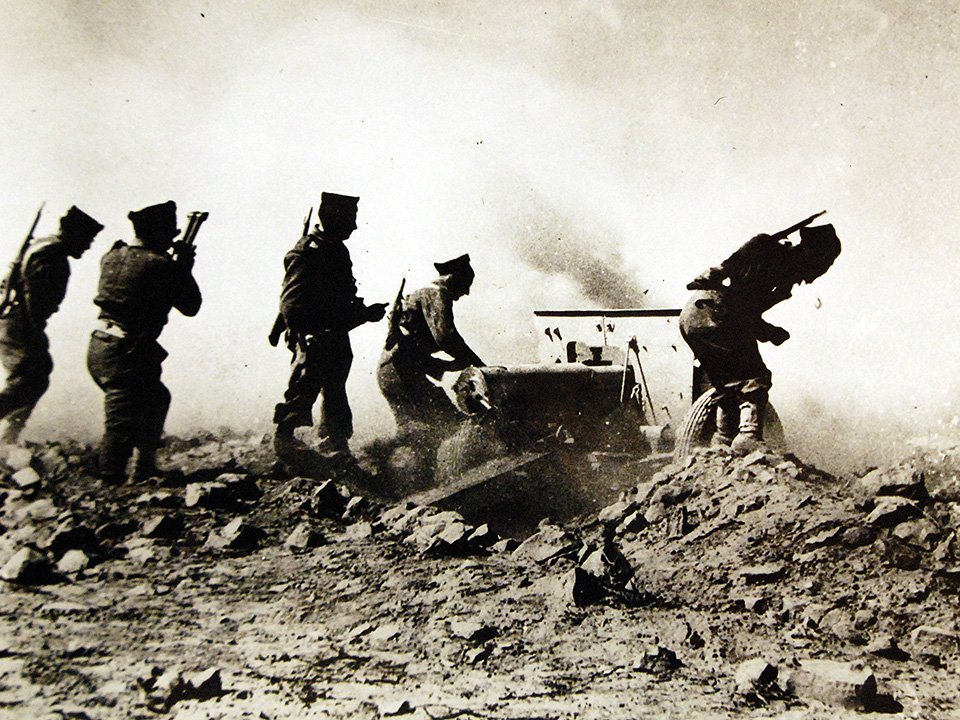
Rommel gave them one chance to surrender. They said no.
3,600 Free French soldiers held a desert fortress called Bir Hakeim against the full weight of Rommel's Afrika Korps for 16 days. They were surrounded, outnumbered, and running out of everything.
On the night of June 10-11, with the position finally collapsing, General Koenig ordered a breakout into the open desert in total darkness.
The Germans discovered the movement. The retreat became a brutal close-quarters fight. Men broke into small groups. Some crawled for miles. Most of them made it out.
What they bought with those 16 days: enough time for the British Eighth Army to withdraw to El Alamein, where the tide of the entire North African war would eventually turn.
Rommel later said the Free French fought magnificently. It meant something, coming from him.
France had been occupied for two years. These men had no country. They held anyway.
Il était l'un des derniers hommes de Bigeard.
Stanislas Butryn est titulaire des décorations suivantes :
Médaille militaire, décoré à l’âge de 21 ans.
Officier de la Légion d’honneur.
Officier de l’ordre national du Mérite.
5 citations pour faits de guerre, dont 2 à l’ordre de l’Armée.
Ne jamais oublier. 🖤
Son nom ne vous dit peut-être pas grand-chose : Stanislas Butryn, cet homme exceptionnel avait été décoré pour un acte de bravoure inouï : ramener sur son dos un frère d'armes blessé sous le feu.
Ce héros s'en va encore dans un silence total, aucun mot des médias.
Ne jamais oublier. 🖤
11 juin 1940. Avec eux, il s'est battu jusqu'au bout. Alors, quand, une fois capturés, l'ennemi les sépare, ce père de 3 enfants dit en allemand sa fierté d'avoir eu des tirailleurs pour frères d'armes. Comme eux, et 7 autres officiers, il est donc exécuté. Jean Speckel. 36 ans.
1943. Annecy. Dans son école maternelle des Fins, plus que des Allemands. Mais la directrice, veuve, 3 enfants, a beaucoup de visiteurs... Des résistants, des fugitifs qu'elle continue à aider, à cacher. Car chez elle une leçon l'a emporté sur toutes : résister ! Marcelle Mairot.
8 juin 1944. Normandie. Il marche,les mains liées, devant des SS. C'est que, surpris en plein sabotage, il a chèrement défendu sa peau. Pris le 6,il avait réussi à s'évader. Cette fois,après avoir refusé de parler,il s'en va creuser une tombe. La sienne. À 20 ans. Daniel Rousseau