“It is not enough to say bodies and processes already exist when families can be passed from one system to another while the underlying safeguarding concern is never properly investigated.”
I’ve written to the Public Petitions Committee ahead of Thursday’s consideration of #PE1979 because Joseph’s case shows exactly why the current system is not enough.
We used the school, Social Work, CEC complaints, GTCS and other existing routes. Yet it still took years and an independent safeguarding review to establish that serious concerns about a five year old child should have been treated as child protection from the outset.
That is the problem.
It is not enough to say bodies and processes already exist when families can be passed from one system to another while the underlying safeguarding concern is never properly investigated.
Who independently scrutinises the system when the system itself fails?
That is why #PE1979 matters. Children should not need their parents to fight for years just to have safeguarding concerns recognised and acted upon.
The Scottish Government says existing processes are enough. But if they are working, why are survivors and whistleblowers still demanding genuine independence? Petition PE1979 is calling for an Independent National Whistleblowing Office for Education & Children’s Services. On 10 September, the Public Petitions Committee has the opportunity to demand more than the status quo. “Marking your own homework” isn’t accountability. Children and young people deserve better. #PE1979 #Safeguarding #Scotland @AlisonMBDickie@Heavy_Boab@lezleymarion@scotgov
Every single word Holly says here is absolutely true. I implore everyone to listen to her in full.
Our family has been through this ourselves, and we know first hand what happens when serious safeguarding concerns are investigated and managed by the very bodies where those concerns originate.
It is time for genuinely independent processes. Children, families, survivors and whistleblowers should not have to spend years fighting the same organisations they raised concerns about just to get answers and accountability.
If the current processes were good enough, we would not still be here four years after our first documented reports in 2022.
Please listen to Holly and support PE1979. This matters.
The PE1979 petitioners have our full support.
Joseph’s independent safeguarding review, commissioned by Edinburgh Council, has now documented serious failures in how safeguarding concerns about him were handled and made significant recommendations for change.
For us, that makes it impossible to accept that the existing systems and processes are good enough.
Families, survivors and whistleblowers should not have to fight for years before serious safeguarding concerns are properly recognised.
The status quo failed Joseph. Others should not have to go through the same.
I sincerely hope the Public Petitions Committee properly scrutinises the Scottish Government’s response and pushes for meaningful, independent accountability.
Alison, Bill, Christine and Neil, you have our full support.
#PE1979 #ChildSafeguarding #ChildProtection #Whistleblowing #ChildrensRights
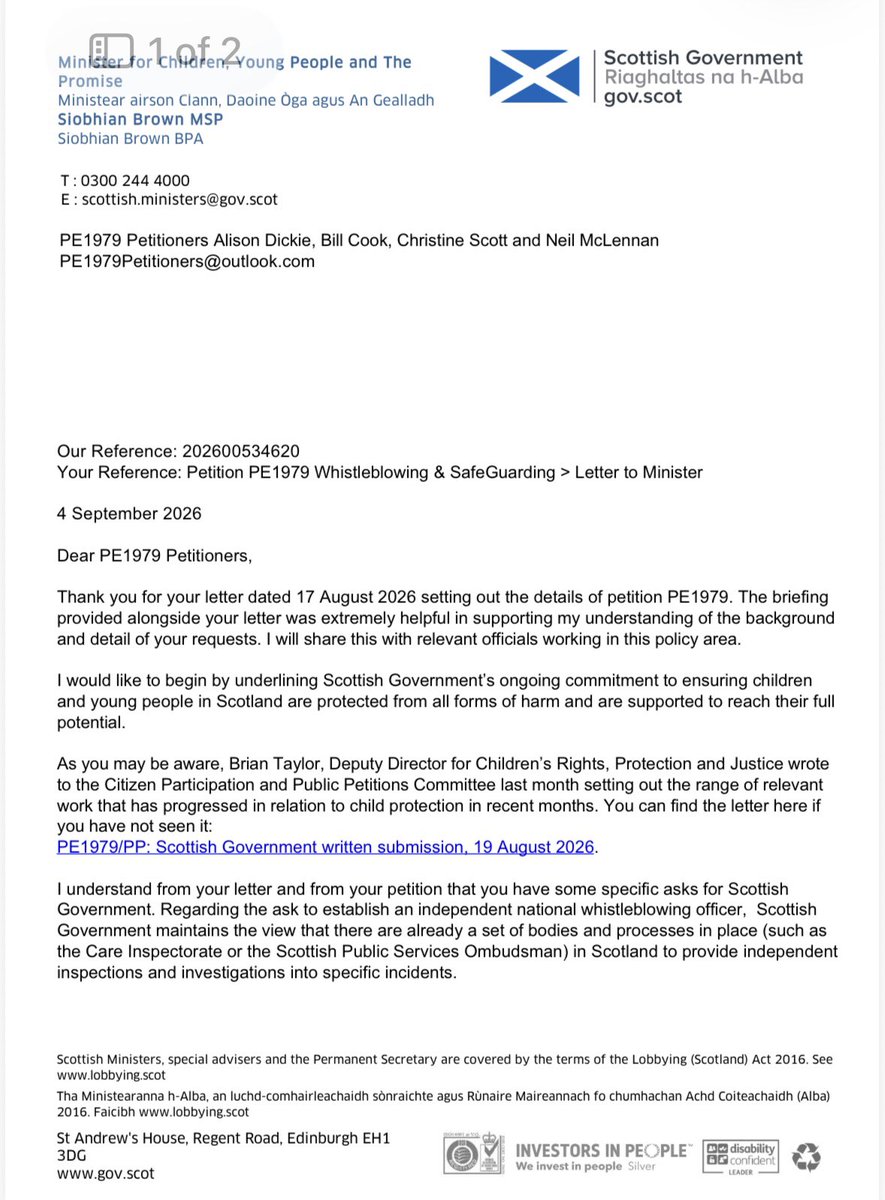
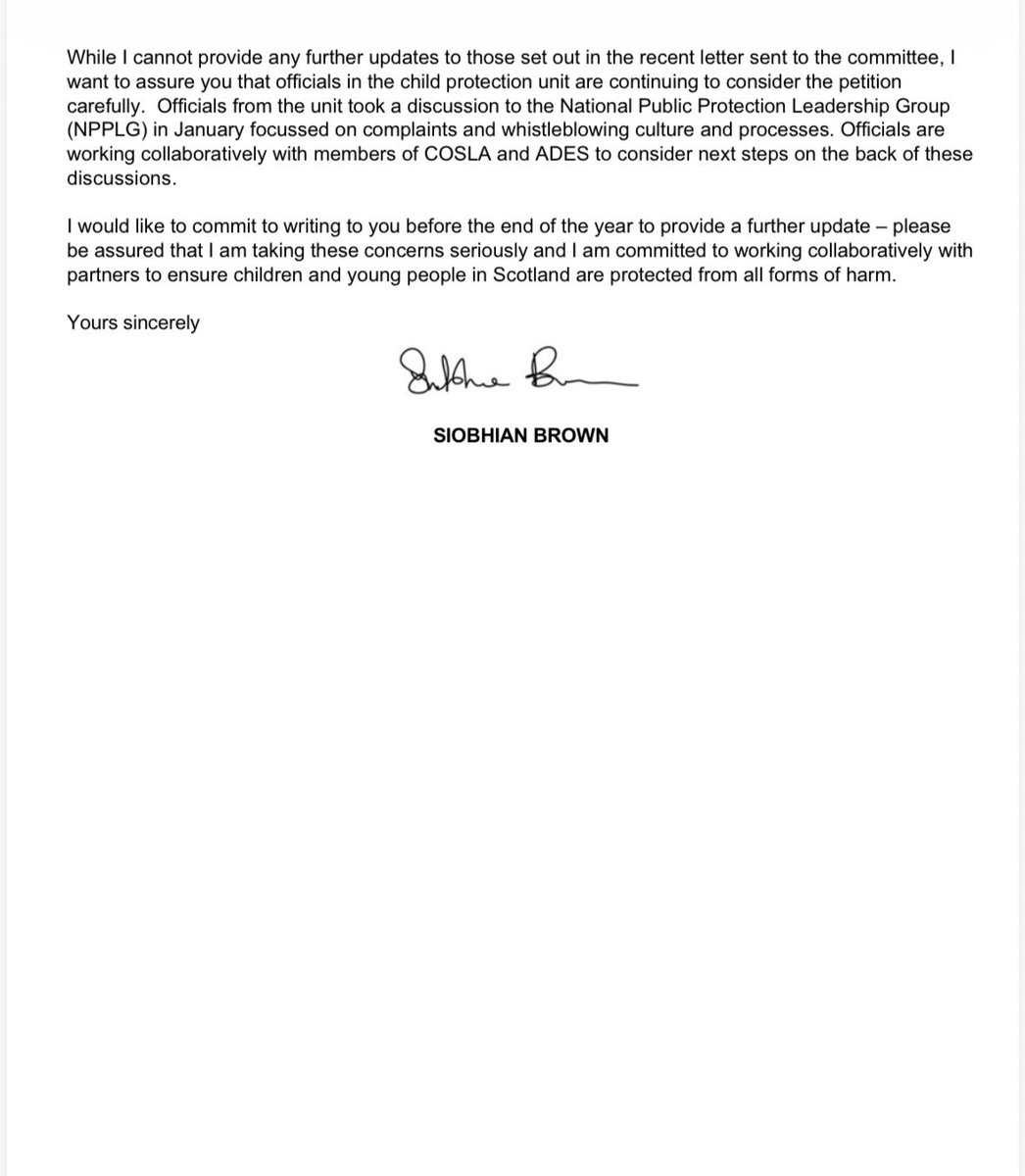
PE1979 UPDATE: Petitioners have received the letter below from the new Minister for Children,Young People and The Promise. Sadly, it would appear, that after 4 years (and more) of raising the serious child safeguarding issues behind the petition’s calls, that the SG are still mainly happy with the status quo!
This is simply not good enough and is, in fact, an insult to the survivors and whistleblowers behind the petition’s calls and the many more out there.
We have well highlighted the issues with the existing bodies and processes and will continue to do so. We will also continue to call for independent investigation of allegations relating to the mishandling of child abuse concerns by public bodies and the empowering and ongoing space of an independent national whistleblowing office for education and children’s services.
As the new Public Petitions Committee considers our petition on Thursday (10th), it is our sincere hope that they will not simply rubber stamp the SG’s position but rather, use the fullness of their parliamentary committee powers to hold them to account and to ensure speedier progress for the petition’s calls.
Our letter to the minister and our latest submission are in the replies.
#childsafeguarding #childprotection #whistleblowing #childrensrights
1/6 After years of fighting for answers, we finally have the independent safeguarding review commissioned by Edinburgh Council into what happened to Joseph. Its findings are serious. This was not simply a case of “poor communication” or a few mistakes.
Over the past two weeks a lot of people have become experts on coprolalia, the offensive vocal tics that can occur in Tourette’s.
But Tourette’s does not just target words. It often targets the most taboo actions too.
Copropraxia is the involuntary making of obscene or offensive gestures. Giving the middle finger. Sexual gestures. Movements directed at people around you that look completely deliberate to anyone watching.
Except they are not deliberate.
They are neurological tics. No warning. No control. And very often directed at the exact people the person least wants to offend.
Copropraxia is rare, but some people live with it. My son does, alongside coprolalia. It is incredibly tough, especially in public, because people see the gesture and assume intent rather than understanding what they are actually witnessing.
This is exactly why education and understanding of Tourette’s matters. Without it, people jump straight to outrage and condemnation instead of recognising a condition they clearly do not understand.
If you want to learn more, start here:
https://t.co/7W0JzQJG7b
This kind of nonsense genuinely pisses me off because it’s so incredibly misinformed, yet people share it with absolute confidence as if they’ve uncovered some kind of conspiracy. So let me educate you.
Tourette’s tics wax and wane. That’s one of the most basic, well established features of the condition. Symptoms change over time. The frequency changes, the intensity changes, and the specific tics themselves can change. Some disappear entirely. Others appear later. Some come and go depending on stress, fatigue, environment or attention. This has been documented in clinical research for decades.
Coprolalia works the same way. It is not a choice and it is not something someone decides to turn on or off depending on who is watching. It’s an involuntary neurological symptom where the brain latches onto taboo or socially unacceptable words and fires them out without permission. The person saying them usually finds them just as distressing and embarrassing as everyone else hearing them.
The idea that someone “stopped saying it because it affected their revenue” just shows a complete misunderstanding of Tourette’s. Tics evolve over time. They fade. They get replaced by other tics. That is literally how the condition behaves.
People living with Tourette’s often spend their entire lives trying to suppress tics, apologise for them and avoid situations where they might happen. They carry the social consequences of something their brain does without their consent.
So when someone confidently claims Tourette’s is fake or deliberate because a tic changed or disappeared, they’re not exposing anything. They’re just demonstrating they don’t understand the most basic fundamentals of the condition they’re talking about.
Tic suppression isn’t “just holding it in.”
Try not blinking for as long as you can.
Or holding your breath.
Your eyes burn. Your chest tightens. Your whole body screams for release.
That’s what suppressing tics can feel like.
Yes, some people can suppress for short periods. But it takes huge concentration, it’s exhausting, and it can even be painful. Eventually the pressure builds and the tics come out in an onslaught.
Now imagine trying to learn maths, write an essay, or focus in class while doing that all day.
When schools force children to suppress tics, they’re not learning.
All their cognitive and physical energy is going into fighting their own nervous system.
It strips them of their ability to do their work to their full potential.
My son’s teacher understood this.
She ignored the tics.
The class ignored the tics.
After a while they became background noise. No one noticed anymore until a new one appeared.
Acceptance works.
Forcing suppression doesn’t.
More people need to learn this:
https://t.co/Wm2zlq9nKu
Do you know how Tourette’s is diagnosed?
There isn’t a blood test or brain scan for Tourette’s. Diagnosis is based on clinical history and observation.
Doctors usually look for:
• Both motor and vocal tics (movements like blinking, head jerks, shoulder shrugs, and sounds such as throat clearing, sniffing, words etc.)
• Tics present for at least 1 year
• Onset before age 18
• Tics that change over time (they often wax and wane in type, frequency and intensity)
• Symptoms not better explained by another condition or medication
Helpful evidence can include videos of tics, family observations, and school reports showing how symptoms appear day to day.
The first step is usually speaking to your GP, who can refer to paediatrics or neurology for assessment.
For clear information and support for families navigating diagnosis and life with Tourette’s, visit:
👉 https://t.co/9MS31Kajyk
Education and understanding make a huge difference.
Thank you to @SarahBoyack for hosting a roundtable for Tourette Scotland where myself and other families were able to share our experiences of navigating the education system and supports in Scotland.
Thank you also to @NatalieDon_ for attending and taking the time to listen to our concerns.
Vocal tics are sounds or words that a person with Tourette’s syndrome or a tic disorder makes involuntarily. They are not done on purpose and often cannot be controlled, even when the person desperately wishes they could stop.
They can be small sounds or full words and phrases.
Common examples of vocal tics include
• throat clearing
• sniffing
• coughing sounds
• grunting
• humming
• repeating words or phrases
• sudden shouting of words
In a small minority of people with Tourette’s there can also be coprolalia, which is the involuntary shouting of socially inappropriate or taboo words. This is the symptom the media loves to focus on, but it affects only a small minority of people with Tourette’s.
The important thing to understand is this.
A vocal tic is a neurological symptom. It is not a behaviour choice.
If you want to learn more about Tourette’s and how it actually affects people, Tourette Scotland has excellent resources and support.
https://t.co/9MS31Kajyk
Education leads to understanding. Understanding leads to acceptance.
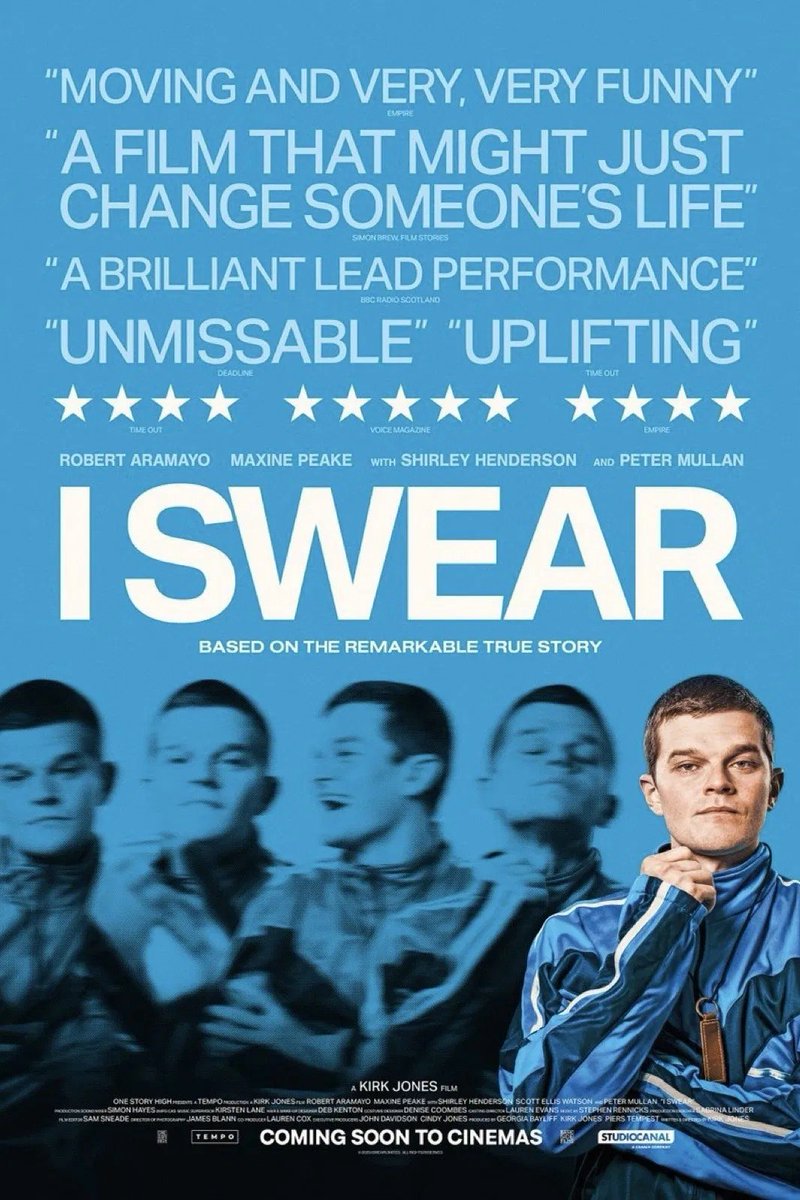
If you haven’t watched I SWEAR yet, it’s available on Netflix UK today.
The film follows John Davidson and his life with Tourette’s. It’s powerful, emotional, and the most honest and real depiction of Tourette’s there has ever been on screen.
Robert Aramayo gives an absolutely stellar performance as John. The certainly agreed.
It’s also an absolutely fantastic film in its own right. You’ll laugh, you’ll cry, and you’ll come away with a far better understanding of what living with Tourette’s can actually look like.
This story means a lot to our family and many others in the Tourette’s community.
Give it a watch. You won’t be disappointed.
One of the things often discussed in Tourette syndrome is the premonitory urge, sometimes called the “tic signal”. This is the sensation some people feel just before a tic, often described as pressure, tension, or an itch that is relieved when the tic happens.
But not everyone with Tourette’s experiences this.
For my son, he doesn’t really feel any premonitory sensation at all. His tics just happen. There is no warning or build up beforehand. It’s actually one of the things I’m still trying to wrap my head around, because many people describe that feeling before a tic.
Researchers at the University of Oxford are currently studying this exact experience. They are exploring how young people with Tourette syndrome or chronic tic disorders experience the “tic signal”, and whether it differs for autistic young people with tics. The research also looks at interoception, which is how we sense what is happening inside our bodies.
The study involves a 10 minute questionnaire for parents and a 10 minute questionnaire for young people and could help improve understanding of how tics are actually experienced.
If you or your child might be interested in taking part, you can find the study here:
https://t.co/MBDlmsq8ab
Fear doesn't shrink when you wait it out. It grows. Every time I've walked towards the thing that scared me, it got smaller. Every time I avoided it, it grew bigger. Move towards it. Even an inch at a time.
Tourette Scotland have issued a formal response to the Saturday Night Live sketch and have written directly to SNL and NBC executives.
They call the sketch “abhorrent” and say it reinforces the dangerous myth that Tourette’s is fake, following the attacks directed at John Davidson after the BAFTAs.
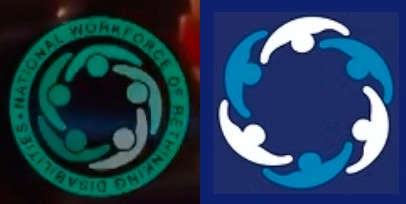
They also highlight that the sketch used a doctored version of the Tourette Scotland logo, dragging a charity that has supported families for 30 years into a vile attempt at humour.
Read the full statement here:
https://t.co/W45h8ESPPW
Tourette Scotland have shared today that over £15,000 has now been donated in the past week, with more than 500 generous individuals showing their support for the charity and for John Davidson.
Thank you to everyone who has donated and shared messages of support. This will go such a long way for so many families living with Tourette’s.
As well as support from across the UK and Ireland, international donations have come in from Australia, Bulgaria, Canada, Croatia, Czech Republic, Germany, Netherlands, New Zealand, Poland, Sweden and the USA.
Thank you once again everyone. Your kindness and support has been truly outstanding. 🫶
https://t.co/DgUTWmQtA3