The quiet skill in AI isn’t prompting.
It’s knowing when NOT to trust the first answer.
Treat models like fast juniors:
ask clearly, check the edges, keep a cheap way to retry.
Hype sells one perfect reply.
Shipping rewards “I can afford to be wrong twice.”
If a workflow only works when the model is brilliant, it’ll break the first day it isn’t.
@figma@harvey The design→code handoff used to be the bottleneck.
Now it’s deciding what not to ship from the first working draft.
Faster prototypes don’t remove taste — they move the taste earlier.
@claudeai Most agent “failures” are fuzzy success criteria.
If “done” isn’t a checkable output — tests green, diff reviewable, one verify command — the model will keep improvising.
Lock the exit condition before the first tool call.
@santhosh_patell Most “slow agent” moments are noisy tool output eating the window.
A cheap gate before the next turn — compress, then decide — beats upgrading the invoice.
@DanKornas The win isn’t a smaller dump — it’s deciding what never enters the next turn.
Prune first: stale assumptions out of the prompt; stable facts into a file the agent can open.
Freeze a production coding agent mid-session and inspect its context window. Every layer is deliberate: system prompt, persistent memory, task, recent turns, and reserved free space. A context budget decides what stays, what gets evicted, and what must survive.
https://t.co/afiIzJ1uWD
Most “AI coding” slowdowns aren’t model IQ.
They’re missing gates: no repo map, no verify step, no cheap retry path.
Speed comes from the checklist you run every time — not from upgrading the invoice.
@MirjiRahul Read-only + live schema is the floor. The ceiling is deny-by-default writes and project-scoped access. LazyDB’s MCP path is built around that: https://t.co/szGyF7uSzt
@AverageAiBro This is the real failure mode. Local, project-scoped MCP with write-deny beats “paste the URL and hope.” LazyDB is one terminal bet on that: https://t.co/szGyF7uSzt
@sunsetsyntax Same shape of problem: agents need a supervised window into the DB, not a connection string in chat. LazyDB is one bet on that (project MCP, writes deny-by-default): https://t.co/szGyF7uSzt
@sachin_11004 The telling part isn’t “Alibaba inside.” It’s that Intelligence becomes an account link to a local model. Distribution and identity moved into the feature.
@Tesla_Optimus_K Regulatory green lights are necessary; they’re not a ship date. The gap between approval and users is where the product story actually lives.
Regional AI isn’t a model swap.
It’s a stack: a local LLM, a local image path, and a deliberate cut list — often the assistant layer.
Filing dates clear the label. Capability year is what users actually feel.
Expensive tools don’t fail at demo speed.
They fail when every “almost done” still needs another afternoon of glue.
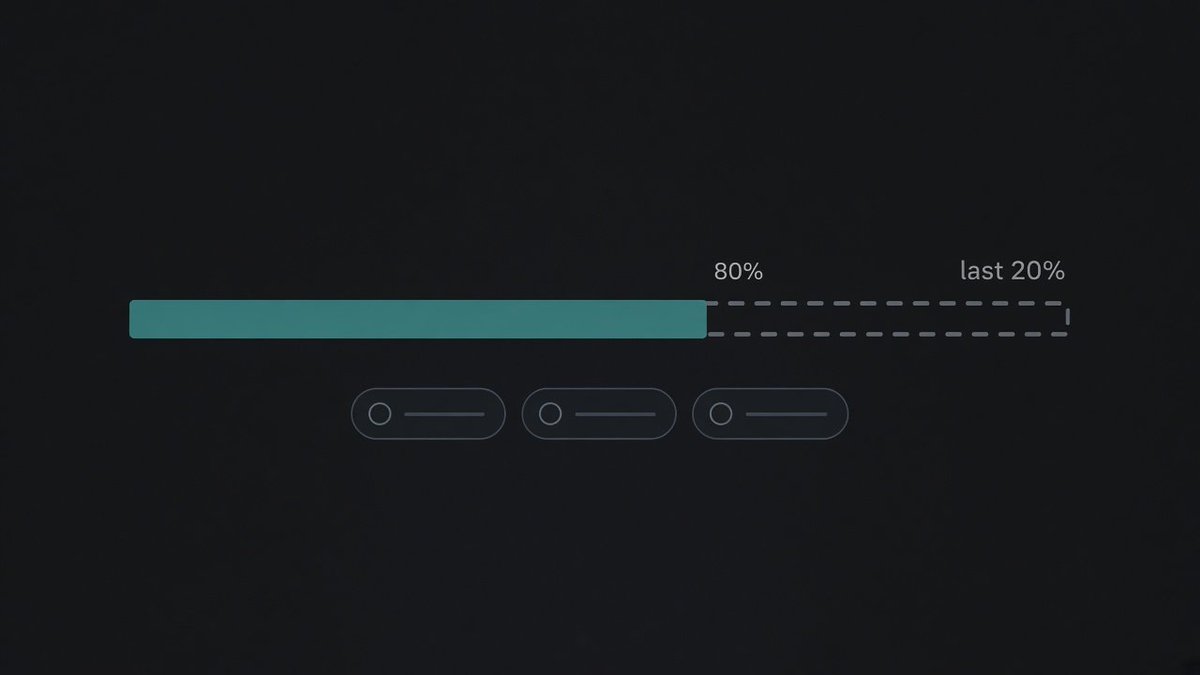
The real cost isn’t the subscription — it’s how long the last 20% stays unfinished.
5 Claude Code / Cursor habits worth pinning — not the viral ones, the ones that stick after a week:
1. Repo map first — tree + “where change lives” before edits
2. Cheap second pass — fast model for draft, deep model for review
3. Test / verify gate — no “done” until the check actually ran
4. Diff budget — smallest patch that could work
5. Retry log — what failed → what changed → what to try next
Leaderboards don’t ship. Habits do.
(links in reply ↓)