Join Axton, founder of Litmaps, for a FREE live masterclass this week. He'll show you how to find the right papers fast, stay organised, spot research gaps, and get the most out of the tool.
See the time in your zone on the sign-up page 👉 https://t.co/AprrAG41Lj
#LiteratureReview
Goldey-Beacom students, if you’ve got a research paper or thesis this semester, your college has you covered with Litmaps Pro. Sign up with your https://t.co/x7BjVXfrij email and you’ll have full access, including Zotero sync and email alerts for new papers in your field.
Thanks to @GBCEdu for making this available to everyone on campus. 📚
Go to the Litmaps app here ➡️ https://t.co/bGeEdYZc2N
Want to get the most out of it? Here’s a 5-minute guide to get you started.
How to dive into your literature review, start to finish, using the Litmaps app.
https://t.co/QEyHTqApJf
Goldey-Beacom students, if you’ve got a research paper or thesis this semester, your college has you covered with Litmaps Pro. Sign up with your https://t.co/x7BjVXfrij email and you’ll have full access, including Zotero sync and email alerts for new papers in your field.
Thanks to @GBCEdu for making this available to everyone on campus. 📚
Go to the Litmaps app here ➡️ https://t.co/bGeEdYZc2N
Ilya Shabanov (@Artifexx) walks us through his literature review workflow using Litmaps, Zotero, and Obsidian
Check out the workflow
https://t.co/8spWpCFH7q
The Lit Review shortcut that allowed me to complete my PhD in 2.5 years (with 4 papers written):
Three tools: Obsidian + Litmaps + Zotero
...and the right strategy.
Join the free webinar to learn how:
https://t.co/tmiDl16qfY
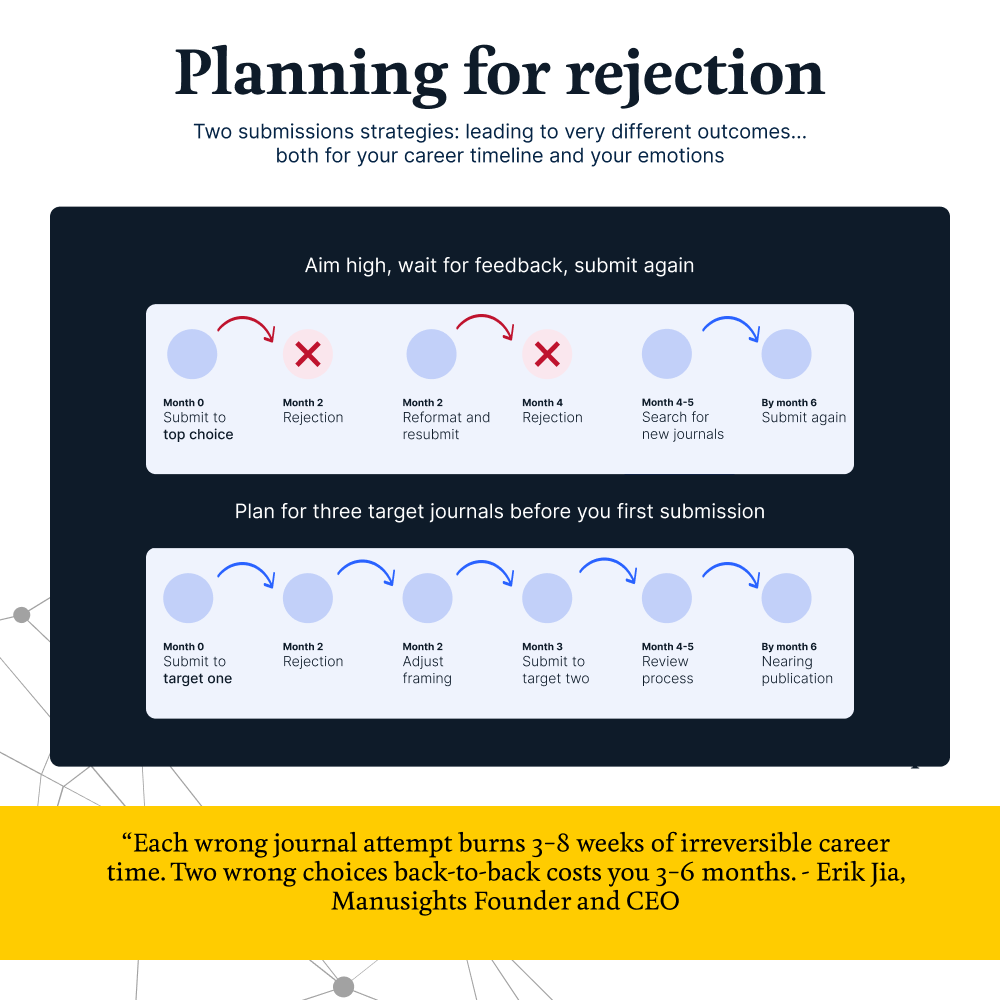
How to protect your sanity during journal submission? Choosing a journal shouldn’t start after you finish the paper.
Shortlist 3 potential homes before you submit:
🎯 Ambitious best fit
🎯🎯 Strong alternative
🎯🎯🎯 Specialist journal
We looked at how citation mapping can help ↓
https://t.co/8ASs35dBia
@manusights takes the workflow a step further ↓
https://t.co/TfKM4eSpNR
Learn how to build a smarter, faster literature review workflow using three of the most powerful tools available to researchers right now.
Ilya Shabanov @Artifexx will show you how to use Litmaps, Zotero, and Obsidian together to discover literature, organize your notes, and build a research knowledge base that actually makes writing easier.
📅 30th September
🕔 9:00 PM London / 1:00 PM Los Angeles / 9:00 AM Wellington
💻 Google Meet. Free to join
🎥 Can't make it live? Register for the recording.
Sign-up for free ⬇️
https://t.co/CckhHRFvg3
Welcome new students! Research quickly goes from "I'm exploring this exciting new topic!" to "I'm drowning in a sea of papers."
💡 The key to staying on track is strategy.
Here's a simple strategy to go from an idea to a finished literature review (using Litmaps):
Learn how to build a smarter, faster literature review workflow using three of the most powerful tools available to researchers right now.
Ilya Shabanov @Artifexx will show you how to use Litmaps, Zotero, and Obsidian together to discover literature, organize your notes, and build a research knowledge base that actually makes writing easier.
📅 30th September
🕔 9:00 PM London / 1:00 PM Los Angeles / 9:00 AM Wellington
💻 Google Meet. Free to join
🎥 Can't make it live? Register for the recording.
Sign-up for free ⬇️
https://t.co/CckhHRFvg3
How many papers make up a literature review? 50? 100?
@Faheem_uh asked researchers in our latest webinar. The most common answer wasn't a number at all: "it depends."
Faheem breaks down what it actually depends on (and how to know when you've searched enough) 👇
https://t.co/YxIpEwWDot
🔎 Struggling with your literature review?
Most researchers face these 5 problems at some point.
But few of us have clear strategies on how to get past them.
Here's how to tackle each of these with literature maps (aka Litmaps):
1️⃣ Overwhelming process → Use a simple search strategy
Start with a seed paper (a key paper in your field) and use Litmaps’ citation network to expand your search strategically instead of aimlessly browsing databases.
2️⃣ Too many papers to read → Prioritize the most relevant
Instead of skimming hundreds of papers, Litmaps highlights key connections between works, helping you identify which papers matter most for your research.
3️⃣ How does it all connect? → Visualize the literature
Litmaps builds an interactive citation map, making it easy to see relationships between studies, spot influential works, and understand how the research field has evolved over time.
4️⃣ Did you miss something important? → Find missing links
Use Litmaps to search on the papers you already have - to find key studies you may have overlooked, ensuring you don’t miss critical references in your field.
5️⃣ Falling out-of-date? → Monitor your Litmaps
Track your Litmap & easily integrate new relevant papers as they’re published, keeping your literature review fresh and up-to-date.
#AcademicTwitter #PhDLife #LiteratureReview #Litmaps #Research #PhD
In late 90s to early 2000s, advanced chess or Centeur chess was done, human+chess engines duked it out. By mid 2010s this died out cos engines did not benefit from human help. At least for now, we are not at that level. A good researcher makes ai output better often much better
Thought-provoking article that argues how AI in research doesn't remove the scholar's responsibilities (identifying good questions, interpreting results, being accountable for them) but changes the speed of execution.
In the AI era, the human struggle can no longer be the point of research - @timeshighered
https://t.co/qof5jfHLRR
Don't know where to start your literature review? Spending hours finding papers that lead nowhere?
@Faheem_uh is hosting a live session on Thursday 23 July to show you how to do it properly with Litmaps.
📅 Thursday 23 July
🕔 5pm BST / 12pm ET / 9am PT
Sign up: https://t.co/PSfQwIUxls
Absolute masterclass in literature reviews… and it’s completely free 🎓
@Faheem_uh is hosting a live webinar on how to conduct an advanced lit review faster & more effectively using Litmaps.
Jul 23 | 5PM London | 12PM NY | 9AM LA | 9:30PM Mumbai
Register now 👇
https://t.co/z39TGcYQja