🟢 Vidéo en 4 min de la #VilleDuQuartDHeure qui fait le tour du monde
🔵 A 4-minute video of 15-minute city which goes around the world
🟦 Un video de 4 minutos de la Ciudad de 15 Minutos que da la vuelta al mundo
-
@CarlosMorenoFr@Chaire_eti@iaeparis
https://t.co/8OSnyzAdLd
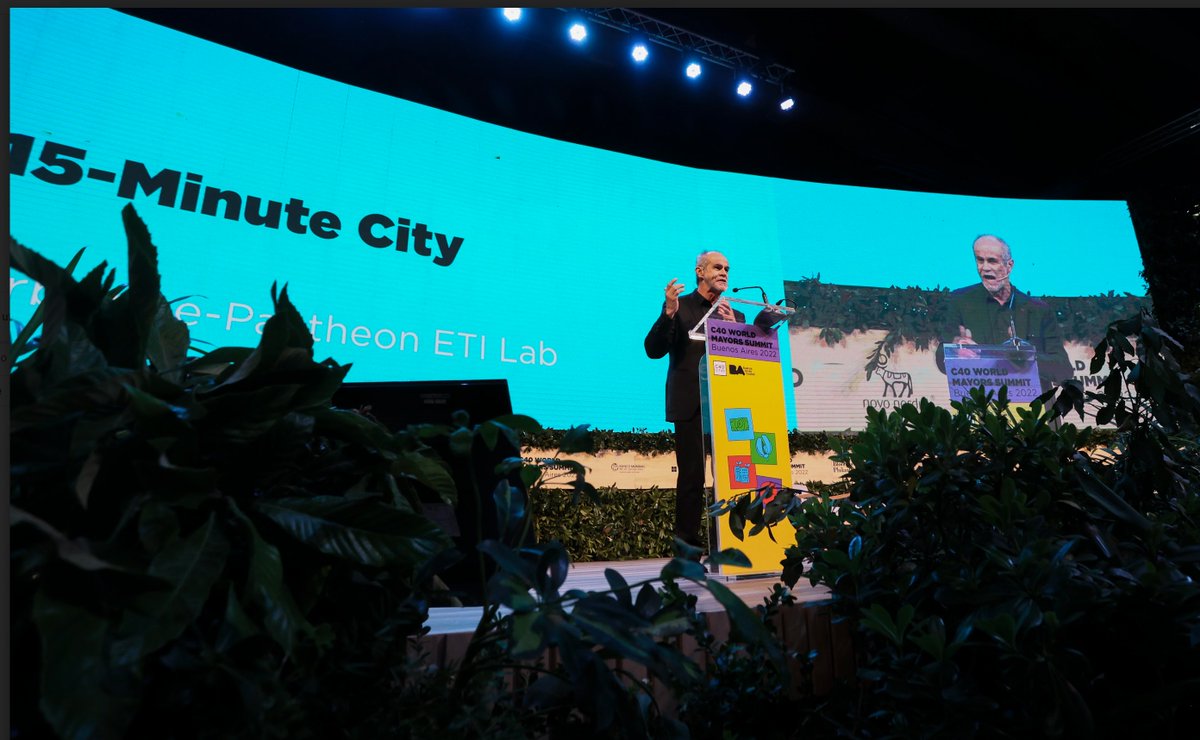
Cumbre mundial en Buenos Aires del @c40cities,
Red de Ciudades por el Clima. Una sesión dedicada a la ciudad de 15 Minutos y el lanzamiento de un nuevo programa. Felicitaciones a Mark Watts Director Ejecutivo, Prof. @CarlosMorenoFr@Chaire_eti@iaeparis@SorbonneParis1 y equipos
A global summit in Buenos Aires of the @c40cities, the Cities for Climate Network. A session dedicated to the 15-Minute City and a new programme launched. Congratulations to Mark Watts Executive Director, Prof. @CarlosMorenoFr@Chaire_eti@iaeparis@SorbonneParis1 and the teams.
Un sommet mondial à Buenos Aires du @c40cities, réseau des villes pour le climat. Une session consacrée à la ville du 1/4 d'heure et un nouveau programme lancé. Félicitations à Mark Watts Directeur exécutif, Prof.
@CarlosMorenoFr@Chaire_eti@iaeparis@SorbonneParis1 et équipes
A global summit in Buenos Aires of the @c40cities, the Cities for Climate Network. A session dedicated to the 15-Minute City and a new programme launched. Congratulations to Mark Watts Executive Director, Prof. @CarlosMorenoFr@Chaire_eti@iaeparis@SorbonneParis1 and the teams.
A global summit in Buenos Aires of the @c40cities, the Cities for Climate Network. A session dedicated to the 15-Minute City and a new programme launched. Congratulations to Mark Watts Executive Director, Prof. @CarlosMorenoFr@Chaire_eti@iaeparis@SorbonneParis1 and the teams.
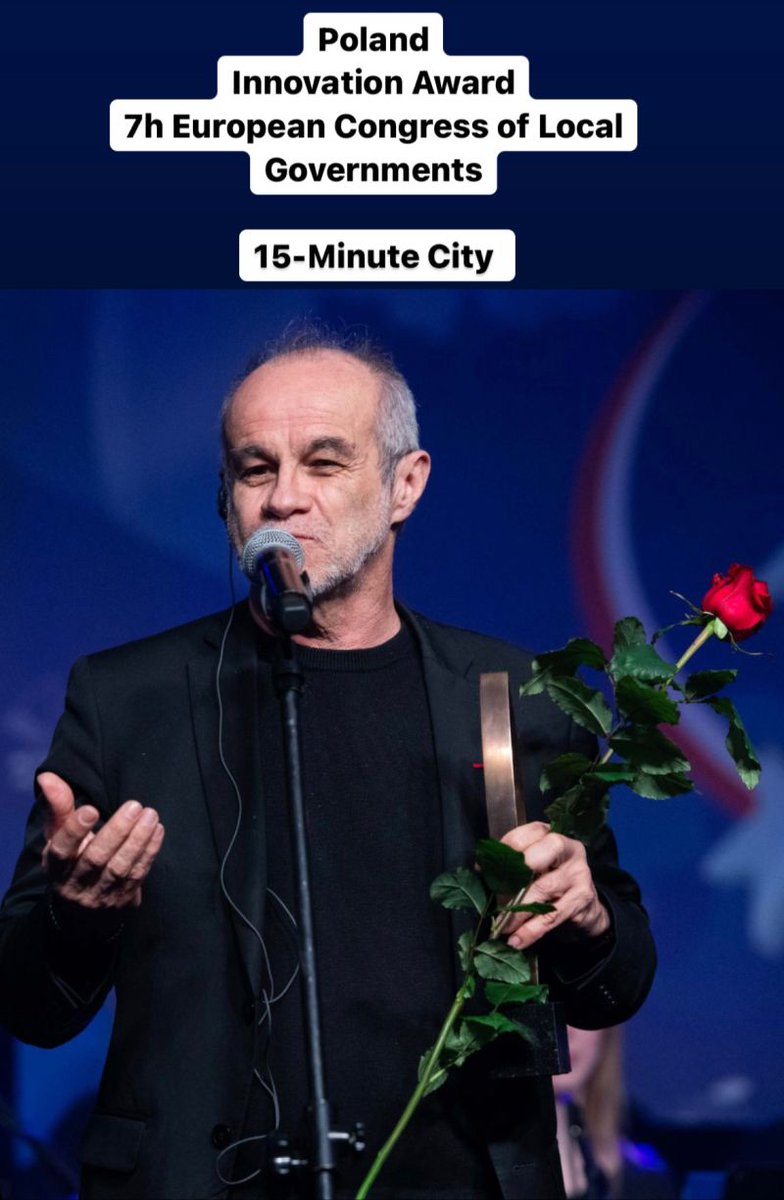
Felicitaciones Pr @CarlosMorenoFr por el Innovation Award otorgado en Polonia por el 7° Congreso Europeo de Gobiernos Locales
-
Congratulations to Pr @CarlosMorenoFr for the Innovation Award given in Poland by the 7th European Congress of Local Governments
@Chaire_eti@iaeparis
Rethinking urban life in a world of massive disruptions (climate change, air pollution, nature, water biodiversity and now Covid-19) has become one of the greatest challenges of the 21st century.
Cities and migration in the new post-pandemic normal
https://t.co/Bo8Ig19RnS
Understanding the 15-Minute City global movement.
The Pr @carlosmorenoFr's open-access text "Living in Proximity in a Living City"
In The Glocalism Journal, issue 2021, March: Cities and Migration in the new post-pandemic normal
https://t.co/7cftolWJDC
In @Horizonte_de : "@CarlosMorenofr ist zur Galionsfigur einer Bewegung geworden, die dagegen ankämpft, dass Städte seit Beginn des 20. Jahrhunderts vor allem nach Bedürfnissen von Autofahrenden geplant wurden"
@SorbonneParis1@iaeparis@IAEFRANCE
https://t.co/65CS0BUmVB
Die Zeitschrift für wissenschaftliche Forschung in der Schweiz, @horizons_de @horizonte_de, berichtet über die Pionierarbeit unseres wissenschaftlichen Leiters, Prof. @CarlosMorenoFr, über die 15 Minuten Stadt
@SorbonneParis1@iaeparis https://t.co/SzsITQdrqy
Dadurch entstehen besser vernetzte Quartiere mit einer
höheren Lebensqualität, so Moreno. Er ist zur Gallionsfigur einer Bewegung geworden, die
dagegen kämpft, dass Städte seit Beginn des 20. Jahrhunderts vor allem nach Bedürfnissen
von 🚗-Fahrenden geplant wurden..(4/5)
Laut @OECD verschlangen Transportinfrastrukturen wie 🚗-Strassen im Jahr 2006 zwischen 25-40 Prozent des öffentlichen Raums in Städten.
Prof. Moreno will diese wieder zum Spazieren, Velofahren und für gemeinschaftliche Aktivitäten zugänglich machen..(3/5)
Erdacht hat die 15-Minuten-Stadt Prof. Carlos Moreno,
Beauftragter für intelligente Städte in Paris. Die Idee: Alle wichtigen Berührungspunkte
des Alltags – z.B. Einkaufen, soz. Kontakte, Arbeit, Natur – sollen in 15 Minuten zu Fuss oder in 5 Minuten per🚴 erreichbar sein.. (2/5)
Selon Carlos Moreno, les échanges entre les quartiers
devraient améliorer la qualité de vie de leurs habitants. Apprenez-en davantage sur les villes vertes et densifiées comme #Singapour et #Zurich sur:
https://t.co/ZbLFfA6YAw et dans le numéro actuel de @horizons_fr . (5/5)
D’après l’@OCDE, les infrastructures de transport occupaient entre 25 et 40% de l’espace public urbain en 2006. Carlos Moreno veut les rendre à nouveau
accessibles à la circulation piétonne et 🚴 ainsi qu’aux activités communautaires.. (4/5)
Le professeur Moreno est devenu l’emblème d’un
mouvement qui déplore que depuis le début du 20e siècle, les villes aient été planifiées pour
répondre en premier lieu aux besoins des 🚗 automobilistes...(3/5)