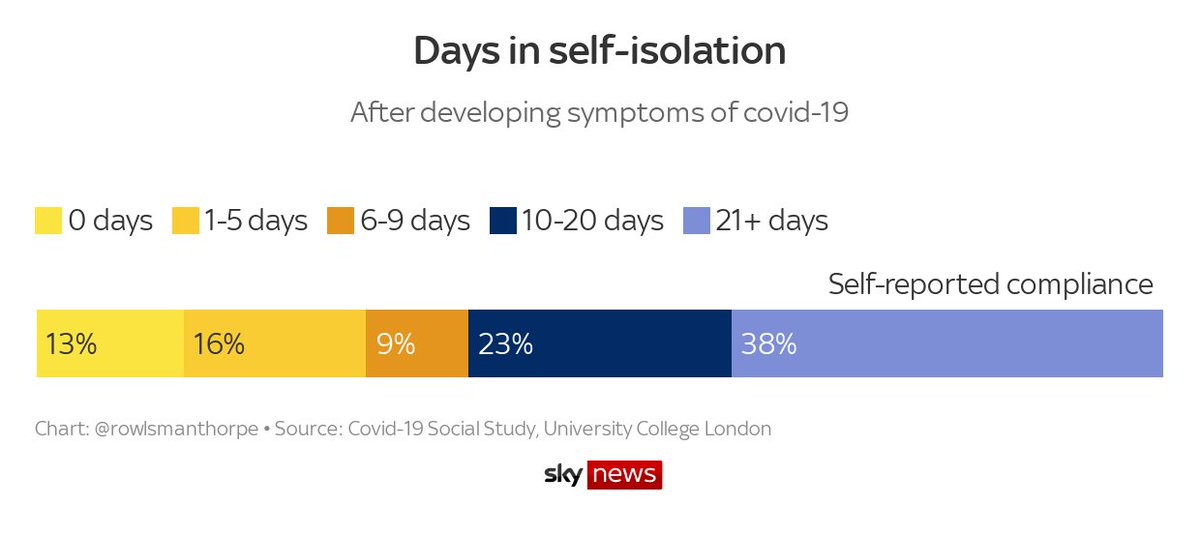
Lots of interesting stuff here. Perhaps most significant is that *presymptomatic* individuals are most likely to transmit. Design testing regimes to detect them.
Some of you had seen this paper mentioned already a while ago, and I had promised to explain, so here goes. "Does Economics Make You Sexist?" A thread (1/N) https://t.co/qslCFxEWso
@MEDevEcon I’d probably find sausage and chorizo a bit much, but would definitely make this type of dish. The good thing about lentils and chorizo is they’re cupboard items so fewer fresh groceries required to make it. (I’m only going to the supermarket once a fortnight at the moment.)
Stefan Dercon has a great new note at CGD on no-regret policies in response to Covid19 in developing countries. A short thread.
https://t.co/iJfrmFrJ9p
All our work is now up-to-date for today Friday April 10 https://t.co/wU7x3bOYk7
–
This shows confirmed deaths relative to the size of the population.
– In Italy and Spain the rate of confirmed deaths is falling.
– In the US and Germany it's rising.
– And in Korea it stays low.
This is how confirmed deaths due to COVID-19 compare between countries when you adjust for each country’s population.
The US has less than half the daily death rate of the UK.
And the UK has a bit more than half the rate of Spain.
https://t.co/NhdscjhEkn
Information on differences in Covid-19 testing is essential to understand how to interpret the numbers of confirmed cases.
Here's a comparisons per million people.
You can check out other countries here: https://t.co/0ttNPlYVzu
Ht @_HannahRitchie
The economy isn’t closed, people. The economic activities we’re doing - childcare, cooking, cleaning etc - just aren’t considered valuable by most economists. #feminist#economics#Covid_19
Thank you v much to @D_Brautigam for talking to me about her interest in China-Africa topics, current research & relevant research gaps to be filled. Sadly we couldn’t hear her keynote at the cancelled #CSAEChinaAfrica conference. Get into #ChinaAfrica by watching here instead.