Museveni has built much of his political rhetoric around attacking the United States and its Western allies, branding them as imperialists, arrogant, and meddlesome. Yet whenever those same countries begin distancing themselves or reconsidering their support, panic sets in. Suddenly, emissaries are dispatched to Washington to soften the rhetoric, seek financial assistance, lobby policymakers, and reassure them that the relationship remains important.
The contradiction is difficult to ignore. Many African authoritarian leaders denounce the West in public while investing their wealth there, maintaining offshore assets, sending their children to Western schools, and relying on Western military training, aid, markets, and financial institutions. But the moment those same governments raise concerns about corruption, human rights, or democratic governance, they are suddenly condemned as imperialists interfering in sovereign affairs.
@KagutaMuseveni, you cannot have it both ways. If you genuinely reject Western influence, then build institutions capable of sustaining your country without depending on Western loans, aid, diplomatic backing, and investment. But condemning your partners while expecting them to bankroll your regime is neither principled nor sustainable it’s hypocritical opportunism and misguided entitlement.
The same contradiction appears in Museveni's domestic narrative. He often projects an image of an all-powerful leader with an unrivaled intelligence network and complete control of the state. Yet he simultaneously complains that officials within his own regime have been stealing from citizens in his name. If the state truly possesses such extraordinary intelligence capabilities, identifying and prosecuting those responsible should not be difficult. The gap between the rhetoric of strength and the reality of governance speaks for itself. @SpireJim’s cartoon summarizes all I just said, watch 👇🏿.
Message to the Chairperson and Members of the Uganda Electoral Commission @UgandaEC
Justice Byabakama,
On 17th January 2026, you orally declared the final results of the 2026 Uganda Presidential Elections.
Article 61(d) of the Constitution of Uganda requires the Electoral Commission to ascertain, publish and declare in writing under its seal the results of the elections. Announcements made through public media do not satisfy this Constitutional requirement.
This requirement must be read together with Article 1 of the Constitution, which vests sovereignty in the people of Uganda and mandates that all authority be exercised in their name and for their benefit.
I have checked the official Electoral Commission website https://t.co/BFOmumRpZR and the https://t.co/yA9BEB2fcT which publishes the Uganda Gazette and have not found any publication of the 2026 Presidential Election results.
As the body entrusted with the responsibility and which conducted these elections, the Electoral Commission is required to provide the people of Uganda with clear answers to the following questions:
1. How did the Electoral Commission ensure there was no ballot stuffing and multiple voting in light of the nationwide failure of the biometric machines?
2. What steps has the Electoral Commission taken to address videos online showing its officials, members of security forces, and other civillians ticking multiple ballots and/or stuffing multiple ballots at different polling stations or at other venues?
3. How did the Electoral Commission ascertain the results of the Presidential Elections within 48 hours in the absence of duly signed and transmitted Declaration of Results (DR) Forms from each polling station?
4. How were the Presidential Election results transmitted to the National Tallying Centre during the nationwide internet shutdown, and what verifiable audit trail exists to demonstrate the integrity, chain of custody, and authenticity of those results?
5. Has the Electoral Commission published the 2026 Uganda Presidential Election results for each polling station?
6. If so, where has the Electoral Commission published these results and when was that publication made?
7. If the publication of these results has not been made, why has the Electoral Commission not complied with this clear mandatory Constitutional requirement, 10 days after your announcement? Such a publication would also enable Ugandan citizens who wish to access these results, to do so.
8. What steps is the Electoral Commission taking to recover the 69 million United States Dollars of taxpayers’ money expended on non-functioning biometric machines, including any civil recovery actions against suppliers and Electoral Commission officials involved in the procurement, approval and testing of this equipment prior to their dispatch to the respective polling stations?
I am asking these questions as a citizen of Uganda and taking into account that the Electoral Commission bears a positive and continuing duty under our Constitution to conduct elections that are not only free and fair but which are also transparent and verifiable through the results declared.
Where access to information has been restricted as was the case with the nationwide internet shutdown, the obligation to provide verifiable quantitative and qualitative data rests squarely with the Electoral Commission as the declaring authority. Transparency in such circumstances is not discretionary. It is a constitutional obligation.
The burden to prove compliance with its constitutional obligations rests with the Electoral Commission and not with the candidates who contested in the elections, the Ugandans who voted, those who opted not to vote, or those who were rendered unable to vote.
Elections belong to the people, not to those who administer them.
FOR GOD AND MY COUNTRY
Justice Dr. Esther Kitimbo Kisaakye.
Former Justice of the Supreme Court of Uganda. January 27, 2026
cc: The People Of Uganda
Hey STAHIZA community! 👋 Just a heads up, we're now open for new enrollments! 📚 Want to join us? Check out our fees structure and get ready to be part of the School of Champions! We're open Mon-Fri, 8am-5pm. See you soon! 😊
The resistance to @HEBobiwine & other contestants (Assuming they also had a huge following) has very little to do with competence or vision. It is mostly about fear, fear of change, fear of losing privilege, & fear of "politics that no longer asks permission from elders for one to speak out their mind".
Below is my personal assessment, drawn from everyday conversations in Bufunda, while travelling, or just sitting around my area.
Resistance to Kyagulanyi comes from several overlapping mindsets, not just one grievance.
1. First, there are those deeply embedded in the regime’s patronage system. For them, any change at the top threatens handouts, access & informal income streams. Change is bad business to them.
2. There is outright ethnic prejudice. Some simply can't accept that he is a Muganda & they express it through coded language many of us hear daily on socials & ku ground.
3. There is moral gatekeeping especially from religious circles. His past is used as a weapon to argue that he should never come close to the presidency. Ironically, Uganda has seen pastors, prophets & “clean” candidates who have contested before & lost. Morality is often invoked selectively when it is politically convenient.
4. There is professional & class snobbery. He is dismissed as “just a musician,” as if leadership were a profession one studies for rather than a mandate earned thru legitimacy, organisation & vision.
5. There are those who argue that he is misleading young people who end up arrested, imprisoned, or killed. This argument ignores history. Museveni himself mobilised thousands of young people during his struggle. Youth participation has always been central to political change. What differs is who later controls the narrative.
What we are really seeing is generational discomfort. A generation that previously avoided political engagement is now watching young people awaken politically & instead of interrogating the system, they blame the messenger. This is then dressed up as “disrespect for elders,” as if age confers permanent political authority. Respect does not mean submission.
6. There is the carefully cultivated belief that Museveni is the only Ugandan with a vision & that anyone else attempting to contest is a joke. That belief is not patriotism, it is conditioning of our minds by regime apologists.
7. There is "elitism / Planned kid mentality". Some people simply hate Bobi Wine because he comes from the ghetto. In their worldview, leadership must look elite, speak elite & come from elite spaces. That is why his supporters are casually labelled “hooligans”, as a way to delegitimise both Kyagulanyi & the social class he represents.
8. Finally, there are those comfortable with the status quo. As long as life remains bearable such as having food, alcohol, freedom of worship, sex & survival, change feels unnecessary. Reality only hits them when they encounter an inconveniencing experience with the dysfunctional system such as bad roads, injustice, land grabbing, broken health care, among others.
WHEN A FLAG MAKES YOU SECOND-GUESS YOURSELF.
I remember the 1980s.
Not as a slogan, but as a feeling.
In 1980, when word spread that Milton Obote was returning from exile, something curious happened in our neighborhoods. Even us children noticed it. Parents began climbing into ceilings, fishing things out of pillows, prying open old tins buried in corners. UPC and DP flags -long hidden during Amin’s time -reappeared. Almost every household, it turned out, had one. Concealed like contraband.
During Amin’s rule, being found with a UPC flag was not political expression; it was a summons. Possibly from the State Research Bureau. Another forbidden artifact was the Uganda Argus -the ancestor of @newvisionwire. Possessing it could invite interrogation. Or worse. People hide things only when consequences are deadly. Back then, a flag or a newspaper could cost you your life.
Since the 1980s, Uganda seemed to have moved past that fear. Governments came and went, guns were “demystified,” and flags -party flags and the national flag -returned to public life. We waved them during @UgandaCranes matches. We painted them on Jackson Ssewanyana aka Uncle Money's pot bellie or clothes. We wrapped them around shoulders during #AFCON or #CECAFA heartbreaks and Cranes near-misses. No one panicked. No one whispered.
Then came South Africa 2010. K’naan sang, “Give me freedom, give me fire.” Africans waved flags not as threats, but as joy. Ugandans joined in -vuvuzelas screaming, flags flying -like a wavin’ flag, indeed. No one asked for permission.
Which is why the recent reminders about “proper use” of the national flag feel… late. And oddly timed. The National Flag and Armorial Ensigns Act speaks of insult, ridicule, disrespect. Fair enough. But what we are seeing at rallies looks less like mockery and more like patriotism competing loudly for attention.
In the U.S., where I live, flags are monopolized, reinterpreted, politicized -sometimes aggressively -but protected under the #FirstAmendment. You can dislike how a flag is used without criminalizing the act of waving it.
Now, I find myself doubting something I never questioned. In the diaspora, we carry the flag instinctively - to welcome a fellow Ugandan at JFK, at Newark airport, at Glen Island picnics. We wear it stitched onto shirts, alongside #Ondabaa shirts, kanzus in closets, and a Uganda Waragi bottle from Luzira under the sink. That's being Ugandan for us. For me. I have never seen a #Ugandan burn their own flag. We revere it. We pose with it. We announce ourselves with it.
So here we are, caught between law and lived experience. Between memory and modernity. Between fear we thought we buried and pride we still carry.
Perhaps the way forward is simple: protect the flag from desecration -but not from citizens who love it loudly. Because a nation confident in itself should never fear its people waving its colors. #MayGodUpholdThee #Uganda
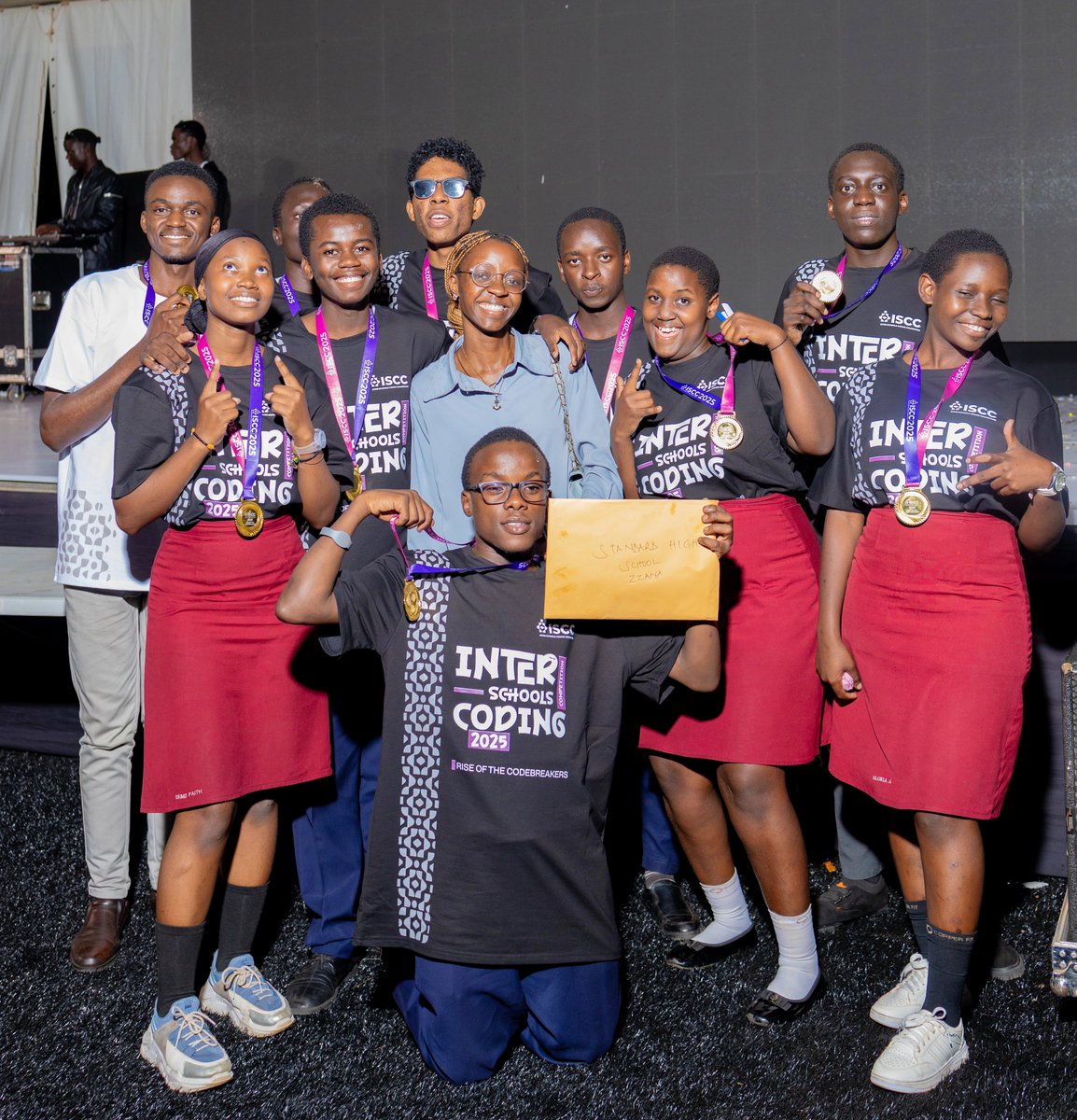
@STAHIZA_School didn’t just win, they dominated, they endured, and they have made history.
At Uganda's biggest coding event, they rose above 48 schools to claim the ISCC National Championship 2025. Uganda, salute your champions.
🏆🎉 CONGRATULATIONS, STAHIZA! THE SCHOOL OF CHAMPIONS HAS DONE IT AGAIN! 🏆👏Emerging as the best school in the national inter-schools coding competition wow!This is a testament to the hard work, dedication, and talent of the students, teachers, and the entire STAHIZA community!
How key is a games teacher to a School's success? Jordan Musoke takes us through his roles at STAHIZA.
Full podcast👇 https://t.co/V9vXOI0wd5
#SchoolSportsPodcast
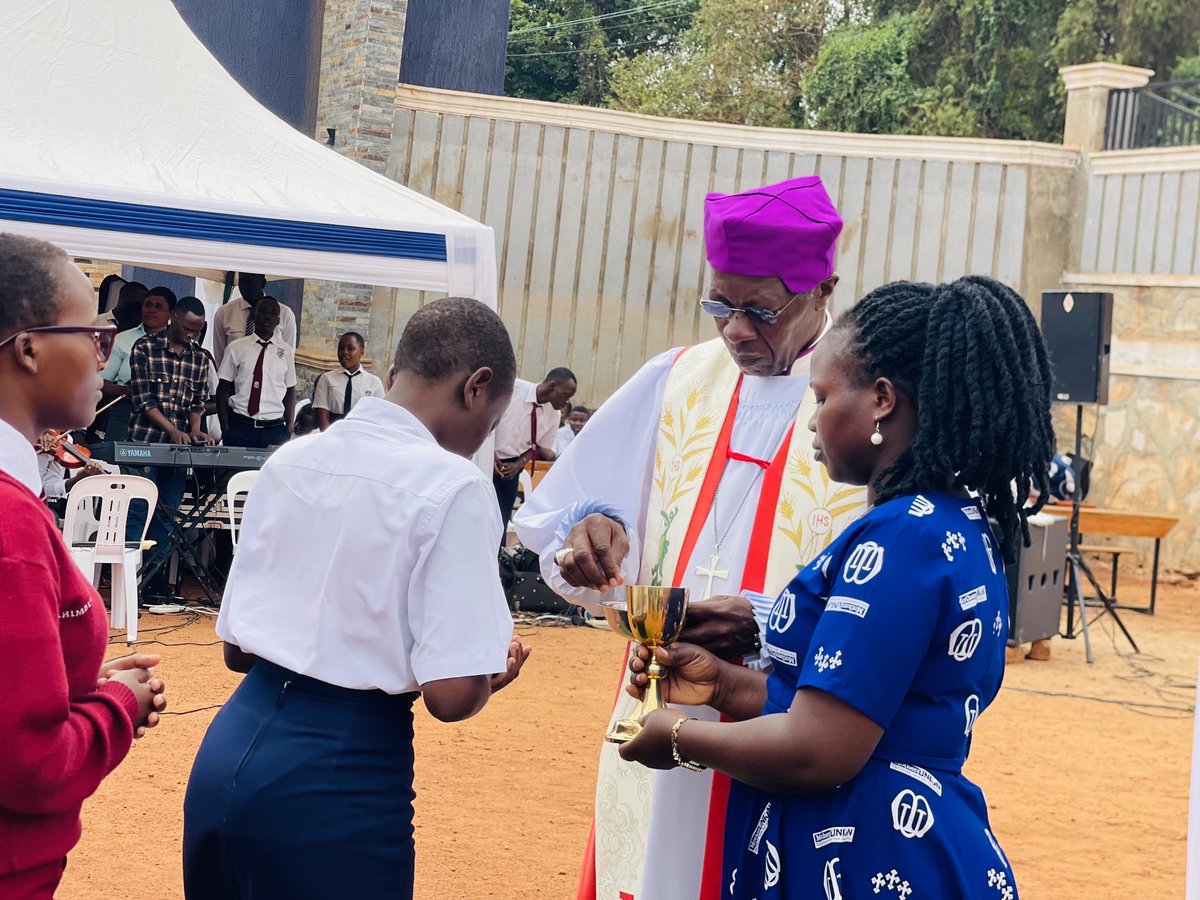
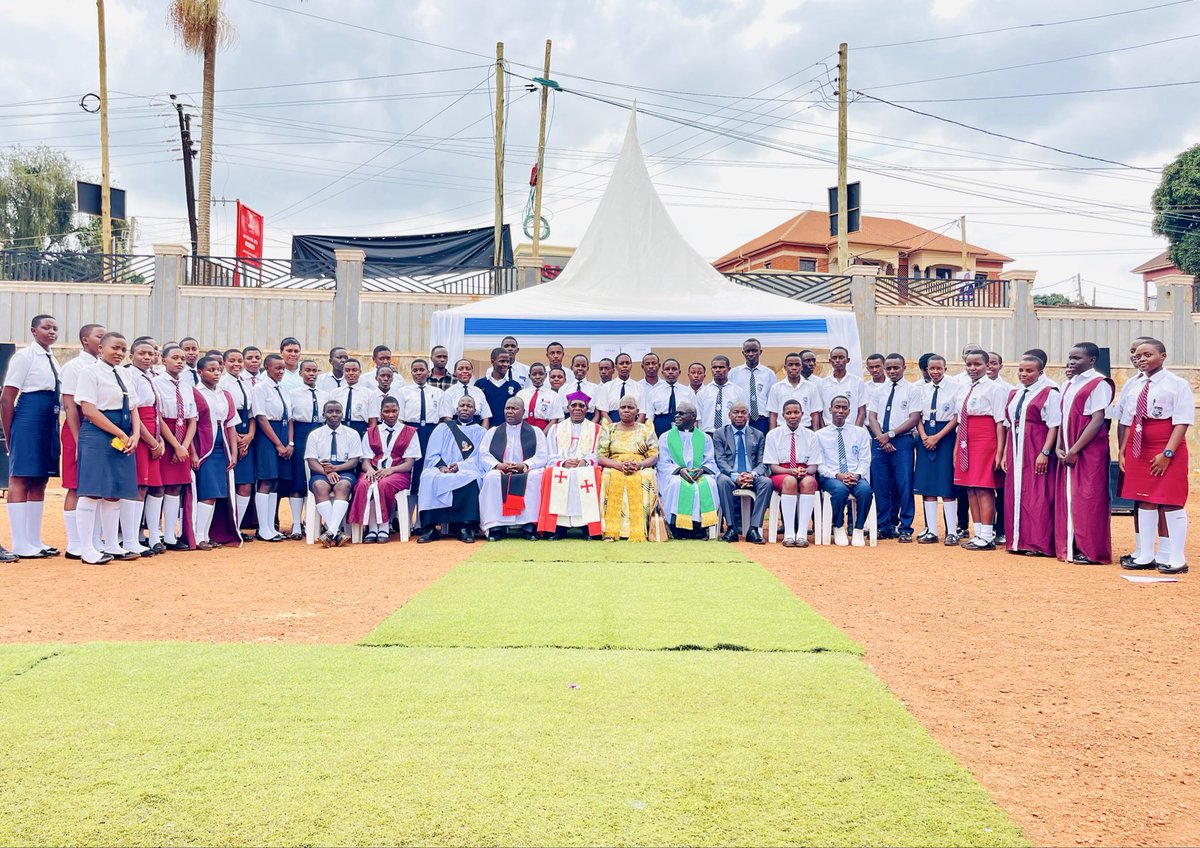
It's great to hear that the S.4 candidates from STAHIZA have been dedicated to God as they prepare for their final UNEB exams!
May these prayers bring solace and strength to the STAHIZA S.4 candidates as they prepare for their exams. Wishing them all the best.
WELCOME BACK TO SCHOOL
Karibu back to school, Standard High School Zana! 🎓📚 Wishing all students, teachers, and staff a productive and successful Term 3! May this term be filled with learning, growth, and memorable moments. 🌟 Let's make it a great one!