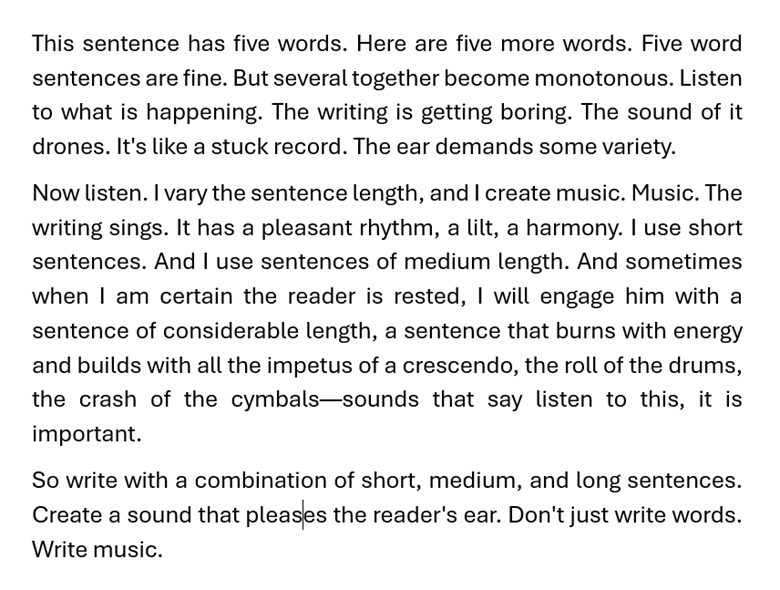
After writing The Great Gatsby, Fitzgerald had a complete meltdown about whether he'd ever write anything good again. Hemingway wrote him a letter that contains what's probably the best advice on imposter syndrome:
"For Christ's sake, write and don't worry about what the boys will say nor whether it will be a masterpiece nor what... You can write twice as well now as you ever could. All you need to do is write truly and not care about what the fate of it is. Go on and write."
Hate to think of how many students have suffered and job applications have been ignored because the software that does stuff like this basically doesn’t work.
Art by the amazing Matt Ryan Tobin.
The fact that this is our *fifth* book together (fifth announced book 😏) makes me so grateful.
And SGJ’s intro is like poetry. An honor.
Fango article has the links to order.
What's a "wedge" tornado? And how rare are "megawedge" tornadoes?
There is no technical definition of a "wedge." Storm chasers consider wedge tornadoes to be those that appear wider than they are tall. (For the tornado's height, they use the distance from the ground to the cloud base – AKA the "lifting condensation level".
True tornado circulations extend up to 30,000 or 40,000 feet into the storm, so no tornadoes are *actually* wider than they are tall. We just can only see the part of the tornado that hangs down from the cloud base.)
The tornado you see below occurred in Harlan, Iowa on April 26, 2024. It's the biggest I have ever seen. It was 1.1 miles wide, and had winds estimated by mobile Doppler radar up to 224 mph!
Only 1 or 2 in 1,000 tornadoes grows larger than a mile wide – at least according to National Weather Service survey data. Realistically, that number might be significantly higher when counting inflow winds and ill-defined edges of the tornadic circulation, especially in rain-wrapped environments. (Where does the "tornado" end and the wind "around" the tornado begin?)
MEGAWEDGE tornadoes are informally considered anything wider than 1.5 miles in diameter. The National Weather Service has only "officially" logged 30 megawedge tornadoes out of the 84,000+ in their database.
The BIGGEST tornado on record occurred in El Reno, Oklahoma on May 31, 2013. It was 2.6 miles across!
That said, researchers found evidence that the Mulhall, Okla. tornado on May 3, 1999 had a peak "core circulation" about 4.3 miles wide. In other words, that's the diameter of the 96 mph or greater winds.