I'm thrilled to share that I will be starting as the William Lyon Mackenzie King Postdoctoral Fellow at @Harvard and @HarvardWCFIA, where I'll continue my comparative research on Canadian and American politics!
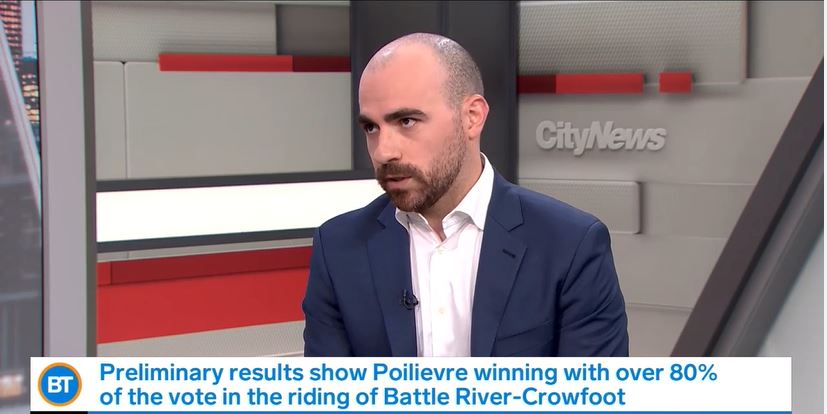
Had a lot of fun speaking to @carynceolin this morning on @breakfasttv We talk about last night's byelection in Battle River - Crowfoot, what happened and what comes next for the Conservative Party and Pierre Poilievre:
https://t.co/RgE0qXnBkS
#OpenAccess from @CJPS_RCSP -
How Canada Compares: The Politics of White Identity, Racial Resentment, and Racial Attitudes in North America - https://t.co/zPJHzPU2RF
- @Lkrashinsky#FirstView
It has long been argued that American politics is group centric, and that race is the defining cleavage separating groups of individuals. Yet, Canadian political science has generally avoided much accounting for the importance of race in the country’s politics.
Over 35 per cent of white Canadians believe that Black Canadians do not deserve any special favours from government. White Canadians with higher levels of racial resentment or white identity are more likely to penalize nonwhite candidates, and are more likely to vote Conservative
*New research paper just published at the Canadian Journal of Political Science*
To what extent do racial attitudes and white identity matter in Canadian electoral politics? And how might this compare to the United States?
https://t.co/nLj7QKsyMU
The majority of these people are not motivated to enter politics out of a sense of loyalty to a given party, but out of a sense of general duty to the public good. Young people who are more self-interested are much less likely to want to work in politics.
We conclude that, above all else, the young people who desire to work as political staffers are motivated to help the public. They are altruistic, change-seekers, and/or motivated to represent the underrepresented.