This started as a wild dream, whipped up in just 2.5 months part-time alongside a full-time job. 70-80 hour weeks fueled this 'fun side project.' The validation was real: 'Oh, there's something here.' The question was: go all-in? #StartupLife#Hustle
YC's investment diversity mirrors the startup market. While not exclusively focused on VR/AR or gaming, they support a wide range of sectors, reflecting the industry's overall landscape. This broad support, including past successes like Coinbase in crypto, is a key strength.
VR is a huge hit with kids and teens, consistently topping wish lists and gift guides. Unlike expensive adult headsets that often end up gathering dust, VR devices like the Quest are actively used by younger generations, proving their real entertainment value. #VR#Gaming#Tech
Always wanted to dunk or shoot hoops like in NBA Jam but too short? This creator made it possible in VR! A pandemic prototype shared on Reddit and TikTok blew up, racking up millions of views. Proof that passion projects can take off! #VR#IndieGame#Creator
Turning down a sure thing from Mark Cuban for a 1% chance at Y Combinator? That's the wild gamble of entrepreneurship. Risky, but maybe worth the shot. #StartupLife#YC
VR gaming is booming! Nathan's company, Vinci Games, is making waves with Roughknots, a unique blend of Gorilla Tag and Pokémon. Discover the magic behind their success in the rapidly growing VR market. #VRGaming#IndieDev
Didn't intend to start a company, just made a game for myself. But the demand was insane – 400+ people in Discord begging for this unfinished prototype. Turns out, I had to make it after all! #GameDev#StartupStory
Cold emailing Mark Cuban? It worked! Reaching out with a VR NBA 2K concept landed a reply in just 2 hours. Turns out, a tailored basketball-themed email is the key to getting his attention. #MarkCuban#ColdEmail#Startup
Mark Cuban offered a deal, but was it the right move? Weighing the 'Shark Tank' prestige against a potentially better angel investor deal for a future Y Combinator shot. A tough choice for a first-time founder. #StartupLife#Founder
Combining Gorilla Tag's unique movement with Pokémon's collecting gameplay led to a hit VR game. This unexpected blend resonated with kids and teens, achieving over 60,000 reviews and becoming one of the highest-rated VR titles ever. #VRgaming#IndieDev
This free-to-play VR game achieved over $1M in its first 3 months of alpha, becoming one of last year's most successful launches. In the competitive VR market, speed and innovation are key, much like Roblox where games must constantly evolve to keep young audiences engaged.
Made over a million dollars in 3 months on our first game. But then realized the VR market shifted, with kids and teens now dominating. Had to pivot from adult/premium titles to games more like Roblox to align with the current audience. #VRDev#GameDev
Gorilla Tag hit $100M revenue with ZERO advertising. This massively popular VR game on Quest proves you don't need ads to succeed. We dive into how this YC founder achieved it. #VRGaming#IndieDev#BusinessGrowth
Gabriel doesn’t get enough credit, he’s actively one of the best VCs I have meet
Truly incredible execution in what he’s building with Lobster Capital
By the time demo day hit basically my entire batch knew who he was & what his fund did.
Tier 1 ecosystem fund 🦞
A YC company closed a ~$200M valuation at Demo Day (Highest I've seen in six years of tracking every batch)
Prev. record was $100M. They doubled it.
The company has great revenue and strong traction for a seed-stage company.
But…
Most seed funds make 30-100 investments. To return your fund, each investment needs to return 60x if you're making 60 bets.
At $200M entry, you need a $12B exit just to return 1x.
Wild?
Impossible?
Well… Coinbase turned a $300K Demo Day check into $2.5B at peak.
Elsewhere, SpaceX will go public at $1T prove (30,000x for Seed)... and they also prove that pure hardware companies can reach these outcomes.
Maybe this founder is the next Elon Musk? Let’s hope so!
But valuations like this assume best-case scenarios…. Every investor at Demo Day is underwriting the same billion-dollar outcome. Most will be wrong.
American dynamism is driving capital into hardware and investors see deeptech and think about massive government contracts and category dominance.
That narrative might be right… If so, Hardware companies with real traction DO deserve premium valuations compared to 2023.
But $200M at seed stage compresses all future upside into the exit!! (How many years, and how much dilution!?)
Margin for error disappears completely at that entry price.
Does YC's fastest unicorn prove domain expertise is overrated?
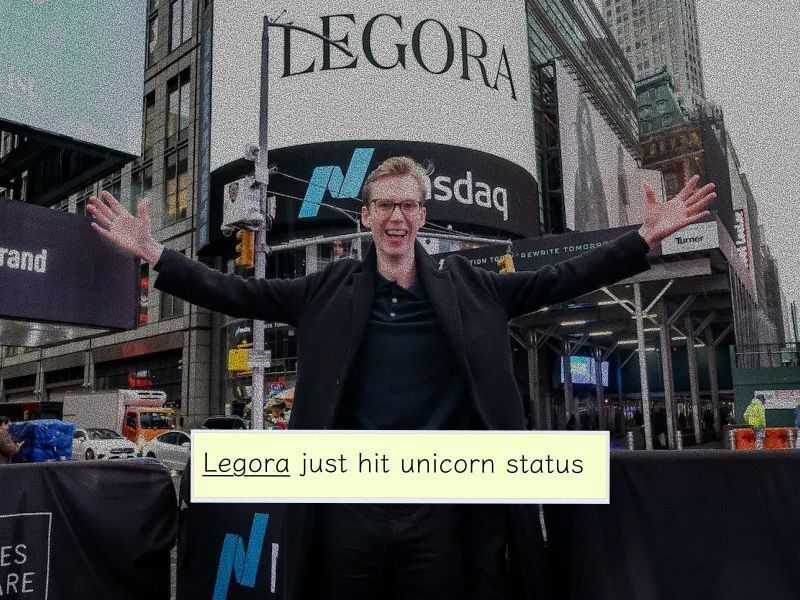
Legora went from YC Winter 2024 to $1.8B valuation in 13 months.
(Btw that’s the fastest unicorn in YC history raised $80M from Iconiq and General Catalyst).
Max Junestrand was 23 when he started it, he’s an ex-VC and none of the other founding team were lawyers.
Instead they interviewed 100 lawyers over lunch, offered to pay their hourly rates (couldn't actually afford it but the lawyers didn't charge them anyway), and learned the industry from scratch.
The company builds AI workspace software for lawyers doing contract review, legal research, and due diligence. Stuff that used to take days now takes minutes.
The traditional legal tech companies had decades of customer relationships and massive engineering teams. That moat disappeared in 18 months because foundation models changed everything.
Max explained… "Our ability to outship teams of thousands of engineers with just 30 is insane."
OpenAI, Anthropic + other foundation labs dropped the cost of building legal AI by 100x, so small teams suddenly had the same capabilities as companies with billions in revenue.
Legora now serves 10,000+ lawyers daily across the EU/US. They're beating companies 100x their size because they ship faster. The old players spent years building workflow tools for specific tasks while Legora built an entire workspace in a year.
They also hold true to one of the main reasons I believe the YC batches we are seeing now will be very successful…
Since foundation models made it trivial for startups to compete with incumbents who spent decades building moats around complexity.
Small technical teams using foundation models to rebuild entire software categories like legal tech, medical diagnostics, financial planning, and tax prep. Any industry where the moat was complexity instead of network effects is vulnerable.
So if YC's fastest unicorn came from a 23-year-old non-lawyer building legal software.
Can technical talent with access to foundation models can now compete with anyone?
One YC founder took 15 minutes out of his day to help. He rewrote our entire go-to-market strategy — and gave me a list of warm intros.
That call turned into a walk, an hour of pure mentorship. And it completely changed the direction of our company.
Sometimes, the smallest act of generosity shifts everything.