I’m running a 90-day paper trading experiment.
Multiple systems.
Same conditions.
No real money.
High-level results only.
No methodology.
No signals.
Follow the experiment.
Tape got messier this week.
Same start. Same market.
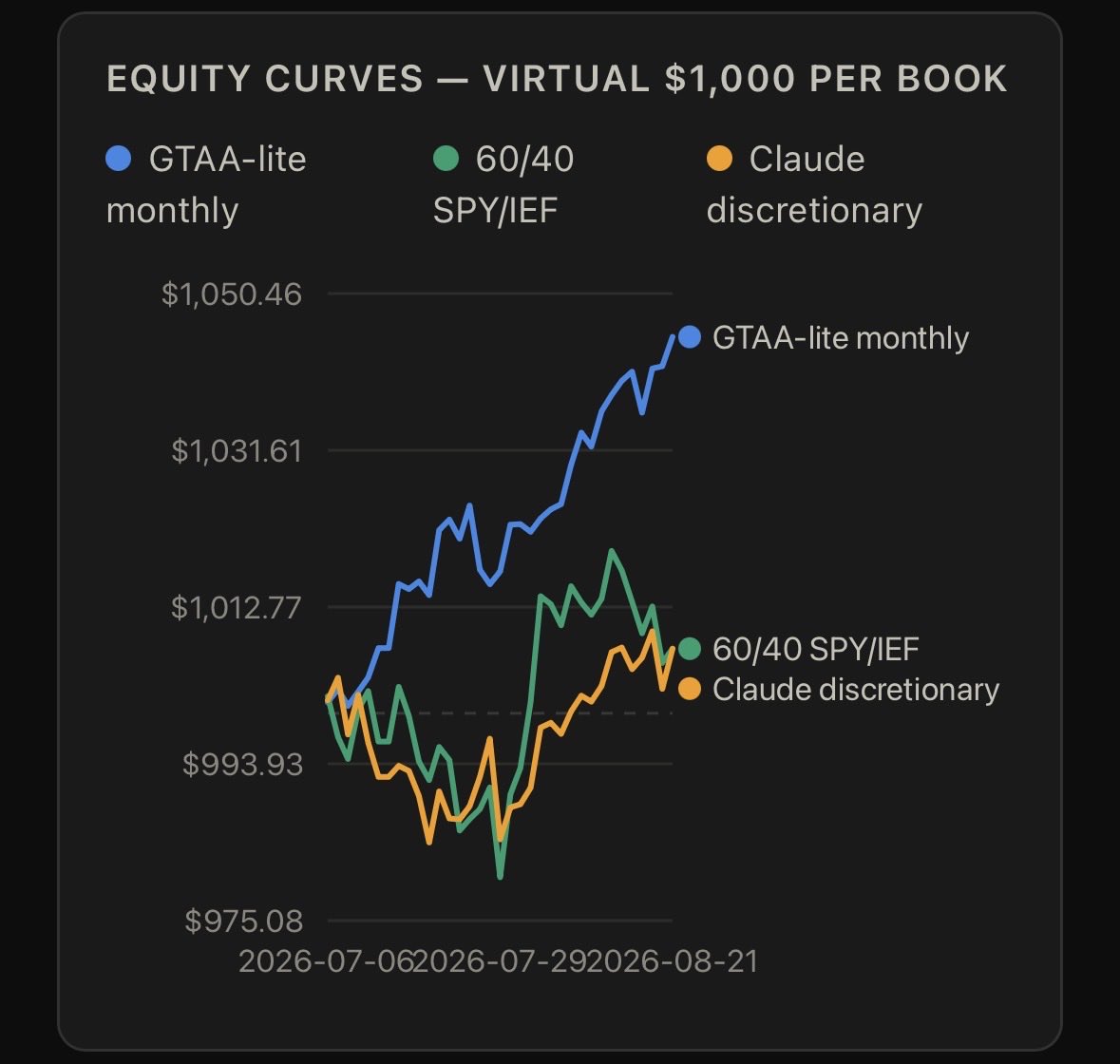
Rules-based: +4.53% · peak DD 0.9%
60/40: +0.78% · peak DD 2.3%
Autonomous model sleeve: +0.78% · peak DD 2.0%
Two sleeves just tied.
One path still ahead — and still the calmest.
Paper only.
No methodology.
No signals.
Follow the experiment.
@StockSavvyShay Demand is the easy headline.
The constraint is still utilization — whether the grid, the chips, and the balance sheet actually get used at the prices people modeled.
Day 47 paper burn-in.
Same start. Same market.
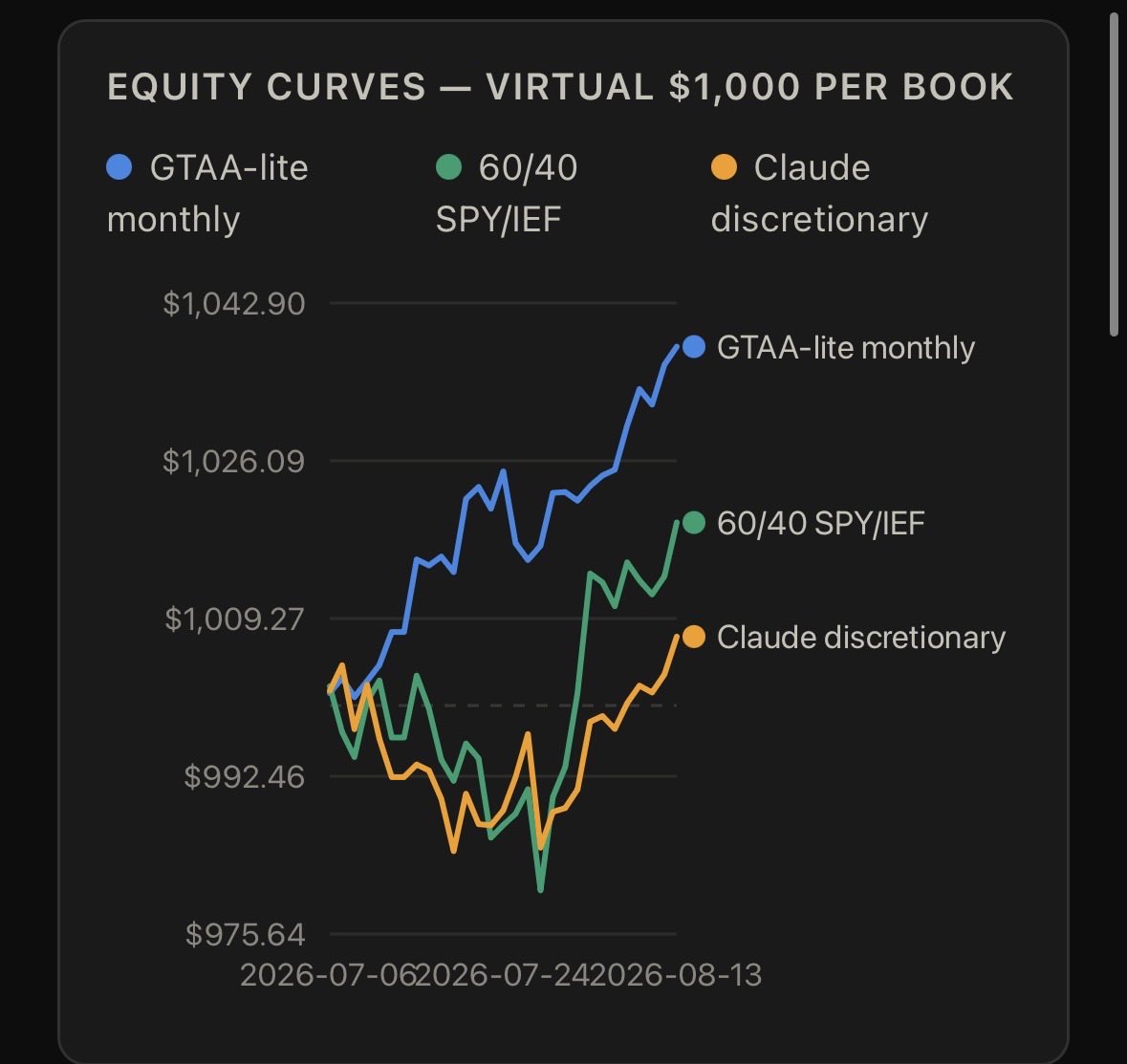
Rules-based: +4.15% · peak DD 0.9%
60/40: +1.28% · peak DD 2.3%
Autonomous model sleeve: +0.99% · peak DD 2.0%
All three green.
One path still clearly ahead — and still the calmest.
Paper only.
No methodology.
No signals.
Follow the experiment.
I’m running a 90-day paper trading experiment.
Multiple systems.
Same conditions.
No real money.
High-level results only.
No methodology.
No signals.
Follow the experiment.
Day 44 paper burn-in.
Same start. Same market.
Rules-based: +4.00% · peak DD 0.9%
60/40: +1.72% · peak DD 2.3%
Autonomous model sleeve: +0.79% · peak DD 2.0%
All three green.
One path still clearly ahead — and still the calmest.
Paper only.
No methodology.
No signals.
Follow the experiment.
Day 41 paper burn-in.
Same start. Same market.
Rules-based: +3.83% · peak DD 0.9%
60/40: +1.95% · peak DD 2.3%
Autonomous model sleeve: +0.73% · peak DD 2.0%
All three green.
One path still clearly ahead — and still the calmest.
Paper only.
No methodology.
No signals.
Follow the experiment.
I’m running a 90-day paper trading experiment.
Multiple systems.
Same conditions.
No real money.
High-level results only.
No methodology.
No signals.
Follow the experiment.
@coinbureau The useful question isn’t the headline.
It’s whether the demand is real end-use or circular financing that only works if the next buyer shows up on schedule.
@EmanAbio@SuiNetwork This is the right primitive.
If one compromised agent key can drain the account, you didn’t build an agent system.
You built a single point of failure with extra steps.
Same market. Same start. $1,000 each.
Rules-based is still the only curve that looks like a process.
60/40 recovered.
The model sleeve is still lagging.
This is why the experiment is public.
The system stays private.
Paper only. Follow the experiment.
@Sirbest247@MossAI_Official@MossAI_CN This is the whole game.
Show results.
Hide the edge.
If you can’t separate proof from the recipe, you don’t have a product — you have a giveaway.
@JensenHuang Always-on agents are the unlock.
The constraint just moves to permissions, evals, and what they’re allowed to touch when they run for days without a human in the loop.
@base Day one is right.
Agents trading and paying is the easy vision.
The hard product is limits, identity, and who owns the loss when an agent is wrong.
Day 37 paper burn-in.
Rules-based: +2.99% · peak DD 0.9%
60/40: +1.53% · peak DD 2.3%
Autonomous model sleeve: +0.02% · peak DD 2.0%
All three green.
Rules-based still ahead — with the lowest drawdown by a wide margin.
Paper only.
No methodology.
No signals.
Follow the experiment.
@Cointelegraph Agents getting wallets is the easy headline.
The product is still spend limits, approval paths, and who eats the loss when the agent is wrong.
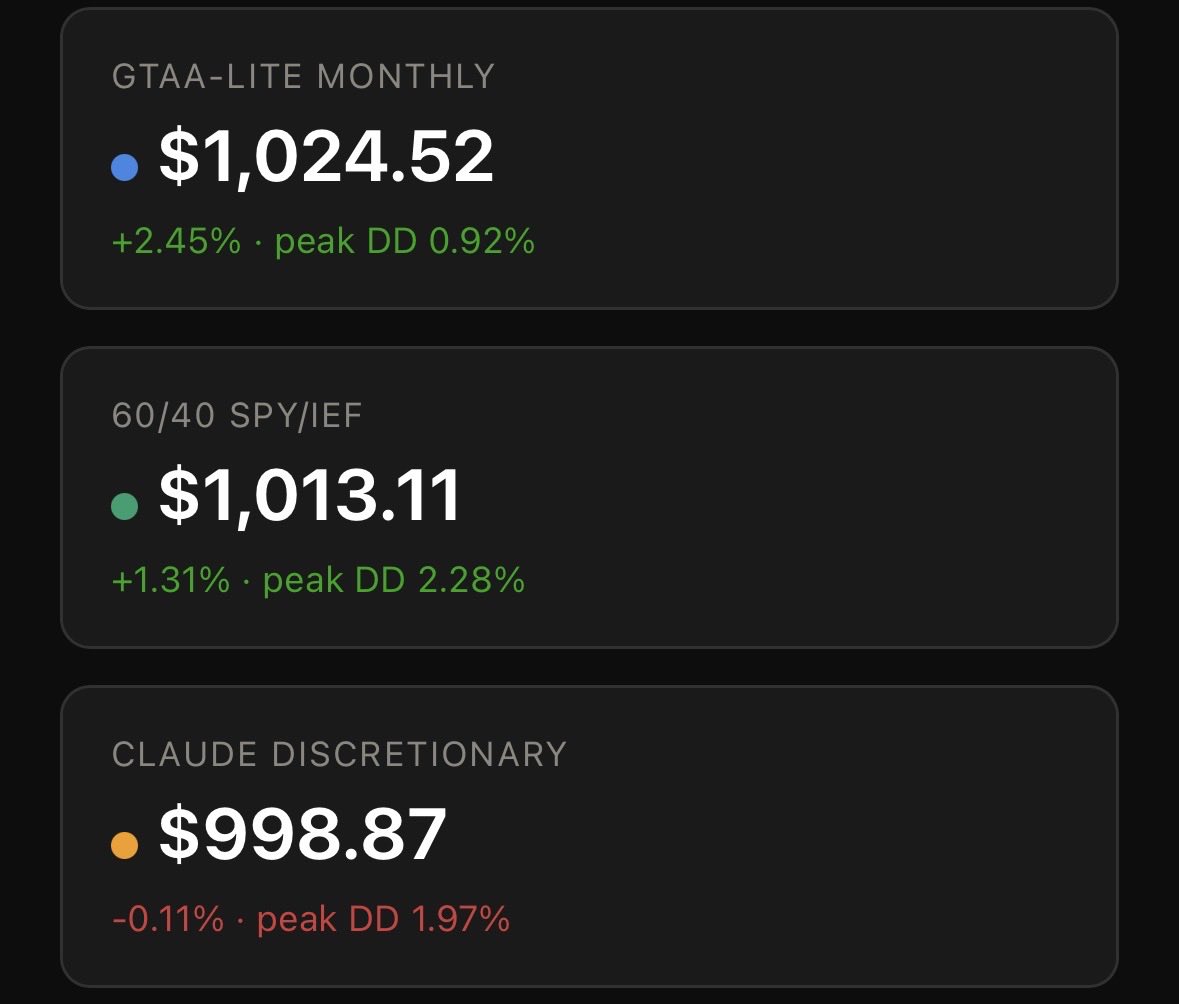
Day 33 paper burn-in.
Rules-based: +2.45% · peak DD 0.9%
60/40: +1.31% · peak DD 2.3%
Autonomous model sleeve: -0.11% · peak DD 2.0%
Tape got friendlier.
Rules-based still ahead — with less than half the drawdown of 60/40.
Paper only.
No methodology.
No signals.
Follow the experiment.
I’m running a 90-day paper trading experiment.
Multiple systems.
Same conditions.
No real money.
High-level results only.
No methodology.
No signals.
Follow the experiment.
@ethereum@big_tech_sux@vyperlang This is the right direction.
Agents get more autonomy.
The only way that stays safe is proving what they’re allowed to do — not hoping the demo behaves.