@FurmanCenterNYU Learn more about the different models of public development and what cities can learn from them in @FurmanCenterNYU and @local_housing’s new Policy Brief: https://t.co/66qEluCDzs
@FurmanCenterNYU These models use dedicated funding streams and portfolios of smaller properties to cross-subsidize costs, highlighting how specialized entities can effectively focus on affordable housing needs.
But it’s at the state level where some of the most consequential change is taking place. Read more from @voxdotcom’s Rachel Cohen here ⤵️ https://t.co/U0brHtKBvJ
In Washington, DC, Congress has held more hearings on housing affordability recently than it has in decades, and President Joe Biden has been ramping up attention on the housing crisis, promising to “build, build, build” to “bring housing costs down for good.”
@HUDgov To learn more about the history and different kinds of models of public development, visit the @FurmanCenterNYU’s @local_housing https://t.co/IMDsHthMRP
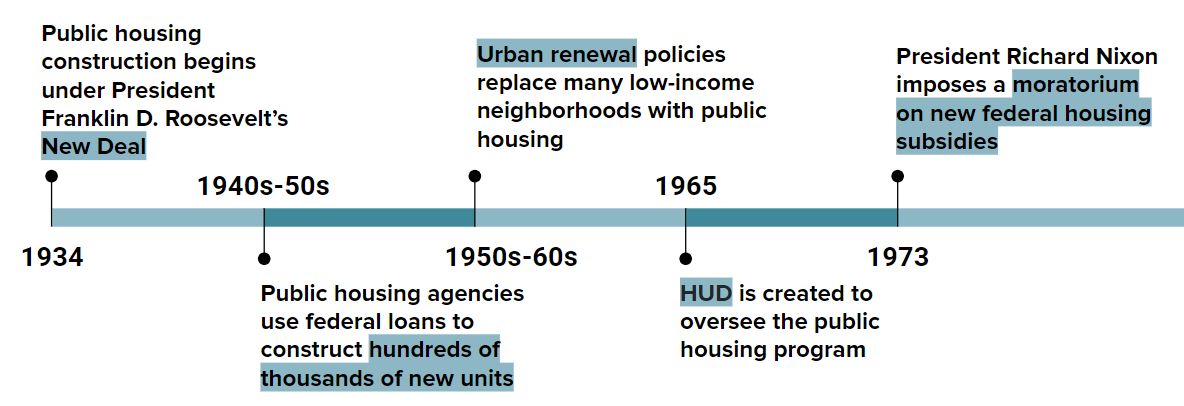
In the US, public housing is the most familiar version of public development. But over the last century, there has been a gradual shift toward relying on for- and non-profit developers to provide affordable housing in exchange for a variety of subsidies.
@HUDgov ▪️ 1986 - Congress establishes the Low-Income Housing Tax Credit (LIHTC)
▪️ 1999 - The Faircloth Amendment caps the number of public housing units