Unboxed my custom MacBook Pro 128 gb and deployed the company brain to it.
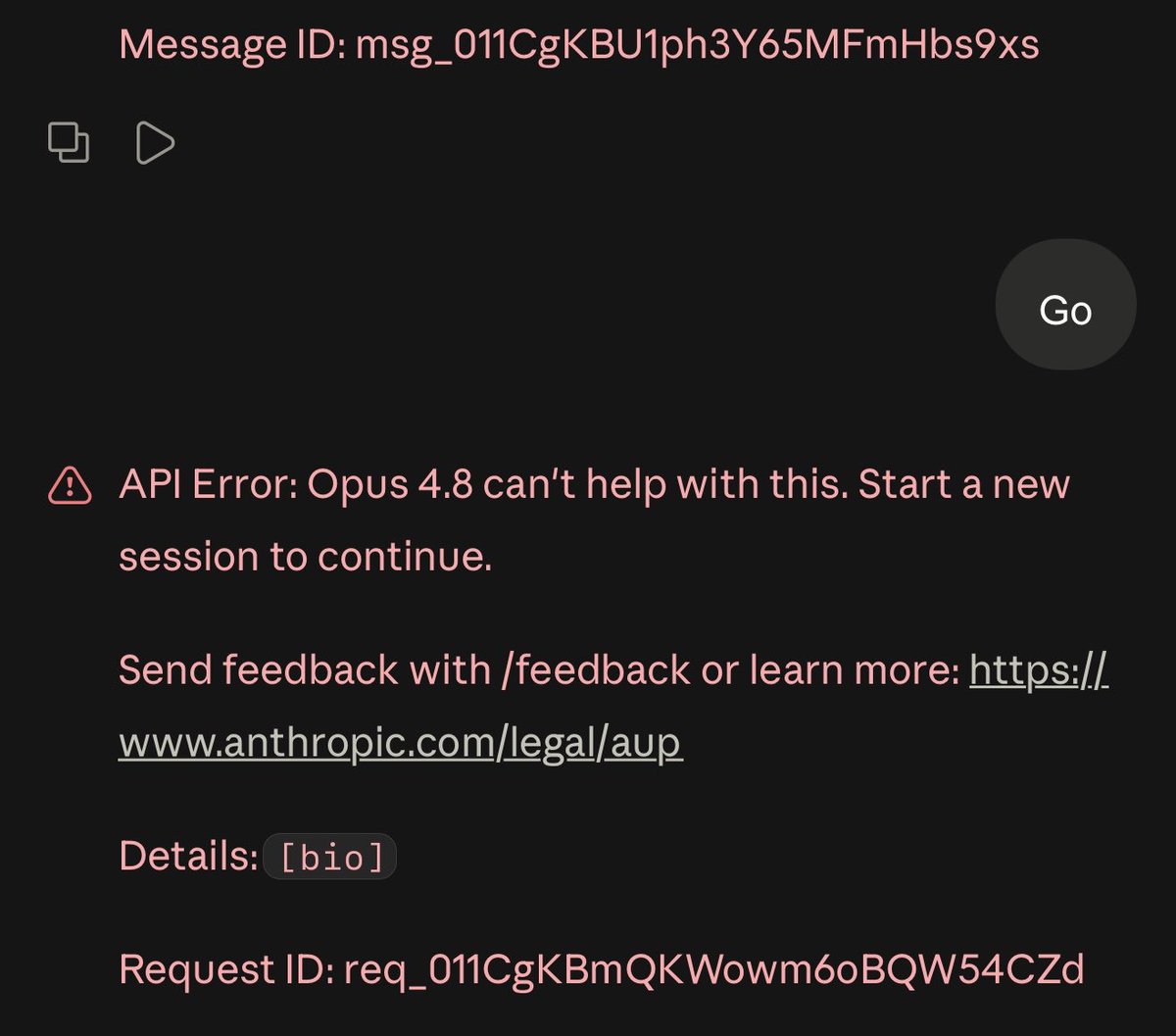
Claude Code has been really grinding my gears lately.
I have to go back to 4.7 to get normal antibody work done.
So basically I have to roll back 6-8 months in terms of model quality.
This is unacceptable to me considering I pay for a Max subscription.
So I’m going to try and go 90%++ local.
This is my fully local v0 solution stack to [bio] flags in Claude Code
Grok Harness over GLM4.7
pointed at the repo
with real tool calling,
auto mode,
artifact generation,
and auto memory.
Fed the Claude md to it so we aren’t starting over.
Web app TUI supported by Tailscale and Redis so we can
authenticate users,
brick lost devices,
and queue work.
And best of all, no bio classifier stopping me
Let us engineer the cell line for your next minibinder potency assay!
Why stop at SPR?
There is a lot of ground between SPR and patch clamp electrophysiology assays!
You do not need to go straight to patch clamps.
Come to Lodgepole Discovery and we will engineer a cell line and test the potency using a Nav1.6 and Cn2 +\- your minibinders in a cell-ELISA.
The co-crystal was just solved.
Does your minibinder bind to the same epitope as Nav1.6 in-silico?
Let’s screen your compounds with MD!
You cannot screen realistically many molecules in iPSCs.
If we see potency we can then take it to increasing physiological complexity.
A Pharma would traditionally prepare engineered lines during molecule discovery such that there is support as early as possible in discovery.
More than likely you would need to screen molecules and improve them iteratively.
An ELISA lets you do that.
The engineered line allows you to present the exact protein involved in the patch clamp assays, in a controlled experiment.
Presumably this is intended as intravenous delivery for maximum dose penetration into effected tissues.
What is the iv PK of a minibinder in humans? Has anyone done that?
Seriously come to a team of experts who can develop a cell line and get you the next set of answers!
I see a lot of teams presenting binders.
Let’s show some efficacy data!
@LodgepoleDisc@citrini
Proteins in the soluble fraction after lysis
Green flags on the first runs!
Antigen 1 and 2 scale up expression tomorrow
Purify this week on the Go.
Assays next week
Lodgepole Discovery (@LodgepoleDisc) is an end to end discovery partner for biotech and Pharma.
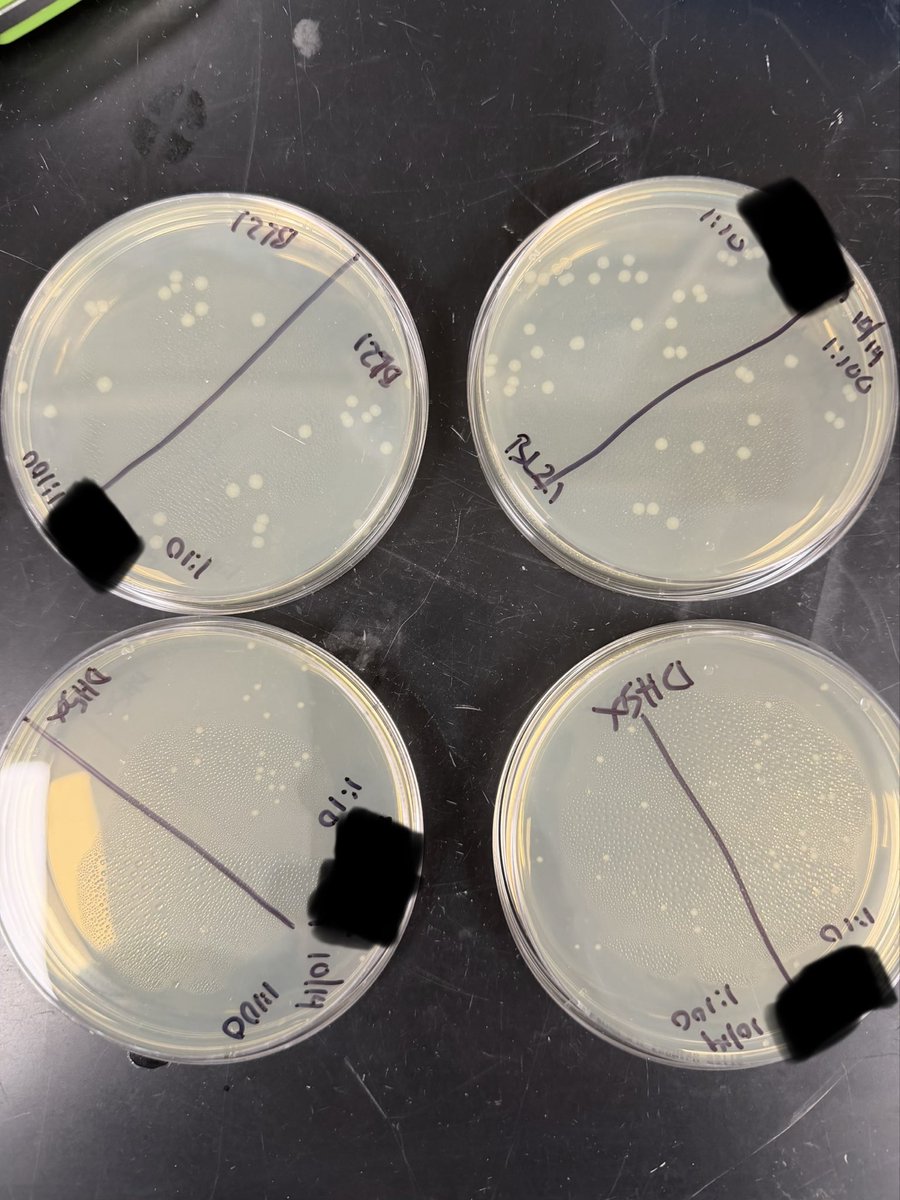
First set of transformations look great.
It’s like riding a bike, after thousands of these in grad school and my post doc it felt so good to just whip this up without much thought or effort.
BL21 DE3 for expression under the Lac operon
DH5a for high copy DNA replication and isolation
Tomorrow overnight cultures
Monday we express and miniprep
Tuesday purify and by end of week we are cooking up plate assays.
You can always tell the strains apart by their colony size.
It may look like the DH5s have not grown well but they always have smaller colonies.
@LodgepoleDisc
We are live and accepting new customers.
Pharma grade
Binder design -> Lab testing
The team includes ex Regeneron, ex Ginko, and ex Sartorius scientists.
We are protein biochemists and cell biologists on a mission.
We move fast.
Let’s get on a call.
I’ve spent >>$100k of my own money building this.
End to end lab capabilities coming online to support discovery research.
New lab space with significantly more bench space.
Molecular biology: cloning, libraries, subcloning, mutagenesis
Protein expression: E. coli, CHO, HEK, etc
Protein purification: all common resin chemistries (affinity, IEX, SEC, custom columns)
Protein QC: gels, two color WB, ELISA, SPR, mass photonics, TEM
In vitro assays: effector function, internalization, efficacy, dose response
In vivo: pk and pharmacology (at our partner labs)
Industry standard equipment from top brands including Thermo, Cytiva, Waters, and LiCor.
Lodgepole operates at the intersection of computational protein engineering, automation, and laboratory science; giving clients a single partner for both in silico discovery and hands-on experimental work.