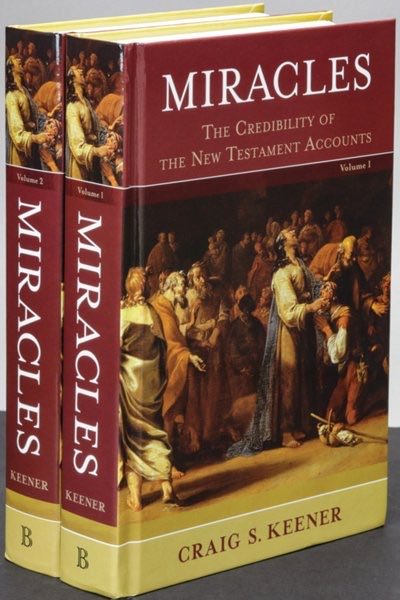
@LevantineEpi@DerekPodcast@BartEhrman@DrWilliamLCraig If you’d only scrolled down a bit…
Also the idea that you have to teach in the history department of a university to be classified as a historian is ridiculous. There are countless historians of religion who are affiliated with religious studies departments.
@BanjoAtheist It may not be your job but anyone who is open-minded should be able to say what kind of evidence would convince them that Christianity is true or false. How could someone be open-minded if there’s nothing that could make them change their mind?
Was Jesus’ story just a copy of existing dying and rising pagan gods? There are multiple problems with this thesis.
From Bart Ehrman’s book “Did Jesus Exist?” 👇
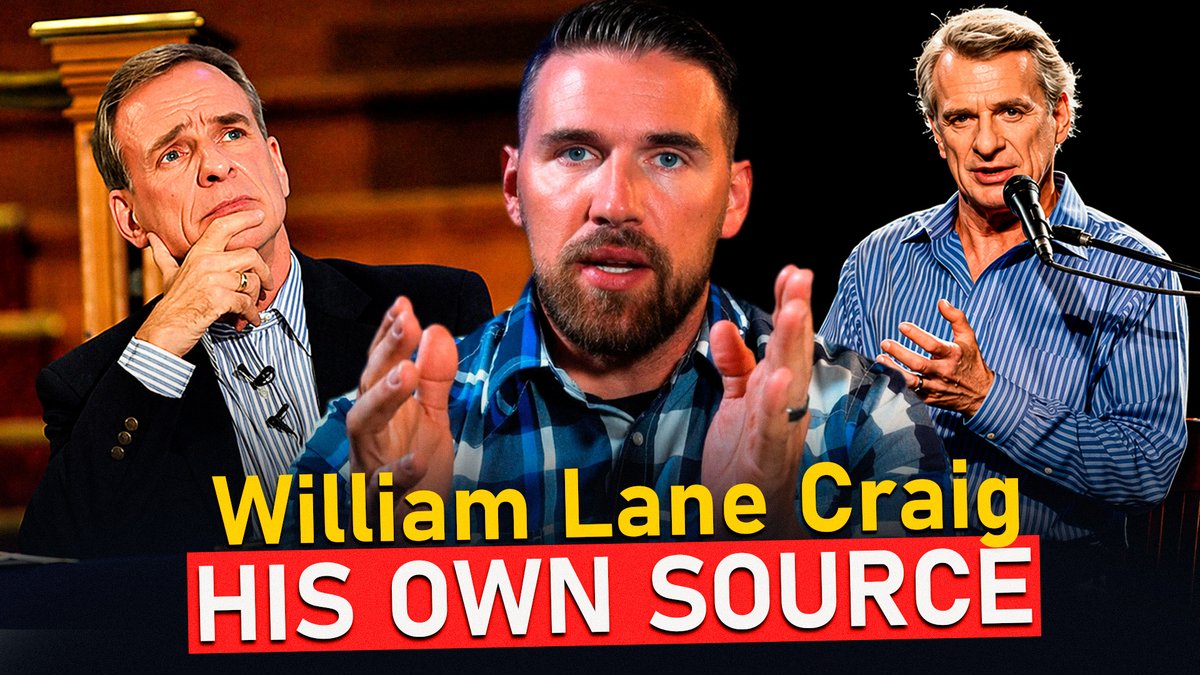
William Lane Craig told millions of people there are NO parallels to the resurrection of Jesus in ancient mythology.
He tried to make anyone who parallels Jesus to other "pagan Gods" as dinosaurs. Only outdated idiots would see the death, resurrection and ascension of Jesus as having parallels to other Gods, because there are no other Gods... duh!
Yet, there is plenty of scholarship that does show dying and rising Gods. He cites Tryggve Mettinger to prove his point, but Mettinger does think there are dying and rising Gods.
Craig has to know this. He must have read Mettinger, yet he hid it.
Video is below.
@BanjoAtheist What could have happened to Jesus that wouldn’t be evidence against his divinity?
If he died and didn’t rise, you could say that this proves he wasn’t God.
If he never died & instead ascended into heaven, you would still say that there are other gods who did the same thing
The first response to my article defending the Kalam's Causal Principle was just published!
Definitely worth a read. Dan makes a lot of fair and insightful points.
Be on the lookout for my rejoinder article...
https://t.co/wTZltUZ9Ro
@Leophilius I have already explained multiple times that this argument is compatible with the belief that the universe has a beginning. Just look at my definition of “begins to exist” in the paper—it’s not limited to just the ontological actualization of the universe.
@Leophilius My friend, you’re asking me to explain a 23 page paper in 280 characters or less 😅. It’s fine, we can disengage. I just thought you might be interested in the paper because it directly addresses your original post.
@Leophilius I’m really trying to understand what you’re saying.
*If* the universe has a beginning, this means that it is bounded in the earlier than direction, right?
My paper argues that if the universe has a beginning, then it has a cause whether on a tensed or tenseless view of time.
@Leophilius Isn’t that just the difference between A-theory and B-theory of time?
On A-theory of time, if the universe begins, then the universe actualizes ontologically.
While on B-theory of time, the universe is bounded at one end in the earlier than direction.
What am I missing?
@Leophilius Can you tell me what you understand to be the difference between the “universe began” and “the universe has a beginning” if it’s not that those two sentences can presume different views of time?
@Leophilius Well, I’m responding to your original post where if you grant that the universe began, then you do believe that the universe began uncaused.
@TGrogan268173 It’s clear from your dismissive & mocking tone in multiple replies that you’re not interested in a civil & constructive dialogue. I’ve tried to engage your questions in good faith, but I haven’t received the same in return. This will be my last response. Also here’s the evidence.
Given that the First Cause was initially changeless & beginningless, the first event could not occur unless the First Cause had the capacities to initiate change & to prevent itself from changing. Having these two capacities implies that the First Cause has libertarian freedom.